

What Qualifies as a Catastrophic Injury Under Louisiana Law?
A catastrophic injury is one that permanently changes how a person lives, works, and functions. The term is a description of severity, not a separate kind of lawsuit. What the catastrophic label captures is the scale of the harm. Injuries that leave lasting impairment, require lifelong care, or end a person’s ability to earn a living.
The distinction between a serious injury and a catastrophic one is practical, not cosmetic. It shapes how a claim is investigated, how the future is documented, and how long the consequences last.
Medical vs. legal definitions: what qualifies in Bossier Parish courts
Doctors and lawyers describe catastrophic injuries from two angles. The medical description focuses on diagnosis and prognosis. An injury that produces permanent disability, requires ongoing treatment, or carries a high risk of long-term complications. Treating physicians, neurologists, and rehabilitation specialists document this through imaging, functional assessments, and projected care needs.
The legal description focuses on consequences. The question is what the injury did to the person’s life and earning capacity, not just what the chart says. “Catastrophic” is not a statutory label that switches on a different set of rules. It is a way of describing how serious and how permanent the harm is. The two descriptions work together. The medical proof establishes what happened to the body. The legal record translates that into the cost of repairing the harm.
The difference between a serious injury and a catastrophic injury
A serious injury heals. A broken arm, a concussion that resolves, a soft-tissue injury that improves with treatment. These are painful and worth compensating, but the person usually returns to their prior life. A catastrophic injury does not resolve. It leaves permanent deficits that shape every day that follows.
The practical line is permanence and lifetime cost. A serious injury is measured largely by past medical bills and a defined period of lost work. A catastrophic injury involves decades of care: surgeries, therapy, assistive equipment, home health, and the loss of a career that may never resume. That long horizon is where these cases diverge from routine injury claims, and it is why they call for expert support to document correctly.
Why the catastrophic designation changes the scope of a case
The catastrophic designation matters because it widens every category of harm that has to be documented. When the impairment is lifelong, the future medical care, the diminished ability to earn, and the daily human cost all stretch across a working lifetime rather than a few months of treatment.
Documenting that future is the hard part. A routine claim can often be built from records that already exist. A catastrophic claim requires building a record that does not yet exist: a projection of the care, equipment, and lost earnings a person will face over the rest of their life. That is why these cases run on a different budget than routine injury claims, and why documenting one correctly takes more than reviewing a stack of bills.
What qualifies as a catastrophic injury in Bossier City, LA
In Bossier City, an injury reads as catastrophic when it produces permanent, life-altering consequences rather than temporary harm. The hallmarks are permanent loss of a major bodily function, an inability to return to prior work, the need for lifelong medical treatment, and significant ongoing care or assistance.
The qualifying question always ties back to permanence and the projected cost of living with the injury. A person who needs surgery and improves has a serious claim. A person whose injury permanently changes their independence, employment, and daily functioning has a catastrophic one.
Our Bossier City Office
1815 Benton Rd
Bossier City, LA 71111
Open 24/7 for injured Bossier City residents
Get directions →What Types of Catastrophic Injuries Do Bossier City Attorneys Handle?
Catastrophic injury practice covers the small set of injuries that change a person’s life permanently and demand lifelong medical care. These are not the soft-tissue strains and short-healing fractures that make up routine personal injury work. They are injuries that destroy earning capacity, require home modification, and generate medical bills that run into the millions. The case types below share a common feature: the damages are large, the medical proof is complex, and the defense will contest causation and value at every step.
Traumatic Brain Injury (TBI) and Acquired Brain Injury
A traumatic brain injury results from a blow, jolt, or penetrating wound to the head. An acquired brain injury comes from internal causes such as oxygen deprivation or stroke triggered by trauma. Both range from concussion to coma, and the most serious leave a person unable to work, drive, or live independently. The difficult part of these cases is proof. Mild and moderate brain injuries often do not show on a standard CT scan, so the medical record alone can understate the harm. Building the claim takes neurological testing, neuropsychological evaluation, and witnesses who knew the person before and after the injury.
Spinal Cord Injury and Paralysis (Paraplegia, Quadriplegia, Tetraplegia)
Spinal cord injuries produce partial or total loss of movement and sensation below the level of the damage. Paraplegia affects the legs and lower body. Quadriplegia, also called tetraplegia, affects all four limbs. These injuries are permanent in most cases, and the lifetime cost of attendant care, durable medical equipment, and accessible housing is substantial. The injury level on the spinal column drives both the medical prognosis and the damages calculation, which is why these cases turn on detailed medical documentation rather than general statements about severity.
Severe Burn Injuries and Traumatic Amputation
Severe burns are graded by depth and by the percentage of the body surface affected. Third-degree and fourth-degree burns destroy nerve tissue, require skin grafts, and leave permanent scarring and disfigurement. Traumatic amputation, the loss of a limb in an accident or through later surgical necessity, brings prosthetic costs, repeated revision surgeries, and lasting functional loss. Both injury types carry a strong disfigurement component, which Louisiana law treats as a recognized element of damage separate from the underlying physical harm.
Crush Injuries, Compartment Syndrome, and Polytrauma
Crush injuries occur when a body part is compressed under heavy force, common in industrial and vehicle accidents. They can trigger compartment syndrome, a condition where pressure inside the muscle cuts off blood flow and requires emergency surgery to prevent permanent damage or amputation. Polytrauma describes a single accident that produces multiple serious injuries at once, such as a head injury combined with internal bleeding and broken bones. These cases require coordinated proof across several medical specialties, because no single treating doctor sees the whole picture.
Catastrophic Injuries to Minors in Bossier City
When the injured person is a child, the case carries features that adult claims do not. A child’s future earning capacity has not yet formed, so projecting lost income takes vocational and economic analysis rather than a simple wage history. Louisiana law also treats claims belonging to minors differently for timing purposes, which affects when a suit must be filed on the child’s behalf. Severe injuries to a developing body, including brain and spinal injuries, can change a child’s entire developmental path, and the damages model must account for a lifetime that may span seventy or eighty years.
These injury categories share one practical reality. Each requires medical experts, economic projections, and the resources to document harm that unfolds over decades.
Which Accidents Most Often Cause Catastrophic Injuries in Bossier City?
A handful of accident patterns produce most catastrophic injuries in Bossier City. High-speed highway collisions, heavy industrial work, large entertainment venues, and dangerous products account for the cases that leave people with lifelong impairment. The accident type drives which parties may be responsible, what evidence matters, and how much investigation a case demands.
Interstate 20 and US-71 commercial truck accidents
Bossier City sits at the crossroads of two heavily trafficked routes. Interstate 20 carries east-west freight through the Shreveport-Bossier corridor, and US-71 funnels traffic north and south. Loaded tractor-trailers traveling these roads can weigh up to 80,000 pounds, and a collision between an 18-wheeler and a passenger vehicle transfers enormous force to the smaller vehicle’s occupants.
Truck wrecks at highway speed are a leading source of the most severe injuries seen in the region. These cases also tend to involve more than one possible responsible party and federal motor carrier regulations enforced by the Federal Motor Carrier Safety Administration. The presence of corporate carriers, electronic logging data, and onboard recording systems separates a serious truck claim from an ordinary car accident, which is why preserving that evidence early matters so much.
Barksdale Air Force Base contractor and civilian accidents
Barksdale Air Force Base anchors the eastern edge of Bossier City and brings constant contractor traffic, construction work, and civilian employment to the area. Accidents involving base operations can arise on or off federal property, and the location of the incident shapes the legal path. An injury on the public roads serving the base follows ordinary Louisiana rules. An injury on federal land or involving a federal entity can pull a claim into a different framework with its own procedures and deadlines.
Construction and maintenance work tied to the installation also exposes workers and visitors to fall, equipment, and vehicle hazards. The mix of private contractors, civilian staff, and federal interests means a single incident may implicate several distinct categories of responsible party, each governed by different rules.
Industrial, oil field, and construction site accidents in Bossier Parish
Bossier Parish supports manufacturing, energy production, and active construction. Industrial and oil field work involves heavy machinery, elevated workspaces, pressurized systems, and hazardous materials. Construction sites add falls from height, crane and equipment failures, trench collapses, and struck-by incidents to the list.
These settings produce crush injuries, severe burns, amputations, and other life-altering harm. Worksite accidents frequently involve more than the immediate employer. Equipment manufacturers, property owners, general contractors, and subcontractors may all bear some share of responsibility for an unsafe condition. Sorting out who controlled the hazard is central to building one of these claims and requires early documentation of the scene before conditions change.
Casino and entertainment venue premises liability
Bossier City’s riverfront casinos and entertainment venues draw large crowds and operate around the clock. High foot traffic, parking structures, escalators, walking surfaces, and crowd management all create conditions where serious falls and other injuries occur. Under Louisiana premises principles, a property owner can be answerable when a dangerous condition on the property causes harm and the owner knew or should have known about it.
Venue cases turn on what the property owner knew, how long a hazard existed, and what steps were taken to address it. Surveillance footage, maintenance logs, and incident reports are often the difference between proving a claim and watching it dissolve, and those records can be overwritten on short retention cycles.
Defective product and negligent security claims
Some catastrophic injuries trace back to a product that failed rather than a single negligent driver or property owner. Vehicle components, industrial equipment, consumer goods, and machinery can cause severe harm when they are unreasonably dangerous in design, construction, or warning. Claims against manufacturers in Louisiana proceed under a specific statutory framework that defines how a product defect is proven.
Negligent security is a related category that arises at apartment complexes, parking lots, and commercial properties. When foreseeable criminal activity causes injury and a property owner failed to provide reasonable security measures, the owner’s conduct can be examined as a cause of the harm. Both product and security claims require technical investigation and records that establish what the responsible party knew and when. Liability across these accident types depends on which party can be held responsible and the precise statute that governs each theory.
Who Can Be Held Liable for a Catastrophic Injury in Bossier City?
A catastrophic injury claim often has more than one defendant. The driver who hit you may be one party. The company that employed that driver, the maker of a failed component, the owner of the property where the incident happened, or a government agency that maintained a dangerous road can each carry separate responsibility. Identifying every party early matters because catastrophic injuries produce damages that exceed what a single insurance policy can cover.
Trucking Companies and FMCSA-Regulated Carriers
When a commercial truck causes a catastrophic injury, the driver is rarely the only defendant. The motor carrier that owns the truck or employs the driver can answer for the driver’s conduct and for its own decisions, including hiring choices, training, or schedules that press a driver against hours-of-service limits. Federal Motor Carrier Safety Administration rules govern driver qualifications, logbooks, vehicle inspection, and maintenance for interstate carriers. Brokers, freight shippers, and maintenance contractors are sometimes drawn in when their own conduct contributed to the wreck. Sorting out which entity did what usually requires the dispatch records, maintenance files, and electronic logging data that early investigation secures.
General Contractors and Subcontractors
Construction and industrial sites in Bossier Parish involve layers of contractors, and responsibility tends to follow control over the work. A general contractor that controls site safety can answer for hazards it created or left uncorrected. A subcontractor responsible for a specific scope of work can answer for dangers within that scope. Equipment lessors and on-site safety vendors are sometimes named when their work fell short. Which entity controlled the hazardous condition is the central question, and answering it usually requires the contracts, safety logs, and incident records that early investigation secures.
Product Manufacturers Under the Louisiana Products Liability Act
When a defective product causes a catastrophic injury, a claim against the manufacturer is governed by La. R.S. 9:2800.52. That statute requires a claimant to prove the product was unreasonably dangerous in one of the ways the statute defines, in construction or composition, in design, because of an inadequate warning, or because it failed to conform to an express warranty, and that the damage arose from a reasonably anticipated use of the product. Those statutory categories are the framework the statute itself states for the claim. Defective vehicle components, industrial machinery, and safety equipment are the kinds of products that show up in these claims. Those examples describe the products themselves, not any standard beyond what La. R.S. 9:2800.52 sets out. Which manufacturer made the failed part, and whether the failure traces to construction, design, or warning, is a question the product records and engineering analysis gathered in early investigation address.
Property Owners and Premises Liability
A property owner can be answerable when a defective condition on the premises causes a catastrophic injury. La. C.C. art. 2317.1 provides that the owner or custodian of a thing answers for damage caused by its ruin, vice, or defect only on the conditions the article spells out: the owner knew or, in the exercise of reasonable care, should have known of the defect, the damage could have been prevented by reasonable care, and the owner failed to exercise that care. Those are the elements La. C.C. art. 2317.1 itself imposes. Casinos, hotels, retail stores, parking structures, and similar venues across Bossier City are the kinds of premises where this question arises. Whether the owner knew or should have known of the hazard is a practical investigation question that often turns on maintenance records, prior complaints, and inspection histories.
Government Entities: City of Bossier City, LADOTD, Federal Contractors
A government body can be a defendant when a public condition caused the harm. A dangerous roadway, a defective traffic signal, or a poorly maintained public structure can support a claim against the City of Bossier City or the Louisiana Department of Transportation and Development. Claims against public entities follow separate procedural rules and notice requirements, which makes early evaluation important. Injuries connected to work performed by federal contractors near installations such as Barksdale Air Force Base add another layer, because the contractor’s status and the location of the incident affect who can be sued and where. Determining whether a public or federal party bears responsibility is an investigation focus that shapes the entire claim.
What We Handle
Bossier City Practice Areas
-
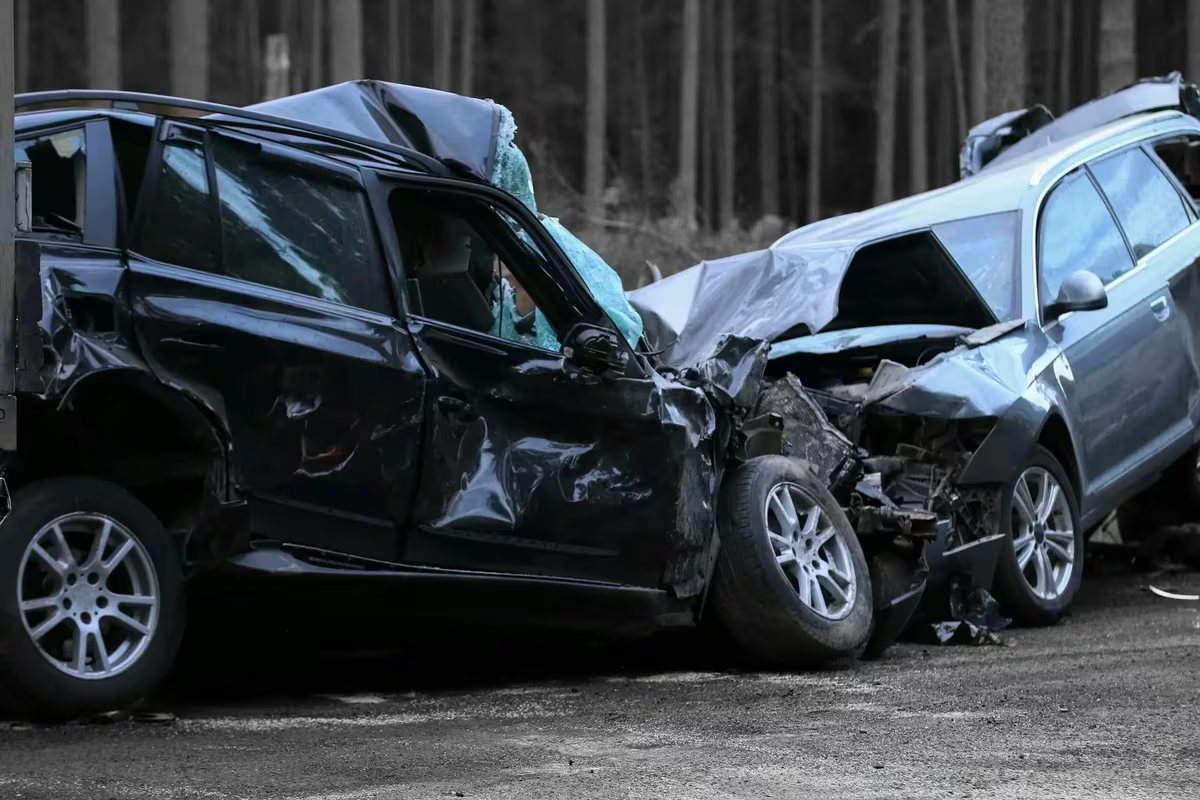 Car Accidents Rear-end, intersection, and highway collisions across Louisiana.
 -
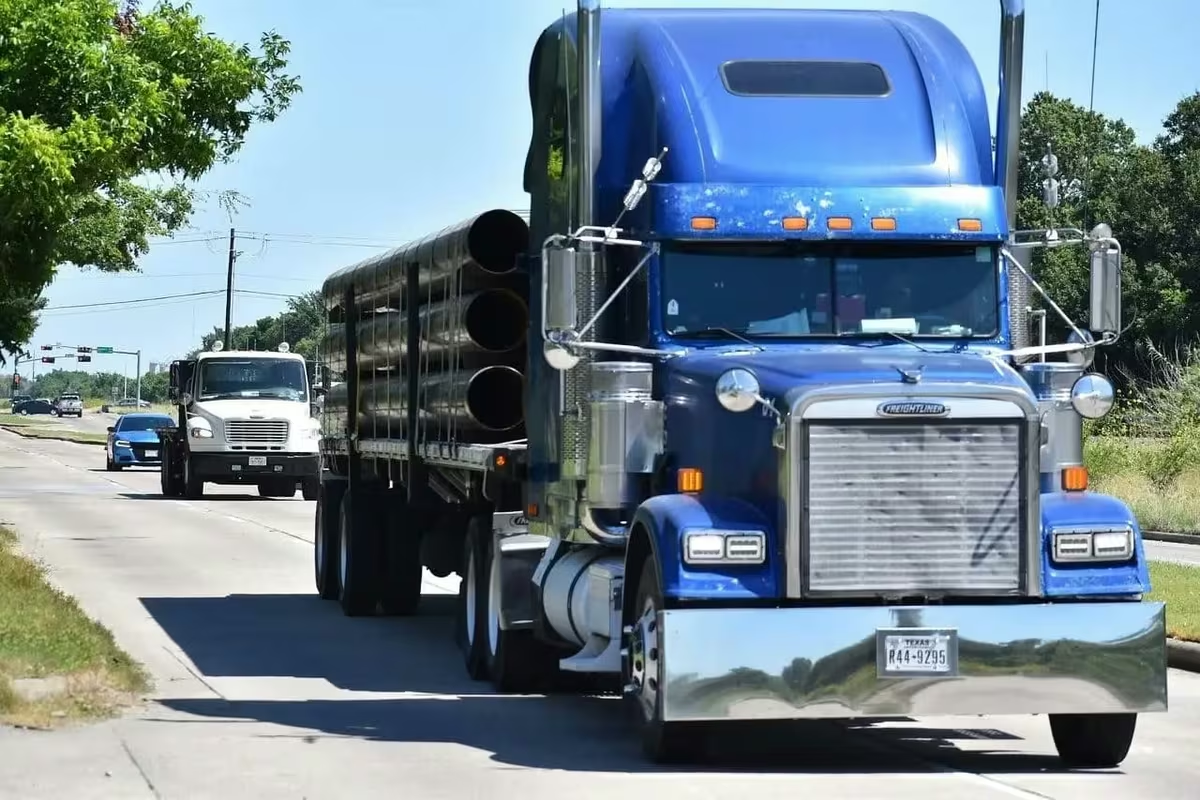 Truck Accidents 18-wheeler and commercial-vehicle wrecks governed by federal trucking rules.
 -
 Motorcycle Accidents Serious-injury motorcycle crashes where bias against riders is common.
 -
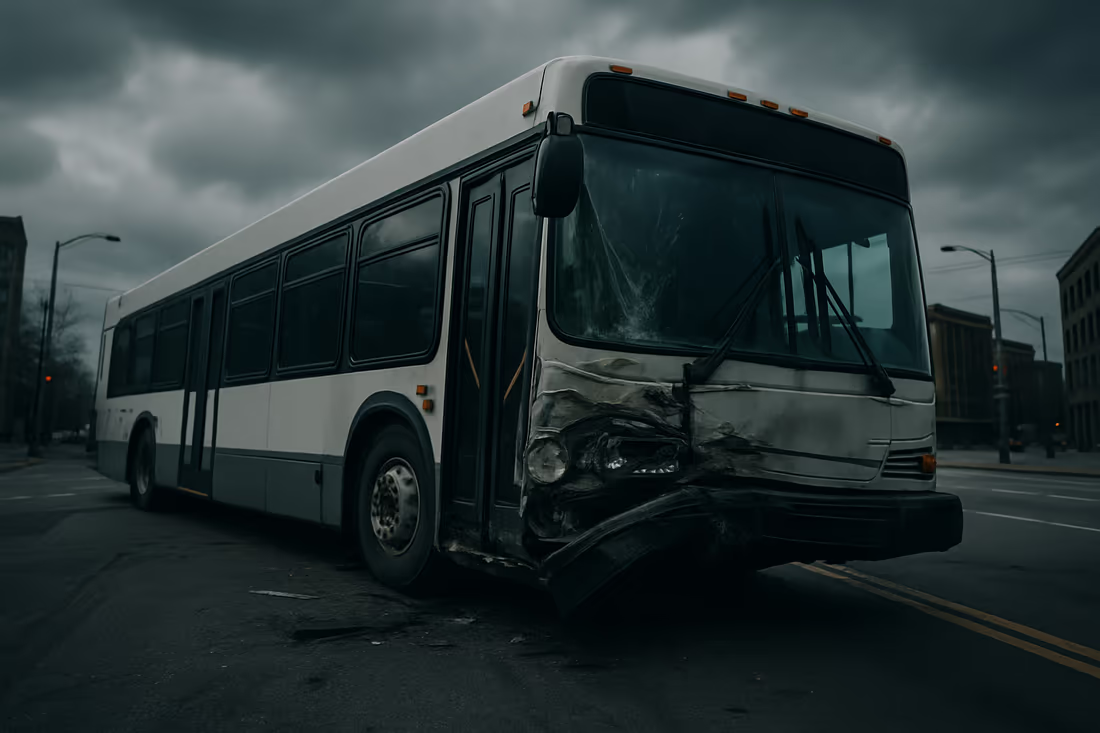 Bus Accidents Transit, school, and charter-bus crashes involving public and private carriers.
 -
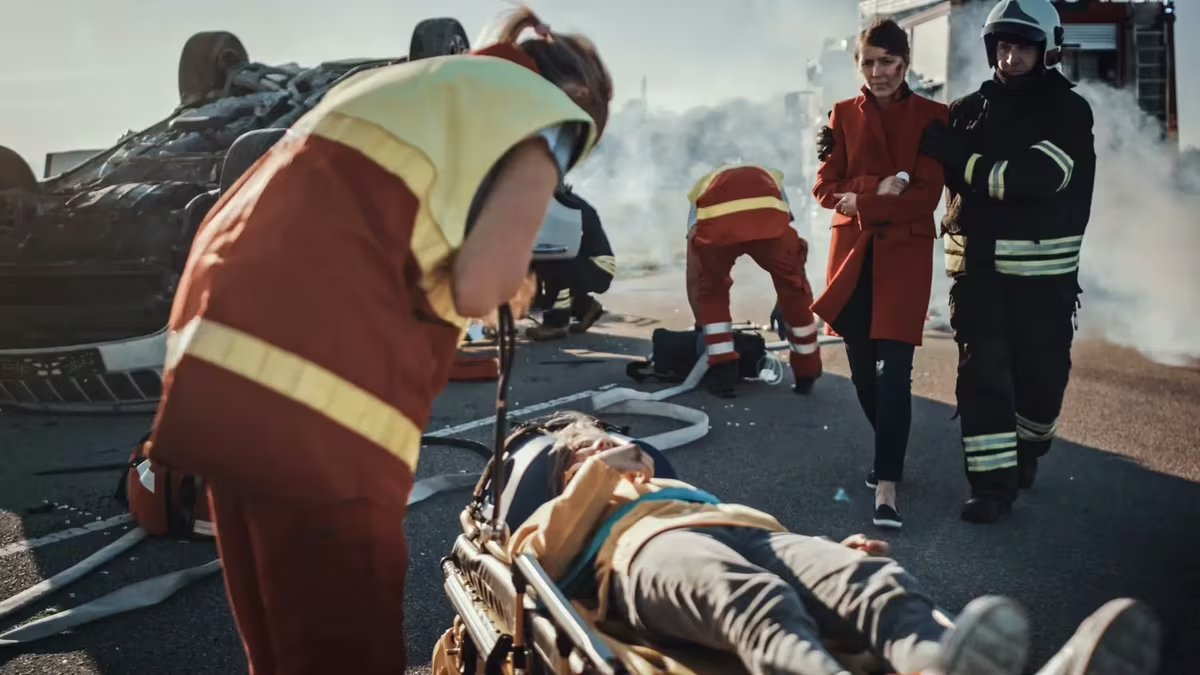 Catastrophic Injury Brain, spinal-cord, amputation, and severe-burn injuries that change a life.
 -
 Brain Injury Traumatic brain injuries with long-term cognitive and physical effects.
 -
 Burn Injury Severe burns from fires, explosions, chemicals, and electrical contact.
 -
 Wrongful Death Claims brought by families after a fatal accident or act of negligence.
 -
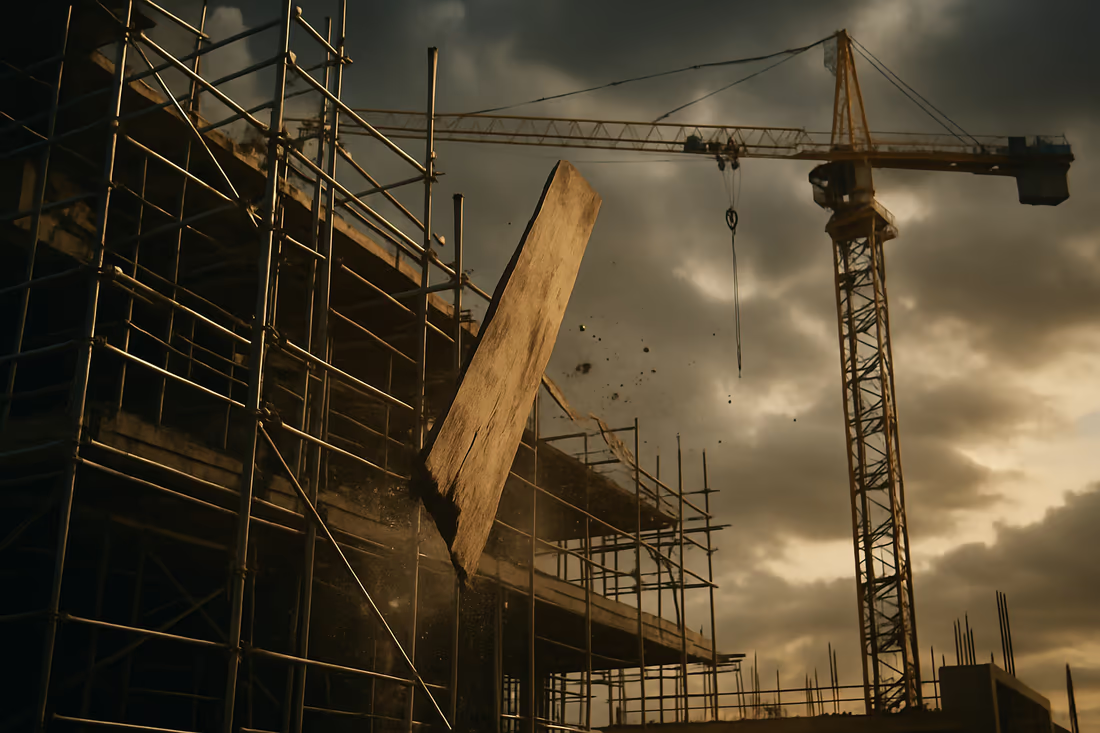 Construction Accidents Falls, struck-by, and equipment injuries on the job site.
 -
 Offshore Accidents Rig, platform, and vessel injuries beyond the shoreline.
 -
 Workers' Compensation On-the-job injuries and the benefits owed to injured workers.
How Much Is a Catastrophic Injury Claim Worth in Louisiana?
A catastrophic injury claim is worth the full cost of putting a life back together, which in these cases runs into decades of medical care, lost earnings, and human loss that no settlement check fully restores. There is no single number, and any lawyer who quotes one before reviewing your medical records and the defendant’s conduct is guessing. The value comes from adding up two categories of damages, economic and non-economic, then accounting for the conduct that caused the harm. What separates a catastrophic case from a routine injury claim is the sheer span of the future being calculated, often a lifetime.
Economic damages: lifetime medical costs, lost earning capacity, home modification
Economic damages are the measurable, dollar-for-dollar costs of the injury. In a catastrophic case these are dominated by future medical care: surgeries, rehabilitation, in-home nursing, durable medical equipment, and prescription costs projected across the person’s life expectancy. A spinal cord injury can require attendant care for forty years. That projection is built by a life care planner, not estimated from a stack of bills.
Lost earning capacity is the second large piece. The question is not only what wages were missed during treatment, but what the person could have earned over a full career had the injury never happened. A vocational expert and an economist translate that lost trajectory into present-day dollars. Home and vehicle modifications, wheelchair-accessible ramps, widened doorways, adapted controls, are also compensable as economic losses when the injury makes them necessary.
Non-economic damages: pain and suffering, loss of consortium, disfigurement
Non-economic damages compensate for harm that has no invoice: physical pain, mental anguish, loss of enjoyment of life, disfigurement, and the loss of consortium that a spouse or family member suffers when a loved one is permanently changed. These damages are real, and in catastrophic cases they are often the largest component of the award.
One context where Louisiana sets a specific statutory limit is medical malpractice. Under La. R.S. 40:1231.2, claims against qualified health care providers are subject to a total cap of $500,000 that combines economic and non-economic damages, exclusive of future medical care, which is paid as incurred through the Louisiana Patient Compensation Fund. Whether that statute applies to a given catastrophic injury depends on whether the defendant is a qualified health care provider and whether the harm arises from medical treatment.
Punitive damages and when they are available
Punitive damages, sometimes called exemplary damages, are a separate question from the economic and non-economic categories above, and whether they belong in a given case is a question of facts rather than of category. Whether such damages apply depends on the specific conduct and the specific statute cited for it.
The practical step is to have the facts examined early for any conduct that might support such a claim, because that examination can shape both the theory of the case and how it is documented.
How pre-existing conditions affect catastrophic injury value
A pre-existing condition does not bar a claim, though defense insurers often argue otherwise. The dispute in these cases is rarely whether the prior condition existed. It is how much of the current disability the accident caused. That line is drawn with treating physicians and medical records showing the person’s baseline before the injury.
Insurers routinely try to assign as much of the harm as possible to the pre-existing condition to shrink the claim’s value. Separating the aggravation caused by the accident from the prior baseline is the medical-causation question at the center of valuation.
Secondary claims for caregiver and emotional distress
A catastrophic injury rarely affects only the injured person. Louisiana recognizes loss of consortium claims, which allow a spouse, and in some circumstances children or parents, to seek compensation for the loss of companionship, services, and support caused by the injury. These are separate claims belonging to the family members themselves, not a portion of the injured person’s award.
In limited circumstances, a close family member who witnessed the injury-causing event may also have a claim for emotional distress. These secondary claims carry specific requirements about relationship and proximity to the event, and they are evaluated on the particular facts. The point for valuation is that the full worth of a catastrophic case can extend beyond the injured person to the household that now carries the consequences. A complete claim accounts for all of it.
How Does Louisiana’s Comparative Fault Law Affect Your Recovery?
The amount of fault assigned to an injured person directly changes the size of that person’s award. Louisiana ties the two together in one rule, La. C.C. art. 2323. Under that article, a court assigns a percentage of fault to every party whose conduct contributed to the injury, including the injured plaintiff, and the plaintiff’s damages are reduced by the plaintiff’s own percentage. For causes of action arising on or after January 1, 2026, the same article adds that a plaintiff found 51% or more at fault collects nothing, while a plaintiff at 50% or less still has damages reduced by the fault percentage and keeps the claim. Everything below applies that one rule.
How the rule reduces your award
The reduction in La. C.C. art. 2323 is arithmetic. If a claim is valued at $4 million and the injured person is assigned 20% of the fault, the award is reduced by that 20%, leaving $3.2 million. The math is straightforward. The contest is over the percentages, because in a catastrophic case where lifetime damages run into the millions, each point of assigned fault is a large dollar figure.
The date the cause of action arises controls which version of La. C.C. art. 2323 applies, so the timing of the underlying accident is a threshold question. For a cause of action arising on or after January 1, 2026, the 51% bar is part of the same article, which means the apportionment of fault decides not only how much an award shrinks but whether it survives at all.
Can I still collect if I was partially at fault in Louisiana?
Yes, if the assigned share of fault is 50% or less for a cause of action arising on or after January 1, 2026. La. C.C. art. 2323 treats partial fault as a reduction of the award, not an erasure of it. A plaintiff judged 30% responsible keeps 70% of the proven damages. In a catastrophic case, that remaining share frequently covers the bulk of lifetime medical care and lost earning capacity.
The practical work, then, is keeping the assigned percentage low, because La. C.C. art. 2323 turns each point of fault into a reduction. Across a multimillion-dollar claim, a single percentage point is a large dollar figure, and once the cause of action arises on or after January 1, 2026, a percentage that climbs past 50% ends the claim entirely. Documentation gathered early, before memories fade and evidence disappears, is what supports a lower allocation.
How the same rule applies against multiple defendants
Catastrophic injuries rarely trace to a single careless act. A truck wreck on a Bossier Parish highway can involve more than one responsible party. La. C.C. art. 2323 assigns a percentage of fault to every party whose conduct contributed to the injury, so the apportionment is not just the plaintiff against one defendant but a division across several parties under the same article.
That structure can work in the injured person’s favor. When fault is divided among multiple defendants, the same allocation under La. C.C. art. 2323 that can reduce a plaintiff’s award is the tool that documents how much each defendant should bear, while keeping the plaintiff’s own percentage as low as the evidence allows. Showing how each defendant’s conduct contributed to the harm takes accident reconstruction, records, and testimony assembled into one coherent account of fault.
What Is the Statute of Limitations for Catastrophic Injuries in Louisiana?
The deadline to file a catastrophic injury lawsuit in Louisiana turns on one fact, the date the injury happened. Under La. C.C. art. 3493.1 and La. C.C. art. 3492, injuries sustained on or after July 1, 2024 carry a two-year prescriptive period, injuries before that date are governed by the older one-year period, and product liability claims retain the one-year period. Louisiana calls this deadline prescription, and it functions the way a statute of limitations does in other states. Once it runs, the claim is gone.
The One-Year Prescriptive Period for Injuries Before July 1, 2024
For catastrophic injuries that occurred before July 1, 2024, the one-year period applies under La. C.C. art. 3492, running from the day the injury or damage was sustained. A serious wreck, a fall, or a workplace incident from 2023 falls under that older rule. One year is short. Catastrophic cases involve months of acute treatment, surgeries, and uncertainty about long-term prognosis, and the clock keeps running through all of it.
One detail extends that shorter clock past the dividing line below. Product liability claims retain the one-year deadline, so a defective-product case follows the one-year period even when the injury is recent. That makes the legal theory, not just the calendar date, part of the deadline calculation.
The Two-Year Deadline for Injuries On or After July 1, 2024
For delictual actions arising on or after July 1, 2024, the prescriptive period is two years under La. C.C. art. 3493.1. A catastrophic injury from a Bossier City truck collision in late 2024 or 2025 carries that longer window. The extra year matters in serious cases, where building a claim for a spinal cord injury or a traumatic brain injury takes medical records, expert review, life care planning, and damages analysis.
Both deadlines come from the same statutory scheme, and the injury date decides which one controls. The cutoff is always the injury date, not the date you hire a lawyer, which makes pinning down both the date of injury and the legal theory the first task at the initial meeting.
Exceptions: Discovery Principle, Minors, and Government Defendants
A handful of circumstances change the standard timeline, and a catastrophic injury can implicate more than one. When an injury or its cause is not immediately knowable, Louisiana courts apply a discovery principle (contra non valentem) that can delay the start of prescription until the injured person knew or should have known of the harm and its cause. This matters in cases involving latent conditions or injuries whose connection to a defendant’s conduct is not obvious at first.
Claims involving minors follow different timing rules than those for adults, which is significant when a child suffers a catastrophic injury. Government defendants add their own layer. Claims against public entities often carry notice requirements and procedural steps that operate independently of the general prescriptive period. A claim that involves a state agency, a parish body, or a federal actor needs those deadlines identified early, because missing a notice step can defeat a claim even when the prescriptive period has not run. Because these exceptions are fact-specific and easy to misjudge, confirming which one applies belongs in the initial case evaluation, not after.
Why Missing the Deadline Results in Claim Denial
When prescription runs, the right to sue is extinguished. A defendant facing an untimely suit raises prescription as a defense, and a court that finds the deadline passed will dismiss the case regardless of how serious the injury is or how clear the other side’s fault. There is no separate inquiry into the merits once the claim is time-barred. That is why the injury date drives everything else. Identifying whether the one-year or two-year period applies, screening for an exception, and accounting for any government-defendant notice rule are the first steps in a catastrophic claim, well before the larger work of proving liability and damages begins.
Past results do not guarantee future outcomes; each case is decided on its own facts. See our full case results.
What Louisiana Laws Govern Catastrophic Injury Claims?
Catastrophic injury claims in Bossier City run on the same statutory framework that governs every Louisiana personal injury case, but the high stakes make each rule matter more. The governing law starts with the Civil Code article that creates fault liability, then runs through procedural questions like which parish hears the case and what happens when a government body is involved. Knowing which rules apply tells you what a claim is built on and where it can break down.
Louisiana Civil Code art. 2315: the foundation of tort liability
Every fault-based injury claim in Louisiana traces back to La. C.C. art. 2315. The article states the core rule plainly: every act of a person that causes damage to another obligates that person to repair it. That single sentence is the legal foundation for negligence claims arising from truck collisions, construction accidents, and most other catastrophic events in Bossier Parish.
Article 2315 is where the analysis begins for nearly every catastrophic case, so it is worth understanding what it requires and what it leaves to other rules. The article fixes the basic duty to repair damage caused by fault, but it does not by itself answer who pays, how much, or under what added theories a particular defendant can be reached.
Venue: which parish courthouse hears the case
Venue decides which parish courthouse a case is filed in, a question that comes up often when a crash near the Red River could connect to more than one parish. The choice is not cosmetic. Different parishes draw from different jury pools and assign cases to different benches, so when more than one parish is a proper venue the decision becomes a strategic one.
Resolving venue between Bossier and Caddo Parish when both are proper venues is a strategic call tied to the facts of the case rather than a default answer, and it is one a trial lawyer can explain in plain terms before filing.
When a government body may be the responsible party
When a defective road, a failed traffic signal, or a hazardous shoulder contributes to a catastrophic crash, the responsible party may be a public entity rather than a private defendant. Claims against public bodies follow a different procedural path, including notice and filing steps that do not apply to ordinary claims against private parties.
A claim tied to a federal contractor or an incident on federal property near Barksdale Air Force Base adds another layer, because federal rules can control whether and how the entity may be sued. Identifying a government defendant early changes the route the case takes.
Is there a cap on pain and suffering damages in Louisiana?
The general-damages question is one of the first things a catastrophic injury claimant wants answered, because pain and suffering often makes up a large share of the value in a severe case. The honest answer depends on who caused the harm and under what theory the claim is brought.
Medical malpractice is the major area where Louisiana applies a separate statutory damages scheme that works very differently from a claim against a trucking company or a manufacturer. That distinction matters at the outset because it changes how a claim is valued from day one.
How Do Catastrophic Injury Cases Proceed in the 26th Judicial District Court?
A catastrophic injury suit arising in Bossier City is typically handled in the 26th Judicial District Court, the trial court that local practitioners work in for Bossier Parish matters. Where a case is handled shapes the jury pool, the local procedures you follow, and the defense lawyers and adjusters you will deal with for the life of the case. The procedural path below is the same one any plaintiff follows, scaled up by the medical and economic complexity that catastrophic claims carry.
Why Local Court Familiarity Matters
Local practitioners associate serious Bossier City injury matters with this court, so for most Bossier City accidents this is the courthouse a plaintiff and the lawyers expect to be working in. That makes a lawyer’s day-to-day familiarity with the forum a practical concern rather than a technicality.
A lawyer who tries cases here understands how this community tends to evaluate serious injuries and large damages claims, which informs trial strategy from the first filing.
How the Court Handles High-Value Claims
Catastrophic claims are high-value claims by definition. They involve lifetime medical needs, lost earning capacity, and damages figures that the defense will contest at every stage. The trial court is the forum where those questions get litigated through discovery, motion practice, expert depositions, and trial if no settlement is reached.
The court manages the pretrial schedule, rules on motions that can narrow or expand the issues, and sets the case for trial. In a high-value matter, defense counsel often files motions aimed at limiting expert testimony on future medical costs or earning capacity. How those motions are decided can move the value of a case substantially, which is why pretrial work in this court is not a formality.
Navigating Local Judges and Insurance Defense Tactics
Insurance carriers defending a serious injury claim here tend to assign experienced regional defense firms and apply familiar tactics: disputing the severity of the injury, attacking causation, and pointing to any pre-existing condition or alleged fault on the plaintiff’s part. They also watch how individual judges handle evidentiary disputes and damages questions.
A plaintiff’s lawyer who appears regularly in this court knows the local procedures, the docket rhythm, and how the bench tends to approach the issues that recur in catastrophic cases. That familiarity does not change the law, but it shapes how a case is presented and argued.
Venue: Bossier City and Neighboring Caddo Parish
Bossier City sits across the Red River from Shreveport, which lies in Caddo Parish and is served by a different district court. A single accident can sometimes have connections to more than one area, and the question of where a suit belongs is one that a lawyer evaluates early, before filing.
That choice carries real consequences. Neighboring parishes draw different jury pools and have different benches, so where a case is handled is a strategic decision rather than an afterthought. When an accident has ties to both areas, working through where to file is part of building the case.
Your Bossier City Injury Attorneys
Founding partners Trey Morris and Justin Dewett lead every Bossier City injury case Morris & Dewett takes.


How Does a Bossier City Catastrophic Injury Lawyer Build Your Case?
A catastrophic injury case is built backward from the size of the loss. When an injury costs millions across a lifetime, the defense knows it and the insurer prepares accordingly. The work that decides these cases happens in the first weeks after the injury and continues through expert development that can take a year or more.
Immediate Steps: Evidence Preservation, Black Box Retrieval, Medical Liens
Evidence disappears fast. A commercial truck’s electronic control module stores speed, braking, and throttle data, but carriers can overwrite it on a normal maintenance cycle. A spoliation letter goes out early, putting the at-fault party and its insurer on formal notice to preserve the vehicle, the data, driver logs, and maintenance records.
Scene evidence matters just as much. Skid marks fade, surveillance footage gets recycled on a 30-day loop, and witnesses move. Early investigation captures photographs, downloads any black box or dashcam data, and locks down third-party video before it is gone. On the medical side, hospitals and providers often assert liens against any future award. A lawyer who tracks and negotiates those liens protects the portion of the award that actually reaches the injured person, rather than letting providers claim it after settlement.
Retaining Life Care Planners and Vocational Rehabilitation Experts
Catastrophic injuries are priced over a lifetime, not over a hospital stay. A certified life care planner builds a written, year-by-year projection of future needs: surgeries, medication, physical therapy, durable medical equipment, attendant care, and home health services. This document becomes the spine of the future-medical claim. Without it, a defense expert fills the vacuum with a far lower estimate.
A vocational rehabilitation expert addresses what the injury did to the person’s ability to work. They assess pre-injury earning capacity, the jobs the person can no longer perform, and whether retraining is realistic given the disability. For someone who can never return to physical labor, that analysis quantifies the wage loss that stretches to retirement age.
Accident Reconstruction and Biomechanical Engineering Experts
Liability in a serious crash often turns on physics the jury cannot see. An accident reconstructionist uses the black box data, scene measurements, vehicle damage, and roadway geometry to rebuild how the collision happened and who could have avoided it. In a truck case, that analysis ties speed and stopping distance to the carrier’s conduct.
A biomechanical engineer answers a different question: did this event cause this injury. Defense lawyers in spinal cord and brain injury cases routinely argue the forces involved were too minor to cause the claimed harm, or that the injury pre-existed the crash. A biomechanical expert connects the mechanism of injury to the medical diagnosis, closing the gap the defense tries to open. The two disciplines work together, reconstruction establishing how, biomechanics establishing what the body absorbed.
Calculating Lifetime Damages with Economic Experts
Once the life care plan and vocational findings are in place, a forensic economist converts them into present-day dollars. Future medical costs and lost earning capacity are projected across the person’s life expectancy, then discounted to present value and adjusted for medical inflation. This produces a defensible number a jury can adopt rather than a round figure the defense can dismiss.
The economic analysis also captures losses that go unnoticed without it: lost retirement contributions, lost household services the injured person can no longer provide, and the cost of modifying a home or vehicle for a wheelchair. Louisiana law obligates the responsible party to repair the damage they caused under Civil Code article 2315, and economic experts translate that obligation into a number grounded in records and methodology rather than guesswork.
Negotiating with Insurers and Knowing When to Take a Case to Trial
With liability proven and damages quantified, the demand goes to the insurer backed by the full expert file. Carriers settle when they believe the case is trial-ready and the verdict risk is real. A demand supported by a life care plan, an economist’s report, and a reconstruction opinion carries weight that a bare settlement letter never will. The negotiation reflects the preparation behind it.
The decision to settle or try the case belongs to the client, informed by counsel. An attorney who prepares every catastrophic case for trial from the first day negotiates from strength, because the insurer knows the file can go to a jury. A firm that only settles signals to insurers that it will accept less, and the carriers price that into every offer. Building the case to win at trial is what makes a fair settlement possible.
Why Hire a Bossier City Catastrophic Injury Attorney Instead of a General PI Firm?
A catastrophic injury case requires a different approach than a soft tissue claim that settles in six months. The medical record runs thousands of pages. The future damages stretch across a lifetime.
The defense hires its own experts and litigates hard because the numbers are large. A general personal injury practice that handles a high volume of routine claims is built for speed and turnover, not for carrying a single case through years of expert development and trial.
A record of taking catastrophic cases to verdict, and what building them required, separates a firm equipped for this work from one that is not.
Resource Requirements: Catastrophic Cases Require Six-Figure Litigation Budgets
Catastrophic cases cost real money to build before a single dollar comes back. Life care planners, accident reconstructionists, treating-physician depositions, economic experts, exhibit preparation, and trial logistics commonly run well into six figures on a single file. A firm that cannot front those costs is forced to settle early and low because it cannot afford to develop the case fully.
A firm without the capital to advance litigation costs cannot carry a catastrophic claim to its full value when the defense tries to outspend it.
Expert Witness Depth: Life Care Planners, Neurologists, Economists
The value of a catastrophic injury claim is proven through experts, not adjectives. A life care planner projects the cost of future surgeries, attendant care, medical equipment, and home health services across the client’s life expectancy. A treating neurologist or neurosurgeon documents the permanence of a brain or spinal injury. A forensic economist reduces those lifetime costs and lost earning capacity to present value the jury can award.
A firm that handles these cases regularly already knows which experts hold up under cross-examination and which fold. The depth of that bench is the difference between a damages model a jury believes and one the defense dismantles.
Trial Record in Bossier and Caddo Parish Courts
Insurance carriers track which firms try cases and which always settle. A firm with a credible record of taking catastrophic claims to verdict in Bossier and Caddo Parish courtrooms carries leverage into every negotiation, because the carrier knows the alternative to a fair settlement is a jury. A firm that has never tried this kind of case has no such credibility, and adjusters price that into their offers.
You can review our case results to see the range of matters the firm has handled.
Understanding Local Insurance Carrier Tendencies
Every region has its own pattern of how carriers and defense counsel evaluate and defend large claims. An attorney who practices in Bossier Parish regularly knows which adjusters move quickly on serious injuries, which defense firms the carriers retain for high-value files, and how local juries tend to view damages in catastrophic cases. That knowledge shapes whether a case is pushed toward trial or resolved in negotiation, and when.
A firm parachuting in from elsewhere starts without that local read. Practical knowledge of the local landscape affects timing, settlement posture, and ultimately what a claim is worth.
Contingency Fee Structure with Zero Upfront Costs
Catastrophic injury representation is handled on a contingency fee, which means the attorney’s fee is a percentage of the compensation obtained and is paid only if the case results in a settlement or judgment. There are no upfront legal fees to begin the case. The firm advances the litigation costs, including expert fees and court expenses, and is reimbursed from the proceeds when the case resolves.
Confirm the percentage, whether costs are deducted before or after the fee is calculated, and what happens to advanced costs if the case does not succeed. A clear written contingency agreement lets a family pursue a serious claim without paying out of pocket while the case is built, which matters most when an injury has already disrupted a household’s income.
Bossier City Catastrophic Injury Lawyer Reviews and Case Results
The honest way to evaluate any catastrophic injury attorney is to look at how they have handled cases like yours, what former clients say, and whether independent bodies have vetted their work. Those three signals tell you more than any slogan.
Representative verdicts and settlements by case type
Catastrophic injury outcomes vary by the mechanism of injury, the strength of the liability evidence, and the defendant’s resources. A spinal cord case with permanent paralysis carries different lifetime costs than a severe burn case or a traumatic brain injury, so results are most useful when they are grouped by case type rather than reduced to a single headline number.
You can review the range of matters this firm has handled on our case results.
Client testimonials
Reviews from former clients tell you how a firm communicates during a multi-year case. Catastrophic claims often take years to resolve because the full extent of future medical need has to be documented before any settlement makes sense.
A review that names the type of injury, describes how the firm explained the comparative fault analysis, or notes how the attorney handled an insurer’s lowball offer carries more weight than a generic five-star comment.
Peer recognition: board certifications, Super Lawyers, and trial-lawyer membership
Independent recognition is the third signal, and it is the one a firm cannot manufacture. Verify any credential at its source. Super Lawyers publishes its selection methodology and a searchable directory, so you can confirm whether an attorney appears on the current list. Martindale-Hubbell maintains the AV Preeminent peer rating, which reflects evaluations from other attorneys and the judiciary.
Louisiana does not recognize a board certification in personal injury or catastrophic injury. Verifiable signals include membership in trial-lawyer organizations, years in practice, and standing with the Louisiana State Bar.
What clients say
- ★★★★★
I hired Morris and Dewett back in November of 2025.
They helped me get through my hard times of being off work, stress, and worry. Anytime I had a question I could call and they always had an answer. Very nice and professtional people. Thank you Morris and Dewett for making this an easy process for me and my family.
- ★★★★★
Morris and Dewett and their team of attorneys and staff go above and beyond.
They always were there to support me and answer all my questions after a shoulder injury that included multiple surgeries. They are caring and compassionate and that goes a long way! Highly recommended!
- ★★★★★
Thanks Morris and Dewett for the excellent work you have done on my behalf.
I want to personally thank Sarah for her kindness.
- ★★★★★
Morris & Dewett does things the right way!
They put their clients first in measurable and impactful ways.
- ★★★★★
First time being injured and needing a lawyer they where very helpful.
They answered my questions Id have very well. Highly recommend them.
- ★★★★★
Wonderful experience with Morris and DeWitt, everyone was articulate and punctual, and open to all my questions about the process.
My case couldn't have been handled by a better team! Caity Nerren, Jessica Christian, and Meghan Nolen were all fantastic and helped every step of the way. Thanks again for all of your hard work.
Reviews reflect individual client experiences. Past results do not guarantee future outcomes.
Get a Free Consultation with Our Bossier City Catastrophic Injury Attorneys
A first conversation with a lawyer costs nothing and obligates you to nothing. It exists so you can ask questions, understand where your case stands, and decide whether this firm is the right fit. The consultation is built to help you make that decision, not to push you into one.
What to Bring to Your First Consultation
Bring whatever you already have. A catastrophic injury case rarely starts with a complete file, and missing documents do not disqualify a claim. The most useful items are the police or incident report, names and contact information for anyone involved, and any photographs from the scene. Medical records, hospital discharge papers, and bills help establish the scope of the injury. If insurance adjusters have already called, bring their names, the claim numbers, and copies of anything they sent in writing.
Equally useful is a plain account of what happened and what has changed since. Note the dates of medical appointments, the names of treating physicians, and any work you have missed. If a family member is helping a seriously injured loved one, that family member can attend in their place and bring the same materials. Nothing needs to be organized or formatted. The intake conversation sorts it out.
How Our Contingency Fee Agreement Works
A catastrophic injury claim is handled on a contingency fee basis, which means there is no upfront charge and no hourly billing. The fee is a percentage of the eventual compensation, agreed in writing before any work begins. If the claim does not result in a settlement or award, there is no attorney fee.
This structure matters most in catastrophic cases, which require substantial investment in accident reconstruction, medical experts, life care planners, and economists. Those costs are advanced by the firm and accounted for at resolution rather than paid out of pocket as the case proceeds. The written agreement spells out the percentage and how case expenses are treated, so the financial terms are clear before you commit. You can read the agreement, ask questions about every line, and take it home before signing.
Contact Us: Phone, Address, and Service Area
Morris and Dewett Injury Lawyers was founded in 2001 in Shreveport, Louisiana, and represents catastrophically injured clients throughout Bossier City, Bossier Parish, and the surrounding region. Catastrophic injury claims filed in Bossier and Webster Parishes are heard in the 26th Judicial District Court, and the firm handles matters across the Shreveport-Bossier area and statewide. The firm maintains five Louisiana offices, with its headquarters in Shreveport and additional locations in Covington, Minden, Ruston, and Lake Charles.
You can reach the firm to schedule a free consultation by phone or through the contact Morris and Dewett page, where the intake team will arrange a time that works for you. If travel is difficult after a serious injury, the firm can arrange to meet at a hospital, a rehabilitation facility, or your home. To see the kinds of matters the firm has handled, view our case results. The decision to call is yours. When you are ready, the conversation is available.
Frequently Asked Questions
- What if the at-fault party has minimal insurance coverage?
- A low policy limit does not always end the inquiry. The first step is identifying every source of coverage, not just the at-fault driver's liability policy. Catastrophic cases routinely involve more than one insurer. Your own uninsured and underinsured motorist coverage may apply when the at-fault party carries little or no insurance. Louisiana drivers can carry UM coverage, and it stacks in ways many people do not realize until a lawyer reviews their declarations page. A commercial vehicle, an employer's policy, or an umbrella policy can also expand the money available. When coverage is genuinely thin and no other defendant or policy exists, the practical reality is that a judgment can exceed what a defendant can pay. That is one reason the early investigation looks hard at whether a deeper-pocketed party shares fault.
- How long does a catastrophic injury lawsuit take in Bossier Parish?
- There is no fixed timeline, but catastrophic cases generally take longer than minor injury claims, often a year or more, and sometimes several years when the case proceeds toward trial. The reason is medical, not procedural. A catastrophic injury claim should not settle until the full scope of future care and lost earning capacity is understood, and that picture can take many months to develop. Several factors stretch or compress the schedule. The number of defendants matters, because each one gets to conduct discovery. Disputes over fault add time. So does the need for expert evaluations, life care planning, and economic analysis. A case that resolves through negotiation moves faster than one that requires a trial date in court. Rushing toward a fast settlement on a permanent injury is usually a mistake. Once you sign a release, the claim is closed even if your condition worsens. The careful timeline protects the long-term value of the claim.
- Can family members recover damages for a loved one's catastrophic injury?
- Yes, in defined circumstances. Louisiana recognizes a loss of consortium claim, which allows certain family members to seek damages for the loss of companionship, support, society, and services caused by an injury to their relative. A spouse, children, and in some cases parents may hold this claim depending on the family relationship. Loss of consortium is a separate claim that belongs to the family member, not to the injured person. It is valued on its own and reflects how the injury changed the relationship and the household. When a parent can no longer participate in a child's life the way they once did, or a spouse takes on full-time caregiving, those losses are real and compensable. This is distinct from a wrongful death claim, which arises only when the injury proves fatal. For a survivor whose loved one lived but was permanently changed, the loss of consortium claim is the vehicle for the family's own damages.
- What if my injury happened on federal property near Barksdale AFB?
- An injury on federal property changes which rules and which defendant apply, and it changes them in ways that demand early attention. Claims against the United States generally proceed under the Federal Tort Claims Act rather than ordinary Louisiana tort procedure. That framework requires an administrative claim filed with the responsible federal agency before any lawsuit, and the deadlines and procedures differ from a standard state-court case. Not every injury near a federal installation is a claim against the government. A wreck on a public road, an incident involving a private contractor, or a defective product can leave a standard claim against a private defendant even when the location is close to base. Sorting out who controlled the property and who caused the harm is the threshold question. Because federal claims carry their own filing requirements and shorter administrative windows, an injury connected to federal property should be reviewed quickly.
- Can I sue if my family member was paralyzed in a Bossier City accident?
- When a family member survives an accident with paralysis, the injured person holds the primary claim for their own damages, and the law allows another adult to pursue that claim on their behalf if the injury left them unable to manage their own affairs. A person with a spinal cord injury who remains competent directs their own case; where capacity is impaired, a court can appoint someone to act for them. Family members may also hold their own loss of consortium claims, as described above, alongside the injured person's claim. A paralysis case typically involves both: the survivor's claim for lifetime medical care, lost earning capacity, and the harm itself, and the family's separate claim for what the injury took from the relationship. Paralysis cases are among the most resource-intensive a firm handles, precisely because the future care needs are lifelong and the stakes for getting the valuation right are permanent. Whether to bring suit, and who should be named as defendants, depends on how the accident happened and who controlled the cause.
Last updated June 28, 2026