

What Does a Bossier City Wrongful Death Lawyer Do for Your Family?
A wrongful death lawyer handles the legal claim that arises when someone dies because of another party’s conduct. The work splits into concrete tasks: reconstruct what happened, find every party that bears responsibility, value the family’s losses, deal with the insurers, and file suit in court if the parties cannot reach a fair resolution. The family carries the grief. The lawyer carries the file.
Investigating Cause of Death and Establishing Negligence
The first job is building the factual record of how the death happened. That means pulling the crash or incident report, photographing the scene before it changes, locating witnesses while memories are fresh, and preserving physical evidence such as a vehicle or equipment before anyone repairs or discards it. In a fatal motor-vehicle case, that often includes the data recorded by the vehicle and the records of the parties involved.
Establishing negligence is not the same as describing a tragedy. A lawyer connects the facts to a theory of fault: what the responsible party should have done, what they did instead, and how that failure caused the death.
Identifying All Liable Parties
Many fatal accidents involve more than one responsible party. A wrongful death lawyer maps the full set: a negligent driver, the employer who put that driver on the road, a contractor, a property owner, a product manufacturer, or a government entity that controlled the road or premises. Each party may carry separate insurance, and each layer of coverage matters when the losses are large.
Identifying every liable party early is what separates a thorough claim from a thin one. Claims against a government body and claims involving commercial defendants carry their own procedural requirements, which is one reason families benefit from counsel who looks past the obvious defendant.
Negotiating With Insurance Companies and Defense Counsel
Insurers assign adjusters and defense lawyers to fatal-accident claims, and their job is to limit what the company pays. A wrongful death lawyer handles that contact directly so the family is not negotiating against trained professionals while grieving. The lawyer presents the documented losses, responds to defense theories, and pushes back when an early offer undervalues the claim.
A recorded statement to an adjuster, or a signed release accepted too soon, can damage a claim before its full value is known. Counsel manages those communications and advises the family before anyone signs anything.
Filing Suit in Bossier Parish District Court When Necessary
When negotiation does not produce a fair result, the claim moves to court. Civil cases arising in Bossier Parish are filed in the local district court, and a wrongful death lawyer prepares and files the petition, manages discovery, retains the experts the case needs, and tries the case if it reaches a jury. Filing also protects the claim against the deadline that governs these actions.
Most cases resolve before a verdict, but the credible ability to try a case shapes what a defendant will offer to avoid one.
When to Contact an Attorney After a Fatal Accident
The practical answer is early, while evidence still exists and before any release is signed. Reports can be obtained, scenes can be documented, and vehicles or equipment can be preserved only if someone acts before they are gone. Insurers begin their own investigation immediately, and a family that waits often loses the chance to match it.
Speaking with a lawyer does not commit a family to a lawsuit. It produces an honest read on whether a claim exists, who may be responsible, and what the next steps are. Consultations for these matters are typically free.
Our Bossier City Office
1815 Benton Rd
Bossier City, LA 71111
Open 24/7 for injured Bossier City residents
Get directions →What Is a Wrongful Death Claim Under Louisiana Law?
A Louisiana wrongful death claim is a civil action that lets specific surviving family members claim compensation for the losses they personally sustain when someone else’s conduct kills a relative. Louisiana creates this action in La. C.C. art. 2315.2, and the Louisiana Legislature publishes the full text of the article. The claim belongs to the survivors, not to the person who died, and it measures what the family lost when the death occurred.
A wrongful death action is not a criminal prosecution. The State brings a criminal case to punish, while the family brings the civil claim to address what the death cost them. The death usually traces to the same kind of conduct that supports any injury claim: a driver who ran a light, a property owner who ignored a hazard, a manufacturer who sold a defective product. When that conduct causes a fatal injury rather than a survivable one, the right to sue passes to the family. A family does not need a criminal conviction to bring the civil claim, because the two proceedings run on separate tracks.
Fatal Negligence, Recklessness, and Intentional Misconduct
A fatal-injury claim can grow out of ordinary negligence, gross recklessness, or intentional acts. Ordinary negligence covers the everyday failures behind most fatal accidents, such as a distracted commercial driver or a careless property owner. Recklessness involves a conscious disregard for safety that goes beyond simple carelessness. Intentional misconduct covers deliberate harm.
The label matters because it shapes what the family must prove and, in some situations, what remedies the law makes available. Most fatal accident claims rest on negligence, which is a failure to act with the care a reasonable person would use. The same death can support more than one theory at once. A drunk driver who kills someone may have acted both negligently and with reckless disregard, and the petition can plead both.
Elements Required: Duty, Breach, Causation, and Damages
Every fatal accident claim built on negligence requires four things. The defendant owed the decedent a duty of reasonable care. The defendant breached that duty. The breach caused the death. And the survivors sustained real damages because of it. Miss any one element and the claim fails.
Duty asks what care the situation required, such as a motorist’s duty to drive safely or a hospital’s duty to meet the accepted standard of care. Breach is the failure to meet that duty. Causation links the breach to the death, both as a factual matter and as a matter of legal responsibility. Damages are the losses the survivors carry forward. A lawyer evaluating a fatal accident works through each element in order, because a strong showing on duty and breach still collapses without proof that the breach, and not some other cause, produced the death.
Wrongful Death vs. Survival Action: The Critical Louisiana Distinction
Louisiana treats a fatal-injury case as two separate causes of action rather than one. The wrongful death action compensates survivors for their own losses after the death. The survival action is different, and Louisiana governs it through La. C.C. art. 2315.1. It carries forward the claim the decedent could have brought had they lived, covering the harm the decedent personally endured before dying.
The two actions belong to the family but measure entirely different losses, and a complete case usually pleads both in one petition. The point here is foundational. A death triggers two distinct claims, not one.
What Is the Difference Between a Wrongful Death Claim and a Survival Action in Louisiana?
A fatal accident gives a Louisiana family two separate legal claims, not one. Both are created in favor of the same statutorily designated beneficiaries: the survival action under La. C.C. art. 2315.1 and the wrongful death action under La. C.C. art. 2315.2, each published by the Louisiana Legislature on its official site. The survival action carries forward the damages the person who died could have claimed had they lived. The wrongful death action covers the losses the surviving family members suffer because of the death. Both come from the same incident, both can be filed in one petition, and they compensate different harms.
The short version: the survival action looks backward at what the decedent endured before dying. The wrongful death action looks forward at what the family loses going ahead. Treating them as one claim leaves money unclaimed, because the two reach different categories of damage.
Survival Action Damages: The Decedent’s Own Pain and Suffering
The survival action under article 2315.1 carries forward the personal injury claim the decedent owned at the moment of death. It compensates what that person experienced between the injury and dying: physical pain, conscious mental anguish, and fear. If someone is severely hurt in a crash and survives for hours or days before passing, those hours of suffering are claimed through the survival action rather than the wrongful death action.
The strength of this claim turns on the evidence of conscious suffering. Medical records, witness accounts, and the interval between injury and death all matter. A death that follows prolonged hospitalization presents a different survival claim than one that is instantaneous, and the analysis is fact-specific to each case.
Medical Expenses Before Death
Medical bills incurred before death belong to the survival action under article 2315.1, not the wrongful death claim. These are costs the decedent became liable for while still alive: emergency transport, hospital care, surgery, intensive care, and treatment between the injury and death. Because the decedent owed those debts, the right to claim them is carried forward through the survival action to the same beneficiaries the article designates.
This is one reason the two claims should never be collapsed. Pre-death medical bills sit on the survival side because the decedent incurred them. Forward-looking family losses sit on the wrongful death side. Keeping the categories straight ensures every expense is claimed under the correct theory.
Who Recovers Under Each Claim
Both actions are created in favor of the same classes of statutory beneficiaries under articles 2315.1 and 2315.2. What differs is the nature of the loss each beneficiary asserts. In the survival action, the beneficiary stands in the decedent’s shoes and claims what the decedent could have claimed. In the wrongful death action, the same beneficiary claims a personal loss the death caused that individual.
A single family member can hold a claim under both actions at once, asserting the decedent’s pre-death suffering and their own forward-looking loss in the same suit.
Why the Distinction Affects Total Compensation and Filing Deadlines
The survival action under La. C.C. art. 2315.1, as published by the Louisiana Legislature on its official site, exists separately from the wrongful death action, and its prescriptive period must be tracked from the death. The right to assert the decedent’s pre-death claim has its own clock, so a family cannot assume that preserving one action preserves the other.
The distinction drives total compensation because each claim reaches damages the other cannot. Plead both, and the family captures the decedent’s conscious suffering and pre-death medical bills on the survival side, plus their own losses on the wrongful death side.
Who Can File a Wrongful Death Lawsuit in Louisiana?
One Louisiana statute answers this question and controls the entire answer. La. C.C. art. 2315.2 sets a ranked order of family members and works down that order one tier at a time. The closest surviving relatives hold the claim, and once a tier is occupied, no tier below it can file. Everything in this section is a reading of that single article, not a set of separate rules with separate authority.
The order inside that one article runs as follows. The surviving spouse and children sit at the top and share the claim. The article reaches the next tier only when no one in the tier above survives: parents come next, then siblings, then grandparents. Because a single article fixes the whole ranking, the practical question in any fatal accident case is which tier of that one order is occupied, since that tier supplies the named plaintiffs.
Class 1: Surviving Spouse and Children (Priority Claimants)
The first tier of La. C.C. art. 2315.2 is the surviving spouse and the children of the person who died, who share the claim. Their existence ends the inquiry, because the article never moves past an occupied tier. This is the common pattern in fatal car, truck, and workplace cases, where a husband or wife and the decedent’s children bring the claim together in one petition.
Class 2: Parents of the Deceased (No Surviving Spouse or Children)
The second tier of the same ranking is the surviving parents. They hold the claim only when the first tier is empty, meaning no spouse and no child survived. This is the reading of La. C.C. art. 2315.2 that lets a mother and father sue over the death of an unmarried, childless son or daughter.
Class 3: Siblings (If No Higher Class Exists)
The third tier of La. C.C. art. 2315.2 is brothers and sisters, and the same article reaches them only when every tier above is empty. The order runs spouse and children, then parents, then siblings, so a living parent keeps the claim, and so does a living spouse or child. Siblings therefore hold the claim only when no spouse, no child, and no parent survives. That follows directly from the article’s order, and it is a narrower opening than many families expect, turning on whether a parent was alive when the death occurred.
Class 4: Grandparents
Grandparents form the last tier of the same ranking. The article reaches them only when no tier above is occupied, which by the order means no spouse, no child, no parent, and no sibling survives. By the time La. C.C. art. 2315.2 runs all the way down to grandparents, every higher tier is empty. This reading applies when the person who died left behind only older-generation relatives.
What Happens When Multiple Family Members Have a Claim
Within a single occupied tier, more than one person can share the claim under La. C.C. art. 2315.2. A surviving spouse and several children, or two surviving parents, stand together in the same tier. They typically join in one petition, and each person pleads the losses tied to that individual’s own relationship to the decedent.
Because the article fills one tier and closes the tiers below it, reading the ranking correctly at the start matters. Doing so tells the family which tier the statute actually reaches and who the named plaintiffs will be. Anyone unsure where they fall under La. C.C. art. 2315.2 should confirm it before filing, since that single ranking decides who can sue and who cannot.
What We Handle
Bossier City Practice Areas
-
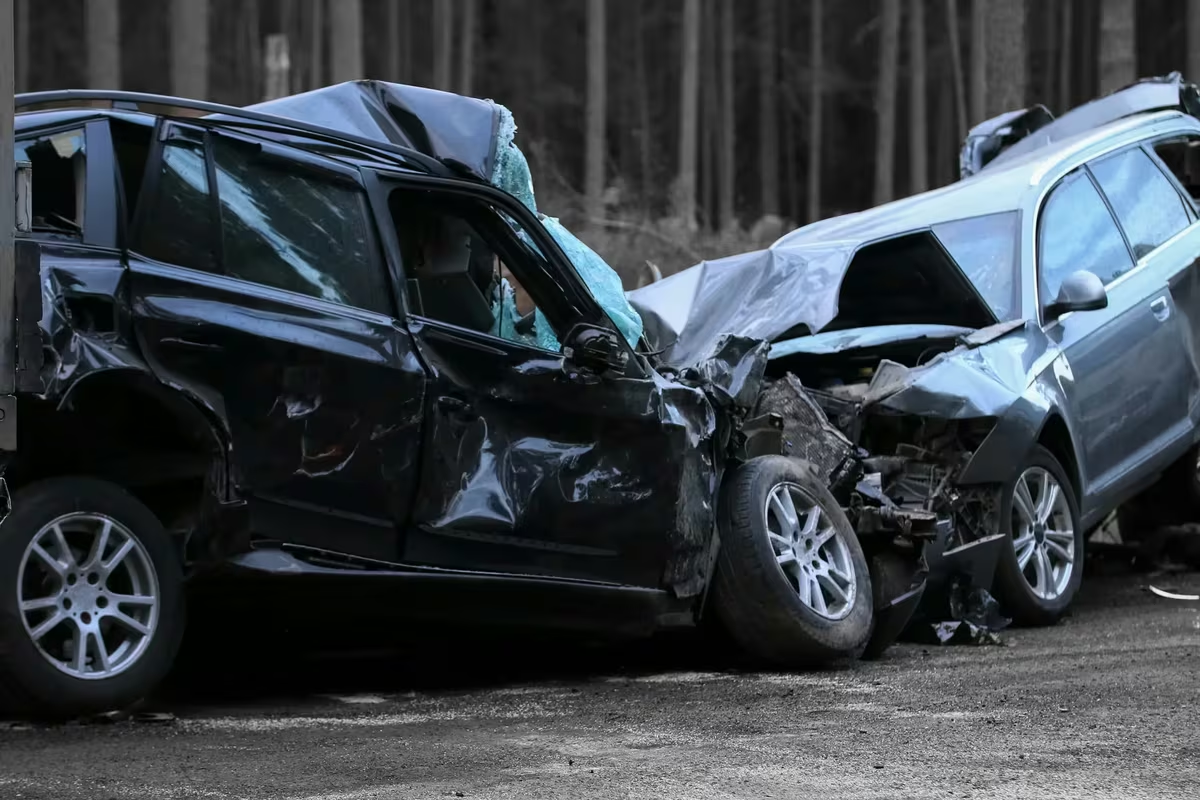 Car Accidents Rear-end, intersection, and highway collisions across Louisiana.
 -
 Truck Accidents 18-wheeler and commercial-vehicle wrecks governed by federal trucking rules.
 -
 Motorcycle Accidents Serious-injury motorcycle crashes where bias against riders is common.
 -
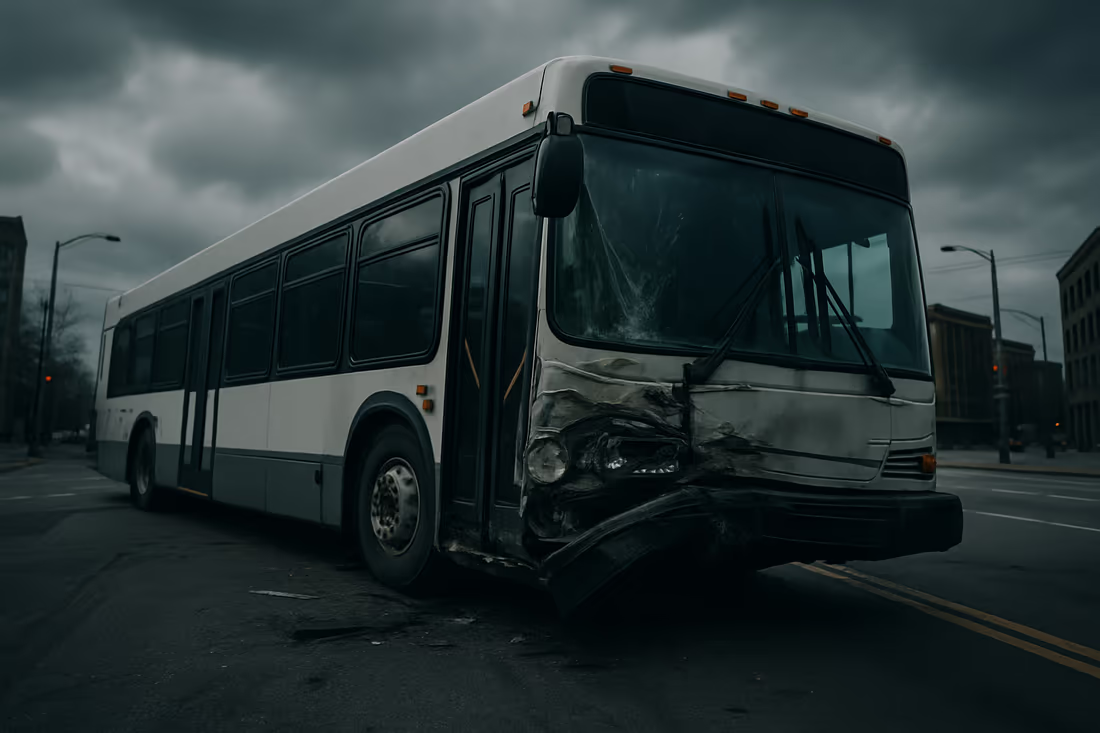 Bus Accidents Transit, school, and charter-bus crashes involving public and private carriers.
 -
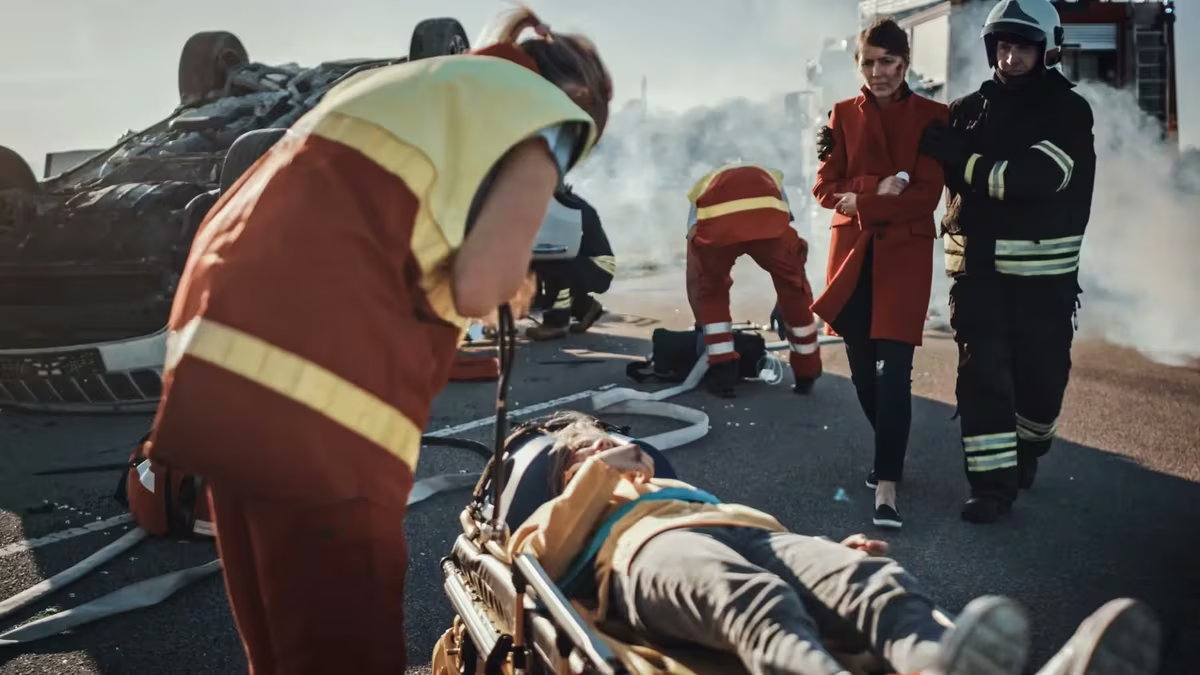 Catastrophic Injury Brain, spinal-cord, amputation, and severe-burn injuries that change a life.
 -
 Brain Injury Traumatic brain injuries with long-term cognitive and physical effects.
 -
 Burn Injury Severe burns from fires, explosions, chemicals, and electrical contact.
 -
 Wrongful Death Claims brought by families after a fatal accident or act of negligence.
 -
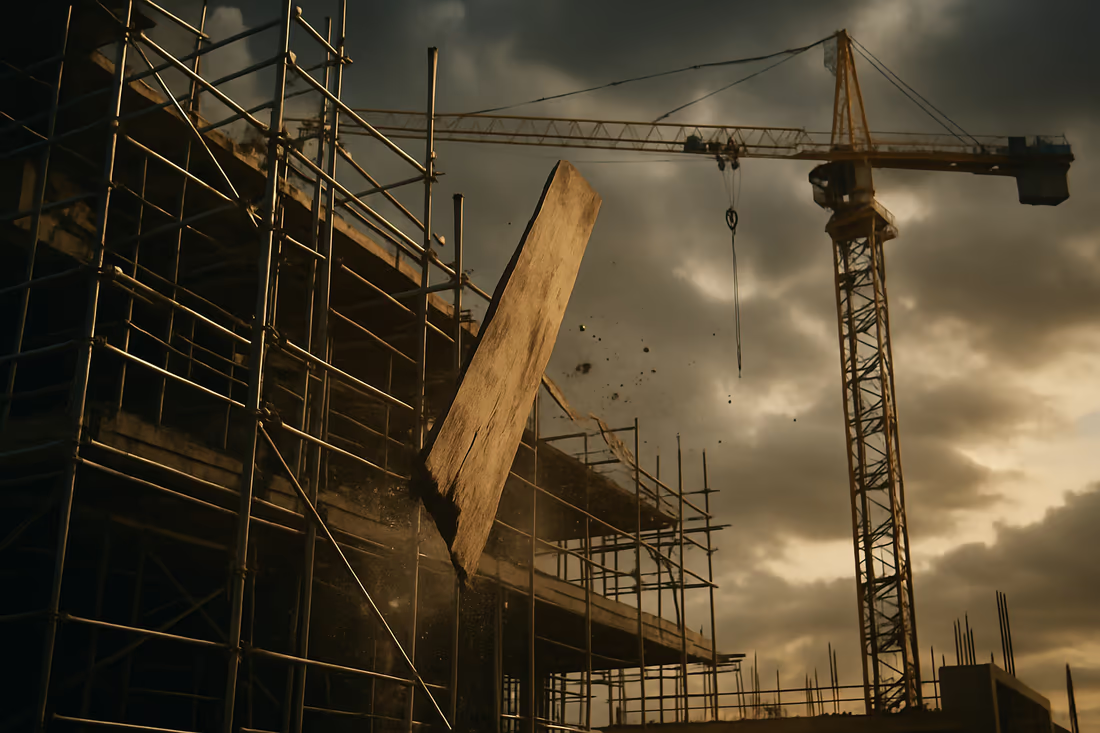 Construction Accidents Falls, struck-by, and equipment injuries on the job site.
 -
 Offshore Accidents Rig, platform, and vessel injuries beyond the shoreline.
 -
 Workers' Compensation On-the-job injuries and the benefits owed to injured workers.
What Is the Statute of Limitations for a Wrongful Death Claim in Bossier City?
A wrongful death claim in Louisiana runs on a prescriptive period, which is the state’s term for the deadline to file suit. Once that period runs, the claim is extinguished, and a court will dismiss it no matter how strong the underlying facts are. The deadline generally starts on the date of death rather than the date of the underlying accident, which matters when someone survives an injury for days or weeks before dying. Confirm the exact period that applies to your situation against the current Louisiana Civil Code and with an attorney before relying on any date.
Louisiana’s Prescriptive Period for Wrongful Death
Louisiana measures the wrongful death filing deadline from the day the death occurs. That is the trigger date a court looks to, and it is fixed by statute rather than set case by case. Because the period is calendar-based, the practical window to investigate, identify defendants, and prepare a petition is narrower than families often expect.
The length of the applicable period turns on the current text of the Louisiana Civil Code, and Louisiana’s general tort prescription rules have been the subject of recent legislative change. Which version of the rule applies can depend on when the death occurred relative to those changes. The controlling Civil Code article, applied to a death on a specific date, determines the period that governs.
If the deadline passes before a petition is filed, the defense will plead prescription, and the merits of the claim never get heard. That is why the date of death belongs at the top of any intake conversation.
Deadlines That May Differ for Government, Medical Malpractice, or Product Claims
Not every fatal-accident claim runs on the same clock. The general prescriptive period sets the baseline, but several categories carry their own procedural deadlines and pre-suit requirements that can shorten the practical window.
Claims against a government body, such as a parish, a municipality, or a state agency, frequently require a formal notice step before suit and can carry distinct timing rules. Medical malpractice deaths run through a separate statutory process that often requires submission to a medical review panel before a lawsuit can proceed, which changes how and when the filing happens. Claims involving a defective product can implicate additional rules tied to when the defect and the harm were discovered.
These overlays are reasons to confirm the controlling deadline early rather than to assume the default period applies.
Why Families Should Not Wait to Investigate a Fatal Accident
Evidence decays quickly after a fatal accident in Bossier City. Skid marks fade, vehicles get repaired or scrapped, surveillance footage is overwritten on a routine cycle, and witness memories blur within weeks. The prescriptive deadline sets the outer limit for filing, but the useful evidence often disappears long before that limit arrives.
Early investigation also protects the claim against defenses built on the passage of time. Preserving the scene, securing the crash or incident report, and putting potential defendants on notice to retain their records all happen more effectively in the first weeks than in the final month before a deadline. A claim filed at the last minute on thin evidence is a weaker claim than one built deliberately over months.
The deadline is the legal floor, not the planning target. Treating the date of death as the start of a working investigation, rather than the start of a countdown to be watched passively, is what keeps a wrongful death claim viable.
What Damages Can Families Recover in a Louisiana Wrongful Death Case?
Wrongful death damages in Louisiana belong to the surviving family members, not to the person who died. Under La. C.C. art. 2315.2, the listed beneficiaries claim the damages they themselves sustained because of the death. Each beneficiary’s claim is measured by that person’s own loss, so a surviving spouse and a minor child present distinct claims within the same petition. The categories that article sets out are the ones families ask about most: lost financial support, lost love and companionship, mental anguish, and funeral expenses.
Because the claim is personal to each survivor, two people in the same family can claim different amounts within these same statutory categories. A teenage child who depended on a parent’s income and daily guidance has a different claim than a sibling who lived across the country. Knowing how each category applies to a given family member shapes the whole case.
Loss of Financial Support and Future Earnings
When the person who died provided income to the household, the survivors can claim the support they lost under La. C.C. art. 2315.2. That includes wages, benefits, and the value of services the decedent performed for the family. An economist usually calculates the figure by projecting what the person would have earned over a normal working life, then reducing it to present value.
This category matters most when the decedent was a primary earner or contributed substantial in-kind support.
Loss of Love, Companionship, Guidance, and Affection
The loss of the relationship itself sits within the same La. C.C. art. 2315.2 categories the survivors claim. A spouse loses a partner. A child loses a parent’s guidance. A parent loses a son or daughter. These losses are real even though no invoice measures them.
This is where the personal nature of each claim shows clearly. The closeness of the relationship, the role the decedent played day to day, and the age of the survivors all affect the value. A young child losing a parent and an adult child who saw a parent twice a year hold different claims within this same category.
Grief, Anguish, and Mental Suffering
The emotional toll of losing a family member falls within the mental anguish category La. C.C. art. 2315.2 provides to survivors. This is distinct from the loss of the relationship. It reflects the survivor’s own emotional injury rather than the value of the bond that was lost.
Proof here often comes from the survivors themselves, from family members, and sometimes from treating mental health providers. The stronger the documentation of how the death affected a survivor’s life, the clearer this part of the claim becomes.
Funeral and Burial Expenses
Funeral costs fall within the funeral expense category La. C.C. art. 2315.2 lists for surviving beneficiaries. Families should keep every receipt and invoice tied to the funeral, burial or cremation, and related services. These are concrete numbers, and they belong in the damages calculation alongside the larger categories.
Track these costs from the start. Funeral and burial expenses are among the easiest damages to document, but only when the family preserves the paperwork. The four categories above are the ones La. C.C. art. 2315.2 sets out for surviving beneficiaries, and each one is measured by what the individual survivor lost.
How Much Is a Bossier City Wrongful Death Case Worth?
There is no fixed number for a wrongful death case. Value depends on who died, what the family lost, who is responsible, and how much insurance or assets are available to pay a judgment. Two cases with similar facts can settle for very different amounts because the people left behind had different relationships, different financial dependence, and different evidence. Honest case valuation starts with the facts of the loss, not a formula.
A useful way to think about value is to separate what can be measured in dollars from what cannot, then account for the practical limits on what a defendant can actually pay.
Economic Damages vs. Non-Economic Damages
Economic damages are the losses that have a price tag. They include the income and benefits the family would have received had the person lived, the value of services the deceased provided to the household, and out of pocket costs tied to the death. An economist often calculates lost future earnings using the person’s age, wages, work-life expectancy, and benefits.
Non-economic damages cover losses that have no invoice. Loss of love, companionship, guidance, and the family’s grief and mental anguish all fall here. These figures depend on the closeness of the relationship and the testimony that brings it to life. A long marriage with children at home and a distant, estranged relationship produce different numbers even when the underlying accident is identical.
Factors That Affect Wrongful Death Case Value
Several concrete factors move the value of a case up or down. The strength of the liability evidence is one. The deceased’s age and earning history is another, as is the number of dependents who relied on that income and support. The severity of the conduct involved also matters, because a clearly documented cause of death with strong proof of negligence supports a higher figure than a disputed, hard to reconstruct accident.
How fault is shared between the parties is another factor that can affect what a family receives. If the person who died is found to have borne some responsibility for the accident, that finding can reduce the family’s award. How a shared-fault finding works in a given case depends on the specific facts and on the law in force when the claim arose, so confirm the current rule and its effect with counsel rather than relying on a general estimate. This is one reason the strength of the liability proof carries so much weight in valuation.
Insurance Limits, Commercial Defendants, and Collectability
A case is only worth what someone can actually pay. A claim against an individual driver carrying a minimum auto policy may be capped by that policy limit, regardless of how much the loss is truly worth. This is why collectability matters as much as liability.
Commercial defendants change the picture. A trucking company, a manufacturer, or a business with commercial coverage and corporate assets can satisfy a far larger judgment than a private individual. Identifying every responsible party and every applicable insurance layer often determines whether a meaningful sum is available at all.
Settlement Value vs. Trial Value
Settlement value and trial value are not the same number. Trial value is what a jury might award if the case is proven in full. Settlement value discounts that figure for the risk of losing, the cost and delay of litigation, and the uncertainty of how a particular jury will react.
A defendant facing strong evidence and clear damages will often pay more to settle than one who sees real defenses. The gap between the two numbers reflects how each side reads its odds at trial.
Why There Is No Universal Wrongful Death Settlement Calculator
Online calculators promise a quick estimate, but they cannot account for the variables that decide real cases. They do not know the strength of the liability proof, the deceased’s actual earnings, the depth of the family relationships, the available insurance, or how fault might be shared between the parties.
A grounded valuation comes from investigating the facts, retaining the right experts, and identifying every source of compensation.
Past results do not guarantee future outcomes; each case is decided on its own facts. See our full case results.
How Do Bossier City Wrongful Death Lawyers Prove Liability?
Liability in a fatal accident case rests on the same practical components that decide any injury claim. The family has to show that someone owed a duty of care, fell short of it, caused the death, and produced losses the law treats as compensable. The difference in a death case is that the person who experienced the harm cannot testify. The proof has to be assembled from records, physical evidence, and witnesses who can reconstruct what happened.
Proving Duty, Breach, Causation, and Damages
A liability case is built from four working parts. The family has to show the other side owed the deceased a duty of care, that the other side fell short of that duty, that the shortfall caused the death, and that the death produced losses the family can claim. Drivers are expected to operate vehicles safely. Property owners are expected to keep premises reasonably safe. Employers carry obligations tied to the work they direct.
A breach is the failure to meet that expectation: running a red light, ignoring a known hazard, sending a fatigued driver onto the road. The causal link between the breach and the death is often the most contested part of the case. The defense will argue that something else caused the outcome, that the death would have happened anyway, or that an intervening event broke the chain.
Evidence Used in Fatal Accident Investigations
The evidence that proves liability degrades fast, which is why an early investigation matters. In a fatal vehicle crash, that means the law enforcement crash report, scene photographs, skid marks, vehicle damage patterns, and any traffic or surveillance video. Modern vehicles store data in event recorders that capture speed, braking, and throttle inputs in the seconds before impact. Commercial trucks add electronic logging devices, maintenance files, and driver records.
Different fatal cases pull different proof. A workplace death turns on safety records, equipment inspection logs, and regulatory compliance. A premises death turns on maintenance history and prior complaints. A medical case turns on the chart, imaging, and the standard of care. In each, witness statements taken while memories are fresh, and physical evidence preserved before it is repaired or discarded, can decide whether a claim survives. Common causes of wrongful death, such as distracted or impaired driving, unsafe worksites, defective products, and inadequate security, each leave a distinct evidentiary trail that the investigation has to follow.
Expert Witnesses in Wrongful Death Cases
Most fatal accident cases require expert testimony because the questions exceed common knowledge. An accident reconstructionist translates physical evidence into speed, angle, and timing conclusions. A biomechanical expert connects the forces of the collision to the fatal injuries. A medical expert explains cause of death and, in malpractice cases, whether the care fell below the accepted standard.
Economic experts also matter. A forensic economist calculates the value of lost future earnings and household services, and a vocational expert establishes what the deceased would have earned over a working lifetime. The attorneys handling a fatal accident case select the experts it requires and retain those with working relationships and credible credentials in the relevant field.
Multiple Liable Parties and Insurance Coverage
Fatal accidents frequently involve more than one responsible party, and identifying all of them widens the pool of available coverage. A commercial vehicle death can implicate the driver, the trucking company, a maintenance contractor, and a cargo loader. A workplace death can reach beyond the employer to equipment manufacturers and third-party contractors on site. A defective product can pull in the manufacturer, distributor, and retailer.
Each defendant may carry separate insurance, and the difference between one policy and several can determine whether a judgment is collectable. Insurers do not volunteer the full extent of available coverage, so part of proving a viable claim is locating every policy that applies and every party whose conduct contributed to the death.
Comparative Fault in Louisiana Wrongful Death Cases
The defense will almost always argue that the deceased shared some blame, because Louisiana law reduces a family’s damages by the percentage of fault assigned to the person who died. Louisiana uses a modified comparative fault system under La. C.C. art. 2323. For causes of action arising on or after January 1, 2026, a plaintiff who is 51 percent or more at fault collects nothing. At 50 percent or less, the damages are reduced by the assigned fault percentage.
That rule changes how liability proof is built. It is not enough to show the other side did something wrong. The family also has to answer the claim that the deceased contributed to the death, whether by speeding, ignoring a warning, or some other conduct the defense will magnify. The reconstruction, the data, and the witness accounts that establish the defendant’s fault are the same evidence that holds the line on the deceased’s share.
What Types of Fatal Accident Cases Do Bossier City Wrongful Death Lawyers Handle?
A wrongful death case starts with the event that caused the death, and the type of event shapes everything that follows: who the defendant is, what evidence exists, which insurers respond, and how complicated the investigation gets. A fatal highway collision, a workplace death, and a nursing home death each run on different facts and different sets of records. Knowing which category a death falls into tells you what the case will demand. These categories cover the bulk of fatal accident claims that arise in and around Bossier City.
Fatal Car and Truck Accidents on I-20, I-220, and US-71
Fatal vehicle crashes are the most common source of wrongful death claims in northwest Louisiana. Bossier City sits on the I-20 corridor, with I-220 looping the north side and US-71 running through the parish, and high-speed traffic on those routes produces severe collisions. Passenger-vehicle wrecks usually involve one or two drivers and their auto insurers. Commercial truck crashes are a different animal: the trucking company, its insurer, the driver, a freight broker, and a maintenance contractor can all share responsibility, and federal motor carrier rules govern driver hours, vehicle inspections, and recordkeeping. A truck’s electronic control module and driver logs can be overwritten or discarded within weeks, and an attorney who moves to preserve them immediately protects the evidence that often decides liability.
Motorcycle, Pedestrian, and Bicycle Deaths
Motorcyclists, pedestrians, and bicyclists have almost no protection in a collision, so crashes involving them frequently turn fatal. These cases carry a recurring obstacle: the insurer for the driver often argues the rider or pedestrian was partly to blame, claiming the motorcyclist was speeding or the pedestrian crossed against the signal. Reconstructing what actually happened takes physical evidence, scene measurements, vehicle data, and often surveillance or traffic-camera footage. A thorough investigation separates fact from the defense narrative and establishes how the collision occurred and who caused it.
Workplace and Industrial Fatality Claims
Northwest Louisiana has manufacturing, construction, oilfield, and chemical-processing operations, and fatal accidents at those sites raise questions that go beyond a standard injury claim. A workplace death may involve the employer, but it may also involve equipment manufacturers, contractors, subcontractors, and property owners who controlled the site. The interaction between a workers’ compensation death claim and a separate wrongful death lawsuit against a third party is a recurring issue in these cases, and the answer depends on who caused the death and their relationship to the deceased. Identifying every responsible party, not just the employer, often determines whether the family has a viable claim and how much coverage is available.
Medical Malpractice Wrongful Death Cases
When a death follows a medical error, the claim runs through Louisiana’s specialized medical malpractice framework, which differs from an ordinary negligence case. These claims require medical expert testimony to establish the applicable standard of care and to show that a provider’s breach of that standard caused the death. Hospital records, imaging, medication orders, and treatment timelines become the core evidence. Medical malpractice deaths also carry distinct procedural and timing requirements, so families with a possible claim should have it reviewed without delay.
Nursing Home Neglect and Elder Abuse Fatalities
Deaths in nursing homes and long-term care facilities often trace to neglect: untreated bedsores, dehydration, malnutrition, medication errors, unaddressed infections, or falls that go unreported. Proving these cases means reconstructing the resident’s care from facility records, staffing logs, care plans, and incident reports, and identifying where the facility failed to meet its obligations to the resident. Corporate ownership structures can place responsibility beyond the individual facility, with management companies and parent entities also bearing liability. A careful review of the records and the ownership chain reveals who controlled the conditions that led to the death.
If you are unsure which category your family’s case falls into, that uncertainty is itself a reason to have the facts reviewed, because the answer drives how the investigation proceeds and which deadlines apply.
Your Bossier City Injury Attorneys
Founding partners Trey Morris and Justin Dewett lead every Bossier City injury case Morris & Dewett takes.


What Should Families Do After a Fatal Accident in Bossier City?
The hours and days after a fatal accident are not the time for paperwork. They are the time for grief. Still, a few practical steps in the first weeks protect a family’s ability to pursue a claim later. None of this requires hiring anyone. It requires knowing what evidence disappears and what documents are worth saving.
A few steps matter most after a fatal crash, workplace incident, or other fatal event in Bossier City. Each one exists because something gets lost or compromised when no one acts on it early.
Request the Police, Crash, or Incident Report
The official report is the spine of a fatal-accident file. For a roadway death, the Louisiana State Police or the Bossier City Police Department prepares a crash report that records the location, the vehicles, the parties, weather, time of day, and the investigating officer’s observations. For a workplace or premises death, an incident report or an OSHA filing serves a similar role.
A family member or the personal representative can request the report once it is finalized. Get the report number from the responding agency, and note the name and badge number of the investigating officer. Reports sometimes contain errors in the diagram, the direction of travel, or the assignment of fault. Having the document in hand early lets those errors be identified while witnesses and physical evidence still exist to correct them.
Preserve Photos, Videos, Vehicles, and Physical Evidence
Physical evidence has a short shelf life. Skid marks fade. Roadside debris gets swept. Surveillance footage from nearby businesses is often overwritten within days or weeks. The vehicles involved in a crash carry data and damage patterns that an investigation depends on, and a totaled vehicle can be sold for salvage or crushed before anyone examines it.
Photograph everything that can be reached safely: the scene, the vehicles, the resting positions, the road surface, and any visible defects. Save phone videos, dashcam files, and doorbell or security footage. Ask the towing company or storage yard not to release or destroy the involved vehicle. A written request to preserve evidence, sent to the parties who hold it, creates a record that the evidence existed and was demanded.
Avoid Giving Recorded Statements to Insurance Adjusters
An insurance adjuster will often call within days of a fatal accident. The adjuster may sound sympathetic and may frame a recorded statement as routine. It is not routine. A recorded statement is taken so it can be used later, and a grieving family member answering open-ended questions can give answers that get repurposed against the claim.
There is no legal obligation to give a recorded statement to the other party’s insurer. A family can decline, gather the facts, and respond in writing through counsel later. Anything said about how the accident happened, about the deceased person’s actions, or about fault can affect the value of a Louisiana wrongful death claim, where compensation is reduced in proportion to any fault assigned to the decedent.
Track Funeral Costs, Medical Bills, and Income Loss
Wrongful death damages in Louisiana belong to the surviving family members and are measured by their own losses, which means the family’s documentation drives the economic side of the claim. Keep every funeral and burial invoice, every receipt, and every statement of payment. Save the medical bills for any treatment the deceased received before death.
Income loss is harder to reconstruct after the fact, so capture it while the records are accessible. Gather recent pay stubs, tax returns, W-2 or 1099 forms, and any documentation of benefits, bonuses, or self-employment earnings. These records establish the financial support the family lost. The fuller the documentation, the less the family depends on estimates that an insurer can dispute.
Contact a Wrongful Death Lawyer Before Signing Releases
The single most consequential document a family can sign early is a release. Insurers sometimes offer a quick payment in the weeks after a death, and that offer almost always comes attached to a release that ends the claim for good. Signing it closes the door on every future claim against that party, even if the full extent of the loss is not yet known and even if other liable parties exist.
Read nothing as final and sign no release until someone has reviewed the offer against the actual value of the claim. A consultation costs a family nothing, and it answers the questions that matter before any deadline forces a decision: who the liable parties are, what the claim is worth, and whether the offer on the table reflects it. Local resources, including the Bossier City Police Department records division and the Bossier Parish Clerk of Court, can help a family gather the underlying documents while that review is underway.
Where Are Wrongful Death Cases Filed in Bossier City and Bossier Parish?
A wrongful death lawsuit is not filed just anywhere. It belongs in a specific trial court, and which court that is depends on where the death-causing conduct happened and where the parties are located. Bossier City sits inside Bossier Parish, so a fatal accident on a city street, a parish road, or one of the interstates running through the area is generally handled in the trial court that serves the parish. Sorting out the correct court is something a lawyer does early, before a suit is filed, not something to discover after the fact.
Where a Wrongful Death Case Gets Filed
A wrongful death petition is filed with a parish clerk of court, and the case is then assigned to a judge who manages it through discovery, motions, and trial. Many claims settle before trial. Even so, the petition still has to be filed in the right court to protect the claimants’ rights and to give the court authority over the dispute.
Why Venue and Jurisdiction Matter in Wrongful Death Cases
Venue is the question of which court is the proper place for a lawsuit. Jurisdiction is the court’s authority to decide the case and to bind the parties. The two are separate questions, and both have to be right. Filing in the wrong court can lead to a transfer, a delay, or a dismissal that costs time the family may not have under Louisiana’s filing deadlines.
Venue choices also have practical consequences. The parish where a case is tried shapes the jury pool, the local procedures, and the pace of the docket. A defendant may try to move a case to a venue it prefers, and a claimant’s attorney has to be ready to respond.
Claims Involving Nearby Shreveport, I-20, I-220, and Northwest Louisiana
Bossier City sits directly across the Red River from Shreveport in Caddo Parish, and the two cities share heavy interstate traffic. Interstate 20 runs east and west through the area, Interstate 220 loops north of the cities, and US-71 carries traffic through the corridor. A fatal crash on these roads can involve drivers, employers, and vehicles connected to more than one parish, which raises the question of where the resulting lawsuit belongs.
When a death-causing event crosses parish lines or involves out-of-parish defendants, the proper court is not always obvious. A crash that begins in one parish and ends near the line of another, or a commercial vehicle based outside Northwest Louisiana, can create a real choice of forum. Identifying the correct court early keeps the case on track and avoids procedural disputes that benefit no one but the defense.
How Long Does a Wrongful Death Case Take in Bossier Parish?
Most Bossier Parish wrongful death cases resolve in one to three years, though the range is wide. A clear-liability case with adequate insurance can settle in under a year. A disputed case that goes to trial can run three years or longer. The timeline depends on how contested liability is, how many parties are involved, and whether the case settles or proceeds to a verdict.
A wrongful death case moves through investigation, discovery, negotiation, and trial. Each phase looks different and takes a different amount of time.
Pre-Litigation Investigation and Demand Phase (3-6 Months)
The first phase happens before any lawsuit is filed. Counsel gathers the crash or incident report, medical records, witness statements, and any physical evidence, then identifies the parties who may be responsible. In a fatal case, this work also sets up the elements that have to be proven later. This phase commonly runs three to six months.
Once liability is documented and the losses are quantified, counsel sends a demand to the responsible party’s insurer. The demand lays out the facts, the legal basis, and the damages. The insurer reviews it, and some cases settle here without a suit ever being filed. When the insurer disputes fault or undervalues the claim, the case moves into litigation.
Discovery, Depositions, and Expert Retention
If the demand does not produce a fair offer, counsel files suit and the case enters discovery. Discovery is the formal exchange of evidence between the parties. It includes written questions, document requests, and depositions, which are sworn out-of-court testimony taken under oath. In a fatal accident case, depositions often cover the involved drivers or operators, eyewitnesses, investigating officers, and corporate representatives when a company is a defendant.
This is also when experts are retained. Accident reconstructionists, economists who calculate lost financial support, and medical experts who address cause of death all produce reports and may be deposed. Discovery is usually the longest phase of a wrongful death case, often running a year or more in a heavily disputed matter.
Mediation and Settlement Negotiation Timeline
Many wrongful death cases settle after discovery and before trial. Once both sides have seen the evidence, they have a clearer view of the case’s strengths and weaknesses, and settlement discussions become more productive. Mediation is a common step here. A neutral third party meets with both sides and works to bridge the gap between offer and demand.
Mediation can be scheduled within a few months of completing the key depositions. A single session sometimes resolves a case, while complex matters take more than one. When multiple family members hold claims, the negotiation also has to account for how a settlement will be allocated among them. Settlement remains possible at almost any point, including on the courthouse steps before trial begins.
Trial: When It Happens and What to Expect
When the parties cannot agree, the case is set for trial. In a wrongful death matter, that point often arrives two to three years after the death, depending on the court’s docket and the complexity of the evidence. A trial puts the question of fault and damages to a judge or jury, who hear the witnesses, review the exhibits, and reach a verdict.
A trial can last several days or longer in a case with multiple parties and competing experts. Even after a verdict, an appeal can extend the timeline further. Most cases never reach this stage, but preparing each case as if it will go to trial is what gives a family leverage in settlement. A firm that prepares for trial negotiates from a stronger position, and that preparation is what often produces a fair resolution short of a verdict.
What clients say
- ★★★★★
I hired Morris and Dewett back in November of 2025.
They helped me get through my hard times of being off work, stress, and worry. Anytime I had a question I could call and they always had an answer. Very nice and professtional people. Thank you Morris and Dewett for making this an easy process for me and my family.
- ★★★★★
Morris and Dewett and their team of attorneys and staff go above and beyond.
They always were there to support me and answer all my questions after a shoulder injury that included multiple surgeries. They are caring and compassionate and that goes a long way! Highly recommended!
- ★★★★★
Thanks Morris and Dewett for the excellent work you have done on my behalf.
I want to personally thank Sarah for her kindness.
- ★★★★★
Morris & Dewett does things the right way!
They put their clients first in measurable and impactful ways.
- ★★★★★
First time being injured and needing a lawyer they where very helpful.
They answered my questions Id have very well. Highly recommend them.
- ★★★★★
Wonderful experience with Morris and DeWitt, everyone was articulate and punctual, and open to all my questions about the process.
My case couldn't have been handled by a better team! Caity Nerren, Jessica Christian, and Meghan Nolen were all fantastic and helped every step of the way. Thanks again for all of your hard work.
Reviews reflect individual client experiences. Past results do not guarantee future outcomes.
How Do Contingency Fees Work for Bossier City Wrongful Death Lawyers?
A contingency fee means the lawyer’s payment comes out of the settlement or verdict, not out of your pocket up front. If the case produces no compensation, there is no attorney fee. For a family deciding whether they can afford counsel after a fatal accident, that structure is the point: it lets you hire an experienced wrongful death lawyer without writing a check at the start.
Contingency Fee Model: No Fee Unless We Win
Under a contingency arrangement, the attorney fee is a percentage of the amount the lawyer collects for you. The fee is earned only if the case produces compensation through a settlement or a judgment. If the claim does not produce compensation for the family, you owe no attorney fee for the time the lawyer spent on it.
This is the common arrangement for wrongful death and personal injury work, and it changes who can afford to pursue a claim. A family does not need cash on hand to investigate a fatal accident, retain experts, or take a corporate defendant and its insurer to court. The lawyer carries that financial risk in exchange for a share of the result.
The fee is contingent, and the terms are set out in a written agreement before any work begins. The percentage is set by agreement between the family and the lawyer. Some agreements use a single fixed percentage. Others use a tiered structure, where the percentage changes depending on how far the case has to go, because a matter that has to be filed and litigated takes more work than one that settles before suit. In a tiered agreement, a defined event moves the case to a higher tier.
What Case Costs Are Separate From Attorney Fees
The attorney fee and the case costs are two different things. The fee is the lawyer’s percentage. Case costs are the out-of-pocket expenses the case requires, and these are separate line items.
In a wrongful death case those costs can be substantial. They often include accident reconstruction experts, medical record retrieval, autopsy and pathology review, economists who calculate lost financial support, court filing fees, deposition transcripts, and service of process. Many firms advance these costs and then deduct them from the proceeds at the end. How costs are handled varies by agreement: whether the firm advances them, whether they come out of the gross or the net amount, and what happens to advanced costs if the case does not produce any compensation.
How Fee Agreements Work When Multiple Family Members File
More than one relative can hold a wrongful death claim arising from the same death, and that affects how the fee arrangement is documented. When several family members participate, each person who retains the firm signs a fee agreement, and the contingency percentage applies to the amount collected on behalf of the represented claimants.
When several relatives are involved, the net proceeds are allocated among them. Some allocations are agreed among the family. Others can require additional steps, particularly where a minor child is a beneficiary.
How Morris & Dewett Handles Fees and Costs
Morris & Dewett works wrongful death cases on a contingency basis and sets out the terms in a written agreement before any work begins. The agreement states the contingency percentage and whether it changes if the case is filed or goes to trial. The firm advances the case costs and deducts them from the proceeds at the end, and the agreement states whether those costs come out of the gross or the net amount. If the case produces no compensation, the family owes no attorney fee for the time spent on it. When more than one family member has a claim, each represented claimant signs an agreement and the net proceeds are allocated among them.
To see the kind of results that come out of this work, view our case results. When you are ready to discuss your own situation, you can talk to a lawyer.
Frequently Asked Questions
- Can parents sue for the wrongful death of an adult child?
- Yes, but only when no one in a higher beneficiary class survives. La. C.C. art. 2315.2 ranks who may bring a wrongful death claim in classes. A surviving spouse and children come first and share the claim. The article moves to the next class only when no one in the class above survives. Parents hold the claim when the decedent left no spouse and no child. So a parent of an adult child who died without a spouse or children has standing. A parent of an adult child who left behind a spouse or a child does not, because that higher class controls.
- What if the deceased person was partly at fault?
- A family can still recover, but the award is reduced by the decedent's share of fault, and a high enough share can bar the claim entirely. Louisiana uses a modified comparative fault system under La. C.C. art. 2323. For causes of action arising on or after January 1, 2026, a plaintiff who is 51 percent or more at fault recovers nothing. At 50 percent or less, damages are reduced by the fault percentage assigned. If the person who died was found 30 percent at fault, the family's award drops by 30 percent. Defense lawyers and insurers push fault onto the decedent for exactly this reason, which is why how an attorney handles the fault question matters.
- Can I file if the at-fault driver was uninsured?
- Often, yes, through other coverage and other defendants. An uninsured at-fault driver does not end the matter. Uninsured and underinsured motorist coverage on the decedent's own policy, or on a household member's policy, may apply. A commercial defendant, an employer whose worker caused the death, or another party who shares fault may carry coverage that does. Identifying every source of coverage is part of building the claim, and it is one reason families benefit from having the accident investigated rather than assuming nothing can be done.
- Does a workers' compensation death claim bar a wrongful death lawsuit?
- Not always. Louisiana workers' compensation is generally the exclusive remedy against an employer for a work-related death, which limits a direct wrongful death suit against that employer. It does not bar a claim against a third party whose negligence caused the death. A defective product, a negligent driver who was not the employer, or a separate contractor on a job site can each be a target outside the comp system. Whether a death involves a third party who shares responsibility is a fact question worth investigating before assuming the comp claim is the only option.
- Do wrongful death proceeds go through succession in Louisiana?
- No. Wrongful death damages belong to the surviving family members, not to the estate of the person who died. Under La. C.C. art. 2315.2, the listed beneficiaries claim the damages they themselves sustained because of the death, so the money goes to them directly rather than through the decedent's succession. Each beneficiary's claim is measured by that person's own loss. A spouse and a minor child present distinct claims within the same petition. A survival action stands on different footing, since those damages belonged to the decedent and pass to the same statutory beneficiaries, so the treatment of each award is a detail to confirm with the attorney handling the case.
Last updated June 28, 2026