

Bossier City Truck Accident Lawyers for 18-Wheeler & Commercial Vehicle Crashes
There are capable attorneys across Bossier Parish who take truck cases. A loaded tractor-trailer is rarely a fender bender, and a commercial truck claim is built differently than an ordinary car wreck.
Commercial truck claims turn on deadlines, liability, evidence, and damages that ordinary car wrecks never raise, and Morris and Dewett handles these cases on that footing.
Who We Help After a Commercial Truck Crash
We represent people injured in crashes involving large commercial vehicles in and around Bossier City. That includes drivers, passengers, motorcyclists, and pedestrians hit by 18-wheelers, semi-trucks, tankers, delivery vehicles, and other commercial fleets that move through the I-20 corridor and along U.S. 71 and U.S. 80.
We also represent families who lost a relative in a fatal commercial-vehicle crash. The injuries in these cases tend to be severe because of the size and weight disparity between a passenger car and a fully loaded rig. That severity shapes everything that follows, from the medical record to the value of the claim.
Why Truck Accident Claims Require a Different Legal Strategy
A truck case is not a bigger car case. Interstate motor carriers operate under the Federal Motor Carrier Safety Regulations, a body of federal rules that does not apply to ordinary passenger-car drivers. Those rules govern driver hours, vehicle inspection, driver qualification, and record-keeping, and they often hold the answers to how a crash actually happened.
More than one company can be responsible. The driver, the carrier, a cargo loader, a maintenance contractor, and a parts manufacturer can each sit somewhere in the chain. Sorting out who did what requires evidence that the carrier controls and that does not last forever. Electronic logs, engine data, and inspection records can be lost on a routine retention schedule, so the legal strategy in a truck case starts with preserving proof before it disappears.
Decades of Bossier City and Shreveport Court Experience
Morris and Dewett has handled personal injury and commercial-vehicle cases in Northwest Louisiana for years, including matters in Bossier Parish and Shreveport courts. Local familiarity matters in a truck case. Knowing the venue, the local docket, and how these claims are litigated in this region affects how a case is built and presented.
The number of commercial-vehicle cases a firm has taken through litigation, and how early it moves to preserve carrier records, mark the difference between a practice that treats a truck case as the federal-regulation matter it is and one that treats it as a routine auto claim.
Our Bossier City Office
1815 Benton Rd
Bossier City, LA 71111
Open 24/7 for injured Bossier City residents
Get directions →What Should You Do Immediately After a Truck Accident in Bossier City?
The first hours after a commercial truck crash shape the rest of the claim. Two facts make these collisions different from a fender-bender on Benton Road or Airline Drive. A loaded tractor-trailer carries records that the carrier controls, and the people who arrive to investigate often work for that carrier’s insurer. What you do at the scene, and in the days that follow, either preserves the proof of what happened or lets it slip away.
Call 911 and Report the Crash
Call 911 from the scene, even if the damage looks minor. A responding Bossier City Police Department or Bossier Parish Sheriff’s officer creates an official crash report that records the position of the vehicles, the weather, road conditions, and the parties involved. That report becomes a neutral starting point when the trucking company later disputes how the collision happened.
Stay at the scene until officers release you. Give the officer a factual account of what you observed. Do not guess at speeds, distances, or fault, and do not apologize, because offhand statements get written down and used later.
Get Medical Care Immediately
See a doctor the same day, whether by ambulance from the scene or at an emergency room or urgent care afterward. The force involved in a heavy-truck impact produces injuries that do not announce themselves right away. Concussions, internal bleeding, and disc damage can stay quiet for hours while adrenaline masks the pain.
Prompt treatment protects your health and ties your injuries to the crash in the medical record. A gap between the collision and your first visit gives a trucking insurer room to argue that something else hurt you. Follow the treatment plan and keep every appointment.
Photograph Vehicles, Injuries, Road Conditions, and Cargo
If you are able, use your phone to document the scene before anything moves. Photograph both vehicles from several angles, the resting positions, skid marks, debris, and any damage to guardrails or signs. Capture the road surface, the weather, and the lighting.
Commercial trucks add details a car crash never has. Photograph the tractor and trailer markings, the company name and the U.S. DOT number on the cab door, the license plates, and the cargo, including any load that has shifted or spilled. Photograph your own visible injuries. These images record conditions that change within minutes and trucking surroundings that an investigator may not see for days.
Collect Witness and Truck Information
Get the names and phone numbers of anyone who saw the crash before they leave. Independent witnesses fade fast, and a stranger who saw the truck drift across the line is far harder to find a week later.
From the driver, collect the same basics you would in any wreck plus the trucking specifics: the driver’s name and commercial license, the motor carrier’s name, the U.S. DOT and motor carrier numbers, and the insurance information for both the driver and the company. A commercial crash usually involves more than one company, so the carrier identity recorded at the scene helps trace who is responsible.
Do Not Give a Recorded Statement Without Legal Advice
A trucking company’s insurer often reaches out within a day or two, sometimes before you have seen a doctor. The adjuster may sound concerned and ask for a recorded statement “to process the claim.” A recorded statement taken early, while you are medicated or still learning the extent of your injuries, can be used to minimize the value of what happened to you.
You are not required to give a recorded statement to the other side’s insurer. You can decline politely and say you will follow up after speaking with a lawyer. Get legal advice before any recorded interview so your words are not turned against your claim later.
How Do Truck Accident Claims Differ From Car Accident Claims in Louisiana?
A truck accident claim and a car accident claim both start in the same place: someone got hurt because someone else was careless. From there they diverge. A commercial truck case involves bigger vehicles, an extra layer of operating records that never touch ordinary drivers, more potential defendants, electronic data that disappears on a schedule, and insurers who treat every claim as litigation from day one.
Commercial Trucks Cause More Severe Injuries
A loaded tractor-trailer can weigh up to 80,000 pounds. A typical passenger car weighs around 4,000. When those two collide, the physics are not close to even. The same impact that dents a fender between two cars can crush a passenger compartment when a big rig is involved.
That severity changes the case. Higher medical costs, longer treatment timelines, permanent impairment, and lost earning capacity are common rather than exceptional. The valuation work is heavier, and so is the proof. A serious truck case usually needs treating physicians, life-care planners, and economists to document what a fender-bender claim never would.
The Commercial Side Keeps Records Car Cases Never Generate
A commercial carrier keeps records on things ordinary drivers never document: driver hours, vehicle inspections, driver qualification files, and dispatch communications. A commercial operation tracks how its trucks and drivers are supposed to function, and it generates paperwork to prove it. None of that paperwork has any equivalent in a routine passenger-car claim.
That difference matters because it creates documents a car case simply does not produce. Logbooks, maintenance files, and qualification records all sit inside the carrier’s files and describe how the truck and driver were operating. Requesting and reading those records separates lawyers who have handled commercial cases from those who treat a truck wreck like an oversized car wreck.
Several Companies May Share Liability
In most car accidents, fault sits with one or two drivers. A commercial wreck can spread across many parties. The driver may be at fault. The company that employed and dispatched the driver may share fault. So might the company that loaded the cargo, the entity that owned or leased the trailer, a maintenance contractor, or a parts manufacturer.
Identifying every responsible party is a core part of building a truck case, and it is why these claims demand a wider investigation than a routine collision. More vehicles and more companies in the chain mean more places fault can live.
Critical Evidence Can Disappear Quickly
Modern trucks record data. Engine control modules log speed, braking, and throttle in the moments before a crash. Electronic logging devices track driving hours. Dispatch systems hold messages and routing. None of this exists in the typical passenger-car case, and much of it can be overwritten, recycled, or discarded on a retention schedule.
That timing is the difference. A car accident leaves a police report and photographs that stay put. A truck case can lose its most persuasive proof within weeks if no one moves to preserve it. Prompt legal action to secure that evidence is one of the clearest practical reasons a commercial claim is handled differently from the moment it arrives.
Trucking Insurers Defend Claims Aggressively
Carriers and their insurers often send rapid-response teams to a serious crash scene, sometimes before the injured person leaves the hospital. The investigators, adjusters, and defense counsel are working to limit the company’s exposure from the first hours. That posture is standard practice on the commercial side and uncommon in an ordinary auto claim.
For the injured person, the consequence is that the other side starts building its defense immediately. A recorded statement requested early, an inspection of the wreck done without your input, or an opinion locked in before you have counsel can all shape the claim against you. Truck cases reward early, organized representation because the opposing side is already organized.
Who Can Be Held Liable for a Bossier City Truck Accident?
A truck crash rarely traces to a single careless person. The driver may have made the mistake behind the wheel. The company that employed him, the crew that loaded the trailer, the manufacturer that built a failed part, and the shop that skipped a brake inspection can each carry a share of responsibility. Sorting out who answers for the harm is the first real work of a commercial-vehicle case, because more responsible parties usually means more insurance coverage available to pay for serious injuries. A single driver may have minimal personal assets, while the carrier and its insurer stand behind a much larger policy.
Truck Driver Liability: Hours-of-Service Violations, Impairment, Distraction
The driver is the most direct source of fault in most truck wrecks. Driving past the federal hours-of-service limits, operating while impaired by alcohol or drugs, texting, speeding, following too closely, and failing to account for a loaded trailer’s stopping distance all point to driver negligence. These failures are also the ones an investigation can document through logs, electronic records, and post-crash testing.
Driver fault is the entry point, not the endpoint. Tracing a driver’s error back to the company that put that driver on the road is what separates a serious truck-accident practice from one that treats the case like an ordinary fender-bender, because driver fault frequently opens the door to the carrier’s far deeper pockets.
Trucking Company Liability: Negligent Hiring, Entrustment, and Supervision
Louisiana ties a trucking company’s responsibility for its driver to a single statute. Under La. C.C. art. 2320, a master is answerable for the damage occasioned by a servant in the exercise of the functions in which the servant is employed, which makes a carrier responsible for the negligence of a driver acting in the course and scope of employment. This is vicarious liability. The carrier answers for the wreck even when the company itself did nothing wrong in that moment, because the negligent driver was doing the company’s work.
A carrier can also be at fault for its own conduct. Hiring a driver with a known history of crashes or violations, putting an unqualified driver behind the wheel, ignoring fatigue patterns in the logs, or pressuring drivers to run routes that cannot be completed within legal hours describe failures by the company itself. These negligent hiring, entrustment, and supervision theories sit alongside the vicarious claim, and a thorough case pursues both.
Cargo Loaders and Shippers: Improper Loading
The party that loads a trailer is not always the trucking company. Shippers, freight brokers, and third-party loading crews handle cargo on many commercial runs, and an improperly secured or unbalanced load changes how a truck handles, brakes, and corners. When a shifting load contributes to a rollover or a jackknife, the entity responsible for loading and securement can be brought into the claim as its own defendant.
Truck or Parts Manufacturer Liability
When a mechanical failure causes or worsens a crash, the manufacturer may share responsibility. A defective brake system, a tire that fails under normal use, a steering component that breaks, or a trailer coupling that gives way can each support a product liability claim against the company that designed or built the part. These claims require preserving the physical evidence and retaining engineers to examine the failed component, which is why early investigation matters so much.
Third-Party Maintenance Contractors
Many carriers outsource their fleet maintenance to outside repair shops. A contractor that performs a brake job incorrectly, signs off on an inspection it never properly conducted, or returns a truck to service with a known defect can be named as a defendant in its own right. Maintenance records, work orders, and inspection reports show whether the shop did what it was paid to do.
How Liability Connects to Who Actually Pays
Identifying liable parties only matters if there is a way to collect from them, and Louisiana changed the ground rules here. Many people assume an injured party can simply name the trucking company’s liability insurer as a defendant. That is no longer the default. Under La. R.S. 22:1269, the general rule now prohibits naming the insurer directly, and direct action against the insurer is permitted only within seven enumerated exceptions: when the insured is bankrupt or insolvent, when the insured has died, when service of process on the insured fails within 180 days, in uninsured motorist carrier actions, in family tort claims, when the insurer has denied coverage or issued a reservation of rights, and when the insured fails to answer or defend.
Knowing which of those exceptions applies, and structuring the suit accordingly, is part of building a claim that holds together. The current direct action rules determine who gets named in a truck-accident suit, and applying them correctly requires working from the law as it stands now rather than an older version of the statute that no longer controls.
What We Handle
Bossier City Practice Areas
-
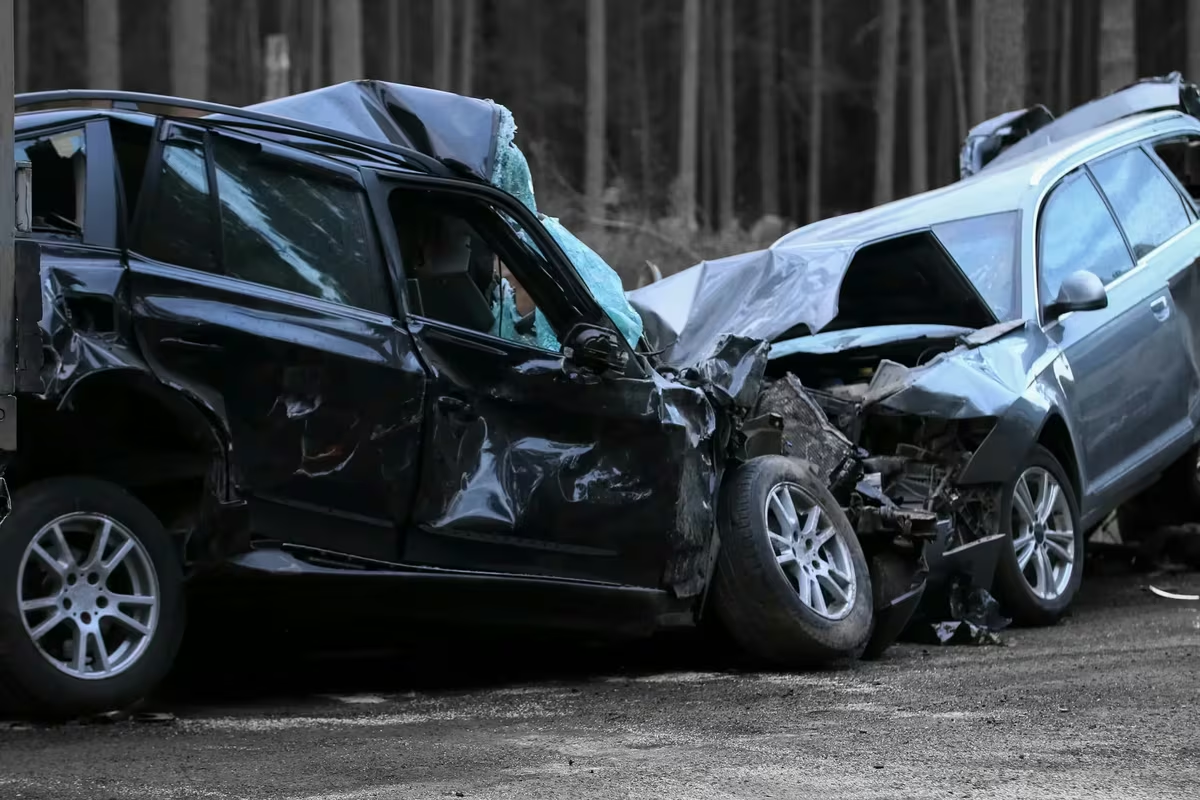 Car Accidents Rear-end, intersection, and highway collisions across Louisiana.
 -
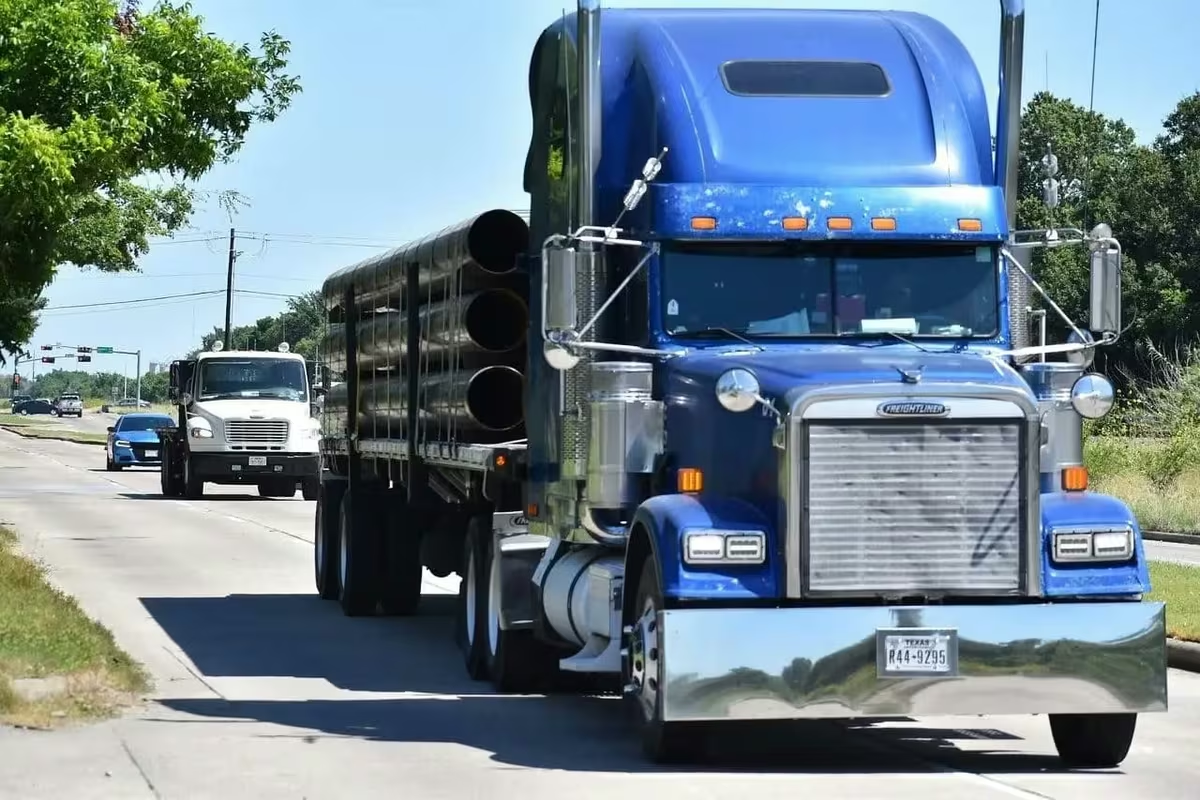 Truck Accidents 18-wheeler and commercial-vehicle wrecks governed by federal trucking rules.
 -
 Motorcycle Accidents Serious-injury motorcycle crashes where bias against riders is common.
 -
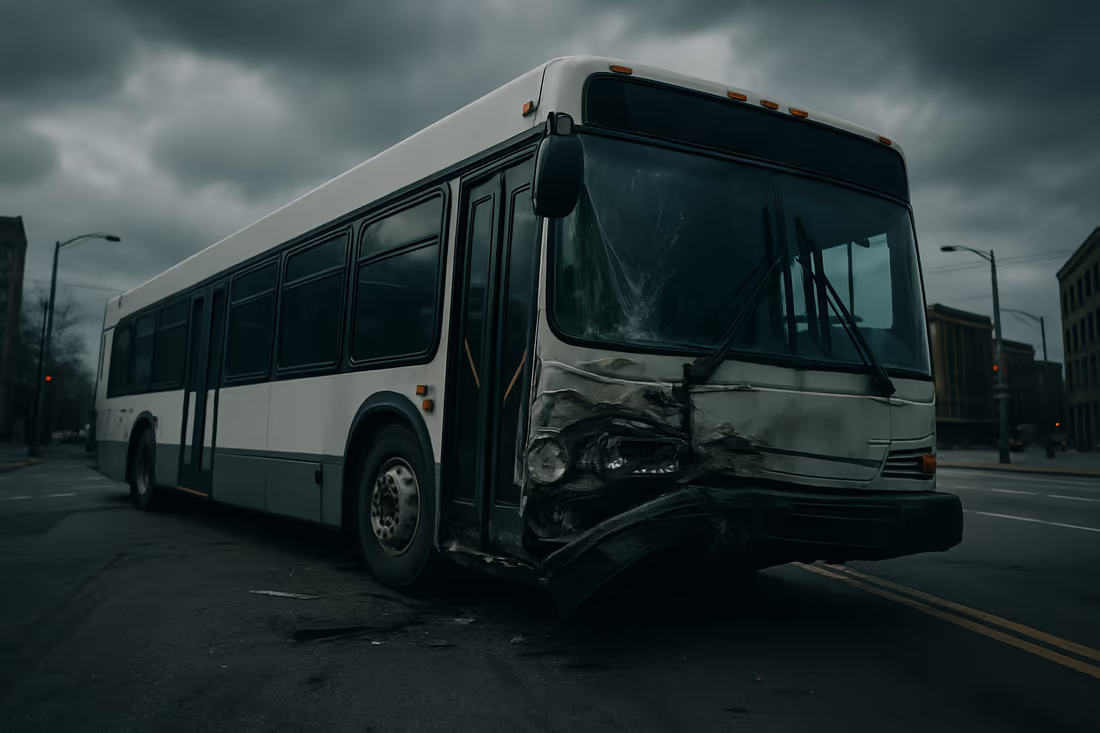 Bus Accidents Transit, school, and charter-bus crashes involving public and private carriers.
 -
 Catastrophic Injury Brain, spinal-cord, amputation, and severe-burn injuries that change a life.
 -
 Brain Injury Traumatic brain injuries with long-term cognitive and physical effects.
 -
 Burn Injury Severe burns from fires, explosions, chemicals, and electrical contact.
 -
 Wrongful Death Claims brought by families after a fatal accident or act of negligence.
 -
 Construction Accidents Falls, struck-by, and equipment injuries on the job site.
 -
 Offshore Accidents Rig, platform, and vessel injuries beyond the shoreline.
 -
 Workers' Compensation On-the-job injuries and the benefits owed to injured workers.
What Louisiana and Federal Trucking Laws Govern Your Claim?
A commercial truck claim runs on two legal tracks at once. Louisiana tort law decides who pays and how much. A separate layer of federal safety oversight shapes how the truck, the driver, and the carrier were supposed to operate before the crash. Both matter because a federal safety problem often points toward the negligence a Louisiana court needs to see.
Louisiana Comparative Fault Rules
Louisiana follows a comparative fault system under La. C.C. art. 2323. For causes of action arising on or after January 1, 2026, a plaintiff who is 51% or more at fault recovers nothing. If the plaintiff’s share of fault is 50% or less, the court reduces damages by that percentage rather than barring the claim outright.
That rule drives strategy from the first day. A trucking insurer that can pin half the blame on you cuts its exposure in half, and at 51% it owes nothing. Rebutting a comparative fault argument is central to these cases, because fault allocation, not just liability, decides what a case is worth.
Federal Hours-of-Service Practice
Federal motor carrier safety practice puts limits on how long a commercial driver can stay behind the wheel before taking required rest. These rest expectations are meant to reduce fatigue-related crashes, and they apply to commercial carriers rather than ordinary passenger-car drivers. That difference is one reason a truck case gets built differently from a car case.
Many fatigue-related crashes trace back to a driver who pushed past rest expectations to hit a delivery deadline. A lawyer handling these cases looks at the driver’s duty-status records early, before they disappear, because those records can show how long the driver was actually on the road.
Electronic Logging Devices
Most commercial drivers record duty status with an electronic logging device rather than handwritten paper logs. The device connects to the truck’s engine and captures driving time automatically, which makes it harder to construct a clean record after the fact.
That data can show how long a driver stayed on duty. Because the records sit in the carrier’s hands, securing them quickly is part of building a truck case the right way.
Driver Qualification Standards
Carriers are expected to confirm that a commercial driver is properly licensed, medically fit, and carries a driving history that does not disqualify them, and to keep a qualification file on each driver. These are baseline expectations for the people a company puts behind the wheel of a tractor-trailer.
When a carrier puts an unqualified, medically unfit, or improperly licensed driver on the road, that lapse points toward the company’s own conduct, not just the driver’s. The driver qualification file is where carrier negligence usually hides, which is why it belongs in every case.
Commercial Truck Insurance
Interstate motor carriers typically carry liability coverage well above the limits on a passenger-car policy, and carriers hauling certain dangerous cargo tend to be held to a higher standard. That larger coverage is one reason truck claims get defended so hard.
Louisiana law also shapes how that insurance enters a case, including when an injured party can pursue the carrier’s insurer rather than the carrier alone.
How Long Do You Have to File a Truck Accident Lawsuit in Louisiana?
Louisiana sets a filing deadline for truck accident lawsuits, and the date of the crash controls which deadline applies. Confirm the deadline that governs your specific crash date with an attorney before assuming you have time. The clock runs whether or not you have hired a lawyer.
The Filing Deadline Turns on Your Crash Date
The deadline to file a personal injury lawsuit in Louisiana depends on the date of the accident. The safest course is to treat the case as time-sensitive from day one and verify the governing deadline with counsel who can read your crash date against the law that applies to it. An attorney who knows that date can tell you the precise deadline for your situation. Do not rely on a number you read somewhere else, because the rule that applied to an older crash may not be the rule that applies to yours.
This matters in trucking cases for a practical reason. Building a commercial truck claim takes time. Identifying every potentially liable company, obtaining federal carrier records, and retaining experts all happen before a lawsuit is filed. Waiting until the deadline approaches compresses that work and weakens the case. A firm that handles commercial-vehicle cases begins investigating immediately, because federal trucking records and physical evidence do not wait.
Shorter Notice Rules for Government Claims
When a government vehicle or a public entity is involved, different rules can apply. A crash with a municipal truck, a parish-owned vehicle, or a state agency vehicle may carry separate notice requirements and a different procedural path than a claim against a private carrier. Confirm the specific notice rule with counsel before relying on the standard timeline, because a government claim can demand earlier action than an ordinary tort claim.
This is why the identity of the at-fault party matters early. A truck that looks like an ordinary commercial vehicle may be operated by a public entity or a government contractor. An attorney investigating the crash confirms ownership and operator status before any notice requirement becomes a problem, because a government entity in the chain changes the deadline analysis.
Who Holds a Wrongful Death Claim After a Fatal Crash
When a truck crash causes a death, the wrongful death claim belongs to surviving family members rather than to the person who died. Which relatives qualify to bring that claim depends on who survives the decedent and how the family is structured. That question of standing determines who can file, so it should be settled early with counsel rather than assumed.
The family member who holds the claim should confirm the applicable filing deadline promptly with an attorney, because grief and probate matters often consume the early weeks after a death. A wrongful death claim and a survival claim for the decedent’s own pre-death losses can both arise from the same crash. An attorney sorts out who holds which claim within the family and tracks the deadline that applies to each.
Why Filing Early Preserves Evidence
The filing deadline is not the only clock that matters. In a commercial truck case, the most decisive evidence sits in the carrier’s control and disappears on its own schedule. Electronic logging data, driver hours-of-service records, dispatch communications, and the truck’s onboard data can be overwritten, discarded, or simply lost long before any lawsuit deadline arrives.
Acting early lets an attorney send preservation demands to the carrier and secure the physical evidence before it is gone. That is the real cost of waiting. A claim filed at the last lawful moment may survive the deadline yet arrive without the records that prove fault. Federal law governs how trucking companies are regulated and what records they keep, and those federal record-retention windows can be shorter than the deadline to sue. Treating the case as urgent from the start protects both the filing deadline and the evidence that gives the claim its strength.
What Types of Truck Accident Cases Do Bossier City Lawyers Handle?
“Truck accident” covers a wide range of commercial vehicles, and the type of truck involved shapes the entire case. A tanker spill, a logging-truck rollover, and a parcel-delivery van each bring different equipment, different operators, and different regulatory layers. Bossier City sits at the crossing of Interstate 20 and the Red River corridor, where freight traffic, oilfield equipment, and last-mile delivery fleets share the same roads.
18-Wheeler, Semi-Truck, and Tractor-Trailer Accidents
The classic big-rig crash involves a tractor pulling one or more trailers, often loaded to 80,000 pounds. These are the cases that move along I-20 and U.S. 71 through Bossier Parish in heavy volume. A fully loaded tractor-trailer cannot stop, turn, or recover from a swerve the way a passenger car can, so rear-end impacts, jackknifes, and lane-change collisions tend to produce serious harm. These cases usually involve a motor carrier, a driver, and a freight broker or shipper, which means liability is rarely limited to the person behind the wheel. Identifying every responsible party in a tractor-trailer wreck depends on understanding how freight operations are structured.
Tanker Trucks and Hazardous Materials Spills
Tanker trucks carry liquids, gases, and chemicals, and a crash can add a spill, a fire, or a toxic release to the underlying collision. The Bossier and Shreveport area moves petroleum products and industrial chemicals tied to the region’s energy and manufacturing activity. A tanker case can involve cleanup records, hazardous-materials manifests, and federal transport rules layered on top of the ordinary crash investigation. The injuries can extend beyond impact trauma to chemical exposure, which complicates both the medical picture and the proof of causation.
Flatbed and Oversize Load Accidents
Flatbed trailers haul cargo that is not enclosed: steel, lumber, pipe, machinery, and oversize loads that exceed standard dimensions. When freight is not secured correctly, it can shift, fall, or come loose into traffic. An oversize-load haul often requires permits, escort vehicles, and route planning, and a failure in any of those steps can cause a crash. These cases frequently turn on cargo-securement practices and whether the load was within legal limits, so the investigation reaches the people who loaded and permitted the haul, not just the driver.
Logging, Dump, and Construction Vehicle Crashes
North Louisiana’s timber industry puts loaded logging trucks on rural highways and parish roads around Bossier City. Dump trucks and construction vehicles operate near work zones, where mixed traffic, debris, and frequent stops raise the risk of a collision. Logs and aggregate that are not secured or that overhang the bed create their own hazards. These vehicles often run shorter, local routes, which can mean different operators and different maintenance practices than long-haul freight, and the investigation has to account for that.
Delivery Trucks and Parcel Carrier Vehicle Crashes
Last-mile delivery has put a large number of box trucks, sprinter vans, and parcel vehicles on Bossier City streets, especially in residential areas and around commercial corridors. These vehicles make frequent stops, back into driveways, and operate under tight delivery schedules. A crash can involve a major carrier’s own fleet, a regional contractor, or an independent driver delivering for a national brand, and sorting out which arrangement applies determines who answers for the harm. Tracing responsibility when a delivery driver works through a contractor rather than the brand on the side of the truck turns on these layered employment structures.
Past results do not guarantee future outcomes; each case is decided on its own facts. See our full case results.
How Is Fault Investigated in a Commercial Truck Accident?
A commercial truck investigation does not start with the police report. It starts with the data the truck itself recorded and the records the carrier keeps. Fault in these cases is reconstructed from electronic evidence, company documents, and physical scene findings, much of which sits in the hands of the trucking company and its insurer. The work is to capture that evidence before it is overwritten, discarded, or quietly allowed to cycle out.
This matters because a passenger-car claim usually turns on two drivers and a few witnesses. A truck claim turns on the machine, the driver’s hours, and the company’s records. Knowing where the evidence lives, and how fast it can disappear, is what separates a guess about fault from a documented conclusion. Preserving truck evidence in the first days after a crash is the mark of a practice that has actually handled these cases.
Black Box (ECM) Data: What It Records and How to Obtain It
Most modern tractors carry an engine control module, the truck’s version of a black box. The ECM logs vehicle speed, throttle position, brake application, engine RPM, and how long the engine ran at given speeds. After a crash, that data can show whether the driver braked, how fast the truck was traveling on impact, and whether speed exceeded what the conditions allowed.
ECM data is not handed over on request. It is read with manufacturer-specific software, and the module can be overwritten when the truck is returned to service or repaired. Securing a download often requires a written demand to preserve the unit, followed by an inspection where both sides observe the extraction. Reconstruction work later compares the ECM record against the scene to build a timeline of the seconds before the collision.
Driver Log Books and ELD Records as Evidence
A driver’s hours records show whether fatigue played a role. Logs and electronic logging device data reveal driving time, rest breaks, and on-duty hours, which a reconstruction can cross-check against fuel receipts, weigh-station stamps, dispatch records, and toll data. When the paper log says one thing and the supporting documents say another, the discrepancy itself becomes evidence.
A carrier holds driver logs and the supporting documents that back them up on its own internal schedule, and material can be cycled out over time. That is the practical reason prompt action matters. Once a carrier moves past the point where it keeps a given record, material that would have shown a problem may no longer exist, so a demand to preserve it has to reach the company early. Counsel who handle these cases send that demand in the first days rather than waiting.
Preservation Letters and 72-Hour Evidence Holds
A preservation letter, often called a spoliation letter, is a written demand sent to the carrier and its insurer instructing them to hold every category of evidence: the ECM, driver logs, ELD data, maintenance files, dispatch records, the driver’s qualification file, and the truck itself. It puts the company on notice that this material needs to be kept intact.
The urgency is real. Trucks get repaired and put back into revenue service within days. Carriers move through their own records on their own schedules. Sending these letters in the earliest window, often within the first few days, locks down material that would otherwise vanish. Investigators frequently push to inspect the truck and pull the data before it leaves the scene or the impound yard.
Accident Reconstruction Experts
Reconstruction experts turn raw data into an explanation of how the crash happened. They measure skid marks, gouges, and debris fields, study crush patterns on both vehicles, and combine that physical evidence with ECM downloads to calculate speeds, angles, and the sequence of impacts. Their analysis can establish who had the right of way, whether a driver had time to react, and whether the truck was overloaded or improperly braked.
This is where the electronic and physical evidence converge into a conclusion a jury can follow. A reconstruction grounded in the truck’s own recorded data is harder for a defense to dismiss than testimony alone. Experienced truck litigators line up reconstruction before the scene evidence is cleared away.
Post-Accident Drug and Alcohol Testing Records
After a serious commercial crash, a driver is sometimes tested for drugs and alcohol. Whether that testing happened, and what it showed, is part of the picture investigators pursue. The investigation works to confirm whether any test was performed, locate the results, and understand how the carrier handled it.
These records are obtained through the carrier and the testing facility, and they can reveal impairment that the scene never showed. The absence of a test, or a test done long after the crash, can matter on its own, because the value of a result fades as time passes. Pinning down the testing record early keeps that question from becoming a dead end later.
What Injuries Are Common in Bossier City 18-Wheeler Accidents?
A loaded tractor-trailer can weigh 80,000 pounds. A passenger car weighs around 4,000. When those two collide, the physics fall almost entirely on the people in the smaller vehicle, which is why 18-wheeler crashes produce a different class of injury than ordinary fender-benders. The injuries that recur in commercial-truck cases carry long medical timelines, permanent limitations, or both.
The cause of the wreck often shapes the injury. An underride, where a car slides beneath a trailer, tends to cause head, neck, and crush damage. A jackknife or rollover tends to cause spinal and multi-system trauma. Understanding the mechanism matters because it links the crash to the harm, and that link is what a medical and economic damages case is built on.
Traumatic Brain Injury (TBI) and Long-Term Disability
Traumatic brain injury happens when the head strikes an interior surface or when the brain moves violently inside the skull during the impact. In a truck crash, the forces are high enough to cause TBI even when there is no visible head wound. Symptoms can be immediate or can surface days later as headaches, memory gaps, mood changes, or trouble concentrating.
A moderate or severe TBI can mean lasting cognitive and behavioral changes. Some people cannot return to the work they did before. The medical record here is dense: emergency imaging, neurology follow-up, neuropsychological testing, and often a life-care plan that projects future treatment costs. Document the symptoms early and consistently, because gaps in the record give an insurer room to argue the injury was minor.
Spinal Cord Injuries and Paralysis
The spinal cord carries signals between the brain and the body. When a crash fractures or compresses the vertebrae, the cord can be bruised, torn, or severed. The result ranges from temporary weakness to permanent paralysis, depending on where along the spine the damage occurs.
An injury high on the spine can affect the arms, trunk, and legs. An injury lower down may affect the lower body. These cases involve some of the longest care horizons in personal injury law: surgery, inpatient rehabilitation, mobility equipment, home modification, and ongoing attendant care. The damages reach far past the first hospital bill, which is why the future medical picture has to be developed by qualified experts rather than estimated.
Crush Injuries and Amputations From Underride Collisions
An underride collision occurs when a passenger vehicle slides partway or fully beneath a trailer. Because the point of contact is at window height rather than bumper height, these crashes concentrate force on the upper body and can shear or crush limbs. Crush injuries to the arms, legs, hands, or feet sometimes lead to amputation, either at the scene or during surgery when the tissue cannot be saved.
Crush trauma also damages muscle, nerve, and blood vessels in ways that imaging does not always show at first. A limb that is saved may still lose function. These cases require careful documentation of every surgery, every prosthetic fitting, and every limitation the loss imposes on daily work and life, because the long-term cost of an amputation extends across the person’s lifetime.
Neck, Back, and Disc Injuries
Neck and back injuries are the most common category in truck crashes, and they range from soft-tissue strains to herniated discs that press on nerves. A herniated disc can cause radiating pain, numbness, or weakness down an arm or leg. Some respond to conservative treatment. Others require injections or surgery such as a discectomy or fusion.
Insurers treat these injuries with suspicion because soft-tissue and disc claims are easy to undervalue. Consistent treatment records, imaging that shows the disc damage, and a physician who connects the injury to the crash are what separate a fully documented claim from one the insurer discounts. Pre-existing degeneration is a frequent defense, so the record needs to show how the crash changed the condition.
Fatal Injury Mechanisms in Truck Crashes
The same size and weight that cause severe injuries also cause deaths. Fatal outcomes in commercial-truck crashes commonly trace to a small set of mechanisms: catastrophic head trauma, high spinal cord injury, internal bleeding from blunt-force trauma to the chest or abdomen, and crush injuries in underride or rollover collisions. Death can be immediate or can follow days of intensive care.
When a crash is fatal, the legal claim shifts to the surviving family. Louisiana wrongful death damages belong to the surviving family members, not to the person who died, and each beneficiary’s claim is measured by that person’s own loss under La. C.C. art. 2315.2. The medical mechanism still matters in these cases, because establishing how the death occurred ties the loss directly to the conduct that caused the crash.
Your Bossier City Injury Attorneys
Founding partners Trey Morris and Justin Dewett lead every Bossier City injury case Morris & Dewett takes.


What Compensation Can Truck Accident Victims Recover in Louisiana?
Louisiana law lets a truck accident victim recover two broad categories of damages: economic losses with a dollar figure attached, and non-economic losses that compensate for harm money cannot directly measure. Three statutory sources define the boundaries of that scheme together. La. C.C. art. 2315.4 authorizes exemplary damages in a narrow set of cases, the rule reflected in La. C.C. art. 3546 confirms that exemplary damages are otherwise unavailable absent an express statute, and La. C.C. art. 2315.2 governs who recovers when a crash is fatal. A serious 18-wheeler crash often produces damages in more than one category at once, which is one reason these cases carry higher exposure than ordinary fender-benders.
Economic Damages: Medical Bills, Lost Wages, Future Earning Capacity
Economic damages cover the measurable financial harm a crash causes. That includes emergency treatment, hospitalization, surgery, rehabilitation, prescriptions, assistive devices, and the future medical care a treating physician projects. It also includes lost income while you are out of work and, when an injury limits what you can earn going forward, the reduction in your future earning capacity. These compensatory categories sit inside the same Louisiana damages framework that the three governing statutes set together: La. C.C. art. 2315.4 (exemplary damages in narrow cases), the default against exemplary damages reflected in La. C.C. art. 3546, and the fatal-crash rule in La. C.C. art. 2315.2.
These figures are built from records, not guesses. Medical bills, pay stubs, tax returns, and expert testimony from physicians and economists turn a long-term injury into a documented number. Valuing future earning capacity in these cases relies on vocational experts and life-care planners, not a quick multiplier of past bills.
Non-Economic Damages: Pain and Suffering, Loss of Enjoyment
Non-economic damages compensate for harm that does not arrive as an invoice. Physical pain, mental anguish, scarring and disfigurement, and loss of enjoyment of life all fall here. A spinal injury that ends a person’s ability to hunt, garden, or pick up a grandchild is a real loss even though no receipt records it.
Louisiana does not put a statutory cap on general damages in an ordinary truck accident claim. The amount turns on the severity and permanence of the injury, the credibility of the medical evidence, and how the loss is presented to a judge or jury. The same three statutes that draw the outer limits of the scheme, namely La. C.C. art. 2315.4 (exemplary damages only in narrow circumstances), La. C.C. art. 3546 (no exemplary damages absent an express statute), and La. C.C. art. 2315.2 (fatal-crash claims), leave ordinary non-economic damages uncapped. This is where preparation and proof do the heavy lifting.
Property Damage and Vehicle Replacement
A commercial truck collision frequently destroys a passenger vehicle outright. Property damage compensation covers repair costs or, when the vehicle is a total loss, its fair market value before the crash. It can also reach personal property damaged inside the vehicle and reasonable costs tied to the loss of use of the vehicle.
Property claims are usually the most straightforward part of a truck accident case, but they should not be settled in isolation. Accepting a quick property check sometimes comes paired with pressure to release the injury claim, which is a different and far larger matter. That larger claim runs through the same statutory framework drawn together by La. C.C. art. 2315.4, La. C.C. art. 3546, and La. C.C. art. 2315.2.
Wrongful Death Damages for Families
When a truck crash kills someone, Louisiana law gives the claim to the surviving family members, not to the person who died. Under La. C.C. art. 2315.2, read alongside La. C.C. art. 2315.4 (exemplary damages in narrow cases) and the rule against exemplary damages reflected in La. C.C. art. 3546, the listed beneficiaries recover the damages they themselves sustained because of the death. Each beneficiary’s claim is measured by that person’s own loss, so a surviving spouse and a minor child present distinct claims within the same petition.
These claims compensate for the loss of love, affection, companionship, and support, along with funeral expenses and the family’s own mental anguish. Because each family member’s loss is individual, the value of a wrongful death case depends heavily on the relationships involved and the proof of those relationships.
Punitive or Exemplary Damages in Limited Cases
Louisiana does not allow exemplary damages in most injury cases. The general rule reflected in La. C.C. art. 3546, read together with the narrow authorization in La. C.C. art. 2315.4 and the fatal-crash rule in La. C.C. art. 2315.2, makes exemplary damages unavailable unless a statute expressly authorizes them, and no statute authorizes them in an ordinary negligence claim. The purpose of damages here is to compensate the injured party, not to punish the defendant.
There is a narrow exception that matters in truck cases. La. C.C. art. 2315.4 permits exemplary damages when an injury is caused by the wanton or reckless disregard of an intoxicated motor vehicle operator whose intoxication was a cause in fact of the harm. There is no cap on the amount under that article. If post-accident testing shows a truck driver was impaired, this exception can come into play, which is part of why the impairment evidence in a commercial crash deserves close attention.
How Much Is a Bossier City Truck Accident Case Worth?
No honest lawyer puts a dollar figure on a truck accident case before the facts are in. Case value is the sum of specific, provable losses, and those losses depend on the injury, the available coverage, who is at fault, and how the work limitations play out over years.
A commercial truck crash often produces larger losses than a passenger-car collision because the injuries are more severe and the defendant carries far more insurance. That combination raises the ceiling on a claim. It does not guarantee any particular result.
Severity of Injuries and Medical Prognosis
The single largest factor in most truck accident cases is the medical picture. A fractured wrist that heals in eight weeks values very differently from a spinal injury that requires surgery and lifelong pain management. Value tracks the diagnosis, the treatment already received, and the prognosis for the future.
Future medical care is where many claims are undervalued. A treating physician and a life-care planner can project the cost of surgeries, therapy, medication, and assistive equipment over a person’s lifetime. Those projected costs belong in the claim. Documenting future medical needs is essential, because adding up past bills and stopping there leaves real money unclaimed.
Available Commercial Insurance Coverage
A claim is only worth what can actually be collected. Commercial trucking operations carry liability coverage far larger than a typical auto policy, which is one reason serious truck cases can resolve at higher figures than car-crash cases with identical injuries. Identifying every applicable policy matters because a single crash may involve coverage on the tractor, the trailer, the motor carrier, a broker, and sometimes a separate excess layer.
The practical work is finding all of it. A lawyer who stops at the first declared policy may miss layers that stack on top of it. The total available coverage sets a real ceiling on what a case can pay, regardless of how the damages calculation comes out.
Clear Liability Versus Disputed Fault
When fault is obvious, a case moves faster and the negotiation starts from a stronger position. When fault is contested, value depends on the evidence that proves who caused the crash. Black box data, driver logs, and reconstruction work turn a disputed claim into a documented one.
This is why the strength of the liability proof feeds directly into value. A defendant who concedes fault and disputes only the amount of damages is in a different posture than one fighting over causation. The quality of the investigation often decides which conversation you are having.
Long-Term Work Limitations
Lost income is not just the paychecks missed during treatment. When an injury permanently reduces a person’s ability to earn, that lost future earning capacity is a separate, provable loss. A 40-year-old who can no longer perform the physical job they trained for has a larger claim than the wage loss alone suggests.
Proving this requires more than a pay stub. Vocational experts and economists translate a medical restriction into a dollar figure over a working lifetime. Proving diminished earning capacity relies on named experts and a method, not a guess.
Comparative Fault Reductions
The injured party’s own assigned share of responsibility for a crash directly cuts the value of the claim. Whatever percentage of fault lands on the injured party comes off the top of what that person collects. If the total damages reach a given amount and the injured party is assigned 20% of the responsibility, the result drops by that 20%.
Because every percentage point assigned to the injured party subtracts from what they take home, defense insurers work to push responsibility onto that side. That is one more reason the liability evidence carries weight beyond the question of who pays. It also shapes how much.
How Do Our Bossier City Truck Accident Lawyers Build Your Case?
Building a commercial truck case is mostly about getting in front of the evidence before it goes away. A trucking company knows its own data, its driver’s logs, and its maintenance history within hours of a crash. Our work starts at the same speed, on the same records, so the picture of what happened is locked down while it can still be proven.
Immediate Evidence Preservation Letters
The first document we send is a preservation letter, also called a spoliation letter, to the carrier and its insurer. It puts them on written notice to keep the truck, its onboard data, the driver’s records, dispatch logs, and electronic logging device files. Federal record-retention rules give carriers only a limited window to hold supporting documents under 49 CFR 395.8, which is why the letter goes out fast rather than after a demand is built. A carrier that destroys data after receiving notice exposes itself to consequences a court can weigh later. The letter goes out within days of intake, not weeks.
Independent Accident Investigation and Expert Retention
We do not rely on the trucking company’s version of the crash. We run our own investigation: pulling the police report, mapping the scene, securing photographs and surveillance footage, and downloading the engine control module data when we can get to the truck. Where the mechanics of the collision are disputed, we retain accident reconstruction engineers who rebuild speed, braking, and impact angles from the physical evidence. Post-accident drug and alcohol testing of the driver, required under federal rules in certain crash conditions, is part of the record we pursue. The point is a fact base we control, not one handed to us by the other side.
FMCSA Compliance Audit of the Carrier
Commercial carriers operate under the Federal Motor Carrier Safety Regulations, the rules that govern driving hours, driver qualification, and vehicle maintenance. We audit the carrier’s compliance against those standards: hours-of-service limits, electronic logging device records, driver hiring and supervision files, and inspection history. A pattern of violations often explains the crash and points to the company itself, not just the driver behind the wheel. This is where local knowledge matters, because we have spent decades on these cases in this region and know how carriers operating through the I-20 corridor run their books.
Demand Package and Insurance Negotiation
Once liability and damages are documented, we assemble a demand package. It pulls together the medical records, the cost of future care, lost wages, the liability evidence, and the legal basis for each claim into a single presentation to the insurer. A demand built on a complete file negotiates from a stronger position than one built on assertions. We handle the back-and-forth with the carrier’s insurer directly, so the adjuster deals with the case file rather than with you. If the offer reflects the proven value, settlement resolves the matter. If it does not, the file is already ready for court.
Lawsuit Filing and Trial Preparation in Bossier Parish Courts
When a fair settlement does not come, we file suit in the proper Louisiana court and prepare the case for trial. Filing opens formal discovery, which lets us compel documents and take sworn depositions of the driver, the safety director, and the carrier’s corporate representatives. We prepare every case as though it will be tried, because a file that is genuinely trial-ready tends to settle on better terms and is ready to go before a jury if it does not. Building the demand and preparing to try it, rather than building it and hoping, is the difference that shows up in the result.
What clients say
- ★★★★★
I hired Morris and Dewett back in November of 2025.
They helped me get through my hard times of being off work, stress, and worry. Anytime I had a question I could call and they always had an answer. Very nice and professtional people. Thank you Morris and Dewett for making this an easy process for me and my family.
- ★★★★★
Morris and Dewett and their team of attorneys and staff go above and beyond.
They always were there to support me and answer all my questions after a shoulder injury that included multiple surgeries. They are caring and compassionate and that goes a long way! Highly recommended!
- ★★★★★
Thanks Morris and Dewett for the excellent work you have done on my behalf.
I want to personally thank Sarah for her kindness.
- ★★★★★
Morris & Dewett does things the right way!
They put their clients first in measurable and impactful ways.
- ★★★★★
First time being injured and needing a lawyer they where very helpful.
They answered my questions Id have very well. Highly recommend them.
- ★★★★★
Wonderful experience with Morris and DeWitt, everyone was articulate and punctual, and open to all my questions about the process.
My case couldn't have been handled by a better team! Caity Nerren, Jessica Christian, and Meghan Nolen were all fantastic and helped every step of the way. Thanks again for all of your hard work.
Reviews reflect individual client experiences. Past results do not guarantee future outcomes.
How Much Does It Cost to Hire a Bossier City Truck Accident Lawyer?
Hiring a truck accident lawyer in Bossier City typically costs nothing up front. Most personal injury firms handle these cases on a contingency fee, which means the attorney’s fee is a percentage of the money obtained in the case and is paid only if the case produces a result. No hourly billing. No retainer check. The cost question that stops many people from calling a lawyer usually does not apply here, because the fee is contingent on a recovery rather than charged at the outset.
Contingency Fee Representation
A contingency fee ties the attorney’s payment to the outcome. Instead of charging by the hour, the lawyer agrees to take an agreed percentage of whatever is collected through settlement or judgment. If the case obtains money, the fee comes out of that money. If it obtains nothing, there is no fee.
These arrangements are normally set out in a written agreement that you sign before any work begins. That agreement states the percentage, explains how case expenses are handled, and spells out what you owe in each possible outcome. A clear, written explanation of the fee and how costs are treated is the mark of a firm worth hiring.
No Upfront Attorney Fees
There is usually no charge to start a truck accident claim. You do not pay an attorney fee to open the file, send preservation letters to the carrier, gather the crash report, or begin the investigation. Commercial truck cases often require accident reconstruction specialists, medical record review, and analysis of driver logs and electronic data. Those case costs are commonly advanced by the firm and repaid from the result at the end, separate from the percentage fee. The written fee agreement explains how advanced costs are treated, which matters because expenses and the attorney’s percentage are two different things.
Free Truck Accident Case Review
The first conversation costs nothing at most firms. A free case review lets you describe what happened, ask questions, and get a straight read on whether you have a claim worth pursuing, with no obligation to hire anyone. How many commercial truck cases a firm has handled, how it preserves black box and log data, and how it approaches carriers and their insurers all bear on whether it can carry a commercial-vehicle claim. The firm’s past case results reflect that record. You can schedule a free case review whenever you are ready.
You Pay Only if Money Is Recovered
The contingency structure means the financial risk of the case sits with the firm, not with you. If the claim resolves through settlement or a court award, the agreed percentage and any advanced costs come out of that amount, and the written agreement told you those numbers in advance. If the claim produces nothing, you owe no attorney fee. That alignment is the point: the firm is paid when the client is paid, which keeps the lawyer’s interest pointed at the strongest possible result rather than at billable hours.
Frequently Asked Questions
- Can I sue a trucking company based outside Louisiana?
- Yes. A crash that happens on a Louisiana road generally lets you pursue the claim in Louisiana courts, even when the carrier is headquartered in another state. Interstate motor carriers operate across state lines and accept that their drivers can cause harm wherever they travel. Where the company keeps its offices does not move the case out of the parish where the wreck occurred. Out-of-state carriers register agents to receive legal papers and carry insurance written to respond nationwide. Personal jurisdiction over the company usually follows from the company sending a truck onto the highway where you were hurt. Service of process on a non-resident carrier runs through its registered agent, and venue lies in the parish where the wreck occurred.
- What if the trucking company's insurer contacts me first?
- Expect a call, sometimes within a day or two of the crash. The adjuster works for the carrier's insurer, and the goal of an early call is to close the file cheaply before the full extent of an injury is known. Anything you say can be used to reduce or deny the claim later. You are not required to give a recorded statement to the other side's insurer. You are not required to accept a quick number. Get medical care, get the facts documented, and let counsel speak to the adjuster on your behalf. A trained adjuster knows the case better than an injured person three days out of surgery does. Leveling that imbalance is the point of having a lawyer involved early.
- What if I was partly at fault for the truck accident?
- You can still pursue a claim, but your share of fault matters. Louisiana uses a modified comparative fault system under La. C.C. art. 2323. For causes of action arising on or after January 1, 2026, a plaintiff who is 51 percent or more at fault recovers nothing. At 50 percent or less, damages are reduced by the assigned fault percentage rather than barred. Here is what that means in practice. If a court values your damages at $100,000 and assigns you 20 percent of the fault, your award is reduced by that 20 percent. Trucking insurers know this rule and work to push as much blame onto the injured driver as they can.
- How long does a truck accident case take to settle?
- It depends on the severity of the injuries and whether liability is disputed. A straightforward claim with clear fault and a treated, healed injury can resolve in months. A claim involving a traumatic brain injury, spinal damage, or a death often takes longer because the full medical picture, lost earning capacity, and the carrier's defenses all have to be developed before a fair value is known. Settling too early is a common and costly mistake. A demand made before a treating physician can state a long-term prognosis almost always undervalues the harm. The realistic timeline is driven by reaching maximum medical improvement, completing the investigation of the carrier, and either negotiating a fair number or preparing the case for trial. A case worth pursuing is worth working until the value is established.
- Should I accept the insurance company's settlement offer?
- Not before you understand what the claim is actually worth. A first offer is a starting position, almost always lower than the full measure of economic and non-economic damages. Once you sign a release, the claim is closed, even if future surgery or lost work later proves the injury was worth far more. Evaluate any offer against your real numbers: medical bills, future treatment, lost wages, diminished earning capacity, and the non-economic harm of the injury. Then weigh how comparative fault might reduce a court award and how much insurance coverage the carrier carries.
Last updated June 28, 2026