
Who Are the Top-Rated Bossier City Car Accident Lawyers in Louisiana?
A Bossier City car accident claim turns on how Louisiana fault rules, the prescriptive period, and the available insurance coverage interact, so the work starts with reading those facts correctly from day one. Morris & Dewett has handled personal injury claims in the Shreveport and Bossier area for years, maintains its bar standing in good order with the Louisiana State Bar Association, and publishes its case results rather than promising outcomes.
What to Look For in a Bossier City Car Accident Attorney
Start with experience that matches your case. A lawyer who handles car accident claims regularly knows how Louisiana fault rules, prescriptive periods, and insurance coverage interact, and that knowledge shapes how a claim is built from day one.
Local familiarity matters too. An attorney who knows the Bossier City and Caddo Parish courts, the local crash patterns, and the agencies that produce police reports moves faster on the practical steps. Morris & Dewett has handled personal injury claims in the Shreveport and Bossier area for years, and reviewing a firm’s published case results gives you a factual sense of the work rather than a slogan.
Verifying Louisiana State Bar Membership and Disciplinary History
Every lawyer who practices in Louisiana must be a member in good standing of the Louisiana State Bar Association. You can confirm that membership directly. The Louisiana State Bar Association maintains a public member directory at www.lsba.org, and the Louisiana Attorney Disciplinary Board publishes public discipline records at www.ladb.org.
Look up the specific attorney by name, not just the firm. Confirm the bar admission status, the admission year, and whether any public discipline has been imposed. A clean record is the baseline, not a bonus. If an attorney also handles Texas matters, the State Bar of Texas keeps a comparable directory at www.texasbar.com.
How to Read Martindale, Avvo, and Google Reviews
Third-party rating platforms are useful when you read them critically. Martindale-Hubbell publishes peer-review ratings, where its AV Preeminent designation reflects an evaluation by other attorneys and judges. Avvo blends a numerical score with client reviews and disciplinary data. Google reviews capture client experience but can be gamed, so weight volume and specificity over a single high number.
Read the substance, not just the stars. A detailed review describing communication, timelines, and outcomes tells you more than a one-line rave. Watch for patterns across platforms. Consistent praise for responsiveness across Martindale, Avvo, and Google is a stronger signal than a perfect score in one place.
How Morris & Dewett Handles a Bossier City Claim
A consultation lays out how the claim will run. Morris & Dewett identifies the named attorney who works the file rather than handing it to an anonymous team, and sets a schedule for keeping the client informed. The firm investigates a crash by securing the police report, photographing the scene, and sending preservation demands early, then values the claim against the medical records, the fault evidence, and the available coverage.
The firm puts the contingency structure in writing before any commitment, litigates cases that do not settle, and tries cases in Louisiana courts when an insurer refuses fair value. An individual attorney’s background, such as Trey Morris, is available to review before the first call.
How Morris & Dewett Handles Your Bossier City Claim
Morris & Dewett does not guarantee a specific outcome — no honest Louisiana lawyer can, because results depend on facts, fault, and coverage that develop as the case unfolds. The firm puts the fee agreement in plain writing before you commit, keeps you informed through the named attorney on your file, and litigates when an insurer will not pay fair value.
Our Bossier City Office
1815 Benton Rd
Bossier City, LA 71111
Open 24/7 for injured Bossier City residents
Get directions →What Does a Bossier City Car Accident Lawyer Actually Do?
A car accident lawyer takes over the parts of a claim that injured people are not equipped to handle while they recuperate: gathering the proof of what happened, valuing the harm, dealing with adjusters, and filing suit when the numbers do not add up. The work is concrete: investigation, documentation, negotiation, and, if necessary, trial.
Investigation and evidence collection
The first job is building a record of the crash before it disappears. Skid marks fade. Surveillance footage from a gas station or a Bossier City business gets overwritten in days or weeks. Witnesses forget details and change phone numbers. An attorney working a fresh claim sends preservation letters to anyone holding relevant video, pulls the crash report, photographs the vehicles and the roadway, and identifies witnesses while their memory is intact.
Evidence collection also means securing the data that proves who did what. That includes the official crash report, photographs of vehicle damage and final resting positions, and statements from people who saw the collision. Moving quickly on this evidence after intake treats investigation as the foundation of the case rather than an afterthought.
Insurance negotiation
Most car accident claims resolve through negotiation with an insurer rather than in a courtroom. The lawyer assembles a demand package: medical records, billing summaries, wage-loss documentation, and a written explanation of why the claim is worth what they say it is worth. Then they negotiate. Adjusters open low and expect the other side to either accept or counter with something defensible.
The value an attorney adds here is the ability to counter with documented facts instead of guesswork. A demand backed by treatment records and a clear liability narrative is harder to discount than a phone call from an unrepresented claimant.
Litigation representation
When an insurer refuses to pay a fair amount, the next step is filing a lawsuit. Litigation means drafting and filing the petition, conducting discovery, taking and defending depositions, retaining experts where the case calls for them, and preparing the matter for trial. A claim that looked stuck in negotiation often moves once the defense sees the plaintiff is prepared to try the case.
Not every firm that signs up car accident clients actually tries cases. Some settle everything and hand off anything that requires a courtroom. A firm that litigates carries more credibility in negotiation because the insurer knows the threat is real.
Client communication standards
A good attorney keeps the client informed: returns calls, explains each stage in plain language, and never settles without the client’s authority. You should know who your point of contact is, how to reach them, and what happens next at every step. Communication breakdowns are one of the most common complaints clients raise about lawyers, and they are avoidable.
A named point of contact who handles your file and a clear schedule for updates are the marks of that standard. Vague answers about a “team” with no named contact signal the opposite.
How a local attorney investigates your crash scene
Local knowledge shortens the distance between a crash and the proof of how it happened. An attorney who works Bossier City crashes knows which intersections have camera coverage, which businesses keep usable footage, and how to obtain reports from the Bossier City Police Department. Familiarity with the courts of Bossier Parish and the way local insurers handle these claims is practical, not cosmetic.
A local lawyer can also get to the scene, document road conditions and sightlines, and locate witnesses in the area while the trail is warm. That groundwork is harder to do well from a distance.
How long does a car accident settlement take?
Timelines vary with the facts, and any lawyer who promises a fast payout is guessing. A straightforward claim with clear liability and completed medical treatment can settle in a few months. The single biggest driver of timing is medical treatment: a responsible attorney waits until you reach maximum medical improvement, or has a firm prognosis, before settling, because a claim settled too early cannot be reopened if your injuries turn out worse than expected. Cases that require a lawsuit, expert testimony, or trial take longer, often a year or more.
What Louisiana Laws Affect a Bossier City Car Accident Claim?
A Bossier City crash claim runs on Louisiana statutes, not the rules of any other state. Three of them work together to shape what almost every case is worth: how fault is divided under La. C.C. art. 2323, the minimum insurance every driver must carry under La. R.S. 32:900, and the penalty Louisiana imposes on drivers who skip coverage under La. R.S. 32:866. Each statute is a separate authority, and each can shrink or erase what the at-fault driver’s insurer ever pays out.
How comparative fault works under La. C.C. art. 2323
Louisiana allocates fault by percentage, and that percentage only matters once it is run against both the coverage minimums in La. R.S. 32:900 and the No Pay, No Play bar in La. R.S. 32:866. Under La. C.C. art. 2323, each party to a crash is assigned a share of responsibility, and damages are reduced by the injured person’s own percentage. A driver found 20 percent at fault on a $100,000 claim collects $80,000. For causes of action arising on or after January 1, 2026, the rule has a hard ceiling: a plaintiff who is 51 percent or more at fault collects nothing, while a plaintiff at 50 percent or less has damages reduced by the assigned percentage rather than barred. That ceiling makes the fault split a central point of dispute, because moving a plaintiff from 49 to 51 percent erases the claim entirely. Even a favorable fault number means little until it is measured against the finite pool of insurance set by La. R.S. 32:900, and for an uninsured plaintiff the $100,000 threshold cut imposed by La. R.S. 32:866 comes off before the policy ever responds. The three statutes resolve as one calculation, not three separate questions.
Liability minimums under La. R.S. 32:900
The fault percentage matters most when it is measured against a finite pool of insurance. Every driver registering a vehicle in Louisiana must carry minimum liability coverage under La. R.S. 32:900, set at $15,000 per person for bodily injury, $30,000 per accident for bodily injury, and $25,000 for property damage. Those numbers are a floor, not a target. A serious injury routinely exceeds a $15,000 per-person limit, so the at-fault driver’s policy is often only the first source of payment. A damages award already reduced by the injured person’s fault share under La. C.C. art. 2323 can then be capped a second time by the size of that policy, and for an uninsured plaintiff the No Pay, No Play bar in La. R.S. 32:866 cuts the first $100,000 before the policy responds at all. The three statutes stack in sequence: La. C.C. art. 2323 sets the percentage, La. R.S. 32:900 sets the ceiling on the policy, and La. R.S. 32:866 subtracts a fixed amount on top of both.
The No Pay, No Play bar under La. R.S. 32:866
A third statute can wipe out the largest part of an award before fault or policy limits are even reached. Louisiana’s No Pay, No Play law, La. R.S. 32:866, bars a driver who failed to carry required insurance from collecting the first $100,000 in bodily injury damages or the first $100,000 in property damage from the at-fault driver’s insurer. The bar applies regardless of who caused the crash. An uninsured Bossier City driver hit by a clearly negligent motorist still loses the first $100,000 of any bodily injury award, even after fault is allocated in their favor under La. C.C. art. 2323 and even though the negligent driver carried the minimums required by La. R.S. 32:900. The three rules form one chain. Fault allocation under La. C.C. art. 2323 sets the percentage, the liability minimums under La. R.S. 32:900 set the ceiling on what the policy can pay, and the No Pay, No Play bar under La. R.S. 32:866 subtracts the first $100,000 from an uninsured plaintiff’s award. All three decide what is actually left to collect, which is why contesting the fault allocation, confirming available coverage, and checking the client’s own insurance status all happen early in a Bossier City claim.
What Is the Statute of Limitations for Car Accident Claims in Bossier City, Louisiana?
Louisiana sets the deadline to file a car accident lawsuit by the date the injury was sustained. The same statutory record fixes both halves of the rule: injuries sustained on or after July 1, 2024 carry a two-year prescriptive period under La. C.C. art. 3493.1, and injuries sustained before that date fall under the one-year period in La. C.C. art. 3492. Louisiana calls this deadline a prescriptive period. Miss it, and the claim is barred regardless of how strong the underlying facts are. The date of your Bossier City crash, not the date you hire an attorney, sets the clock.
Two-Year Prescriptive Period for Crashes On or After July 1, 2024
For a car accident injury sustained on or after July 1, 2024, the prescriptive period is two years under La. C.C. art. 3493.1. The period runs from the day the injury or damage was sustained, which for most car accidents is the date of the crash itself. Louisiana injured drivers previously had only a single year, so the longer window reflects a change in the length of the period, not in the day it starts.
That two-year window covers the typical Bossier City auto claim, including bodily injury and property damage from a collision. The exact date a crash falls under is one of the first facts a competent attorney pins down at intake, because it fixes the filing deadline.
One-Year Deadline for Older Louisiana Car Accidents
If your crash occurred before July 1, 2024, the one-year prescriptive period under La. C.C. art. 3492 controls. Under that article, a delictual claim prescribes one year from the day the injury was sustained. A 2023 collision, for example, ran under the one-year deadline rather than the two-year window that La. C.C. art. 3493.1 later established.
Cases that straddle the July 1, 2024 line are exactly where an early legal review matters. A crash near the cutoff can sit under either article depending on when the injury was sustained, and that single fact changes the entire timeline. Confirm the controlling article based on your crash date before assuming you still have time.
Deadlines for Claims Against Government Vehicles or Public Entities
Claims involving a government vehicle or a public entity follow procedural steps that differ from a routine driver-versus-driver case. If a Bossier City municipal vehicle, a parish vehicle, or a state vehicle was involved, the suit proceeds against a public defendant, and the practical path for pursuing the claim is not identical to a claim against a private motorist.
The dated prescriptive periods in La. C.C. art. 3493.1 and La. C.C. art. 3492 still set the outer filing window based on the crash date. A focused investigation early in the case identifies whether a public entity is a defendant. Treat any crash involving a government vehicle as a reason to confirm your deadlines promptly rather than assuming the standard period gives you breathing room.
Why Evidence Should Be Preserved Before the Filing Deadline
The prescriptive period is the outer limit, not the target. Waiting until the deadline approaches works against the claim because the evidence that proves it degrades long before the clock runs out. Skid marks fade. Vehicles get repaired or scrapped. Witnesses move, and their memory of a Bossier City intersection blurs within weeks. Surveillance footage from a nearby business is often overwritten within days.
Acting well ahead of the deadline lets an attorney secure the police report, photograph the scene while conditions still match the crash, and send preservation demands before the other side’s evidence disappears. Medical records also build the strongest connection between the crash and the injury when treatment starts early and stays consistent. The filing deadline tells you when the door closes. The condition of your evidence tells you why it is worth walking through that door early.
What We Handle
Bossier City Practice Areas
-
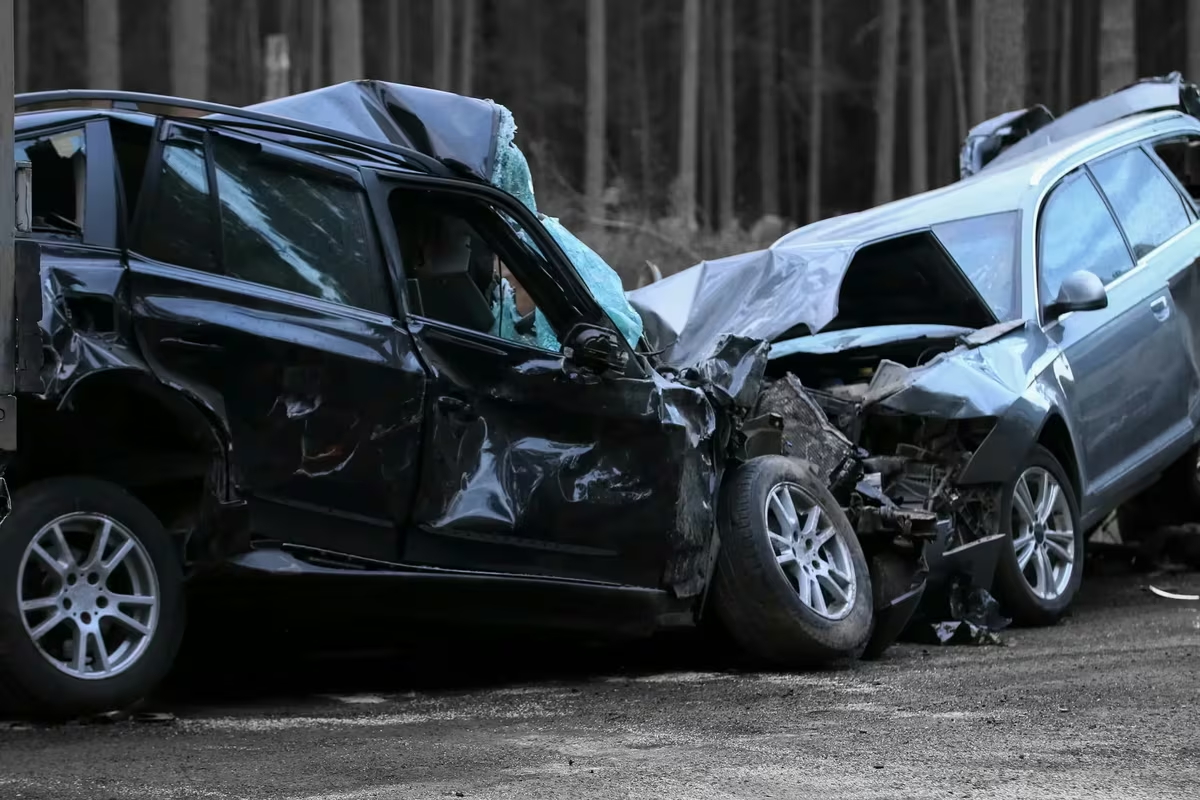 Car Accidents Rear-end, intersection, and highway collisions across Louisiana.
 -
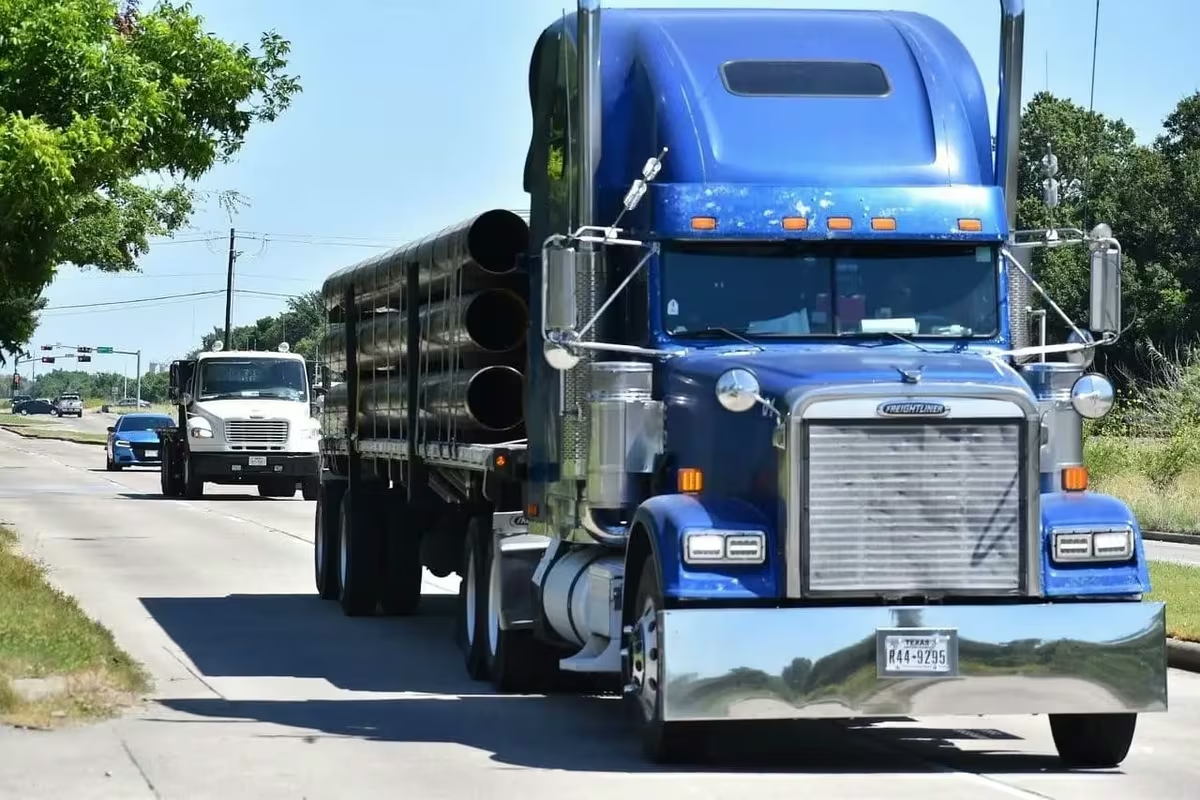 Truck Accidents 18-wheeler and commercial-vehicle wrecks governed by federal trucking rules.
 -
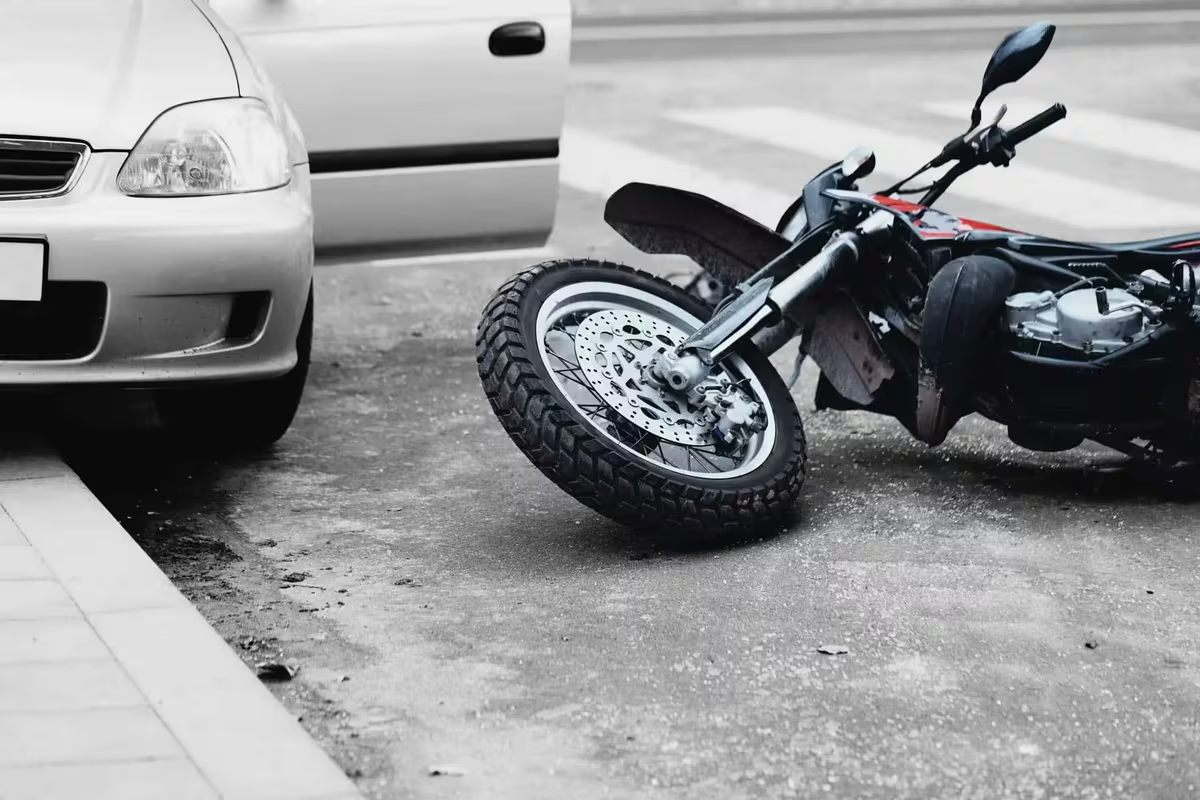 Motorcycle Accidents Serious-injury motorcycle crashes where bias against riders is common.
 -
 Bus Accidents Transit, school, and charter-bus crashes involving public and private carriers.
 -
 Catastrophic Injury Brain, spinal-cord, amputation, and severe-burn injuries that change a life.
 -
 Brain Injury Traumatic brain injuries with long-term cognitive and physical effects.
 -
 Burn Injury Severe burns from fires, explosions, chemicals, and electrical contact.
 -
 Wrongful Death Claims brought by families after a fatal accident or act of negligence.
 -
 Construction Accidents Falls, struck-by, and equipment injuries on the job site.
 -
 Offshore Accidents Rig, platform, and vessel injuries beyond the shoreline.
 -
 Workers' Compensation On-the-job injuries and the benefits owed to injured workers.
What Should You Do Immediately After a Car Accident in Bossier City?
The minutes and days after a crash shape everything that follows. The steps below protect your health first and your claim second. They apply whether the wreck happened on Airline Drive, near the casinos, or on a side street in a quiet neighborhood. None of this requires a lawyer to be present, and none of it costs anything except a little discipline at a stressful moment.
The most common mistakes after a crash come from doing too much, not too little. People apologize when they are not at fault, skip the doctor because they feel fine, and answer questions they were never required to answer. Slowing down and following a clear sequence avoids most of those errors.
Call 911 and report the crash
Call 911 from the scene if anyone is hurt or if vehicles are blocking traffic. In Louisiana, drivers must report a crash to police when it involves injury, death, or apparent property damage at or above a statutory threshold. When in doubt, call. A dispatcher will route Bossier City Police or the appropriate agency to the scene.
A reported crash produces an official record. That record fixes the date, location, and the parties involved before memories fade and stories change. Move to safety if the cars can be moved and the situation allows, but do not leave the scene before officers arrive and clear you to go.
Get medical care even if symptoms seem minor
See a doctor the same day when possible, even if you feel only sore or shaken. Adrenaline masks pain after a collision, and injuries like whiplash, concussions, and soft-tissue damage often surface hours or days later. A same-day or next-day evaluation creates a medical record that ties your symptoms to the crash.
Gaps in treatment are one of the first things an insurer points to when it wants to argue an injury was not serious or was caused by something else. Follow the treatment plan your provider gives you. Keep every appointment, and keep copies of everything.
Exchange information and document the scene
Get the other driver’s name, license number, license plate, insurance carrier, and policy number. Collect names and phone numbers for any witnesses, because they tend to scatter quickly and are hard to find later. Photograph the vehicles, the damage, the road, traffic signals, skid marks, and any visible injuries.
Wide shots establish the layout of the scene. Close shots capture detail. Take more photos than you think you need. If your phone records location and timestamp data, leave that feature on, because it can corroborate when and where the images were taken.
Avoid recorded statements before legal advice
You are not required to give the other driver’s insurance company a recorded statement. Adjusters often call within a day or two and ask friendly questions, but those answers can be used to minimize or deny your claim. A casual “I’m fine” or “I didn’t see them” can resurface months later out of context.
You must cooperate with your own insurer under the terms of your policy, but you can keep your account factual and brief. Do not speculate about fault, do not guess at injuries you have not had diagnosed, and do not agree to a recorded statement with the other side before you have spoken with a lawyer.
Obtain the police report from the Bossier City Police Department
A crash report investigated by the Bossier City Police Department is usually ready within several business days through the department’s records division. You generally need the report number, the date of the crash, and the names of those involved. There is usually a small fee for a copy.
Crashes on interstates or outside city limits may be handled by Louisiana State Police or the Bossier Parish Sheriff’s Office instead, so confirm which agency responded. Request the report as soon as it is ready, review it for errors in names, dates, or the diagram, and keep it with your medical records and photographs. Together those documents form the backbone of any claim that follows.
Where Do Car Accidents Commonly Happen in Bossier City?
Bossier City crashes cluster where traffic volume, merging, and speed differences are highest. That means the interstate corridors, the busy north-south arterials, and the commercial intersections near retail and entertainment districts. Knowing where collisions concentrate helps a driver understand the conditions behind a wreck and what an investigation will need to reconstruct.
I-20 and I-220 Crashes
Interstate 20 runs east-west through Bossier City and carries heavy commuter and commercial traffic between Shreveport, the Louisiana-Texas corridor, and points east. High speeds, frequent lane changes near the Red River crossing, and on-ramp merging produce rear-end and sideswipe collisions. Interstate 220 loops to the north and feeds traffic between I-20 and Benton Road, adding more merge points where speed differentials cause crashes. Interstate wrecks often involve multiple vehicles because traffic moving at highway speed cannot stop in time once a chain reaction starts.
Airline Drive and Benton Road Accidents
Airline Drive (US 71) and Benton Road (LA 3) are two of the busiest arterials in the city, lined with retail, restaurants, and dense driveway access. The frequent curb cuts and turning movements at commercial entrances create points where vehicles cross paths. Left-turn and rear-end collisions are common on these corridors, particularly during peak shopping and commute hours when traffic backs up behind signals.
Barksdale Boulevard and East Texas Street Collisions
Barksdale Boulevard and East Texas Street carry traffic through older, established parts of the city with closely spaced intersections and on-street parking. The mix of local traffic, pedestrians, and vehicles entering and exiting parking creates conditions for angle and rear-end crashes. Signalized intersections along these routes are frequent collision points when drivers misjudge a yellow light or fail to yield while turning.
Shed Road, Industrial Drive, and High-Traffic Intersections
Shed Road and Industrial Drive connect commercial and light-industrial areas, drawing delivery vehicles and work trucks alongside passenger cars. Intersections where these routes meet major arterials see T-bone collisions when a driver runs a signal or misjudges a gap. High-traffic intersections across the city share a common factor: the more turning movements and signal phases a junction handles, the more opportunities exist for a driver error to cause a crash.
Crashes Near Barksdale Air Force Base and Shopping Areas
Traffic near Barksdale Air Force Base surges at shift-change times, concentrating vehicles at the base gates and the surrounding feeder roads. Shopping districts along the major corridors draw heavy weekend and holiday traffic into parking lots and entrance lanes, where low-speed but frequent collisions happen during turning and backing movements. Areas near casinos and entertainment venues see added late-night traffic, which can raise the share of impaired-driving crashes during weekend hours.
These location patterns matter because the road, the traffic conditions, and the time of day all shape how a collision happened and who was responsible. Documenting the scene, the signals, the sightlines, and the traffic flow at a specific Bossier City intersection or interstate segment is part of building the factual record behind a claim.
What Types of Car Accident Cases Do Bossier City Lawyers Handle?
Car accident attorneys in Bossier City handle the full range of crash types that occur on local roads, from low-speed parking lot taps to high-speed interstate pileups. The crash type matters because it shapes how fault gets proven, which parties are involved, and what evidence has to be preserved. A rear-end collision on Airline Drive and a multi-vehicle wreck on I-20 call for different investigations even though both start with the same call to a lawyer.
Rear-End and Intersection Collisions
Rear-end collisions are among the most frequent crashes lawyers see, often tied to following too closely, sudden stops, or distracted driving. The trailing driver is usually presumed at fault, but that presumption can be rebutted, which is why the vehicle damage pattern and any sudden lane changes get scrutinized.
Intersection collisions raise the harder question of who had the right of way. Traffic signal timing, stop sign placement, and witness accounts of who entered the intersection first all carry weight. These cases turn on reconstructing the seconds before impact, so photographs of vehicle resting positions and signal phases matter early.
Head-On and T-Bone Crashes
Head-on collisions tend to produce the most severe injuries because the closing speed combines both vehicles’ velocity. They often involve a driver crossing a center line, going the wrong way, or losing control. Fault analysis focuses on which driver left their lane and why.
T-bone crashes, also called side-impact or broadside collisions, frequently happen at intersections when one driver fails to yield. The point of impact on each vehicle helps establish the angle of entry and which driver had the green light. Side impacts often injure occupants on the struck side, so seating position becomes part of the medical and liability picture.
Drunk and Distracted Driving Accidents
Crashes caused by impaired or distracted drivers carry an added layer because the at-fault driver’s conduct may go beyond ordinary negligence. Under La. C.C. art. 2315.4, exemplary damages are available in Louisiana when an injury is caused by the wanton or reckless disregard of an intoxicated motor vehicle operator whose intoxication was a cause in fact of the injury, and there is no statutory cap on that amount. That makes preserving evidence of intoxication, such as breath test results, arrest records, and bar receipts, important from the start.
Distracted driving cases often hinge on cell phone records, texting timestamps, and dashcam or surveillance footage. Establishing that a driver was looking at a screen rather than the road requires data that disappears if not obtained and preserved quickly.
Hit-and-Run and Multi-Vehicle Pileups
Hit-and-run cases present the challenge of identifying a driver who fled the scene. Investigators work from partial plate descriptions, traffic camera footage, paint transfer, and nearby business surveillance. When the at-fault driver is never found, the injured person’s own uninsured motorist coverage often becomes the path forward.
Multi-vehicle pileups, common on interstates and during poor visibility, involve sorting out a chain of impacts and apportioning fault among several drivers. Each driver’s account, the sequence of collisions, and physical evidence at each impact point all factor in. These cases can involve multiple insurers, which makes early scene documentation essential.
Uber, Lyft, and Commercial Truck Accidents
Rideshare crashes add a coverage question that ordinary collisions do not. Whether a driver was logged into the app, waiting for a ride request, or carrying a passenger affects which insurance policy applies, and the rideshare company’s coverage may layer on top of the driver’s personal policy.
Commercial truck and 18-wheeler crashes are their own category. They commonly involve a corporate employer, federal motor carrier regulations, and electronic logging and engine data that must be preserved before it is overwritten. A truck crash and a passenger car crash are not the same case, and a carrier’s records have to be secured before they cycle out on the company’s routine schedule.
Past results do not guarantee future outcomes; each case is decided on its own facts. See our full case results.
What Injuries Are Common After Bossier City Car Accidents?
Car crashes produce a predictable range of injuries, from soft-tissue strains that resolve in weeks to permanent brain and spinal damage. The injuries below show up most often after wrecks on the interstates and surface streets around Bossier City. Knowing what they are, how they present, and why some take days to surface helps a crash victim avoid the most common mistake: assuming “I feel fine” means no injury occurred.
The link between the crash and the injury is what a claim turns on, so prompt medical evaluation matters for health and for documentation alike.
Whiplash and neck injuries
Whiplash happens when a sudden force snaps the head forward and back, stretching the muscles, ligaments, and tendons of the neck beyond their normal range. Rear-end collisions are the classic cause, and the pain often does not start until hours or a full day after impact. That delay leads people to skip the emergency room, which is a mistake both medically and for the record connecting the injury to the wreck.
Symptoms include neck stiffness, reduced range of motion, headaches that start at the base of the skull, and shoulder pain. Most whiplash improves with conservative treatment, but a portion of cases turn chronic and require months of physical therapy.
Back injuries and herniated discs
The force of a collision can compress or twist the spine hard enough to herniate a disc, the cushioning pad between vertebrae. When the soft center pushes through the outer wall, it can press on nearby nerves and send pain, numbness, or weakness down an arm or leg. Lower-back and lumbar injuries are common in higher-speed crashes on roads like I-20.
Disc injuries range from manageable with rest and therapy to severe enough to require steroid injections or surgery. Imaging such as an MRI is what distinguishes a strained muscle from structural disc damage, which is one reason a full diagnostic workup matters.
Traumatic brain injuries and concussions
A traumatic brain injury can occur when the head strikes the window, steering wheel, or airbag, or even when the brain shifts inside the skull without any direct blow. A concussion is the most frequent form. The dangerous feature of these injuries is that symptoms can be subtle: confusion, memory gaps, sensitivity to light, mood changes, and trouble concentrating.
Because brain injuries do not always show on a standard scan and can worsen over the following days, anyone who lost consciousness or feels disoriented after a crash should be evaluated without delay. Untreated brain trauma can produce lasting cognitive and emotional effects.
Broken bones and orthopedic injuries
Fractures are among the most visible crash injuries. Arms, wrists, ribs, collarbones, and legs break under the force of impact, and the position of the body at the moment of collision often determines which bones take the load. Hip and pelvic fractures appear in side-impact and high-speed wrecks.
Some fractures heal with a cast and time. Others require surgical hardware, extended rehabilitation, and may leave permanent limits on mobility or strength. Orthopedic injuries frequently drive the largest medical bills in a car accident case because of surgery and long healing timelines.
PTSD, anxiety, and emotional trauma
Not every crash injury is physical. Post-traumatic stress, anxiety, and depression are recognized consequences of serious collisions. Symptoms include flashbacks, sleep disruption, panic when driving or riding in a vehicle, and avoidance of the roads where the crash happened.
These conditions are real and treatable, and documented psychological care from a qualified provider establishes the harm. Emotional injuries are part of the full picture of what a crash did to a person, alongside the broken bones and the medical bills.
Who Can Be Held Liable in a Bossier City Car Accident?
More than one party can owe you money after a Bossier City crash. The driver who hit you is the obvious defendant, but the law often reaches further. An employer, a road authority, a bar that overserved, or a rideshare company’s insurer can each carry a share of the responsibility. Identifying every liable party early matters, because each one may have separate insurance coverage that adds to what is available to pay your damages.
Negligent and impaired drivers
The starting point is the at-fault driver. A motorist who ran a red light at Benton Road, followed too closely on I-20, or was texting behind the wheel can be held responsible for the harm that careless conduct caused. Impairment raises the stakes for the people sharing the road. A careful claim sorts out who was driving, what they were doing, and whether their conduct created an unreasonable risk. Those facts also determine which other parties, if any, get pulled into the case.
Employer and vicarious liability for commercial vehicles
When the at-fault driver was working at the time of the crash, the employer is frequently on the hook too. Under La. C.C. art. 2320, an employer answers for the negligent acts of an employee committed within the course and scope of employment. A delivery van, a service truck, or a company sedan running an errand for the business all fit this pattern. This matters in practical terms because a commercial employer usually carries far higher liability limits than an individual driver. Determining whether a driver was on the clock at the moment of impact means pulling employment records, dispatch logs, and routing data before that evidence disappears.
Government entities for dangerous road conditions
Sometimes the road itself is part of the problem. A missing stop sign, a poorly designed intersection, standing water from a broken drain, or a pothole left unrepaired can contribute to a wreck. When a public body controlled the roadway and the defect existed long enough to be noticed and fixed, its role becomes a focus of the investigation rather than a simple add-on to the driver claim. The road authority responsible for the specific Bossier City street or state highway has to be identified and the defect documented before conditions change. A lawyer who handles these matters photographs the hazard, requests maintenance records, and confirms which entity controlled that stretch of pavement. That groundwork is what determines whether a claim against a governmental body is worth pursuing in the first place.
Dram shop liability for DUI crashes near casinos
Bossier City’s riverfront draws heavy traffic to its casinos and nightlife, and alcohol-related crashes follow. When a drunk driver causes a collision, the focus first lands on that driver and on the conduct that caused the wreck. Whether a business that served the alcohol bears any responsibility is a separate, fact-intensive question that depends on how and to whom the alcohol was served. A careful investigation looks at where the impaired driver was drinking before the crash, because that record can open additional avenues of compensation and additional insurance.
Rideshare and delivery driver liability
Rides ordered through Uber or Lyft and meals brought by app-based delivery services put a layer of corporate coverage behind the individual driver. The driver’s status at the moment of the crash drives the analysis. A rideshare driver who is logged into the app, en route to a pickup, or carrying a passenger is typically covered by the company’s commercial policy, which provides substantially higher limits than a personal auto policy. The same course-and-scope principle under La. C.C. art. 2320 can reach delivery drivers working for a company. Pinning down the app data, the trip status, and the employment relationship determines which insurer pays and how much is on the table.
Your Bossier City Injury Attorneys
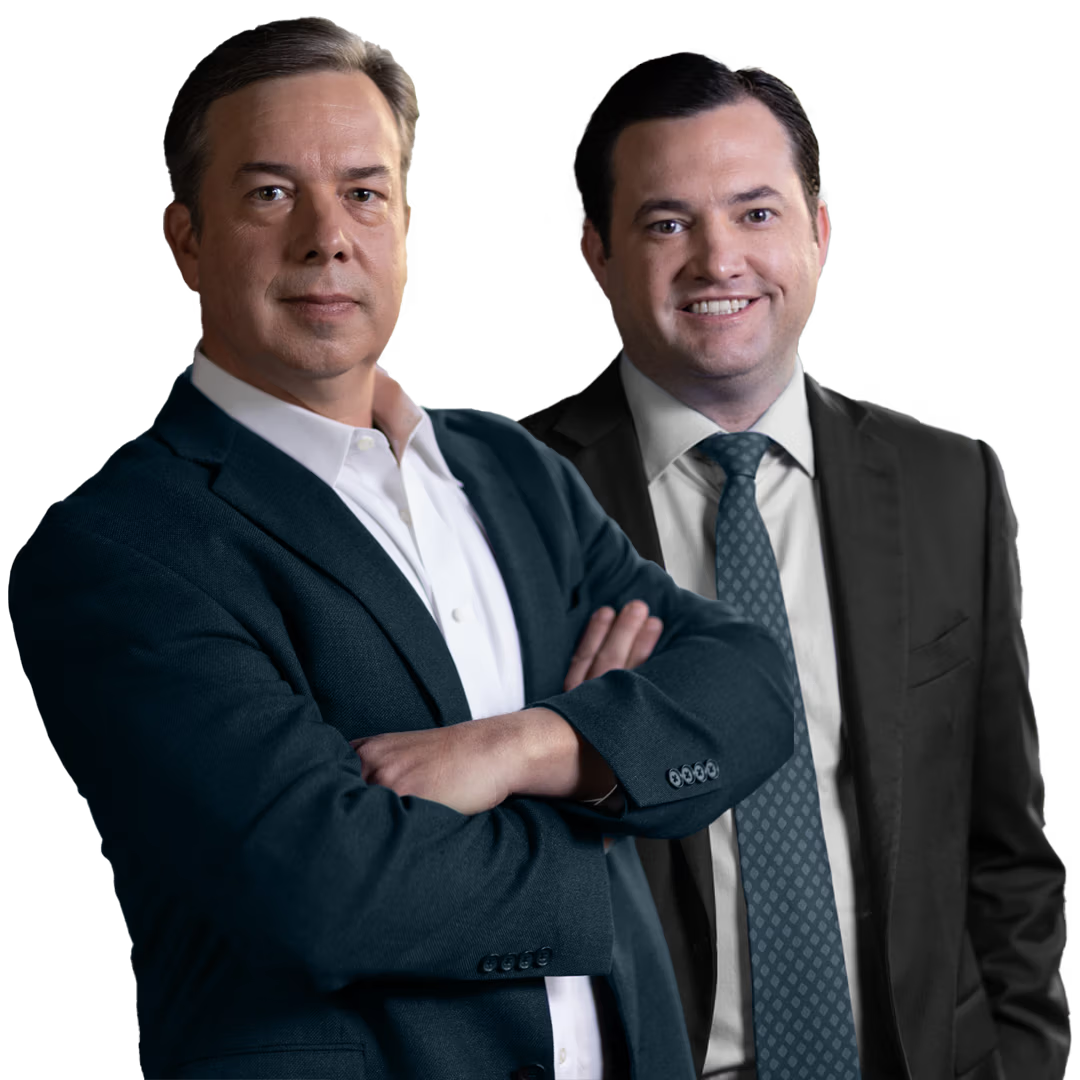
Founding partners Trey Morris and Justin Dewett lead every Bossier City injury case Morris & Dewett takes.


How Do Bossier City Car Accident Lawyers Prove Liability and Recover Compensation?
Winning a Louisiana car accident claim comes down to proof. An attorney has to show that another driver did something a careful driver would not have done, and that the conduct caused the injuries that followed. Every piece of that story needs evidence, and the evidence has to be gathered before it disappears.
Securing police reports, witness statements, and crash photos
The first layer of proof is the contemporaneous record. The crash report prepared by responding officers documents the location, the vehicles, the reported sequence of events, and any citations issued at the scene. Witness statements capture what bystanders saw before memories fade and phone numbers go cold. Photographs of vehicle damage, skid marks, debris fields, and roadway conditions fix the physical scene in time.
This evidence degrades fast. Surveillance footage from nearby businesses is often overwritten within days. Skid marks wash away. An attorney who moves early sends preservation letters and pulls footage before it cycles out, because the window to secure scene evidence is short.
Demonstrating breach of duty: drunk, distracted, and texting driving
Breach means showing the other driver did something a reasonable driver would not. Running a red light, following too closely, drifting across a center line, or driving while impaired can each establish it. The proof varies with the conduct. A distracted-driving claim leans on phone records and the driver’s own admissions. An impaired-driving claim leans on field sobriety results, chemical testing, and the officer’s observations.
Tying the conduct to the crash is its own task. It is not enough to show that a driver was texting or had been drinking. The proof has to connect that conduct to the collision itself, so that a careful chain runs from the behavior to the impact to the injury.
Black box, cell phone, and commercial vehicle data
Modern vehicles record their own data. An event data recorder, often called a black box, can log speed, braking, throttle position, and seatbelt use in the seconds before impact. That data either confirms or contradicts a driver’s account. Cell phone records and app logs can show whether a driver was texting or scrolling at the moment of the crash.
Commercial vehicles add more sources. Electronic logging devices, telematics systems, and dispatch records can reveal hours-of-service issues and routing decisions. Preserving this data requires a timely request, because companies overwrite it on routine schedules. A lawyer who knows the data exists requests it before it is gone.
Accident reconstruction and expert testimony
When fault is disputed or the physics of the crash matter, an accident reconstruction expert rebuilds the event. Using skid measurements, vehicle damage, road geometry, and recorded data, a reconstructionist calculates speeds, angles, and points of impact. That analysis can establish how the crash happened when the other side denies responsibility.
Medical and economic experts carry their own weight. A treating physician or a retained specialist explains how the crash produced the injury. A vocational or economic expert quantifies lost earning capacity and the cost of future care. Reconstruction and expert work is expensive, and firms that rarely try cases often skip it.
Medical records connecting injuries to the crash
Damages have to be tied to the collision. Medical records do that work. They document the diagnosis, the treatment, the prognosis, and the timeline that links the injury back to the impact. A consistent record from the date of the crash forward makes the connection hard to dispute. Gaps in treatment give an insurer room to argue the injury came from something else.
This is why early and continuous medical care matters to the claim, not just to healing. The records connect the conduct to a dollar figure, supporting both the cost of treatment and the harder-to-measure effects on a person’s daily life. Proof and damages move together, and the strength of the record decides how much of the claim survives.
How Much Is a Bossier City Car Accident Case Worth?
No honest attorney puts a dollar figure on a case before reviewing the medical records, the fault evidence, and the available insurance. A case is worth the sum of what the crash actually cost you, measured across hard expenses and human harm, then adjusted for your share of fault and the coverage you can reach. Two crashes that look identical on a police report can settle for very different amounts because the injuries, the treatment, and the long-term effects differ.
Economic Damages: Medical Bills, Lost Wages, Future Care
Economic damages are the costs with a receipt or a clear paper trail. They cover emergency treatment, hospital stays, surgery, physical therapy, imaging, prescriptions, and the mileage to and from appointments. They also cover wages you lost while unable to work and the earning capacity you lose if an injury keeps you from your old job.
Future care is often the largest piece and the easiest to underestimate. A herniated disc that needs injections every year, a knee that will need replacement, or a brain injury requiring ongoing therapy all carry costs that stretch decades forward. Documenting those future expenses usually requires treating physicians and, in serious cases, a life-care planner.
Non-Economic Damages: Pain and Suffering
Non-economic damages compensate the harm that has no invoice: physical pain, mental anguish, loss of enjoyment of life, disfigurement, and the strain an injury puts on daily living. Louisiana refers to these as general damages, and they often make up a substantial portion of a serious-injury claim.
There is no fixed formula for these damages. A jury award or a settlement reflects the severity of the injury, the length of treatment, the permanence of any impairment, and how the injury changed the person’s life. The credibility of the medical record matters here. Consistent treatment and clear documentation make pain and suffering provable rather than speculative.
Wrongful Death and Punitive Damages
When a crash kills someone, Louisiana allows certain surviving family members to bring a wrongful death claim for their own losses, including loss of companionship and support, alongside a survival action for what the deceased endured before death. These are distinct claims with distinct damages, and they reach harms that an ordinary injury claim does not.
Punitive-type damages are the exception rather than the rule in car accident cases. Most crashes produce compensatory damages only, the categories described above, because punitive awards are not available for ordinary negligence by a careless driver. Whether any punitive-type claim fits a given crash depends on the specific facts and the law that applies to those facts, which is one of the first things to discuss with an attorney who has reviewed the file.
How Comparative Fault and Pre-Existing Conditions Affect Payout
Two factors regularly pull a case value down. The first is your share of fault, which reduces the award under Louisiana’s fault rules. The second is a pre-existing condition. Insurers often argue that a degenerative back or an old injury, not the crash, explains the symptoms. The practical answer is that aggravating a prior condition can be compensable, but proving the crash worsened the condition requires before-and-after medical evidence.
The strength of the documentation drives this part of the value. A clean record of consistent treatment after the crash, paired with prior records that show the earlier baseline, separates new harm from old.
Settlement Value vs. Trial Value
A claim has two numbers. Settlement value is what an insurer will pay to close the file without a verdict, discounted for the time, cost, and risk both sides avoid by not going to court. Trial value is what a jury might award after hearing the full evidence, which carries the upside of a larger verdict and the risk of a smaller one or none at all.
The gap between the two is where preparation earns its keep. An insurer offers more to a lawyer who has built the file, retained the experts, and shown a willingness to try the case than to one who treats every claim as a quick settlement.
How Do Insurance Claims Work After a Bossier City Car Accident?
Most Bossier City crash claims start and end with insurance, not a courtroom. You file with the at-fault driver’s liability insurer, your own coverages back you up when theirs falls short, and an adjuster decides what the claim is worth. Knowing how each step works tells you when an offer is fair and when it is being lowballed.
Filing a Claim With the At-Fault Driver’s Insurer
After a crash, you report the loss to the at-fault driver’s bodily injury liability insurer. That carrier investigates fault, reviews your medical bills and property damage, and makes an offer. The adjuster’s job is to close the file for as little as possible, so the claim moves on their timeline unless you push it.
One point trips up many Louisiana drivers: you usually cannot sue the insurer by name. Under La. R.S. 22:1269, the default rule prohibits naming a liability insurer as a defendant. Direct action against the insurer is allowed only in seven defined situations: when the insured is bankrupt or insolvent, the insured has died, service of process on the insured fails within 180 days, the claim is against a UM carrier, the suit is a family tort claim, the insurer has denied coverage or issued a reservation of rights, or the insured fails to answer or defend. Outside those exceptions, the lawsuit names the at-fault driver, and the insurer defends and pays under the policy.
Using Your Own UM/UIM Coverage
When the at-fault driver has no insurance or not enough to cover your injuries, your own uninsured and underinsured motorist coverage steps in. Louisiana requires UM/UIM coverage in every auto policy unless the named insured rejects it in writing on the form prescribed by the Commissioner of Insurance, under La. R.S. 22:1295. A valid rejection stays in effect for the life of the policy, so a waiver signed years ago still controls today.
Pull your declarations page and check for UM/UIM limits. If you never signed a valid written rejection, the coverage may exist even if you assumed it did not. A UM claim runs against your own insurer, one of the defined situations where a carrier can be named directly.
Should You Talk to the Insurance Adjuster?
You will report the basic facts of the crash to file the claim. A recorded statement is different. Adjusters use recorded statements to lock in early descriptions of injuries and fault, then point to them later when you ask for full damages. Ask whether the statement is recorded, and decline to give one until you have legal advice.
Stick to verifiable facts: date, location, vehicles, the police report number. Avoid guessing about speed, fault, or the full extent of injuries before a doctor has evaluated you. Soft tissue and head injuries often surface days after the crash.
Why Quick Settlement Offers May Undervalue the Claim
A fast offer in the first weeks rarely reflects the true cost of an injury. Future medical care, lost earning capacity, and pain and suffering are not yet known while you are still treating. Once you sign a release, the claim is closed even if your condition worsens.
Compare any offer against your full picture: completed treatment, documented future care, lost wages, and the property damage estimate. An adjuster who pushes for a signature before you finish treating is treating speed as leverage. The strongest claims are documented with medical records, wage statements, and a clear liability story before anyone discusses numbers.
When a Lawsuit Becomes Necessary
A lawsuit becomes necessary when the insurer disputes fault, denies the claim, or refuses to offer fair value as the prescriptive deadline approaches. Filing suit stops the prescription clock and forces formal discovery, where the other side must produce documents and answer questions under oath.
Most suits name the at-fault driver rather than the insurer, with the carrier defending behind the named defendant, while a UM dispute lets your own insurer be named directly. Filing does not mean the case goes to trial. Most resolve through negotiation or mediation after both sides see the evidence, but the filing itself often moves a stalled claim.
What clients say
- ★★★★★
I hired Morris and Dewett back in November of 2025.
They helped me get through my hard times of being off work, stress, and worry. Anytime I had a question I could call and they always had an answer. Very nice and professtional people. Thank you Morris and Dewett for making this an easy process for me and my family.
- ★★★★★
Morris and Dewett and their team of attorneys and staff go above and beyond.
They always were there to support me and answer all my questions after a shoulder injury that included multiple surgeries. They are caring and compassionate and that goes a long way! Highly recommended!
- ★★★★★
Thanks Morris and Dewett for the excellent work you have done on my behalf.
I want to personally thank Sarah for her kindness.
- ★★★★★
Morris & Dewett does things the right way!
They put their clients first in measurable and impactful ways.
- ★★★★★
First time being injured and needing a lawyer they where very helpful.
They answered my questions Id have very well. Highly recommend them.
- ★★★★★
Wonderful experience with Morris and DeWitt, everyone was articulate and punctual, and open to all my questions about the process.
My case couldn't have been handled by a better team! Caity Nerren, Jessica Christian, and Meghan Nolen were all fantastic and helped every step of the way. Thanks again for all of your hard work.
Reviews reflect individual client experiences. Past results do not guarantee future outcomes.
How Much Does a Bossier City Car Accident Lawyer Cost?
Most car accident lawyers in Bossier City charge nothing upfront and take a percentage of the result instead of an hourly rate. This is the contingency fee model, and it shapes how these cases are paid for.
Contingency Fee Model: No Win, No Fee
A contingency fee means the lawyer’s payment depends on getting compensation for you. If there is no settlement and no verdict in your favor, there is no attorney fee. The lawyer carries the financial risk of the case instead of the client. That structure exists because most people injured in a crash cannot pay a lawyer by the hour while they are out of work and dealing with medical treatment.
The fee comes out of the gross compensation when the case resolves. You do not write a check at the start. You do not get a monthly invoice. The arrangement aligns the lawyer’s interest with yours because the firm only gets paid when you do.
Typical Contingency Percentages
Contingency percentages in personal injury cases commonly fall in a range, and the exact figure depends on the firm and the stage at which the case resolves. Many agreements set one percentage if the case settles before a lawsuit is filed and a higher percentage if the case proceeds into litigation or trial, because a filed lawsuit requires substantially more work.
The percentage applies to the compensation obtained. A clear fee agreement spells out whether the fee is calculated before or after case costs are deducted, which materially changes what you take home. Get that detail in writing before you commit.
Case Costs and Reimbursement
Attorney fees and case costs are two separate things. Costs are the out-of-pocket expenses of building the case: filing fees, certified medical records, deposition transcripts, accident reconstruction experts, and similar items. These can add up, particularly when expert testimony is needed.
Most firms advance these costs during the case and then deduct them from the settlement at the end, on top of the attorney fee. Read the agreement to see whether you owe costs if the case does not succeed. Some firms absorb costs on an unsuccessful case and some do not. The answer should be stated plainly in the contract, not left to assumption.
Free Consultation: What to Bring and Expect
A free consultation is a no-obligation meeting where a lawyer evaluates your situation and tells you whether you have a viable claim. Bring the documents that let the lawyer assess the case quickly. That includes the crash report, photos of the vehicles and scene, the names and insurers of the other drivers, your own insurance declarations page, and any medical records or bills you already have.
Expect the lawyer to ask how the crash happened, what injuries you sustained, and what treatment you have received. The lawyer should explain the fee structure plainly and give a realistic picture of the claim rather than a guaranteed outcome.
What the Fee Agreement Spells Out
The fee agreement is a contract, and the terms that decide what a client takes home belong in writing, not in assumption. Morris & Dewett states the contingency percentage and whether it increases once a lawsuit is filed, sets out whether the fee comes out before or after case costs are deducted, identifies who carries the costs if the case does not succeed, and names the attorney who will handle the file. Each of those terms is written into the agreement before a client signs.
Morris & Dewett’s case results page lists past verdicts and settlements.
Frequently Asked Questions
- Can I recover compensation if I was partly at fault?
- Often, yes. Louisiana uses a comparative fault system under La. C.C. art. 2323. For causes of action arising on or after January 1, 2026, a person who is 51% or more at fault recovers nothing. At 50% or less, damages are reduced by the assigned fault percentage rather than eliminated. A simple example shows how it works. If a claim is worth $100,000 and you are found 20% at fault, the award is reduced by that 20%, leaving $80,000. Insurers know this rule and frequently try to shift blame onto the injured driver to lower what they pay. Documenting the scene and securing the police report early helps counter that tactic.
- What if the other driver was uninsured?
- When the at-fault driver carries no insurance, uninsured motorist coverage on your own policy becomes the path to compensation. Louisiana requires UM/UIM coverage in every auto policy under La. R.S. 22:1295 unless the named insured rejected it in writing on a form prescribed by the Commissioner of Insurance. A valid rejection lasts for the life of the policy, so check whether you actually carry the coverage before assuming you do not. One Louisiana rule deserves attention here. Under the No Pay, No Play law at La. R.S. 32:866, an uninsured driver cannot recover the first $100,000 in bodily injury damages or the first $100,000 in property damage from the at-fault driver's insurer, and that limitation applies regardless of who caused the crash. Carrying the required coverage protects more than your wallet at renewal time.
- Can I file a claim if I was a passenger?
- Yes. A passenger injured in a crash did not control either vehicle, so a passenger is rarely assigned fault. That position can open more than one source of compensation, including the driver of the car you rode in, the driver of the other vehicle, and the available insurance policies on each. Passengers also reach their own UM/UIM coverage in many situations. If you have a personal auto policy, that coverage can apply even when you were riding in someone else's vehicle. Sorting out which policies respond is one of the first things to review after a passenger injury.
- Will my car accident case go to trial?
- Most car accident claims resolve through settlement rather than a trial. A case heads toward the courtroom when the parties cannot agree on liability or on the value of the injuries, or when an insurer makes offers that do not reflect the documented damages. Preparing a claim as if it will be tried tends to produce stronger settlement positions. When the evidence of fault and injury is organized and complete, an insurer has less room to discount the claim. The decision to accept an offer or proceed to trial belongs to the client, made with the facts laid out plainly.
- How do I get a copy of my Bossier City police report?
- A crash investigated by the Bossier City Police Department generates a report you can request once it is finalized, which usually takes several business days after the collision. Requests typically go through the department's records division, and you will need the report number, the date of the crash, and the names of the drivers involved. The Louisiana State Police handle reports for crashes on interstates and state highways, so a wreck on I-20 or I-220 may route through that agency instead. Keep the case or report number the responding officer provides at the scene. That number speeds up every later request and helps match your file to the correct investigating agency.
Last updated June 28, 2026