

Injured in a Truck Accident in Natchitoches, Louisiana?
A crash with a commercial truck on I-49, US-84, or the parish roads around Natchitoches is governed by the same Louisiana negligence law that controls any injury claim, but the deadlines and fault rules carry real consequences. For crashes on or after July 1, 2024, you generally have two years to file suit under La. C.C. art. 3493.1, and Louisiana’s comparative fault rule under La. C.C. art. 2323 reduces your damages by your share of the blame, with recovery barred entirely for a plaintiff 51 percent or more at fault on causes of action arising on or after January 1, 2026.
Morris & Dewett Injury Lawyers represents people hurt in commercial truck and 18-wheeler crashes in Natchitoches and across northwest Louisiana. A collision with a loaded tractor-trailer is not a matter you settle over the phone with an adjuster, because the size of the vehicle, the number of parties involved, and the way trucking companies move to control the evidence all change what comes next.
Not every collision needs an attorney. A minor crash with no injuries and clear fault often resolves without one. The calculus shifts when an 18-wheeler is involved, when someone is seriously hurt, or when the trucking company’s insurer is already calling. Those are the cases where the decisions made in the first week shape everything that follows.
Signs You Should Contact a Truck Accident Lawyer Immediately
Certain facts move a truck crash out of the do-it-yourself category. If anyone in the vehicles was hospitalized, suffered a fracture, head injury, spinal injury, or any injury expected to last beyond a few weeks, the stakes are high enough that representation matters. Severe injuries drive the largest part of a claim’s value, and they are also the injuries insurers work hardest to minimize.
Watch for these signals that you should talk to a lawyer right away. An adjuster from the trucking company contacts you within days of the crash. Fault is disputed, or the police report blames you in whole or in part. More than one vehicle or more than one company appears to be involved. The truck driver was working for a carrier, a broker, or a delivery service at the time. Any one of these means parties with legal teams are already organizing their version of events.
Delay carries a cost here that it does not carry in a simple car wreck. The longer you wait, the more time the carrier has to gather and shape the evidence before anyone is protecting your side of it.
What a Lawyer Does Before the Trucking Company Controls the Evidence
The evidence that proves a truck case lives mostly inside the trucking company. Electronic data from the truck, the driver’s duty logs, maintenance records, and internal communications sit on the carrier’s servers and in the carrier’s files. After a serious crash, the carrier often dispatches its own investigators to the scene within hours. They are building a record. You should have someone building yours.
A lawyer’s first job is to stop that evidence from disappearing. That means sending a formal letter directing the carrier to preserve records and electronic data, identifying which categories of evidence matter, and acting before routine retention periods run out. It also means documenting the scene, the vehicles, and the injuries while they are still fresh, and locating witnesses before memories fade. None of this requires a lawsuit to be filed. It requires moving early.
When a Truck Accident Case Is Different From a Car Accident Case
A truck case and a car case may start with the same kind of collision, but they are not the same legal matter. Commercial trucks operate under a layer of federal and state rules that ordinary drivers do not. More parties can share responsibility than just the person behind the wheel. The insurance coverage is larger, and the defense is more organized because more money is at risk. The evidence is electronic and held by the company rather than sitting in a glove box.
A serious truck crash is a category of case that rewards early, informed action, and the choice of whether to hire a lawyer is really a choice about whether someone protects your side of the record while the other side is already protecting theirs.
Serving Natchitoches
Served from our Shreveport office.
509 Milam St
Shreveport, LA 71101
Open 24/7 for injured Natchitoches residents
Get directions →What Should You Do Immediately After a Truck Accident in Natchitoches Parish?
The steps you take in the first hours after a commercial truck crash shape everything that follows. A loaded tractor-trailer carries far more force than a passenger car, so injuries run more severe and the evidence trail is more complicated. What you do at the scene and in the days after protects your health first and your claim second. Here is the order that makes sense.
Call 911 and Request Medical Help
Call 911 from the scene. In Natchitoches Parish, that dispatches local law enforcement and emergency medical services to the location. Tell the dispatcher there are injuries and that a commercial truck is involved, because that changes how responders treat the scene.
A crash that involves injuries and a commercial truck draws an official response. The responding officer creates the written record of what happened, and that record becomes a starting point you can later request. Getting law enforcement to the scene is the surest way to lock in an account while the details are fresh.
Stay at the scene until officers release you. Move to a safe spot off the roadway if you can, but do not drive away. The officer who responds builds the first written account of the crash, and you want to be present while that account takes shape.
Get Checked by a Doctor Even if Symptoms Are Delayed
Get a medical evaluation even if you feel functional. Adrenaline masks pain, and the most serious truck-crash injuries often announce themselves hours or days later. Internal bleeding, concussions, herniated discs, and soft-tissue damage frequently feel minor at first and worsen fast.
Truck collisions produce a high share of severe injuries because of the size and weight disparity. Spinal damage, traumatic brain injury, and crush injuries are common, and several have delayed onset. A doctor who examines you early can catch what you cannot feel yet.
The medical record also matters to your claim. A gap between the crash and your first treatment gives the trucking company’s insurer room to argue your injuries came from something else. Prompt care closes that gap and ties your treatment to the collision.
Preserve Photos, Dashcam Footage, and Witness Information
Photograph everything you safely can. The truck and its trailer, both license plates, the U.S. DOT number on the cab door, the positions of both vehicles, skid marks, debris, road conditions, and your own injuries. The DOT number identifies the carrier and is easy to lose track of once the truck is towed.
Save any dashcam footage from your vehicle before it overwrites itself. Many dashcams record on a loop and erase older files within days. Pull the card or back up the video as soon as you are able.
Get names and phone numbers from anyone who saw the crash. Independent witnesses carry weight that the parties to the wreck do not. Their accounts can settle disputes about lights, lanes, and speed that otherwise come down to one driver’s word against another’s.
Do Not Give a Recorded Statement to the Trucking Insurer
A representative from the trucking company’s insurer may contact you quickly, sometimes within a day. They are not calling to help you. They are gathering material to limit what the carrier pays.
You are not required to give the trucking company’s insurer a recorded statement, and you should not before you understand your rights. Early answers, given while you are medicated, in pain, or unaware of the full extent of your injuries, get used later to reduce or deny your claim. A casual “I’m okay” becomes evidence that you were not hurt.
You can decline politely and say you will follow up. Report the crash to your own insurer as your policy requires, but keep your account to the facts and avoid speculating about fault.
Request the Natchitoches Police Crash Report
The officer who responds creates a crash report documenting the parties, vehicles, statements, and the officer’s observations. Ask the responding officer how to obtain a copy and note the report or item number if they provide one.
Crash reports typically take several days to become available after the officer files them. You can request a copy from the agency that handled the scene, whether that was the local police department, the parish sheriff’s office, or Louisiana State Police, depending on where the crash occurred. Keep the report once you have it, because it anchors the timeline and the officer’s findings.
The report is a strong starting point, not the last word. Officers do not always capture everything, and commercial truck cases often turn on records the carrier holds that never appear in a roadside report. Preserving your own evidence early protects you while the deeper investigation gets underway.
How Do Truck Accident Claims Differ From Car Accident Claims in Louisiana?
A truck accident claim looks like a car accident claim on the surface. The same Louisiana negligence rules apply, and an injured person still has to prove fault, causation, and damages. The differences sit underneath. More parties can share responsibility, the insurance behind the truck is larger and defended harder, the equipment is run under a different operating framework, and the evidence that often decides the case lives in electronic systems most drivers never think about. Those four differences are why a commercial-vehicle wreck is its own kind of case.
Commercial Carriers Operate Under a Different Framework
Commercial trucking is a regulated industry in a way that everyday driving is not. A passenger-car driver answers to the state traffic code. A commercial operation typically runs under that code plus a set of operating practices that cover driver hours, equipment inspection and maintenance, driver qualification, and the records the operation keeps. This is general context about how the trucking side works, not a finding about any particular carrier.
The practical effect is more paper and more routine behind the truck than behind a private car. The records a carrier keeps, and the daily routines those records reflect, can become part of the picture when an injured person reconstructs what happened.
Multiple Potentially Liable Parties
In a two-car collision, the universe of defendants is usually small. A truck wreck widens it. The driver is one party. The company that employed or contracted the driver is another. Depending on the facts, a separate cargo loader, a maintenance contractor, a parts manufacturer, or another company in the chain may share responsibility for what went wrong.
This matters because each added party can carry its own insurance and its own records. Identifying every responsible party early shapes the entire case. The full liability analysis, including how Louisiana treats employers and other potential defendants, is covered in the liability section of this page.
Higher Commercial Insurance Coverage and Aggressive Defense
The insurance behind a commercial truck is not the modest policy behind a private car. Commercial coverage on interstate trucks generally sits well above typical personal auto limits. More coverage means more exposure, and more exposure means the carrier’s insurer defends harder and earlier.
Trucking insurers often dispatch investigators to the scene within hours of a serious wreck. They are building their position before the injured person has left the hospital. That early, organized response is one of the clearest ways a truck case differs from an ordinary fender-bender, and it is why the timing of an injured person’s own steps carries real weight.
Electronic Evidence Unique to Commercial Trucks
A passenger car rarely holds evidence beyond a phone and a damage pattern. A commercial truck records itself. The engine control module captures speed, braking, and throttle data in the seconds before impact. Electronic logging devices track the driver’s hours and duty status. Carriers keep inspection logs, maintenance histories, and driver qualification files.
This electronic record can confirm a fact that no eyewitness saw, but it does not preserve itself. Carriers may overwrite or discard certain data on short cycles unless someone demands that it be kept. The mechanics of identifying, demanding, and reading that electronic evidence are addressed in the evidence section of this page. The point here is simpler. The proof in a truck case is built differently, and that difference starts the moment the wreck happens.
What Causes Most Truck Accidents in Natchitoches and Northwest Louisiana?
Most commercial truck crashes in and around Natchitoches Parish trace back to a small set of preventable causes: driver fatigue, unsafe loads, distraction, neglected maintenance, and the freight corridors that funnel heavy trucks through the region. Natchitoches sits at the crossing of I-49, US-84, LA-6, and the timber and farm routes that feed them, so the same long-haul and short-haul hazards that show up nationwide concentrate here. Knowing the usual cause helps explain why the evidence in a truck case lives in a carrier’s files, not just at the crash scene.
Fatigue and Rest on Long US-84 and I-49 Freight Runs
Fatigue is one of the most common factors in serious truck crashes. A tired operator with slowed reaction time is a danger to everyone sharing the road, which is why rest matters so much in commercial driving. Drivers running US-84 across north Louisiana or pushing freight up and down I-49 face delivery pressure that tempts them to keep driving past the point of safe alertness. When a carrier or driver treats rest as optional, the result is a fatigued driver on a high-speed corridor. Rest and duty status are documented, so a driver who claims to have been rested can be checked against the records.
Overloaded and Improperly Secured Loads on Louisiana Farm and Timber Routes
Natchitoches Parish moves a heavy volume of timber, agricultural product, and equipment over local and state routes, and load problems cause crashes in two different ways. An overweight trailer lengthens stopping distance and strains brakes and tires. A poorly secured load shifts, spills, or falls into traffic. Logs that are not chained and blocked correctly, or cargo that was loaded off-balance, can put a truck out of control on a curve or a downgrade long before the driver reacts. Securement and weight standards exist precisely because these failures are predictable. Who loaded the trailer and whether it was weighed and inspected become central questions when a load failure is suspected.
Distracted and Fatigued Driving: ELD Data as Evidence
Distraction and fatigue often travel together, and modern trucks record more than most drivers realize. Electronic logging devices capture duty status and time behind the wheel, and that data can contradict a driver’s account of when they last rested. Texting, phone use, dispatch messaging, and dashboard activity all pull attention from the road at highway speed, where a few seconds covers the length of a football field. The value of the electronic record is that it is objective. A driver may say the crash came out of nowhere, but duty logs and device data can show a driver who had been working well past the point of safe alertness.
Brake Failure and Maintenance Violations
A loaded tractor-trailer can weigh many times more than a passenger car, and its braking system has to be maintained to stop that mass. Worn brake linings, out-of-adjustment air brakes, bald tires, and ignored inspection findings turn a routine slowdown into a crash the driver cannot prevent. Carriers are required to inspect, repair, and document the condition of their equipment, which means a maintenance failure usually leaves a paper trail. Skipped inspections and deferred repairs are not bad luck. They reflect choices that maintenance and repair records can later reveal.
Weather and Road Conditions: Fog on I-49, Flooding on LA-6
Northwest Louisiana weather creates real hazards that a careful commercial driver is trained to handle. Dense fog settles over stretches of I-49, cutting visibility to the point that safe speed drops well below the posted limit. Heavy rain floods low sections of LA-6 and nearby parish roads, where standing water causes hydroplaning and washes out shoulders. Weather does not excuse a crash on its own. Commercial drivers are expected to reduce speed, increase following distance, and pull off when conditions demand it, so a truck that plows into stopped traffic in fog or loses control on a flooded curve raises a question of judgment, not just bad conditions. The relevant proof is what the driver did as the weather worsened, which the same electronic and dispatch records help reconstruct.
What We Handle
Natchitoches Practice Areas
-
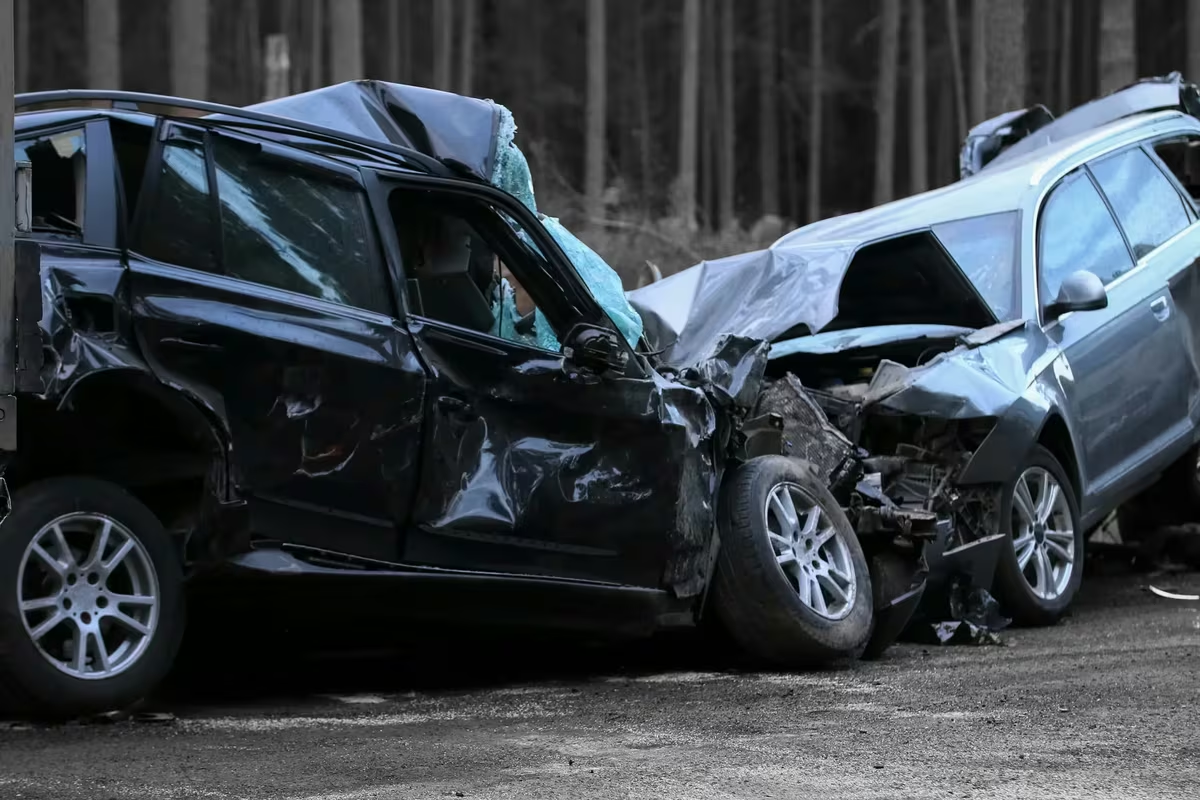 Car Accidents Rear-end, intersection, and highway collisions across Louisiana.
 -
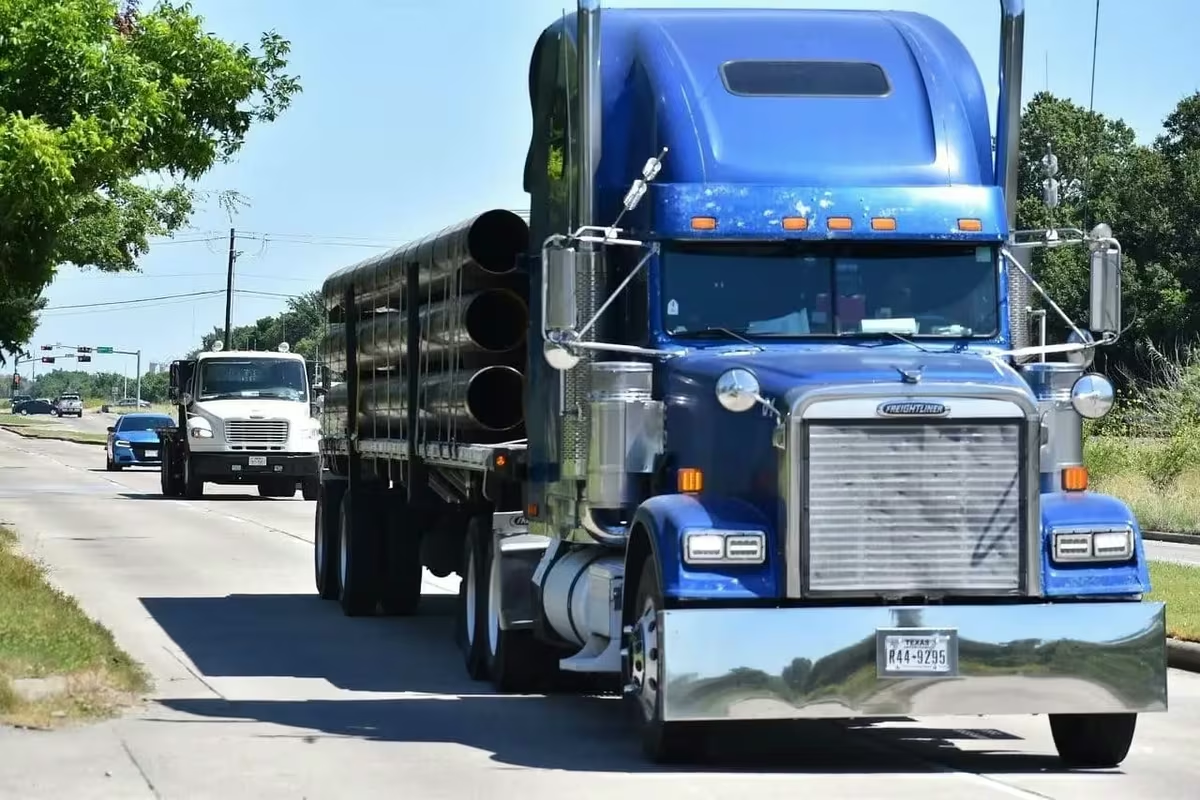 Truck Accidents 18-wheeler and commercial-vehicle wrecks governed by federal trucking rules.
 -
 Motorcycle Accidents Serious-injury motorcycle crashes where bias against riders is common.
 -
 Pedestrian Accidents Crosswalk and roadway pedestrian injuries with high-stakes liability.
 -
 Bicycle Accidents Cyclists struck by drivers who failed to share the road.
 -
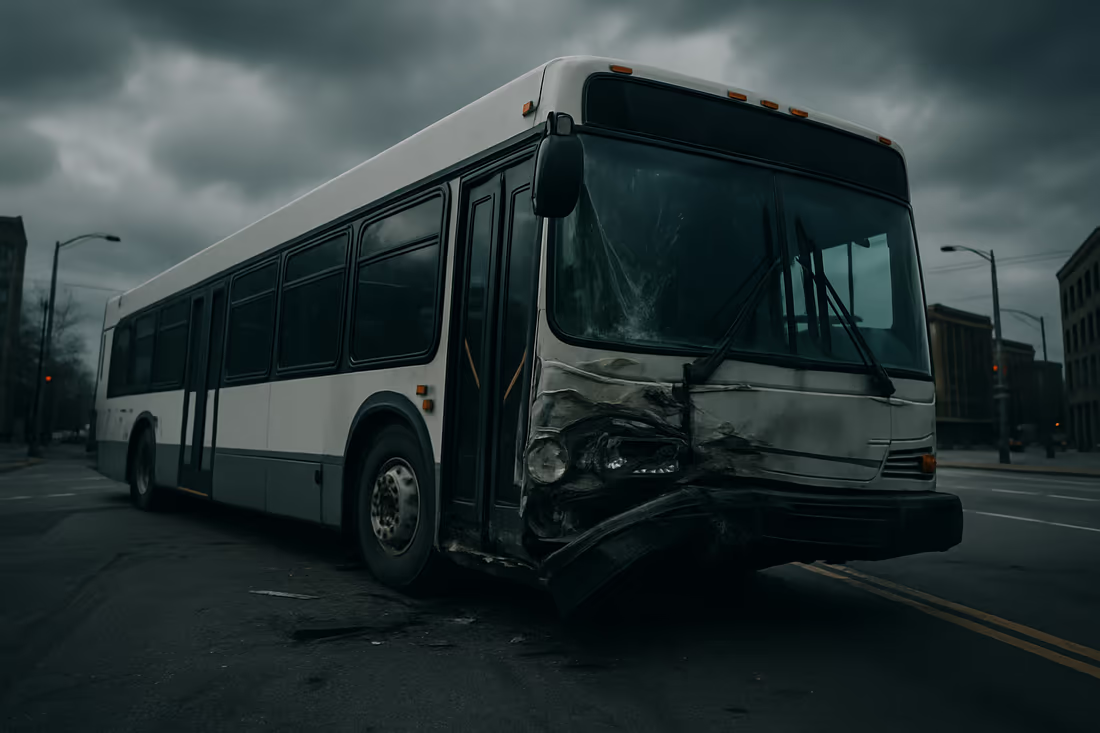 Bus Accidents Transit, school, and charter-bus crashes involving public and private carriers.
 -
 Slip & Fall Falls caused by wet floors, poor maintenance, and hidden hazards.
 -
 Catastrophic Injury Brain, spinal-cord, amputation, and severe-burn injuries that change a life.
 -
 Wrongful Death Claims brought by families after a fatal accident or act of negligence.
 -
 Construction Accidents Falls, struck-by, and equipment injuries on the job site.
 -
 Oilfield Accidents Drilling, pipeline, and refinery injuries across the energy sector.
 -
 Workers' Compensation On-the-job injuries and the benefits owed to injured workers.
 -
 Nursing Home Abuse Neglect and abuse of residents in long-term-care facilities.
Who Can Be Liable for a Commercial Truck Accident in Louisiana?
A commercial truck wreck rarely has just one responsible party. The driver may have made the immediate mistake, but the company that hired the driver, the broker that arranged the load, the crew that secured the cargo, and the manufacturer that built a failed part can each carry a share of the fault. Identifying every potentially liable party early is what separates a thin claim against one driver from a full case against everyone whose conduct contributed to the crash.
The Truck Driver
The driver is the most direct source of fault in most crashes. A driver who runs a red light, follows too closely, speeds for conditions, drives while fatigued, or operates under the influence has breached the duty owed to everyone else on the road. Driver fault is established through the same proof used in any negligence case: the crash report, witness accounts, physical evidence, and the driver’s own logs and conduct.
Naming the driver matters even when the driver has limited personal assets. The driver’s negligence is frequently the legal hook that brings the employer into the case. Establishing what the driver did wrong is the first step, not the last.
The Trucking Company or Motor Carrier (Vicarious Liability and Negligent Hiring)
The motor carrier that employs the driver is usually the party that actually pays a judgment, and Louisiana law provides two distinct routes to reach it. The first is vicarious liability. Under La. C.C. art. 2320, an employer is answerable for the damage caused by its employees in the exercise of the functions in which they are employed. When a truck driver causes a wreck while working within the course and scope of employment, the carrier is liable for that driver’s negligence under La. C.C. art. 2320.
The second route reaches the carrier’s own conduct. A motor carrier that hires an unqualified driver, fails to check a driving record, ignores prior violations, sets schedules that force hours-of-service violations, or skips required maintenance can be directly negligent. This is negligent hiring, retention, training, supervision, and maintenance. Direct-negligence theories matter because they reach the carrier’s own decisions, and because they open the door to the carrier’s internal records.
The Freight Broker, Shipper, or Cargo Loader
Liability does not stop with the carrier and its driver. A freight broker that arranges transportation can be on the hook when it selects a carrier it knew or should have known was unsafe. A shipper or third-party loading crew can be liable when a load is overloaded, unbalanced, or improperly secured and that failure causes or worsens the crash. Shifting cargo and overweight trailers contribute to jackknifes, rollovers, and loss of control, and the party that loaded the freight is often distinct from the party that drove the truck.
These defendants frequently carry their own insurance separate from the carrier. Tracing the chain from shipper to broker to carrier to driver is how a case reaches enough coverage to address a catastrophic injury.
The Truck or Parts Manufacturer (Product Liability)
When a mechanical defect causes the wreck, the manufacturer enters the picture. A defective brake system, a tire that fails, a steering component that breaks, or an underride guard that does not perform can make the manufacturer of the truck or the specific part liable under product liability principles. These claims turn on proving the component was unreasonably dangerous and that the defect, rather than driver error alone, caused or contributed to the injuries. Severe truck crashes often produce exactly the kind of catastrophic injuries that justify the engineering analysis these claims demand.
Product claims require preserving the truck and the failed part before they are repaired, scrapped, or lost. The physical evidence has to be secured promptly, because once a defective component is replaced or discarded, the proof of the defect goes with it.
Government Entities Responsible for Road Hazards
Sometimes the road itself is part of the problem. A poorly designed intersection, a missing or obscured sign, a defective traffic signal, or a hazardous shoulder can contribute to a crash, and the public entity responsible for that road may share fault. Claims against a government defendant carry procedural rules that do not apply to private parties. Under La. R.S. 13:5107, suits against the state or its political subdivisions require service of process within 90 days of commencement. That service requirement is separate from the deadline to file, so a suit filed on time can still run into a service problem if the procedural step is missed.
How Does Louisiana Comparative Fault Affect Your Truck Accident Recovery?
Your percentage of fault directly reduces what you collect. Louisiana follows a comparative fault system under La. C.C. art. 2323. Your damages are reduced by the share of fault assigned to you. For causes of action arising on or after January 1, 2026, a plaintiff found 51% or more at fault takes nothing. At 50% fault or less, damages are reduced in proportion to that percentage. This matters in truck cases because the carrier’s insurer spends real money trying to push more fault onto you, and every point it adds lowers your award.
How Damages Are Reduced by Your Percentage of Fault
The math is straightforward, and that is exactly what makes it worth contesting. If a jury values your total damages at $1,000,000 and assigns you 20% of the fault, your award drops to $800,000. The same case with 40% fault assigned to you pays $600,000. The fault percentage is not a footnote. It is a multiplier applied to your entire damages figure, including medical bills, lost wages, and pain and suffering.
In a serious truck collision the damages numbers are large, so each percentage point carries weight. Catastrophic injuries common after these crashes, spinal trauma, traumatic brain injury, multiple fractures, drive medical and future-care figures into six and seven digits. A 15-point swing in fault on a high-value case moves the award by an amount most people would consider life-changing.
Apportioning Fault Among Multiple Defendants
Truck cases rarely involve a single defendant, and comparative fault governs how blame is divided among everyone in the case. The driver, the motor carrier, a maintenance contractor, a cargo loader, and even an absent third party can each be assigned a share of fault. Under the comparative scheme in La. C.C. art. 2323, the trier of fact allocates percentages across all parties whose conduct contributed to the harm.
This cuts both ways. Multiple at-fault defendants can mean multiple sources of coverage, which often improves the practical value of a claim. It also means defendants point at each other, and at you, to shrink their own exposure. A defendant who shifts 30% of the blame onto a co-defendant or onto an empty chair reduces its own payout accordingly. Sorting out who bears what share, and proving it with logs, electronic data, and reconstruction, is the heart of the liability dispute in a commercial-vehicle case.
Defending Against Insurer Attempts to Shift Blame
Because the comparative system rewards the defense for every point of fault it can attach to you, the carrier’s insurer builds its strategy around exactly that. Expect arguments that you were speeding, distracted, following too closely, or that you could have avoided the collision. A recorded statement taken early, before you have counsel, frequently becomes the raw material for those arguments later.
The answer to blame-shifting is evidence gathered and preserved before it disappears. The truck’s electronic control module, the driver’s hours-of-service records, dashcam and traffic-camera footage, and an independent reconstruction establish what the truck did and when. When the physical record contradicts the insurer’s narrative, the fault percentage it tries to pin on you shrinks, and your damages figure holds.
What Evidence Proves Fault in an 18-Wheeler Accident?
Fault in a commercial truck wreck is shown with records that the trucking company holds at first: engine data, driver logs, qualification files, maintenance histories, and testing results. These documents show whether the driver had been on the road too long, whether the brakes were serviced, and whether the company put an unqualified driver behind the wheel. Much of it can be lost in the ordinary course of running the truck, so the order in which it is requested and saved often decides whether the truth survives.
Black Box (ECM) and Electronic Logging Device (ELD) Data
Every modern tractor carries an engine control module, often called the black box, that records data in the seconds around a hard event: speed, throttle position, brake application, and engine RPM. Alongside it, the electronic logging device records the driver’s duty status, replacing the old paper logbook. Together they can show whether the driver was speeding, braked late, or had been driving far past a safe limit.
This data does not always stay put in practice. The engine module can be overwritten when the truck is driven again or serviced, and the duty-status data does not always remain on the device once new trips pile up. A written request to keep the data, sent early, gives the carrier notice before the truck keeps operating and the information is gone. When the carrier resists, a court can be asked to allow imaging of the module before anything is overwritten.
Driver Qualification Files and Hours-of-Service Logs
The driver qualification file is the company’s record that this person was fit to operate the truck. It contains the application, the commercial license, the medical examiner’s certificate, prior employment checks, and the carrier’s road-test results. Gaps in that file can show a driver who never should have been hired or kept on.
Hours-of-service logs sit next to the qualification file and show when the driver worked, rested, and drove. They are read against the electronic logging data to catch falsified or padded entries. A log that says the driver was off duty while the device shows the engine running is direct evidence of a problem. These records are requested early and compared line by line, because the contradiction between paper and electronic data is frequently where the case turns.
Maintenance, Inspection, and Repair Records
A tractor-trailer is inspected, serviced, and repaired on a documented schedule, and the company keeps those records. They reveal whether brakes, tires, steering, and lights were maintained or whether known defects were ignored. A repair invoice flagging worn brake linings weeks before a crash is the kind of fact that ties a mechanical failure to a decision not to fix it.
These records also include the daily vehicle inspection reports drivers complete. When a driver noted a problem and the company sent the truck out anyway, that paper trail establishes the carrier’s own knowledge. Maintenance files are pulled for the specific tractor and trailer involved, not generic fleet summaries, so the history matches the equipment in the wreck.
Drug and Alcohol Testing Records
Commercial carriers run drug and alcohol testing programs, including testing after certain crashes. Post-accident test results, the testing timeline, and the carrier’s records of prior positive tests or refusals can all bear on fault. A delayed or skipped post-accident test is itself worth examining, because the absence of a test can support a question about why it was avoided.
These records also connect back to the qualification file. A driver with a documented history of testing problems who remained on the road raises a question about the company’s hiring and retention decisions. The testing file is requested with the rest of the driver’s records so the full picture, not a single result, is in front of the people deciding the case.
Dashcam, Traffic Camera, and Surveillance Footage Along I-49 and US-84
Video is the evidence a jury understands without translation. Many trucks now carry forward-facing and driver-facing dashcams that capture the moments before impact. Along freight corridors like I-49 and US-84 through Natchitoches Parish, additional footage may exist from traffic cameras, weigh-station systems, and the security cameras of nearby businesses and truck stops.
This footage is the most perishable evidence of all. Private surveillance systems frequently overwrite within days, and a camera that captured the crash on Tuesday may have recorded over it by the following week. Identifying which cameras had a sightline and sending requests to keep the footage before the loops cycle is time-sensitive work.
Past results do not guarantee future outcomes; each case is decided on its own facts. See our full case results.
What Compensation Can Truck Accident Victims Recover in Louisiana?
Truck accident compensation in Louisiana falls into a few defined categories, and the size of each depends on the injury, the proof, and who survived the crash. A serious 18-wheeler collision can produce a spinal injury, a traumatic brain injury, multiple fractures, or burns that require surgery and months of rehabilitation. Those severe injuries are common in commercial truck cases because a loaded tractor-trailer carries far more force than a passenger car. The categories below track how a claim is actually built: what you can measure, what you cannot measure but still deserves payment for, and what changes when someone dies.
Economic Damages: Medical Bills, Lost Wages, Future Earning Capacity
Economic damages are the costs you can document with paper. They start with medical bills: the ambulance, the emergency room, the surgeon, the hospital stay, the physical therapy, and the medication. In a catastrophic truck case, the future medical care often dwarfs the bills already incurred, so a life-care plan from a medical economist projects the cost of future surgeries, in-home care, assistive devices, and ongoing treatment.
Lost income is the second piece. That includes the wages you missed while you could not work and, when an injury keeps you from returning to your old job, the loss of future earning capacity. A vocational expert and an economist quantify the gap between what you would have earned and what you can earn now. The more permanent the injury, the larger and more important that calculation becomes.
Non-Economic Damages: Pain, Suffering, Loss of Consortium
Non-economic damages compensate for harms that have no receipt. Physical pain, mental anguish, disfigurement, scarring, and the lost ability to enjoy daily life all fall here. These are real and often the largest part of a serious injury claim, but they are also the part insurers attack hardest because there is no invoice to point to.
Loss of consortium is a related claim for the lost companionship, affection, and support that the injury caused within the family. Proving non-economic damages relies on treating physicians, day-in-the-life documentation, and testimony from people who knew you before and after, not a formula plugged into software.
Damages After a Fatal Truck Accident
When a truck crash kills someone, the losses tend to fall into two practical groups, and treating them as one leaves compensation on the table. One group covers the surviving family’s own losses from the death: lost financial support, lost companionship and guidance, and funeral expenses. The other covers what the person who died personally endured between the moment of injury and death, including conscious pain, fear, and the medical expenses incurred before passing. A focus of any fatal truck investigation is keeping these two groups separate and documenting each one with its own evidence.
The family’s losses turn on the decedent’s income, role in the household, and relationship with each survivor. The pre-death suffering turns on a narrower question: did the victim survive the impact for some period, even briefly, with awareness of what happened. Building that part of the case often relies on emergency responder records, medical charting, and witness accounts. A focus of the investigation is preserving that evidence early, before records are lost and memories fade.
Punitive or Exemplary Damages in Limited Louisiana Cases
Punitive damages are unavailable in Louisiana unless a statute expressly authorizes them, and most ordinary negligence claims have no such statute. That is a meaningful difference from some other states, and it shapes how a Louisiana truck case is valued. A defendant’s bad conduct does not automatically add a punitive award the way it might elsewhere. The case is built on the economic and non-economic categories above.
A narrow statutory exception exists for damages caused by a defendant whose intoxication while operating a vehicle was a cause of the injury, under La. C.C. art. 2315.4. That is the kind of fact pattern, an impaired commercial driver, where exemplary damages can come into play. Outside a statutory exception, punitive damages are off the table, and the claim rests on the documented economic and non-economic losses already described.
How Much Is a Natchitoches Truck Accident Case Worth?
No honest lawyer can quote a number the first time you call. A truck accident case is worth the total of what the crash actually cost you, proven with records, and reduced if any fault is assigned to you. Louisiana imposes no general statutory cap on damages in private commercial truck accident personal injury cases, so the value is built from your documented losses rather than measured against a fixed ceiling. The drivers of that value are practical ones: the severity of the injuries, the income lost and still being lost, the insurance and defendants available to pay, and how fault gets divided. Understanding each one tells you what a serious lawyer is actually measuring.
Injury Severity and Long-Term Medical Needs
The single largest factor in most truck cases is the medical picture. A collision with a loaded tractor-trailer produces injuries that often require surgery, hospitalization, and months of treatment. The value reflects not just the bills already paid but the cost of care still ahead.
A spinal fusion, a traumatic brain injury, or a crush injury can carry a lifetime of follow-up care, therapy, medication, and assistive equipment. A serious case is supported by a life-care plan that prices out future treatment, not just a stack of past invoices.
Lost Income, Work Restrictions, and Future Earning Loss
Past lost wages are the easy part. Pay stubs and tax records show what you missed while you were out. The harder and often larger number is future earning capacity when an injury keeps you from returning to the same work.
A logger, a tradesman, or a long-haul driver who can no longer lift, stand, or sit for long stretches may have to change careers or stop working entirely. That loss is calculated by comparing what you would have earned over your working life against what you can realistically earn now. A vocational expert and an economist build that figure. The deeper the work restriction, the larger this piece of the value becomes.
Commercial Insurance Coverage and Available Defendants
A case is only worth what can actually be collected. Commercial carriers in interstate freight carry far higher liability coverage than the typical car policy, which is why a serious truck claim can support a far larger payment than an ordinary fender-bender. The presence of multiple potentially responsible parties also matters, because more defendants can mean more available coverage.
The practical question is whether enough insurance and assets exist to satisfy the full value of the losses. A driver, a motor carrier, and a separate cargo or maintenance entity may each carry coverage. Identifying every layer early is how the real ceiling of a case gets established, and it is one reason these cases reward thorough investigation.
Disputed Fault and Louisiana Comparative Fault
Value does not exist in a vacuum. When a portion of the blame lands on the injured driver, the damages awarded reflect that division, so the same injuries can be worth meaningfully less in a contested case. Trucking insurers know this and routinely argue that the injured driver contributed to the crash.
A case with clear liability and strong evidence holds its full value. A case where fault is genuinely contested carries more risk, and that risk shapes both settlement posture and any verdict. This is why preserving evidence and building the liability record matters as much as documenting the injuries. The strength of the fault proof is part of the value.
Why No Lawyer Can Guarantee a Case Value Up Front
Anyone who promises a specific dollar figure at the first meeting is guessing or selling. The honest answer is that case value turns on questions that are still open: the full extent of the injuries once treatment runs its course, the results of the liability investigation, the coverage available, and how fault is ultimately apportioned.
A responsible evaluation comes after the medical course is understood and the evidence is gathered, not before. It is reached by documenting losses, retaining experts, and pinning down available coverage, and a confident dollar guarantee made before that work is done has no basis in the case.
What Is the Deadline to File a Truck Accident Lawsuit in Louisiana?
Louisiana gives you a limited window to file a truck accident lawsuit, and the window depends on when the crash happened. For injuries sustained on or after July 1, 2024, the prescriptive period is two years under La. C.C. art. 3493.1. For injuries before that date, the older one-year period under La. C.C. art. 3492 controls. Miss the deadline and the court can dismiss the case no matter how strong the evidence is. The date of your crash decides which clock applies.
Louisiana’s Prescriptive Period for Personal Injury Claims
Louisiana calls its filing deadline a prescriptive period rather than a statute of limitations, but the practical effect is the same. Once it runs, the right to sue is extinguished. The clock generally starts on the day the injury was sustained, which in a truck wreck is usually the date of the collision.
Under La. C.C. art. 3493.1, a personal injury claim carries a two-year prescriptive period when the injury occurred on or after July 1, 2024, while a crash that predates that date falls under the one-year period in La. C.C. art. 3492. A single truck crash can produce more than one claim against more than one party, so confirm with your attorney which period applies to each claim before you assume any deadline.
Accidents Before and After Louisiana’s 2024 Prescription Change
The date of injury is the dividing line. A crash on or after July 1, 2024 falls under the two-year period in La. C.C. art. 3493.1, and a crash before July 1, 2024 falls under the one-year period in La. C.C. art. 3492. Getting that date wrong forfeits the entire claim.
Do not assume the longer period saves a delayed claim. If your wreck predates the change, you have one year under La. C.C. art. 3492, not two, and the calendar does not pause while you decide whether to pursue the case.
Why Evidence Preservation Deadlines Matter Before the Lawsuit Deadline
The filing deadline is the outer limit, not the working deadline. Commercial trucking evidence often disappears long before any prescriptive period runs. Electronic data, logs, and physical evidence can be overwritten or discarded under short retention schedules, which means the practical deadline to lock down proof can arrive months before the deadline to file suit.
That gap is why waiting until the eve of prescription is a mistake even when the calendar technically allows it. By then the data that would have proved fault may be gone. Acting early on Louisiana truck accident claims preserves both the right to sue and the evidence needed to prove the case.
Fatal truck crashes and crashes involving a government vehicle carry their own timing and procedural rules, which are addressed in the dedicated compensation and trucking-law sections of this page. The point here is narrow. The date of your crash sets the prescriptive clock under either La. C.C. art. 3493.1 or La. C.C. art. 3492, and that clock is a hard date.
Your Natchitoches Injury Attorneys
Founding partners Trey Morris and Justin Dewett lead every Natchitoches injury case Morris & Dewett takes.


What Louisiana and Federal Trucking Laws Apply to Your Case?
A commercial truck case runs on two layers of law at once. State rules govern who you can sue and how the lawsuit is structured. A separate federal regulatory framework governs how interstate carriers and drivers were supposed to operate the truck in the first place. The interaction between those layers is what separates a truck case from an ordinary car wreck, and it is worth knowing which body of law is in play before you talk to anyone about your claim.
Louisiana’s Direct Action Statute: Suing the Insurer Directly
For decades Louisiana let injured people name a defendant’s liability insurer directly in the lawsuit. That changed. Under La. R.S. 22:1269, the default rule is now prohibition. An injured party generally cannot name the trucking company’s liability insurer as a defendant.
The statute carves out seven specific exceptions where direct action against the insurer is still permitted. Those are when the insured is bankrupt or insolvent, when the insured has died, when service of process on the insured fails within 180 days, in claims against an uninsured or underinsured motorist carrier, in tort claims between family members, when the insurer has denied coverage or issued a reservation of rights, and when the insured fails to answer or defend the suit.
Whether one of those exceptions fits your case is a fact question that shapes how the lawsuit is structured from day one.
The Federal Regulatory Layer
A truck case does not live in Louisiana law alone. Interstate commercial carriers operate under a separate federal regulatory framework that governs how the carrier and driver are supposed to run the truck. A freight run through Natchitoches Parish on US-84 or I-49 usually falls under that framework in addition to state law.
How each federal requirement works in detail is its own topic, covered in other sections of this page. The point here is the division of labor. The state rule under La. R.S. 22:1269 decides who you can name in the suit. The federal layer governs what the carrier was required to do and what records exist as a result. Those are two different jobs that start on the same day, which is why a truck claim is not handled the way a routine car wreck is.
How Do Truck Accident Settlements and Lawsuits Work in Louisiana?
Most truck accident claims resolve through a negotiated settlement, not a courtroom verdict. The process moves through distinct stages: investigation, a demand to the carrier’s insurer, negotiation, and, if talks stall, a lawsuit. Knowing each stage helps you tell whether a claim is being built for leverage or simply pushed toward a quick, low number. The stronger the evidence and the more serious the injuries, the more the timeline tilts toward litigation before a fair figure appears.
Severe injuries change the shape of this process. A claim involving a spinal fusion, a traumatic brain injury, or permanent work restrictions carries future medical and wage components that take time to document. Settling before a treating physician can describe long-term needs usually means leaving money behind.
Pre-Suit Demand and Carrier Insurance Negotiations
A pre-suit demand is a written package sent to the trucking company’s liability insurer. It lays out liability, the medical record, the bills, the wage loss, and the legal basis for the claim. A demand built on driver logs, the police narrative, and a complete medical chronology gives the insurer a reason to take the number seriously.
Carrier insurers respond with their own valuation, often far below the demand. Negotiation runs through offers and counteroffers, each tied to a specific dispute over liability percentage, medical causation, or future damages. The negotiation is only as strong as the file behind it. An insurer that sees a thin file offers a thin number.
When to Reject the First Settlement Offer
The first offer is rarely the real ceiling. It is an opening position designed to test whether you understand the claim’s value or will take an early check to make the problem go away. Accepting before treatment is complete forecloses any later claim for symptoms that worsen or surgeries that become necessary.
Rejecting an offer is a strategic decision, not a reflex. It makes sense when the medical picture is unsettled, when liability evidence is still being gathered, or when the offer ignores future earning loss. A signed release ends the claim permanently, so the timing of acceptance matters as much as the amount.
Mediation vs. Litigation
When negotiation stalls, the next steps are mediation or a filed lawsuit. A civil case arising from a Natchitoches Parish crash is filed in the local district court that hears civil matters. Filing suit starts formal discovery, depositions, and a litigation schedule, and it often changes how seriously an insurer treats the claim.
Mediation puts both sides in front of a neutral mediator who works toward a resolution without a trial. Many truck cases settle at mediation after discovery has exposed the carrier’s records. Litigation and mediation are not opposites. A case can be filed, move through discovery, and still resolve at a mediation set on the eve of trial.
How Contingency Fees Work: No Fee Unless You Win
A contingency fee means the attorney is paid a percentage of the result rather than an hourly rate billed as the case goes. If there is no compensation, there is no attorney fee. This structure lets an injured person pursue a commercial carrier and its insurer without paying legal fees out of pocket while the case is pending.
Costs and fees are separate items. Case costs, such as expert witnesses, deposition transcripts, and medical record retrieval, are typically advanced and then reimbursed from the result. A written fee agreement sets out the fee percentage and how costs are handled before the case begins, so there is no surprise at settlement.
Average Timelines: Settlement vs. Trial in Northwest Louisiana
A claim that settles before suit can resolve within months of the injured person reaching maximum medical improvement. The timeline depends on how long treatment takes and how disputed the liability picture is. A clean liability case with completed treatment moves faster than one where fault is contested across several defendants.
A case that goes through litigation runs longer, often well over a year, because discovery, depositions, expert reports, and the court’s docket all take time. Trial is the longest path, reserved for cases where the carrier refuses a reasonable figure. The right timeline is the one that lets the full extent of the injury and the available coverage come into focus before the claim is closed.
What Types of Truck Accident Cases Do We Handle in Natchitoches Parish?
Commercial truck cases are not one category. The vehicle, the cargo, and the way the crash happened all change what evidence matters and who can be held responsible. Natchitoches Parish sits at the junction of I-49 and US-84, with timber routes, farm roads, and delivery traffic feeding into the same corridors. The cases below reflect the freight that actually moves through this part of northwest Louisiana.
Logging Truck Accidents in Natchitoches Parish Timberlands
Logging trucks run heavy through the timberlands around Natchitoches Parish, hauling logs on open trailers along rural state and parish roads. Two failures dominate these crashes: loads that shift or fall because they were not chained and bound to standard, and weight that overwhelms the truck’s stopping distance on a curve or grade. When a log breaks free or a fully loaded trailer cannot stop, the injuries are severe, often spinal, head, and crush trauma. Proving these cases means examining the load securement, the truck’s weight against its rated capacity, and whether the route was appropriate for the vehicle.
Tanker Truck and Hazardous Materials Crashes
Tanker trucks carry liquids and gases, and a partially filled tank creates a surge of moving weight that can pull a truck off its line during braking or a turn. When the cargo is a hazardous material, a crash adds chemical exposure, fire, and evacuation to the physical impact. These cases pull in federal hazardous-materials handling rules and the carrier’s training and placarding records. The injuries can combine traumatic impact with burns or respiratory harm, which changes both the medical picture and the proof required.
Flatbed and Oversize Load Accidents
Flatbed trailers carry cargo that is exposed and secured by straps, chains, and binders rather than enclosed walls. When securement fails, pipe, steel, lumber, or machinery can slide into traffic or fall onto a passing vehicle. Oversize loads add width, length, or height that demands permits, escort vehicles, and specific routing. A crash involving an oversize load often turns on whether the permit conditions were followed and whether the load was marked and escorted as required. These cases frequently involve the shipper or loader who prepared the cargo, not just the driver.
Amazon, FedEx, and UPS Delivery Truck Crashes
Delivery trucks operate on tight schedules in residential and commercial areas, making frequent stops, backing maneuvers, and turns near pedestrians and cyclists. Crashes involving these vehicles raise a recurring question of who employed the driver and who owned the route. Major delivery brands often move freight through contracted carriers and independent service providers, which means the company on the side of the truck is not always the company legally on the hook. Sorting out the contracting structure early determines which insurance coverage applies.
Jackknife, Rollover, Underride, and Rear-End Collisions
The mechanism of a truck crash often reveals the failure behind it. A jackknife happens when the trailer swings out of line with the tractor, usually after hard braking or a loss of traction. A rollover points to speed, an unbalanced load, or a sharp maneuver. An underride, where a smaller vehicle slides beneath the trailer, is among the most lethal collision types and raises questions about rear and side guard condition. A rear-end collision by a loaded truck reflects following distance and stopping capability. Each pattern directs the investigation toward specific records and physical evidence, and a lawyer who has handled the full range knows which questions each one demands.
What clients say
- ★★★★★
I hired Morris and Dewett back in November of 2025.
They helped me get through my hard times of being off work, stress, and worry. Anytime I had a question I could call and they always had an answer. Very nice and professtional people. Thank you Morris and Dewett for making this an easy process for me and my family.
- ★★★★★
Morris and Dewett and their team of attorneys and staff go above and beyond.
They always were there to support me and answer all my questions after a shoulder injury that included multiple surgeries. They are caring and compassionate and that goes a long way! Highly recommended!
- ★★★★★
Thanks Morris and Dewett for the excellent work you have done on my behalf.
I want to personally thank Sarah for her kindness.
- ★★★★★
Morris & Dewett does things the right way!
They put their clients first in measurable and impactful ways.
- ★★★★★
First time being injured and needing a lawyer they where very helpful.
They answered my questions Id have very well. Highly recommend them.
- ★★★★★
Wonderful experience with Morris and DeWitt, everyone was articulate and punctual, and open to all my questions about the process.
My case couldn't have been handled by a better team! Caity Nerren, Jessica Christian, and Meghan Nolen were all fantastic and helped every step of the way. Thanks again for all of your hard work.
Reviews reflect individual client experiences. Past results do not guarantee future outcomes.
Natchitoches Louisiana Truck Accident Lawyer FAQs
These are the questions people ask most after a commercial truck crash in Natchitoches Parish. The answers below cover the law as it stands in Louisiana. Earlier sections go deeper on deadlines, liability, evidence, and case value. This part gives you the short version.
How long do I have to file a truck accident lawsuit in Louisiana?
For most truck crashes happening now, you have two years. Louisiana changed its rule for delictual (tort) personal injury claims arising on or after July 1, 2024, setting a two-year prescriptive period under La. C.C. art. 3493.1. Crashes before that date fall under the older one-year period in La. C.C. art. 3492. Product liability claims keep their own one-year window. Because the date of the crash decides which deadline applies, confirm your specific date before assuming you have time.
Do I need a lawyer for a truck accident, or can I deal with the insurer myself?
You can deal with the insurer yourself, but commercial truck claims involve evidence and parties that car accident claims do not. Carriers control the electronic logging device data, driver logs, and maintenance records, and they investigate fast. An attorney can demand preservation of that evidence and identify every party who may share fault before records are lost. The timing of that preservation often decides what proof survives.
Can I still get damages if I was partly at fault for the crash?
Yes, in most situations. Louisiana uses a comparative fault system under La. C.C. art. 2323. Your damages are reduced by your assigned percentage of fault. For causes of action arising on or after January 1, 2026, a plaintiff who is 51 percent or more at fault recovers nothing, while a plaintiff at 50 percent or less has the award reduced by the fault percentage. Insurers often try to shift blame onto the injured driver to lower what they pay, which is one reason fault gets disputed in these cases.
Can I sue the trucking company’s insurance company directly?
Usually not. Louisiana’s Direct Action Statute, La. R.S. 22:1269, now defaults to prohibition. Insurers generally cannot be named as defendants. Direct action is permitted only in seven enumerated exceptions, including when the insured is bankrupt or insolvent, deceased, when service of process fails within 180 days, in uninsured motorist actions, in certain family tort claims, when the insurer denied coverage or issued a reservation of rights, or when the insured fails to answer or defend. Whether your case fits one of those exceptions is a fact question worth checking early.
Is the trucking company responsible for what its driver did?
Often, yes. Under La. C.C. art. 2320, an employer is liable for the torts of an employee committed within the course and scope of employment. When a truck driver causes a crash while working, the motor carrier can be held vicariously liable. A claim against the carrier may also reach negligent hiring, training, or supervision, which are separate theories from vicarious liability and require their own evidence.
Can I get punitive damages in a Louisiana truck accident case?
Rarely. Punitive (exemplary) damages are unavailable in Louisiana unless a statute expressly authorizes them. Most ordinary negligence cases do not qualify. A narrow statutory exception exists for certain conduct, but the default rule is that compensation focuses on actual losses, both economic and non-economic, rather than punishment.
What if a government truck or a road hazard caused the crash?
Claims involving a state agency or political subdivision carry extra procedural rules. Under La. R.S. 13:5107, suits against the state or its political subdivisions require service within 90 days of commencement. That service requirement is separate from the prescriptive period, so a suit filed on time can still run into a service problem if the deadline is missed. Identifying a government defendant early protects against that trap.
How much does it cost to hire a truck accident lawyer?
Most personal injury attorneys, including this firm, work on a contingency basis, meaning the fee comes from the result rather than out of pocket up front. Contingency fees and case timelines are covered in more detail above.
Frequently Asked Questions
- Can I Still Receive Compensation If I Was Partially at Fault?
- Yes. Louisiana follows a comparative fault system under La. C.C. art. 2323, which means your damages are reduced by your percentage of fault rather than erased by it. If a jury finds you 20 percent responsible for a crash, your damages award is reduced by that 20 percent. There is a limit to watch. For causes of action arising on or after January 1, 2026, a claimant who is 51 percent or more at fault receives nothing. At 50 percent or less, the award is reduced by the fault percentage and the claim survives. This is why the dispute over each party's share of blame matters so much in trucking cases, and why insurers work to push fault onto the injured driver.
- What If the Trucking Company Is Headquartered Outside Louisiana?
- A claim still proceeds in Louisiana when the crash happened here. The location of a motor carrier's corporate headquarters does not move the case out of state or strip Louisiana courts of authority over a wreck on a Louisiana road. Out-of-state carriers that operate trucks here answer for crashes that occur here. Whether you can name the carrier's liability insurer as a defendant is a separate question. Louisiana's Direct Action Statute, La. R.S. 22:1269, now defaults to prohibiting direct suit against the insurer. Naming the insurer is permitted only in seven enumerated situations, including when the insured is bankrupt or insolvent, the insured is deceased, service of process on the insured fails within 180 days, the claim involves uninsured-motorist coverage, the claim is a family tort claim, the insurer has denied coverage or issued a reservation of rights, or the insured fails to answer or defend. Outside those exceptions, the carrier and driver are the defendants, and the insurer pays on any judgment against them.
- Do I Have to Go to Court, or Can I Settle?
- Most truck accident claims resolve through settlement rather than trial. Filing a lawsuit and going to trial are different things. A case can be filed, move through discovery, and still settle before a jury ever hears it. Settlement is not a sign of weakness in a claim, and a willingness to try the case is what gives a settlement demand its weight. Carriers track which attorneys actually take cases to verdict. The realistic posture in most matters is to prepare the case as if it will be tried, then settle when the offer reflects the full value of the damages.
- Should I Accept the First Settlement Offer?
- A first offer rarely accounts for the full scope of a serious injury, and accepting one closes the claim permanently. Once you sign a release, you cannot reopen the matter if your condition worsens or a future surgery becomes necessary. That finality is the reason an early offer deserves scrutiny rather than relief. Future medical treatment, lost earning capacity, and the non-economic harm a crash causes are often the largest parts of a claim, and they are the parts an early offer tends to discount. The value of a claim is not clear until the medical picture stabilizes and the evidence of fault is fully developed. A first offer arriving before either is settled is an offer made on the carrier's timeline, not yours.
- Can Family Members File a Wrongful Death Claim?
- Yes, when a truck crash causes a death, Louisiana law allows certain family members to bring a wrongful death claim under La. C.C. art. 2315.2. The articles that govern fatal-injury claims define who may sue and on what terms , and the Louisiana Legislature publishes them on its official site. The right to bring this claim belongs to a ranked class of beneficiaries, so who can file depends on the family members the person leaves behind. A wrongful death claim is separate from a survival action, which addresses the harm the person suffered before death. Both have filing deadlines that run from the date of death, and the deadline is shorter than most people expect. Reading the governing articles before any conversation with an insurer protects the family's ability to act in time.
Last updated June 14, 2026