

Bus accident claims in Louisiana are more complicated than standard car accident cases. Multiple defendants, federal regulations, government entity procedures, and time-sensitive evidence make them a different category of case.
Bus Accident Injuries in Shreveport
Most transit and charter buses carry passengers without seatbelts. In a sudden stop or rollover, unrestrained occupants become projectiles inside the cabin. The physics are straightforward: a standard transit bus weighs between 25,000 and 40,000 lbs. When that mass decelerates abruptly, passengers absorb the energy.
traumatic brain injury
TBI | Damage to the brain from an external force. Symptoms range from concussion to permanent cognitive impairment. Often not visible on initial imaging. Requires specialist evaluation.
Common injuries include traumatic brain injury, spinal cord damage, broken bones, internal bleeding, and crush injuries from seat-to-seat impact. Lacerations from shattered bus windows are particularly common in rollover crashes. Pedestrians and cyclists struck by buses sustain injuries that reflect the extreme mass differential between a 40,000-lb vehicle and a human body.
Standing passengers face the highest risk during sudden stops and sharp turns. Handholds and grab bars are not designed for highway-speed deceleration. Rollover crashes add a vertical dimension to the injury pattern: the height of a large bus means any tip produces high-force contact with the roof structure or the ground.
Serious bus accident injuries frequently involve long-term or permanent medical needs. Spinal and brain trauma cases require lifetime care projections, not single-episode billing. That distinction matters when valuing your claim. An attorney who does not work with medical economists and life-care planners on these cases is leaving recoverable damages on the table.
If your injuries involve brain or spinal damage, see brain trauma claims and spine trauma claims for how those specific injuries are handled. For broken bones, see broken bone injuries.
Our Shreveport Office
509 Milam St
Shreveport, LA 71101
Open 24/7 for injured Shreveport residents
Get directions →Types of Bus Accidents and Who Is at Fault
The defendant in your case depends on who operated the bus and under what authority. That determination drives the entire legal strategy.
Transit buses. SporTran (Shreveport Area Transit System) operates fixed-route service on Shreveport city streets. SporTran is a government entity. Claims against it follow the Louisiana Governmental Claims Act. The same two-year prescriptive period applies as in a private claim, but after the suit is filed, La. R.S. 13:5107(D) requires service on the government defendant to be requested within 90 days of filing. Miss that service window and the claim against that defendant may be dismissed without prejudice.
School buses. Louisiana imposes strict safety standards on school bus operators. School districts and their insurers bear liability for driver negligence. School bus claims are also government entity claims in most cases, carrying the same post-filing service-of-citation requirement.
FMCSA
Federal Motor Carrier Safety Administration. The federal agency that sets safety standards and enforces commercial vehicle rules including hours of service, vehicle inspections, and driver qualifications.
Charter and tour buses. Private carriers operating charter or tour service are regulated by the FMCSA Federal regulations govern their hours of service, vehicle inspection requirements, and driver qualification standards. FMCSA violations are powerful negligence evidence.
Intercity and commercial passenger carriers. Long-distance commercial bus lines carry federally mandated insurance minimums well above standard auto coverage. Their defense teams are experienced and well-funded.
Rideshare and shuttle buses. Liability depends on whether the operator holds a commercial carrier license and whether the vehicle meets federal standards for passenger-carrying vehicles. This category has significant variance.
Third-party defendants. Vehicle manufacturers bear responsibility for brake failure, tire blowouts, or defective door mechanisms that caused or contributed to the crash. A maintenance contractor who performed negligent service may also be a proper defendant. The question of who is liable is rarely limited to the driver alone.
For related commercial vehicle cases, see commercial vehicle accidents.
Common Causes of Bus Accidents in Shreveport
Understanding the cause of the crash is not just background information. It determines which laws apply, what evidence to preserve, and which defendants are responsible.
HOS
Hours of Service. Federal rules limiting commercial drivers to 11 driving hours within a 14-hour on-duty window, with a mandatory 30-minute break after 8 hours.
Driver fatigue. HOS violations by a commercial driver are not just regulatory infractions. They are direct evidence of negligence. When a charter bus driver exceeds legal driving hours before a crash, the carrier’s scheduling decisions become a central issue.
Distracted driving. Cell phone use, dispatch radio communication, and in-cab display systems create the same distraction risks for bus drivers as for all commercial vehicle operators. Cell phone records are discoverable evidence in bus accident cases.
CDL
Commercial Driver’s License. A federally required license for operating vehicles over 26,001 lbs GVWR, vehicles carrying hazardous materials, or vehicles transporting 16+ passengers.
Inadequate training. Bus drivers must hold a CDL with a passenger endorsement. Employers who hire drivers without verifying CDL status or skip required training bear direct liability for the consequences. Driver employment files often reveal prior violations the carrier knew about.
Poor vehicle maintenance. Louisiana and federal law require regular inspection of brakes, tires, steering, and door mechanisms. Maintenance logs and inspection records are discoverable. A carrier that deferred known repairs is liable for the resulting injury.
Speeding and unsafe speed. Shreveport’s I-20, I-49, and Texas Avenue corridors carry regular bus traffic at highway speeds. Unsafe speed on city streets and school zones multiplies pedestrian and passenger risk at a linear rate with vehicle mass.
Impaired driving. Commercial drivers are held to a 0.04% BAC standard under federal law. That is half the 0.08% limit applied to non-commercial drivers. A commercial driver at 0.05% BAC is legally impaired for purposes of a bus accident claim.
Failure to yield at crosswalks and intersections. Shreveport bus routes intersect high-pedestrian corridors downtown and near Centenary College and Louisiana State University Shreveport. When a bus route crosses a campus perimeter, the duty to yield pedestrians is heightened.
Road defects. Damaged pavement and missing signage on Shreveport streets can contribute to bus crashes. When road conditions caused or contributed to the crash, the Louisiana Department of Transportation and Development (DOTD) or the City of Shreveport may share liability as infrastructure maintainers.
Road and Weather Hazards on Shreveport-Area Bus Corridors
The elevated urban section of I-49 in Caddo Parish is a documented high-risk corridor. The stretch between LA 526 and I-20 northbound, and I-20 to LA 3132 southbound, is subject to closures due to ice and snow. Buses operating this route in winter weather face elevated rollover and loss-of-control risk. Louisiana DOTD maintains records of closure events and infrastructure conditions on this corridor. Those records may support infrastructure liability claims.
Commercial vehicles including buses are prohibited from the I-20 reconstruction zone near Bossier City and must detour via I-220. The unfamiliar detour route increases collision risk. Violations of commercial vehicle detour orders are punishable under La. R.S. 32:237. A carrier whose driver ignored a mandatory detour and caused a crash faces exposure on both the negligence and the regulatory violation.
Real-time crash and road condition data for Shreveport interstates is accessible through 511LA.org. When timing matters for evidence preservation, traffic incident records from state monitoring systems can document pre-crash conditions.
What We Handle
Shreveport Practice Areas
-
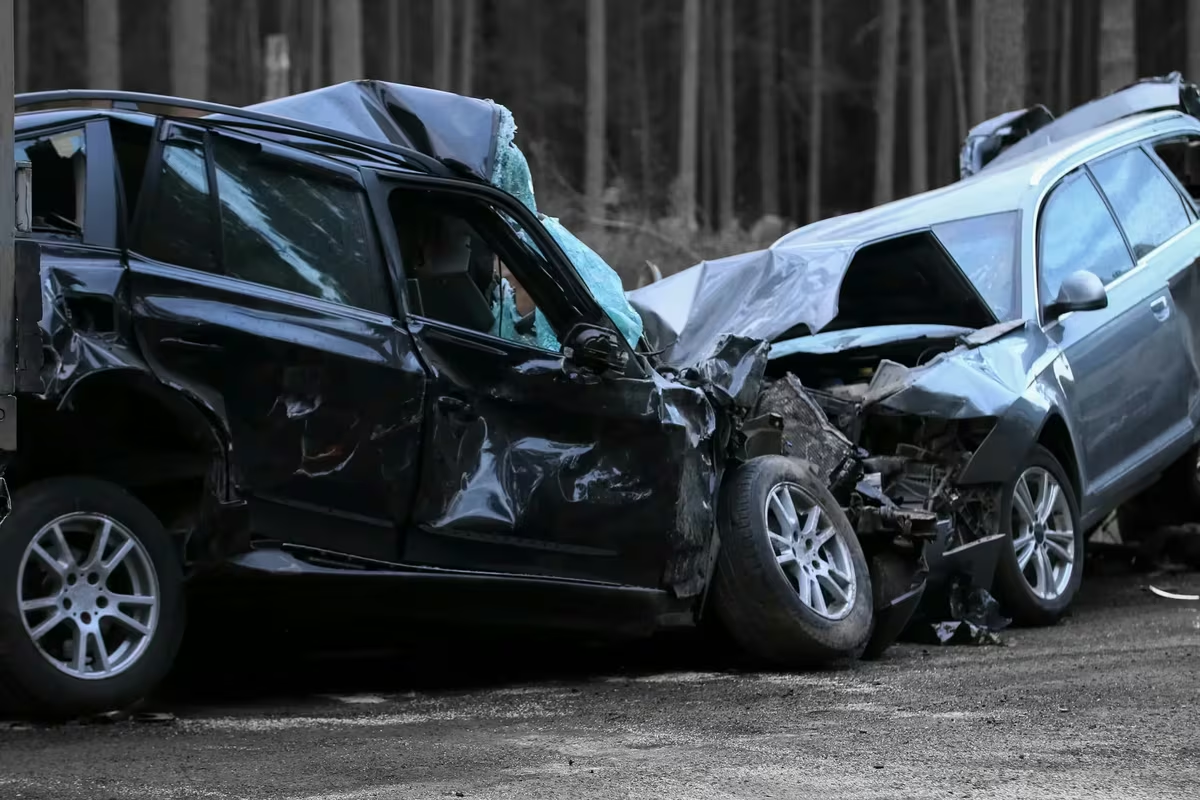 Car Accidents Rear-end, intersection, and highway collisions across Louisiana.
 -
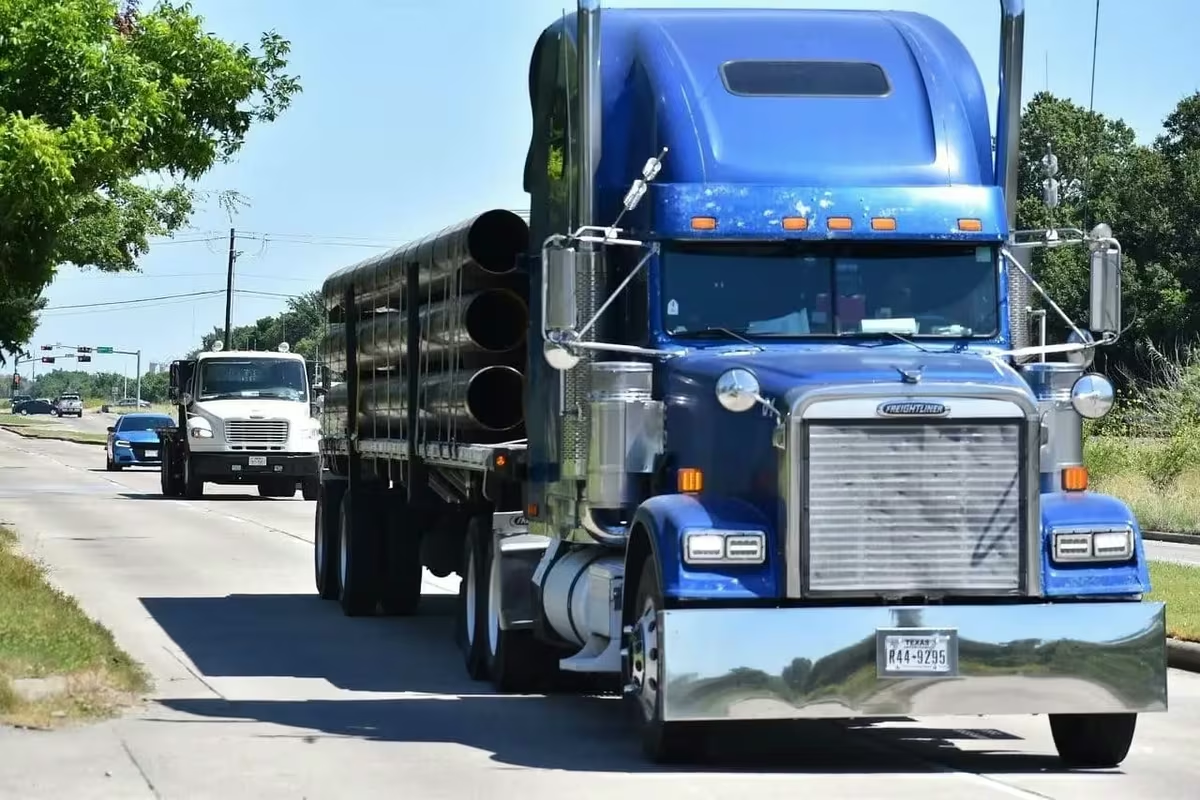 Truck Accidents 18-wheeler and commercial-vehicle wrecks governed by federal trucking rules.
 -
 Motorcycle Accidents Serious-injury motorcycle crashes where bias against riders is common.
 -
 Pedestrian Accidents Crosswalk and roadway pedestrian injuries with high-stakes liability.
 -
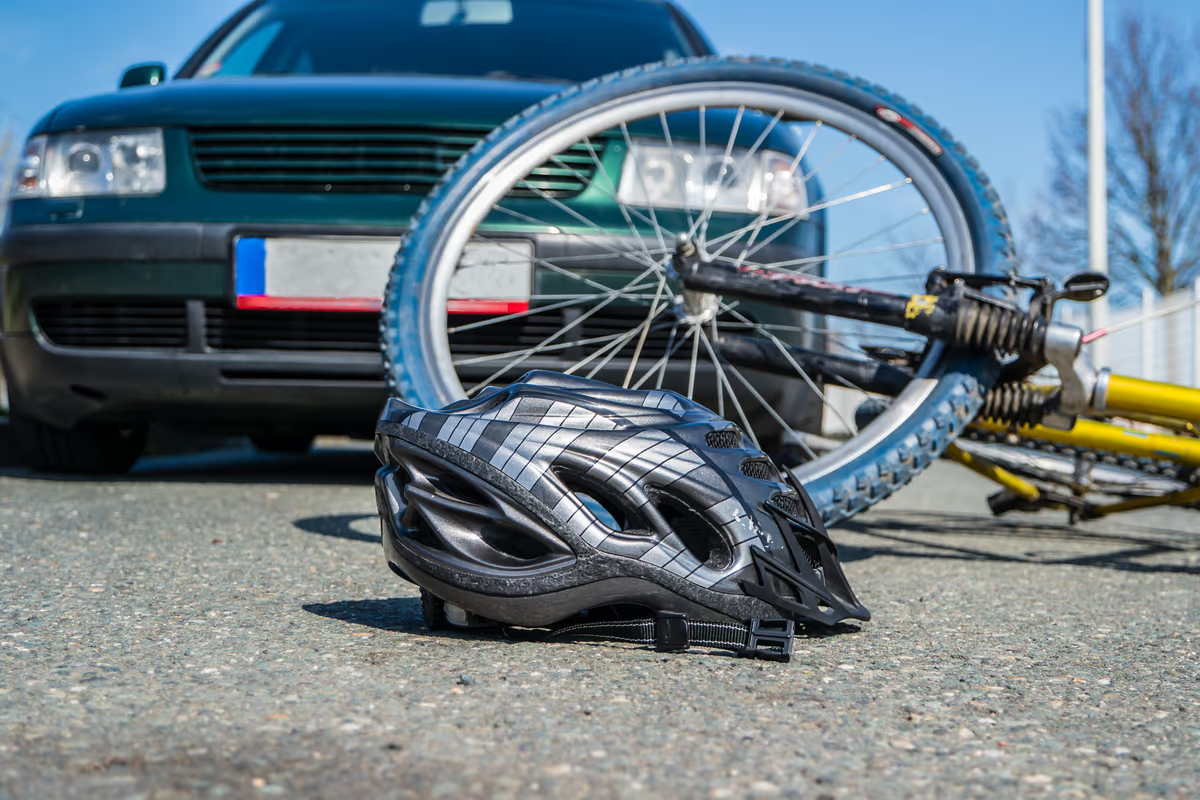 Bicycle Accidents Cyclists struck by drivers who failed to share the road.
 -
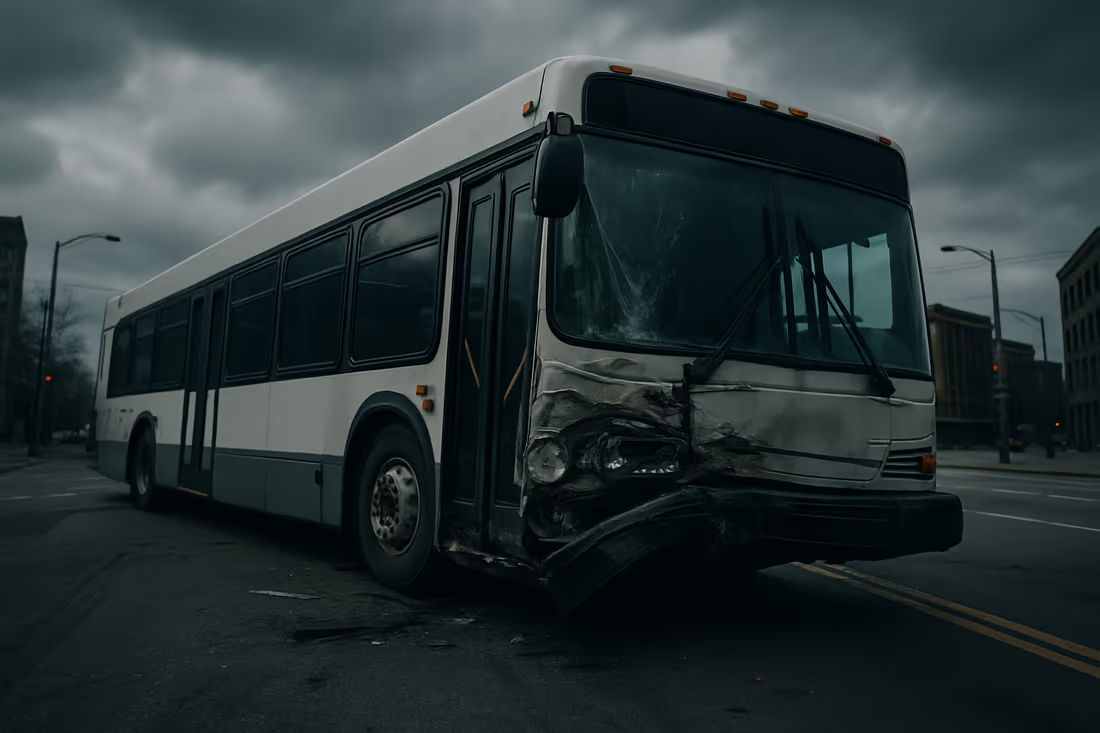 Bus Accidents Transit, school, and charter-bus crashes involving public and private carriers.
 -
 Slip & Fall Falls caused by wet floors, poor maintenance, and hidden hazards.
 -
 Catastrophic Injury Brain, spinal-cord, amputation, and severe-burn injuries that change a life.
 -
 Wrongful Death Claims brought by families after a fatal accident or act of negligence.
 -
 Construction Accidents Falls, struck-by, and equipment injuries on the job site.
 -
 Oilfield Accidents Drilling, pipeline, and refinery injuries across the energy sector.
 -
 Workers' Compensation On-the-job injuries and the benefits owed to injured workers.
 -
 Nursing Home Abuse Neglect and abuse of residents in long-term-care facilities.
Louisiana and Federal Law That Governs Bus Accident Claims
Bus accident claims operate under two legal frameworks simultaneously: Louisiana state law and federal regulations. Knowing which rules apply to which defendant is foundational work.
Federal regulations. The FMCSA regulates interstate and charter bus carriers. Hours-of-service rules, vehicle inspection requirements, driver qualification standards, and minimum insurance coverage are all federal. Violations of FMCSA regulations are evidence of negligence per se, meaning you do not have to prove the conduct was unreasonable. The regulation itself sets the standard of care.
Louisiana minimum insurance for commercial carriers. The minimum liability coverage required for commercial passenger carriers under Louisiana law significantly exceeds standard auto minimums. This matters because it determines the realistic floor of available coverage when injuries are severe.
Government-operated buses: the Louisiana Governmental Claims Act. Claims against SporTran or a public school district follow La. R.S. 13:5101 et seq.. There is no special pre-suit notice and no shorter deadline to sue a Louisiana political subdivision; the general two-year prescriptive period applies. The government-specific rule is procedural and runs after filing: under La. R.S. 13:5107(D), service of citation on the government defendant must be requested within 90 days of commencing the action, or the suit may be dismissed without prejudice as to that defendant. The Act also imposes damage caps and immunity provisions that do not apply to private carriers.
Prescriptive Period
Louisiana’s term for statute of limitations. The legal deadline to file a lawsuit. For personal injury, it is two years from the date of injury under La. C.C. Art. 3493.1, effective July 1, 2024.
Prescriptive Period La. C.C. Art. 3493.1 (effective July 1, 2024) sets a two-year deadline from the date of injury for personal injury claims. The same two-year period applies to government entity claims; the only government-specific timing rule is the post-filing 90-day service-of-citation requirement under La. R.S. 13:5107(D).
Comparative Fault
A legal rule that reduces your recovery by your percentage of fault. In Louisiana, if you are 51% or more at fault, you recover nothing. If you are 50% or less at fault, your damages are reduced proportionally.
Comparative Fault La. C.C. Art. 2323, as amended effective January 1, 2026, imposes a hard 51% bar. If a court finds you 51% or more at fault, you recover nothing. Insurance defense teams routinely build their strategy around pushing your fault percentage above that threshold. Passengers on a bus rarely bear meaningful fault for a crash, but pedestrian cases are different. The carrier’s attorneys will look for any pedestrian behavior to assign.
respondeat superior
Latin for “let the master answer.” A legal doctrine holding employers liable for negligent acts committed by employees within the scope of their employment.
Vicarious liability. Bus companies are liable for driver negligence committed within the scope of employment under the doctrine of respondeat superior. The driver and the employer are both proper defendants.
negligent entrustment
A legal theory holding a vehicle owner or employer liable for knowingly allowing an unqualified, incompetent, or reckless person to operate a vehicle. Applies when the company knew or should have known about the driver’s unfitness.
CDL standard of care. Federal CDL requirements create a baseline. When a driver operated a bus without a valid passenger endorsement, that violation supports a negligent entrustment claim against the carrier.
Government Bus Claims Under the Louisiana Governmental Claims Act
SporTran is a government service. A claim against it is a claim against the City of Shreveport. That distinction changes the procedure. The deadline to file is the same general two-year prescriptive period, and there is no pre-suit notice requirement to clear before suing. What does change is service: under La. R.S. 13:5107(D), once suit is filed, service of citation on the government defendant must be requested within 90 days of commencing the action, or the court may dismiss the claim against that defendant without prejudice.
The Governmental Claims Act also caps damages available against public entities for certain categories of harm. Those caps do not apply to private charter carriers or commercial bus lines. If your bus was privately operated, those limitations are not in play.
Caddo Parish District Court is the venue for bus accident lawsuits involving Shreveport government entities and most private carrier cases arising in the parish. An attorney who handles cases in Caddo Parish regularly knows the local court procedures, the judges, and the pace of the docket. That familiarity matters.
What to Do After a Bus Accident in Shreveport
The actions you take in the hours and days after a bus crash can materially affect the value of your claim.
Call 911. Law enforcement response creates the official record: driver information, crash circumstances, initial fault observations, and the police report that becomes a primary document in your claim. Do not leave the scene without confirming law enforcement has arrived.
Seek medical attention the same day. Internal injuries, concussion, and soft tissue damage may not produce immediate symptoms. A same-day medical evaluation creates a documented connection between the crash and your injuries. Gaps between the crash and your first medical visit become evidence that your injuries were not serious. Insurance adjusters use those gaps.
Do not sign anything at the scene. Bus companies and their insurers may send representatives quickly after a crash. Do not sign any release, settlement authorization, or medical release form at the scene or in the days immediately following. You do not know the extent of your injuries yet.
Document everything. Photograph the bus, including its route number and vehicle identification number on the side panel. Photograph the crash scene, road conditions, traffic signals, and your visible injuries. Get the driver’s name and CDL number if visible. Get the bus company name and insurance carrier information. Collect contact information from all witnesses before they leave.
Do not give a recorded statement to the carrier or its insurer. Commercial carrier insurers employ claims adjusters trained to limit payouts. A recorded statement taken before you have legal representation is a tool for the carrier, not for you. Refer all adjuster contact to your attorney.
Preserve your physical evidence. Clothing worn during the crash, personal items damaged, and any physical objects relevant to the incident should be retained. Do not clean or discard them.
Contact an attorney before accepting any settlement offer. Initial offers from commercial carrier insurers are made before your medical treatment is complete. Accepting early permanently closes your claim. You cannot reopen it after a release is signed.
Past results do not guarantee future outcomes; each case is decided on its own facts. See our full case results.
Establishing Negligence in a Shreveport Bus Accident Claim
Negligence in a bus accident case requires proving four elements: duty, breach of that duty, causation, and damages. Each element has evidentiary requirements that differ from a standard car accident case.
The duty standard is higher. Louisiana law imposes a common carrier duty on bus operators. Passengers must be transported safely and are owed the highest degree of care during transport. That is a stricter standard than ordinary negligence, and it benefits plaintiffs in passenger injury cases.
Primary evidence sources. Police reports establish the official crash record. Traffic camera footage and dashcam video capture the sequence of events. Onboard cameras on the bus itself often record both cabin activity and forward-facing road footage. Eyewitness accounts from other passengers and bystanders are primary sources.
Preservation Letter
A formal legal demand sent to the bus company requiring them to preserve all evidence related to the crash. Stops the carrier from overwriting camera data or destroying driver logs on their normal retention schedule.
Spoliation
The destruction or alteration of evidence after a party has notice of pending litigation. Courts can instruct juries to assume the destroyed evidence was unfavorable to the party that destroyed it.
Onboard camera and black box data. Most commercial buses carry event data recording systems. These systems record pre-impact speed, braking inputs, and cabin footage. This data is subject to routine overwrite cycles. It must be preserved immediately through a Preservation Letter. Morris & Dewett sends preservation letters within 24 hours of engagement. If a carrier destroys this data after receiving a preservation demand, courts can apply a Spoliation instruction.
ELD
Electronic Logging Device. A device installed in commercial vehicles that automatically records driving time. Required by federal law since 2019. ELD data documents hours behind the wheel and is key evidence in driver fatigue cases.
ELD data. For commercial charter and intercity carriers, ELD records establish whether the driver violated hours-of-service rules before the crash. This data is time-sensitive.
Maintenance records. Inspection logs, repair orders, and service histories for the specific bus involved are discoverable. A carrier that deferred brake or tire maintenance while aware of the defect has a difficult time defending a resulting crash.
Driver records. The driver’s employment file documents CDL status, endorsement history, prior traffic violations, training records, and drug test compliance. Carriers occasionally hire drivers with disqualifying violations on their records. When that happens, the claim against the carrier becomes substantially stronger.
FMCSA carrier safety ratings. The FMCSA maintains publicly available safety ratings and inspection histories for all regulated carriers. A carrier with a pattern of safety violations is a different defendant than a carrier with a clean record.
Accident reconstruction. For complex crashes involving multiple vehicles or pedestrian contact, accident reconstruction experts establish pre-impact speed, braking geometry, and impact sequence. This testimony converts physical evidence into the narrative a jury needs.
Types of Evidence We Gather in Bus Accident Cases
Our investigation in a bus accident case begins with evidence that disappears first. Onboard camera footage and event data recorder information are the priority. We send a preservation demand to the carrier within 24 hours. Simultaneously, we request the driver’s full employment file, CDL records, and drug test compliance history.
We pull the carrier’s FMCSA safety rating and inspection history from the public record. A carrier’s compliance history can show a pattern of the same violations that caused your crash. ELD data, if the carrier is a commercial operator, follows. Cell phone records for the driver require a subpoena, which requires filing suit or pursuing pre-suit discovery.
Traffic and intersection camera footage from Shreveport city systems and nearby businesses has a short retention window. We identify relevant camera locations and send preservation requests to the appropriate city departments and business owners. Maintenance logs, inspection records, and repair histories for the specific bus round out the core evidence set.
Your Shreveport Injury Attorneys
Founding partners Trey Morris and Justin Dewett lead every Shreveport injury case Morris & Dewett takes.


Compensation Available After a Shreveport Bus Accident
Louisiana law divides recoverable damages into economic and non-economic categories. Understanding both is necessary to evaluate whether a settlement offer reflects the actual value of your claim.
Economic damages. These are losses with a calculable dollar value: emergency transport, hospitalization, surgery, physical rehabilitation, and prescription costs. They also include lost wages during recovery and loss of future earning capacity if the injuries are permanent. Future care costs for permanent injuries require a life-care plan prepared by a medical expert and a present-value calculation by an economist. Without those expert projections, a claim for future medical care is vulnerable to challenge.
Loss of Earning Capacity
The difference between what you could have earned over your working lifetime and what you can earn now after the injury. Calculated by a vocational expert and converted to present value by an economist.
Loss of Earning Capacity is a separate calculation from lost wages. If your injuries prevent you from returning to your prior occupation or reduce your long-term productivity, that difference has a present value that must be established by expert testimony.
Non-economic damages. Pain and suffering, loss of enjoyment of life, emotional distress, and permanent disfigurement are non-economic. They do not have a bill attached, but they are real and compensable under Louisiana law.
The collateral source rule. Louisiana’s 2020 tort reform modified how medical damages are presented in cases where insurers have negotiated discounts on billed amounts. In some circumstances, damages may be limited to amounts actually paid rather than the full amount billed. This affects how medical damages are presented and how settlement calculations are structured. Your attorney needs to understand how this rule applies to your specific situation.
Punitive damages. La. C.C. Art. 2315.4 allows exemplary damages when an intoxicated driver causes serious injury. The BAC standard for commercial drivers is 0.04% under federal law. If the bus driver was above that threshold at the time of the crash, punitive damages are available. This provision substantially changes the settlement calculus.
Survival Action
A claim under La. C.C. Art. 2315.1 that recovers damages for the victim’s own pain and suffering between the moment of injury and the moment of death. It is separate from the wrongful death action and can be filed alongside it.
Wrongful death claims. If someone was killed in the crash, surviving family members may pursue damages under La. C.C. Art. 2315.2. Recoverable damages include loss of financial support, loss of companionship, and funeral costs. A separate Survival Action under La. C.C. Art. 2315.1 preserves claims for the victim’s own suffering between injury and death.
See wrongful death claims for how those cases are handled.
What Your Bus Accident Claim May Be Worth
Claim value depends on injury severity, whether injuries are permanent, the number of liable parties, applicable insurance limits, and whether punitive damages are available. There is no standard number for bus accident cases.
Commercial bus carriers carry much higher insurance minimums than personal auto policies. The realistic ceiling of a settlement or verdict is tied to those coverage limits. A claim worth $800,000 against a private charter carrier may have full coverage available. The same claim against a government entity may be subject to caps under the Governmental Claims Act.
Cases involving traumatic brain injury, spinal cord damage, or wrongful death require expert testimony to establish full value. A vocational expert assesses loss of earning capacity. A medical economist converts future care costs to present value. A life-care planner documents what treatment will cost over the claimant’s lifetime. Without these experts, your claim will be undervalued.
MMI
Maximum Medical Improvement. The point at which your treating physician determines your condition has stabilized and further treatment will not significantly change the outcome.
Early settlement offers from commercial carrier insurers are structurally low. They are made before your treatment is complete and before your full damages are documented. Accepting before you reach MMI permanently limits your recovery to what is known at that moment.
What a Shreveport Bus Accident Lawyer Does for You
Bus accident claims require knowledge that is specific to this category of case: FMCSA regulations, Louisiana Governmental Claims Act procedures, CDL standards, commercial carrier insurance structures, and evidence preservation timelines. A general practitioner without commercial vehicle experience may miss recoverable damages or procedural deadlines that cannot be corrected later.
The 90-day post-filing service-of-citation requirement for government bus claims is one example. Under La. R.S. 13:5107(D), service on SporTran or a school district must be requested within 90 days of filing suit, or the claim against that defendant can be dismissed without prejudice. An attorney who handles these cases regularly keeps this deadline on the calendar from the day suit is filed.
Evidence preservation is another. Onboard camera footage and event data recorder information are routinely overwritten. Commercial carriers have legal teams who begin managing evidence immediately after a crash. Your attorney needs to move faster. The preservation letter goes to the carrier before the carrier’s team finishes its first internal review.
Negotiation with commercial carrier insurers is different from negotiating with a personal auto insurer. Carrier insurers deploy specialized defense teams with authority to hold the line on claims. Direct negotiation without legal representation means you are at the table with someone whose training is oriented toward minimizing your payout.
Contingency Fee
A fee arrangement where the attorney is paid a percentage of the recovery and only if there is a recovery. The client pays nothing upfront and owes no attorney fees if the case is unsuccessful.
Morris & Dewett handles bus accident cases on a Contingency Fee basis. You pay nothing out of pocket to retain us. If we do not recover for you, you do not owe us attorney fees.
We have represented personal injury clients in the Shreveport area for over 25 years. Our attorneys hold AV Preeminent ratings from Martindale-Hubbell and have been recognized by Super Lawyers. Our Shreveport office has more than 2,498 five-star client reviews. Those credentials are relevant because bus accident cases require experienced attorneys who know commercial vehicle law and the Caddo Parish courts.
What clients say
- ★★★★★
I hired Morris and Dewett back in November of 2025.
They helped me get through my hard times of being off work, stress, and worry. Anytime I had a question I could call and they always had an answer. Very nice and professtional people. Thank you Morris and Dewett for making this an easy process for me and my family.
- ★★★★★
Wonderful experience with Morris and DeWitt, everyone was articulate and punctual, and open to all my questions about the process.
My case couldn't have been handled by a better team! Caity Nerren, Jessica Christian, and Meghan Nolen were all fantastic and helped every step of the way. Thanks again for all of your hard work.
- ★★★★★
Caity, Coleman, and Brooke worked hard to get our case settled in a timely manner!
I highly recommend Morris & Dewett for any personal injury claims!
- ★★★★★
I am very appreciative for the services they have provided me with, very nice and welcoming staff and they take care of you every possible way.
They are the way to go !
- ★★★★★
Morris and Dewett and their team of attorneys and staff go above and beyond.
They always were there to support me and answer all my questions after a shoulder injury that included multiple surgeries. They are caring and compassionate and that goes a long way! Highly recommended!
- ★★★★★
Thanks Morris and Dewett for the excellent work you have done on my behalf.
I want to personally thank Sarah for her kindness.
Reviews reflect individual client experiences. Past results do not guarantee future outcomes.
Why Bus Accident Claims Are More Complex Than Standard Car Accident Claims
The differences between a bus accident claim and a car accident claim are not cosmetic. They affect procedure, evidence, defendants, and the applicable legal standards at every stage.
Multiple defendants are common. The driver, the bus company, the vehicle manufacturer, a maintenance contractor, and a government entity may all share fault. Each defendant has separate counsel, separate insurance, and potentially separate legal defenses. Coordinating a multi-defendant case requires a different approach than a two-party dispute.
Commercial carrier insurance policies carry much higher limits than personal auto policies. Insurers protect those reserves with experienced defense teams. The litigation is substantively more intensive.
Government bus claims require procedural compliance that private carrier claims do not. The post-filing service-of-citation deadline under La. R.S. 13:5107(D), Governmental Claims Act rules, and damage caps create a procedural layer that is not present in claims against private carriers.
Federal regulations create a parallel legal framework. FMCSA rules govern the standard of care for commercial carriers. Violations of those rules are treated differently than violations of state traffic law. An attorney who understands federal motor carrier law uses it. One who does not may miss it entirely.
Black box and onboard camera data requires immediate action. Commercial carriers have legal teams who understand data retention schedules. Your attorney’s preservation demand needs to arrive before the normal overwrite cycle completes.
Medical damages for bus accident injuries tend to be severe. Accurate future cost projection is not optional. It is the difference between a claim that reflects actual damages and one that settles low.
For a broader overview of how injury claims work in Shreveport, see Shreveport injury lawyers.
Frequently Asked Questions
- Can I sue SporTran if I was injured on a Shreveport city bus?
- Yes, but the procedure is different from suing a private company. SporTran is a government-operated service, which means your claim is governed by the Louisiana Governmental Claims Act (La. R.S. 13:5101 et seq.). There is no special pre-suit notice you must give before filing, and no shorter deadline, because the same two-year prescriptive period applies. The procedural difference comes after you file. Under La. R.S. 13:5107(D), you must request service of the lawsuit on the government defendant within 90 days of filing the suit, or the court may dismiss the claim against that defendant without prejudice. The Act also imposes damage caps that do not apply to claims against private carriers.
- How long do I have to file a bus accident claim in Louisiana?
- The standard prescriptive period for personal injury claims in Louisiana is two years from the date of injury under La. C.C. Art. 3493.1, effective July 1, 2024. The same two-year period applies to claims against government-operated buses such as SporTran or a public school district; there is no separate pre-suit notice and no shorter government deadline. The government-specific rule comes after filing. Under La. R.S. 13:5107(D), service of the suit on the government defendant must be requested within 90 days of filing, or the claim against that defendant may be dismissed without prejudice.
- What if the bus company's insurer offers me a settlement right away?
- Early settlement offers from commercial carrier insurers are made before your medical treatment is complete and before your full damages are documented. They are structurally low. Once you sign a release, your claim is closed permanently. You cannot go back and add damages that became apparent later. An attorney can evaluate whether an offer reflects the actual value of your claim, including future medical costs, lost earning capacity, and any available punitive damages.
- Are bus companies required to carry more insurance than regular drivers?
- Yes. Commercial passenger carriers are subject to minimum liability insurance requirements that significantly exceed personal auto minimums under Louisiana law. Interstate and charter bus operators must also meet FMCSA minimum insurance requirements. The practical effect is that the pool of available coverage in a commercial bus accident is substantially larger than in a personal vehicle crash.
- Can I recover damages as a pedestrian hit by a bus in Shreveport?
- Yes. Pedestrians injured by a bus have the same legal rights as bus passengers. The carrier and driver owe a duty of care to pedestrians, and you may pursue economic and non-economic damages. Louisiana's comparative fault rule under La. C.C. Art. 2323 applies. If you are found 51% or more at fault for the incident, you recover nothing. If your fault is 50% or below, your damages are reduced proportionally by your percentage of fault.
- What federal regulations apply to bus accident claims?
- The Federal Motor Carrier Safety Administration sets the primary federal regulatory framework for commercial passenger carriers. Relevant regulations cover hours-of-service limits, driver qualification and CDL requirements, vehicle inspection standards, and minimum insurance coverage. Violations of FMCSA regulations support a negligence per se theory, which means the violation itself establishes the breach of duty without additional proof of unreasonableness. These regulations apply to charter, tour, and intercity commercial buses. Transit buses operated by government entities are primarily governed by state and local authority, not FMCSA.
- What is the difference between a transit bus claim and a charter bus claim?
- A transit bus claim (such as one involving SporTran) is a claim against a government entity, subject to the Louisiana Governmental Claims Act, its 90-day post-filing service-of-citation rule under La. R.S. 13:5107(D), and damage caps. A charter bus claim is against a private commercial carrier, subject to FMCSA regulations and without Governmental Claims Act limitations. The defendants are different, the procedures are different, the insurance structures are different, and the damage caps may differ. Treating them the same is a substantive legal error.
- Does Louisiana comparative fault apply if I was a passenger on the bus?
- Comparative fault applies to all personal injury claims in Louisiana. As a passenger who was seated and following the carrier's instructions, it is unlikely you will be assigned significant fault for a crash. However, if you were standing in a prohibited area, interfering with the driver, or engaging in conduct that contributed to the incident, fault allocation is possible. Insurance defense teams look for any available basis to assign plaintiff fault. An attorney's job is to document your conduct at the time of the crash and respond to those arguments with evidence.
- Who pays my medical bills while my bus accident claim is pending?
- Louisiana does not have personal injury protection (PIP) that automatically covers medical costs while a claim proceeds. Options include your own health insurance or MedPay coverage from your auto policy if you were in a vehicle. Providers may also agree to medical liens, deferring payment until the settlement resolves. If the carrier's liability is clear, some attorneys can negotiate a direct payment arrangement with medical providers. Your attorney should identify all available sources of coverage at the start of representation.
- Can I recover punitive damages in a Louisiana bus accident case?
- Punitive damages are available under La. C.C. Art. 2315.4 when the at-fault driver was intoxicated and caused serious injury. For commercial bus drivers, the applicable BAC threshold is 0.04% under federal law. If the driver exceeded that limit, the intoxication provision applies and exemplary damages are available on top of compensatory damages. Punitive damages are not available in every bus accident case. They require the specific facts that trigger the statute.
- What if my child was injured in a school bus accident in Shreveport?
- School bus claims are typically government entity claims because public school districts are state entities. The Louisiana Governmental Claims Act procedures apply, including the 90-day post-filing service-of-citation requirement under La. R.S. 13:5107(D). Claims on behalf of minors have additional procedural requirements under Louisiana law, and the prescriptive period is tolled until the child reaches the age of majority in some circumstances. An attorney should evaluate the specific school district's status and the applicable deadlines immediately after the incident.
- Do I need a lawyer for a bus accident claim, or can I handle it myself?
- You can pursue a claim without a lawyer. Commercial carrier insurers employ claims adjusters whose training is oriented toward reducing payouts. They have access to carrier defense attorneys, evidence the carrier controls, and the leverage of managing communication on their terms. Evidence preservation deadlines do not pause while you evaluate your options, and once suit is filed against a government defendant, service of citation must be requested within 90 days under La. R.S. 13:5107(D). If the injuries are serious, the complexity of the claim typically exceeds what an unrepresented claimant can manage without cost to the claim's value.
- How much is my Shreveport bus accident claim worth?
- Claim value cannot be accurately quoted before your medical treatment is complete and your full damages are documented. It depends on injury severity, permanence, the number of liable parties, the applicable insurance limits, and whether punitive damages are available. Government entity claims may be subject to damage caps that private carrier claims are not. Cases involving traumatic brain injury, spinal cord damage, or wrongful death require expert economic and medical testimony to establish full value.
- How much does it cost to hire a Shreveport bus accident lawyer?
- Morris & Dewett handles bus accident cases on a contingency fee basis. You pay nothing out of pocket to retain us. Our fee is a percentage of the amount recovered, paid at the conclusion of the case. If we do not recover for you, you do not owe attorney fees. Case costs such as expert witness fees and filing fees are handled as part of the representation and addressed at resolution. You do not need money up front to get legal representation for a bus accident claim.
- Can I file a claim if I was standing on the bus when the accident happened?
- Yes. Standing passengers have the same legal rights as seated passengers. The bus operator owes you a common carrier duty of care regardless of where you were positioned on the bus. Standing passengers are at elevated risk during sudden stops and turns, which is a known condition of transit bus travel. If the driver's operation of the bus was negligent and that negligence caused your fall or injury, you have a claim. Your positioning on the bus may affect how damages are argued but does not eliminate your right to pursue them.
Last updated June 5, 2026