

Injured in a Natchitoches Car Accident?
In Louisiana, a driver or passenger hurt in a crash can pursue compensation from the at-fault driver and that driver’s insurer. A car accident claim runs on specific Louisiana rules: fault decides who pays, a prescriptive period sets the deadline to file, and comparative fault can reduce what an injured person collects.
Morris & Dewett Injury Lawyers represents injured drivers and passengers in Natchitoches and across Louisiana. We handle the claim from the crash report and medical records through the at-fault driver’s coverage and the available insurance, so the claim reflects the full cost of the crash rather than the insurer’s first number.
Local Representation for Natchitoches Parish Crash Claims
Natchitoches sits along the I-49 corridor, with traffic moving between Shreveport and Alexandria and local routes feeding into the historic downtown. Crashes here range from highway collisions at speed to intersection wrecks on routes like Keyser Avenue and LA-6. The injuries, the insurers, and the Louisiana statutes that apply are the same whether the wreck happened on the interstate or a parish road.
Morris & Dewett handles Louisiana car accident claims from offices across the state and represents injured people in Natchitoches Parish. We work the case from the ground up: the crash report, the medical records, the at-fault driver’s coverage, and the available insurance. You can review what these cases have produced and how the firm approaches them through our case results.
Help With Insurance Claims, Medical Bills, and Lost Wages
A car accident claim usually involves three moving pieces at once: the medical treatment you need, the wages you lose while you cannot work, and the insurance company deciding what to pay. Those pieces do not move on the same timeline, and the insurer’s interest is rarely the same as yours.
We handle the claim so those pieces line up. That means dealing with the adjuster, organizing the medical bills and treatment records, and documenting lost income and future care needs. The point of the work is the same throughout: build a claim that reflects the full cost of the crash, not the insurer’s first number.
Free Case Review
A case review is a conversation, not a commitment. You describe what happened, we explain how Louisiana law applies to your facts, and you decide whether to move forward. There is no fee to talk through your situation, and the review helps you understand your options whether or not you hire us.
If you want to walk through the details of your crash, you can reach out for a free case review. Bring what you have: the crash report, photos, names of any insurers involved, and your medical records. Those documents let us give you a clearer read on where your claim stands.
Serving Natchitoches
Served from our Shreveport office.
509 Milam St
Shreveport, LA 71101
Open 24/7 for injured Natchitoches residents
Get directions →What Should You Do After a Car Accident in Natchitoches?
The minutes after a crash decide what evidence survives and what your claim is built on later. The steps below protect your health first and your case second. Take them in order when you can, and skip ahead to whatever is most urgent.
Check for Injuries and Call 911
Check yourself and your passengers before anything else. Adrenaline masks pain, so a person who feels fine at the scene can have a serious injury that surfaces hours later. Call 911 for any visible injury, any complaint of pain, or any doubt about whether someone is hurt.
A police response also creates an official record of the crash. One practical reason to call is that Louisiana law expects crashes involving injury, death, or property damage above the statutory threshold to be reported to law enforcement, a duty set out in La. R.S. 32:398. Calling 911 satisfies that expectation and produces a report that documents the date, location, vehicles involved, and a responding officer’s observations.
Get Medical Treatment
See a doctor even if you walk away from the crash. Whiplash, concussions, and internal injuries often show no symptoms for a day or more, and an early exam links any injury to the wreck while the connection is clear. Waiting gives an insurer room to argue the injury came from something else.
Follow through on the treatment plan. Gaps in care and missed appointments become the insurer’s argument that the injury was minor. Consistent records from your treating providers describe the diagnosis, the care, and the timeline in language that supports the claim.
Document the Scene
If you are physically able, photograph everything before vehicles move. Capture both cars from several angles, the damage, the license plates, skid marks, traffic signals, road conditions, and any visible injuries. Wide shots show how the vehicles came to rest. Close shots show the detail.
Get the names and phone numbers of any witnesses. A neutral third party who saw the crash carries weight that the two drivers’ accounts often do not. The crash report and your own photographs together form the factual backbone of what happened.
Exchange Driver and Insurance Information
Trade names, addresses, driver’s license numbers, license plate numbers, and insurance company and policy details with the other driver. Photograph their insurance card and license rather than copying the numbers by hand. Note the make, model, and color of each vehicle involved.
Keep the exchange factual. Do not argue about who caused the crash and do not apologize, because a casual “I’m sorry” can be twisted into an admission later. State the facts to the responding officer and let the report record them.
Avoid Giving Recorded Statements Too Soon
The at-fault driver’s insurer may call within days asking for a recorded statement. You are under no obligation to give one. Early statements are taken before you know the full extent of your injuries, and an offhand answer can be used to minimize your claim or shift blame.
Stick to the basic facts when you must speak with your own insurer to report the crash. Decline to speculate about fault, injuries, or anything you are unsure of. A short, accurate account protects you far better than a long one given under pressure.
When Should You Call a Car Accident Lawyer in Natchitoches?
Call a lawyer once the other side’s insurer gets involved, once anyone is hurt, or once blame is in question. Those are the moments when what you say and what you sign start to shape the outcome of your claim.
You do not need an injury and a lawsuit to make the call worthwhile. A short conversation early can keep you from giving away leverage you did not know you had.
Call Before Giving a Recorded Statement
The other driver’s insurer will often call within days and ask for a recorded statement. That request sounds routine. It is not. A recorded statement locks in your words while you are still sore, still rattled, and still missing information about your own injuries.
Adjusters are trained to ask questions that invite minimizing answers. “Are you feeling okay?” early on can become evidence you were not really hurt, even if a herniated disc shows up on imaging a week later. You are not obligated to give the at-fault driver’s insurer a recorded statement, and you can decline until you have advice. A short call to a lawyer before that statement is one of the highest-value things you can do.
Call If the Insurance Company Blames You
When an adjuster starts steering the conversation toward what you did wrong, treat that as a signal. Assigning blame to you is how an insurer reduces what it pays. Louisiana looks at each party’s share of fault, so the percentage they pin on you directly affects the dollars on the table.
You do not have to accept the insurer’s version of who caused the crash. Police reports get details wrong. Witnesses remember things differently. Skid marks, vehicle damage, and traffic-camera footage often tell a story the adjuster’s quick conclusion ignored. A lawyer can gather that proof before it disappears and push back on a fault split that does not match the evidence.
Call If Medical Bills or Missed Work Are Involved
Once treatment costs and lost paychecks enter the picture, the stakes rise past what most people can sort out alone. Medical bills arrive from the ER, the imaging center, the physical therapist, and sometimes a surgeon, each on its own timeline. Missed work means lost wages now and possibly reduced earning ability later if the injury lingers.
These are the exact damages an insurer wants to settle fast and cheap, before the full cost is known. An early check that covers this month’s bills can leave you paying out of pocket for next year’s care. A lawyer can document the full scope of treatment, including future care, and value the claim against what your injuries actually require rather than what fits the adjuster’s opening number. If you are facing ongoing treatment or time off the job, that is a strong reason to call.
Do I Need a Lawyer for a Minor Accident?
Not every crash needs a lawyer, and an honest answer respects that. If the impact was light, no one was hurt, and the property damage is small and undisputed, you may be able to handle the claim yourself. There is no point paying for help you do not need.
The catch is that “minor” is hard to judge in the first days. Soft-tissue injuries and concussions often surface later, and a crash that looks minor can produce real medical costs once symptoms appear. Most Natchitoches car accident lawyers offer a free case review for exactly this reason, so you can describe what happened and get a straight read on whether a claim is worth pursuing. A short consultation costs you nothing and removes the guesswork. If the answer is that you do not need representation, a good lawyer will tell you that too.
Louisiana Car Accident Laws Every Natchitoches Victim Must Know
A handful of Louisiana rules shape how a Natchitoches crash claim takes form long before anyone talks numbers. Who pays depends on fault. How much coverage the at-fault driver carries depends on the state minimum coverage statute. And whether the insurer can be named as a defendant depends on a statute most other states do not have.
Louisiana Fault and Negligence Rules
Louisiana handles car crashes as a fault state. The driver who caused the wreck, and that driver’s insurer, are responsible for the resulting damages. There is no no-fault arrangement where an injured person simply collects from their own policy regardless of who was to blame.
Fault turns on negligence. A driver who runs a red light, follows too closely, or fails to yield has departed from the reasonable care every motorist owes other drivers. Showing that the departure caused the collision is the core of the claim. More than one driver can share fault, and the analysis accounts for that division when damages are worked out.
Required Auto Insurance Coverage in Louisiana
Louisiana sets minimum liability limits that every insured driver must carry. Under La. R.S. 32:900, those minimums are $15,000 per person for bodily injury, $30,000 per accident for bodily injury, and $25,000 for property damage. People often see this written as 15/30/25.
Those figures are the floor, not a typical ceiling. A serious injury can run far past $15,000 in medical bills alone. When the at-fault driver carries only the state minimum, the available liability coverage can fall short of the actual harm. That gap is a frequent reason injured people look to their own coverage.
Louisiana’s Direct Action Statute: Suing the Insurer Directly
Louisiana’s Direct Action Statute, La. R.S. 22:1269, governs whether an injured person can name the at-fault driver’s insurer as a defendant. The default rule is now prohibition. Insurers generally cannot be sued directly, a notable shift from how the statute operated for decades.
Direct action against the insurer is allowed only in seven enumerated situations: the insured is bankrupt or insolvent, the insured is deceased, service of process on the insured fails within 180 days, the claim is against an uninsured motorist carrier, the claim is a family tort claim, the insurer has denied coverage or issued a reservation of rights, or the insured fails to answer or defend the suit. Outside those exceptions, the lawsuit names the driver, not the carrier.
This is one of the more technical pieces of Louisiana crash law, a rule that recently moved from broad permission to a narrow list of exceptions.
Fault, Negligence, and Evidence in Louisiana Crash Claims
Because liability rests on proving negligence, the evidence collected after a crash carries the case. Police reports, photographs, vehicle damage, witness accounts, and medical records together help establish who departed from a duty of care and how the collision happened. The insurer on the other side is assembling its own version of events at the same time.
Solid evidence does more than assign blame. It frames the value of the claim against the available liability coverage and sets up the question of whether any direct action against the insurer applies. An attorney evaluating a Natchitoches case looks at all three threads together: the fault picture, the policy limits in play, and the procedural path the statutes allow.
What We Handle
Natchitoches Practice Areas
-
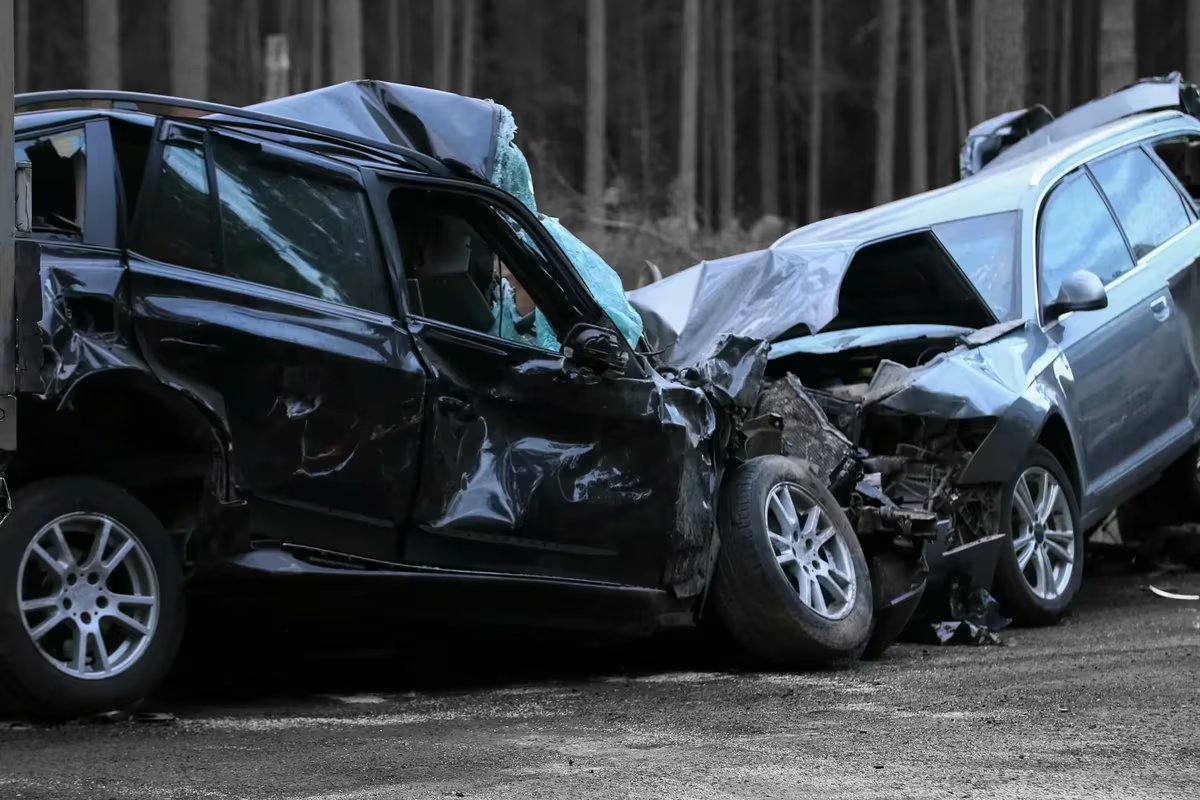 Car Accidents Rear-end, intersection, and highway collisions across Louisiana.
 -
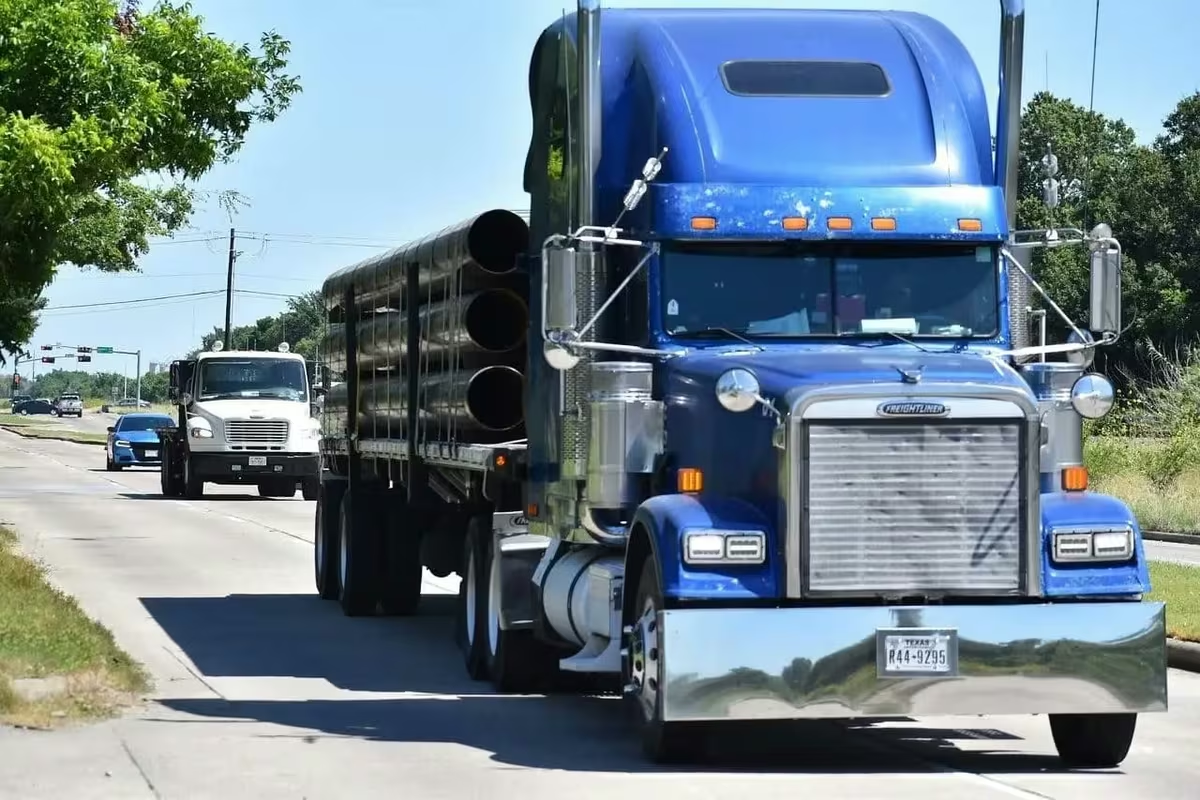 Truck Accidents 18-wheeler and commercial-vehicle wrecks governed by federal trucking rules.
 -
 Motorcycle Accidents Serious-injury motorcycle crashes where bias against riders is common.
 -
 Pedestrian Accidents Crosswalk and roadway pedestrian injuries with high-stakes liability.
 -
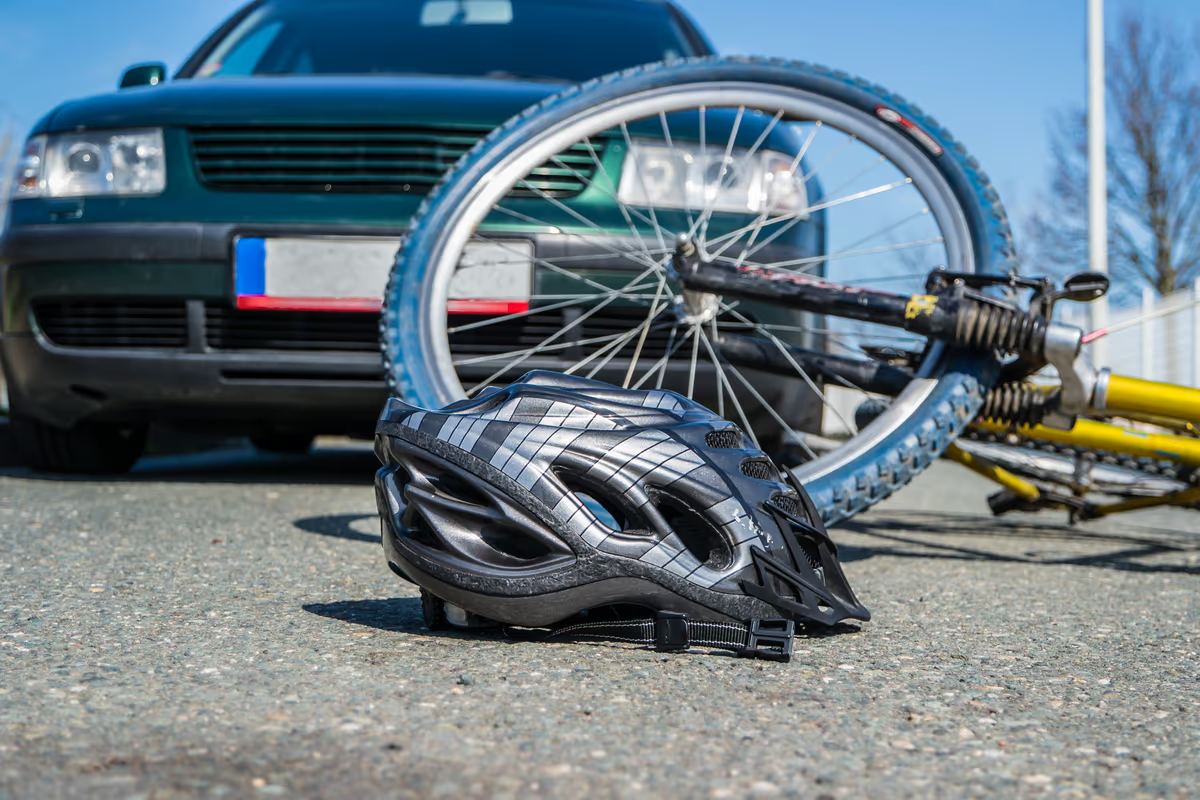 Bicycle Accidents Cyclists struck by drivers who failed to share the road.
 -
 Bus Accidents Transit, school, and charter-bus crashes involving public and private carriers.
 -
 Slip & Fall Falls caused by wet floors, poor maintenance, and hidden hazards.
 -
 Catastrophic Injury Brain, spinal-cord, amputation, and severe-burn injuries that change a life.
 -
 Wrongful Death Claims brought by families after a fatal accident or act of negligence.
 -
 Construction Accidents Falls, struck-by, and equipment injuries on the job site.
 -
 Oilfield Accidents Drilling, pipeline, and refinery injuries across the energy sector.
 -
 Workers' Compensation On-the-job injuries and the benefits owed to injured workers.
 -
 Nursing Home Abuse Neglect and abuse of residents in long-term-care facilities.
How Long Do You Have to File a Car Accident Lawsuit in Louisiana?
If your Natchitoches crash happened on or after July 1, 2024, you have two years to file a lawsuit under La. C.C. art. 3493.1, and crashes before that date fall under the older one-year period in La. C.C. art. 3492. Louisiana calls this deadline a prescriptive period. Miss it and the claim ends, no matter how serious the injuries are.
The Louisiana Prescriptive Period
Louisiana uses the term prescriptive period rather than statute of limitations, but the practical effect on a filing deadline is the same. The clock starts the day the injury or damage was sustained, which in most car accident cases is the date of the crash. That single date is what most people need to pin down first, because it controls which window applies and how much time is actually left.
So the order of operations is simple. Confirm the crash date, then count forward to find the outer edge of the window. Everything else about preparing a claim happens inside that span.
Product liability claims keep their own one-year period. A defect claim against a vehicle or part manufacturer can run out well before the related injury claim against an at-fault driver, so a crash can carry two separate deadlines at the same time.
Why Deadlines Matter
Once the period runs, the claim is gone. A defendant sued after the deadline can ask the court to dismiss the entire case, and no amount of medical evidence or clear fault revives a filing made too late. The deadline is the gate, and there is nothing on the other side of it.
Waiting also weakens a case that is still timely. Witnesses move and forget. Vehicle damage gets repaired. Footage from nearby business cameras is often recorded over within weeks. The evidence that proves what happened is most available right after the crash, not near the end of the window.
Filing the lawsuit is a different step from filing an insurance claim. An open claim with an adjuster does not pause the deadline. The clock runs against the lawsuit, so an unresolved settlement discussion buys no extra time to file in court.
Exceptions That May Apply
A few circumstances change when the period starts or how long it runs. When the injured person is a minor, Louisiana law treats the timing differently than it does for an adult. A crash that causes a death follows its own framework. And an injury that was not immediately discoverable can raise a question about when the clock began at all.
These situations turn on details a general page cannot resolve. The crash date, the parties involved, and the type of claim each affect which deadline governs. Pinning down the exact period for a specific set of facts early leaves room to investigate before any window closes, rather than discovering a timing problem when little time remains.
How Does Comparative Fault Affect Your Louisiana Car Accident Case?
Comparative fault decides how blame gets split when more than one driver contributed to a crash, and that split changes what an injured person can collect. Louisiana’s rule sits in La. C.C. art. 2323. For causes of action arising on or after January 1, 2026, a plaintiff who is 50% or less at fault keeps a claim reduced by that percentage, while a plaintiff who is 51% or more at fault collects nothing. Knowing where that line falls is the difference between a reduced claim and no claim at all.
How Partial Blame Reduces Your Damages
The rule assigns fault as a percentage to everyone who contributed to the crash, and each party’s share lowers what they can collect. Picture a jury that values total damages at $100,000 and finds the injured driver 20% at fault. The award drops by that 20%, leaving $80,000. The reduction is proportional, so a 10% share costs less than a 30% share.
The threshold carries as much weight as the math. A driver found half responsible keeps a claim cut in half. A driver found just over half responsible walks away with nothing. That single percentage point separates a reduced claim from no claim, which is why how fault gets measured deserves close attention.
How Adjusters Apply Comparative Fault to Reduce Your Settlement
Insurance adjusters use fault percentages as a lever to shrink payouts before a case ever reaches a courtroom. An adjuster might argue the injured driver was speeding, looked away, or could have braked sooner, then assign a fault percentage that lowers the offer. A claimed 30% share knocks nearly a third off a settlement, and the adjuster has every financial reason to push that number higher.
Solid fault analysis relies on the police report, scene photos, vehicle damage patterns, witness statements, and sometimes a reconstruction expert. When the evidence shows the other driver caused the crash, a fault percentage that the facts do not support can be challenged rather than accepted. Adjusters count on people not pushing back. A claim handled by someone who knows how fault is proven is harder to discount.
What If I Was Partly at Fault for the Crash?
Being partly at fault does not automatically end a claim. A driver who shares 50% or less of the blame keeps a claim, reduced by that percentage. Someone found 25% at fault for a crash with $80,000 in damages can still pursue $60,000. The claim survives as long as that share stays at or below half.
Fault is rarely as clear as the other side suggests, and an early admission can cost a person dearly. People often assume more blame than the evidence supports, sometimes because an adjuster framed a question to draw out a concession. The better step is to let the evidence set the percentages rather than guessing. When fault is genuinely shared, the question becomes how much, not whether a claim exists, and getting that number right protects what the injured driver can collect.
How Do Insurance Claims Work After a Louisiana Car Accident?
Most car accident cases in Louisiana resolve through an insurance claim, not a lawsuit. After a crash, you file a claim with the at-fault driver’s insurer, the company assigns an adjuster, and the adjuster investigates fault, reviews medical records, and decides what to pay. The process sounds straightforward, but the adjuster works for the insurer, and the insurer’s interest is in paying as little as possible. Knowing how the claim moves and where it stalls puts you in a stronger position.
Insurance Claims vs. Lawsuits
A claim is a demand for payment made directly to an insurance company. A lawsuit is a formal court action filed when the claim cannot be resolved. The two are connected. A claim often becomes a lawsuit because the insurer disputes fault, undervalues the injuries, or refuses to pay a fair amount.
You do not have to choose one or the other at the start. Most claims begin with negotiation. If the insurer makes a reasonable offer, the matter settles and no suit is needed. If it does not, filing suit moves the dispute in front of a judge. The decision to file turns on the strength of the evidence, the size of the medical bills, and how the insurer is behaving.
Recorded Statements and Insurance Adjusters
Soon after a crash, an adjuster from the other driver’s insurer will often call and ask for a recorded statement. The request sounds routine. It is not neutral. A recorded statement is taken under questioning designed to lock in answers that can later be used to dispute fault or minimize injuries.
The adjuster controls the questions, the framing, and the record. An offhand “I’m feeling okay” said the day after a crash, before the full extent of an injury appears, can resurface as evidence that you were never hurt. There is rarely a benefit to volunteering a recorded statement to the other driver’s insurer before you understand your own injuries.
Why Early Settlement Offers Are Often Too Low
A fast offer is not a generous one. Insurers often extend a settlement within days or weeks of a crash, before the injured person has finished treatment or learned the long-term effect of the injury. The offer is calculated to close the file cheaply while the claimant still carries early bills.
The problem is timing. A car accident claim should account for the full course of medical care, including future treatment, lost wages, and the lasting effect of the injury. None of that is known in the first weeks. Once you accept a settlement and sign a release, the claim is closed. You cannot reopen it if the injury turns out to be worse than it first appeared. An early offer that ignores future medical needs almost always sits below the real value of the case.
When an Insurer Stalls a Claim
Louisiana law holds insurers to a duty of good faith and attaches a penalty when they break it. Under La. R.S. 22:1973, an insurer that breaches its duty of good faith, including an arbitrary failure to pay within 60 days of satisfactory proof of loss, faces penalties up to two times the damages sustained or $5,000, whichever is greater. That penalty is separate from and on top of the underlying claim.
For the claimant, this changes the practical cost to an insurer that drags its feet without a reason. An adjuster who sits on a documented claim, ignores the supporting records, or withholds payment after the file already shows liability and damages is taking a risk for the company. The way to keep that pressure available is to build a clean record from the start. Track when proof of loss was submitted, keep written demands, and save the insurer’s responses. A claim with a clear paper trail leaves far less room for an insurer to delay.
What Happens If the Insurer Denies Liability
An insurer can deny a claim by disputing who caused the crash, questioning the injuries, or arguing the treatment was unrelated to the accident. A denial is not the end of the claim. It is a position the insurer takes, and positions can be contested with evidence.
When liability is denied, the dispute moves toward suit. The case is built on the crash record, witness accounts, photographs, medical records tying the injury to the collision, and where useful, expert analysis of how the wreck occurred. A denial often softens once the insurer sees that the claimant is prepared to prove the case rather than accept the refusal. The reason to document everything from the start is exactly this moment. A well-supported claim leaves an insurer little room to deny liability and far more reason to pay what the case is worth.
Past results do not guarantee future outcomes; each case is decided on its own facts. See our full case results.
What If the Other Driver Has No Insurance?
A driver with no insurance, or with the bare Louisiana minimum, can still leave you with real bills. Louisiana law builds a backup into your own policy. Under La. R.S. 22:1295, every auto policy issued in the state includes uninsured and underinsured motorist (UM/UIM) coverage unless the named insured rejected it in writing on the form prescribed by the Commissioner of Insurance. That rejection stays valid for the life of the policy, so if you never signed one, you almost certainly carry this coverage even if you have forgotten about it.
Using Your Own UM or UIM Coverage
UM coverage responds when the at-fault driver carries no liability insurance at all. UIM coverage responds when that driver has insurance, but not enough to cover your injuries. A serious crash can exhaust a small liability policy in a single hospital stay. That is where your own UIM coverage steps in to make up the difference.
The first step is pulling your declarations page and confirming what you carry. Because the coverage is presumed unless a valid written rejection exists, the key question is whether one was ever signed on the prescribed form. Confirming UM/UIM coverage means checking that form itself rather than taking the insurer’s word for it.
Hit-and-Run Accidents and Uninsured Motorist Coverage
When the other driver flees and is never identified, there is no liability policy to pursue. A phantom or hit-and-run driver leaves the loss to be addressed through your own UM coverage, so your policy can respond. Reporting the crash to law enforcement and documenting the scene strengthens this kind of claim because the insurer will scrutinize whether an unidentified vehicle truly caused the wreck.
The police report, witness statements, and physical evidence matter because the insurer will test whether an unidentified vehicle was actually involved. Preserving that record early protects the claim before memories fade and vehicles are repaired.
Filing a Claim With the At-Fault Driver’s Insurer
When the other driver does carry insurance, the first claim usually goes to their liability carrier. Those policies are often written at the state minimum, and the adjuster’s job is to close the file for as little as possible. If your damages exceed their limits, you are not stuck with that ceiling. You can pursue the difference through your own UIM coverage, layering the two sources so the full loss is addressed.
Coordinating a liability claim and a UIM claim at the same time takes care, because settling with the at-fault insurer the wrong way can jeopardize the UIM claim. Sequencing the liability settlement and the UIM claim correctly is what keeps both sources of compensation open.
What Types of Car Accident Cases Do We Handle in Natchitoches?
Car crashes in Natchitoches Parish range from low-speed fender benders on Keyser Avenue to fatal collisions on I-49. The legal work behind each one is different. A rear-end claim turns on medical proof. A truck case turns on federal carrier records. A rideshare wreck turns on which insurance policy was active at the moment of impact. Morris and Dewett handles the full range of these matters for crash victims across the parish. The categories below show what changes from one case type to the next, and what a careful attorney does with each.
Rear-End Collisions and Whiplash Claims
Rear-end crashes are the most common collision type on local roads, and the driver who hits from behind is usually at fault for following too closely or not stopping in time. The legal challenge is rarely fault. It is proving the injury. Whiplash and soft-tissue damage often do not show on an X-ray, and insurers exploit that gap by arguing the harm is exaggerated. The work here is documentation: consistent medical treatment, imaging where it helps, and a clear record connecting the symptoms to the crash.
Drunk Driving Accidents
A crash caused by an impaired driver carries consequences beyond an ordinary negligence case. Under La. C.C. art. 2315.4, Louisiana allows exemplary damages when a plaintiff’s injury results from the wanton or reckless disregard of an intoxicated motor vehicle operator whose intoxication was a cause in fact of the harm. There is no statutory cap on that amount. Building this kind of claim means securing the criminal record, the breath or blood evidence, and witness accounts before they fade. The intoxication has to be tied directly to the crash, not simply present.
18-Wheeler and Commercial Truck Accidents Near I-49
Commercial truck collisions on I-49 and U.S. 84 are not larger car wrecks. They are governed by federal motor carrier rules, and the defendant is often a trucking company with its own investigators on scene within hours. Critical evidence disappears fast: hours-of-service logs, electronic control module data, maintenance records, and the driver’s qualification file. Preserving that evidence early through a spoliation letter can decide the case. Trucking defense moves quickly, and the response has to match it.
Rideshare Accidents (Uber and Lyft)
A crash involving an Uber or Lyft driver raises a coverage question before anything else: which policy applies depends on what the driver was doing at the moment of the wreck. App off, app on and waiting for a ride, or actively carrying a passenger each trigger different layers of insurance. Getting that wrong can leave a serious injury underinsured. The first job in these claims is establishing the driver’s app status through trip records, then identifying every policy in the stack. That sequence determines what compensation is reachable.
Wrongful Death After a Fatal Crash
When a crash takes a life, Louisiana law lets specific surviving family members bring a wrongful death claim for their own losses, and a separate survival action for the harm the person experienced before death. These cases involve the same liability and evidence work as any serious crash, layered with the question of who is entitled to bring suit. Handling them means proving fault while respecting what the family is carrying. The legal structure is precise, and getting the right parties named is part of doing it correctly.
Your Natchitoches Injury Attorneys
Founding partners Trey Morris and Justin Dewett lead every Natchitoches injury case Morris & Dewett takes.


What Causes Most Car Accidents in Natchitoches?
Most crashes in and around Natchitoches trace back to driver behavior, not bad luck. Distraction, impairment, following too closely, failing to yield, and unsafe lane changes account for the bulk of the collisions that send people to the emergency room. Each of these causes points to a driver who had a duty to operate the vehicle reasonably and breached it. That distinction matters because the cause of a crash often determines who is responsible and what evidence proves it.
The cause of a wreck also shapes the claim. A rear-end hit from a phone-distracted driver builds differently than a head-on caused by someone running a stop sign. Knowing the common patterns helps a crash victim understand what happened and what records will tell the story.
Distracted Driving
Distracted driving is the leading behavioral cause behind everyday collisions. Texting, reading a navigation screen, eating, or reaching for a dropped item all pull a driver’s attention off the road. At highway speed, a few seconds of looking down covers the length of a football field, which is enough distance to miss stopped traffic entirely.
Distraction crashes often look like rear-end or sideswipe impacts where the at-fault driver never braked. Phone records, dashcam footage, and witness accounts can establish that a driver was not watching the road.
Impaired Driving
Impaired driving covers alcohol, drugs, and prescription medication that dull reaction time and judgment. Impaired drivers drift across lanes, misjudge gaps, and respond late to hazards. These crashes tend to be severe because the impaired driver often fails to brake or steer before impact.
Impairment also carries legal weight beyond ordinary negligence. Under La. C.C. art. 2315.4, Louisiana allows exemplary damages when injury results from the wanton or reckless disregard of an intoxicated driver whose intoxication was a cause in fact of the harm. A police report documenting field sobriety results or a blood alcohol reading becomes central evidence in these cases.
Following Too Closely
Following too closely, or tailgating, removes the cushion a driver needs to stop safely. When the lead vehicle brakes for a turn, a stoplight, or stalled traffic, the trailing driver has no room to react. The result is a rear-end collision, which is one of the most common crash types on streets and highways alike.
Louisiana drivers must keep a reasonable and prudent distance given speed and traffic. A driver who rear-ends another vehicle usually faces a strong presumption of fault because the law expects following drivers to leave enough space. Skid marks, vehicle damage patterns, and the point of impact help reconstruct how close the driver was traveling.
Failure to Yield
Failure to yield happens at intersections, merge points, and turns where one driver has the right of way and the other does not. Running a stop sign, turning left across oncoming traffic, or pulling out without clearance produces T-bone and angle collisions that often cause serious injury to occupants on the struck side.
These crashes frequently turn on who had the right of way and whether a signal or sign was obeyed. Intersection camera footage, traffic signal timing, and independent witnesses carry real weight here. When two drivers tell opposite stories, the physical evidence at the scene usually settles the question.
Unsafe Lane Changes
Unsafe lane changes occur when a driver moves over without checking a blind spot, signaling, or confirming the lane is clear. On multi-lane roads and highways near Natchitoches, an improper merge can clip a vehicle traveling at speed and trigger a chain of events involving several cars.
Lane-change crashes often produce sideswipe damage along the length of a vehicle, which helps establish how the contact occurred. Damage location, mirror and signal evidence, and any available dashcam video show whether the moving driver made a reasonable effort to merge safely. A driver who changes lanes into occupied space breaches the duty to confirm the path is clear before moving.
Where Do Car Accidents Happen Most Often in Natchitoches?
Most Natchitoches crashes cluster where traffic patterns shift: the high-speed merge points of I-49, the busy commercial stretch of Keyser Avenue, and the rural two-lane highways that carry fast traffic with no median. Knowing where wrecks happen does not change who is at fault, but it does shape the evidence a claim depends on. Crash location determines which agency responded, what cameras or witnesses existed, and how the roadway itself contributed. A lawyer who knows the local roads asks for the right records before they disappear.
Car Accidents on I-49 Near Natchitoches
Interstate 49 runs north to south through Natchitoches Parish and carries the heaviest mix of passenger cars and commercial trucks in the area. High closing speeds make merge points, exit ramps, and the spans around Exit 138 and Exit 142 frequent crash zones. When a wreck happens at interstate speed, injuries tend to be more severe and more than two vehicles are often involved. State Police, not city officers, usually work these scenes, which means the crash report and any commercial-vehicle records come from a different source than a city collision.
Crashes on LA-6 and Keyser Avenue
LA-6 and Keyser Avenue carry steady local traffic through commercial corridors lined with driveways, turn lanes, and signalized intersections. The constant entering and exiting of traffic produces rear-end and turning collisions, especially where drivers slow for businesses or misjudge a gap. Intersection crashes here often turn on signal timing and right-of-way, so nearby business surveillance footage and signal records can decide who was at fault. That evidence is frequently overwritten within days, which is why prompt requests matter.
Highway 1 and U.S. 84 Rural Crash Zones
Highway 1 and U.S. 84 are rural arteries where posted speeds are high and the lanes are undivided. Head-on collisions during passing attempts, run-off-road wrecks, and crashes tied to limited sight distance show up more often on these roads than in town. Rural crashes can also mean a longer wait for emergency response and fewer witnesses, so dashcam footage and the physical evidence at the scene carry extra weight. Photographing skid marks and roadway conditions early preserves facts that fade.
Wrecks Near Northwestern State University
The area around Northwestern State University sees concentrated pedestrian and vehicle traffic during the school year, with frequent stops, crosswalks, and parking turnover. Lower-speed collisions are common here, but pedestrian and cyclist crashes happen too, and those carry serious injury risk even at moderate speeds. Cases in this zone often hinge on right-of-way at crosswalks and intersections, where a clear account of the moments before impact matters most.
Rural Road and Parish Highway Crashes
Beyond the main highways, the parish road network includes narrow two-lane roads with soft shoulders, uncontrolled intersections, and limited lighting. Crashes on these roads frequently involve a single vehicle leaving the roadway or a collision at an intersection with no signal or stop control. Determining fault often depends on physical evidence and roadway design rather than a traffic signal, so a thorough scene investigation drives these claims.
What Injuries Can a Natchitoches Car Accident Claim Include?
A car accident claim can cover any injury caused by the crash, from soft tissue strains that heal in weeks to permanent brain and spinal damage. What matters for the claim is the medical record connecting the injury to the wreck, the cost of treating it, and how it changes daily life going forward. The injuries below show up regularly in crash claims, and each one carries different proof problems and different long-term consequences.
The diagnosis drives the value of the claim. A documented herniated disc with imaging is a different case than a stiff neck that resolves in a week, and the difference between treating an injury and proving one is what the medical record has to capture.
Whiplash and Soft Tissue Injuries
Whiplash happens when the head snaps forward and back, straining the muscles, tendons, and ligaments of the neck. It is common in rear-end collisions, even at low speeds. Soft tissue injuries also include back strains, shoulder injuries, and bruising.
These injuries are real, but insurers treat them with suspicion because they rarely show up on X-rays. Pain and stiffness that develop a day or two after the crash are typical, which is one reason prompt medical care matters. A gap between the crash and the first doctor visit gives an adjuster room to argue the injury came from something else.
Traumatic Brain Injuries and Concussions
A traumatic brain injury can result from a direct blow to the head or from the brain moving inside the skull during a violent impact. A concussion is a mild traumatic brain injury, but “mild” describes the medical classification, not the consequences. Headaches, memory problems, difficulty concentrating, mood changes, and sensitivity to light can persist for months.
Brain injuries are often missed at the scene because the person seems alert and answers questions. Symptoms surface later. A claim involving a head injury frequently turns on neuropsychological testing and the testimony of treating specialists, because the damage does not always appear on a standard scan.
Spinal Cord and Herniated Disc Injuries
Spinal injuries range from herniated discs to damage to the spinal cord itself. A herniated disc occurs when the cushioning between vertebrae ruptures and presses on a nerve, causing pain, numbness, or weakness that can radiate into the arms or legs. Damage to the spinal cord can cause partial or complete loss of function below the level of injury.
These cases carry high stakes because the treatment often escalates from physical therapy to injections to surgery, and the future cost of care can be substantial. Imaging such as MRI is central to proving the injury and linking it to the crash rather than to age or prior wear.
Broken Bones and Internal Injuries
Fractures are common in higher-speed crashes and side impacts, affecting ribs, arms, legs, hips, wrists, and the collarbone. Some heal cleanly. Others require surgical hardware, leave permanent limitation, or develop complications.
Internal injuries are more dangerous because they are not visible. Bleeding in the abdomen, organ damage, and internal bruising can be life-threatening and may not produce obvious symptoms right away. This is part of why a medical evaluation after a serious collision matters even when nothing appears broken.
Wrongful Death After a Fatal Crash
When a crash kills someone, Louisiana law allows certain surviving family members to bring a wrongful death claim. These claims address the losses the family suffers from the death, separate from the injury claim the person could have brought had they survived.
A fatal-crash claim is the most serious category a family can face, and the law identifies who is eligible to recover and in what order. Because of the gravity and the documentation involved, these claims are handled with care for both the family and the proof.
What clients say
- ★★★★★
I hired Morris and Dewett back in November of 2025.
They helped me get through my hard times of being off work, stress, and worry. Anytime I had a question I could call and they always had an answer. Very nice and professtional people. Thank you Morris and Dewett for making this an easy process for me and my family.
- ★★★★★
Morris and Dewett and their team of attorneys and staff go above and beyond.
They always were there to support me and answer all my questions after a shoulder injury that included multiple surgeries. They are caring and compassionate and that goes a long way! Highly recommended!
- ★★★★★
Thanks Morris and Dewett for the excellent work you have done on my behalf.
I want to personally thank Sarah for her kindness.
- ★★★★★
Morris & Dewett does things the right way!
They put their clients first in measurable and impactful ways.
- ★★★★★
First time being injured and needing a lawyer they where very helpful.
They answered my questions Id have very well. Highly recommend them.
- ★★★★★
Wonderful experience with Morris and DeWitt, everyone was articulate and punctual, and open to all my questions about the process.
My case couldn't have been handled by a better team! Caity Nerren, Jessica Christian, and Meghan Nolen were all fantastic and helped every step of the way. Thanks again for all of your hard work.
Reviews reflect individual client experiences. Past results do not guarantee future outcomes.
What Compensation Can You Recover After a Louisiana Car Accident?
Louisiana car accident compensation falls into three buckets: economic damages, non-economic damages, and, in narrow circumstances, exemplary damages. Economic damages cover your financial losses with receipts attached. Non-economic damages cover the human cost the receipts never show. Exemplary damages are rare and tied to a specific statute. Knowing which categories your case touches is how you measure whether an offer reflects the full picture or just the easy-to-count part.
Economic Damages: Medical Bills, Lost Wages, Future Care
Economic damages are the dollar losses you can document. Emergency room charges, surgery, physical therapy, prescriptions, and follow-up appointments all belong here. So do the wages you lost while you could not work and the earning capacity you lose if an injury keeps you from returning to the same job.
Future care is the category people undervalue. A herniated disc that needs injections every year, or a hardware revision down the road, carries a cost that has not been billed yet. A serious claim builds that future number with medical opinion and life-care projections, not guesswork. A valuation that stops at the bills already in hand leaves that future cost off the table.
Non-Economic Damages: Pain, Suffering, and Loss of Enjoyment
Non-economic damages compensate for what an injury costs beyond money. Physical pain, mental anguish, scarring and disfigurement, and the loss of enjoyment of life all fall under this heading. A back injury that ends your ability to hunt, fish, or pick up your grandchild is a real loss even though no invoice measures it.
Non-economic damages often make up the larger share of a serious injury claim, which is why an adjuster has every incentive to treat them as soft and negotiable. These losses do not arrive with a tidy ledger, so the work is documenting them through medical records, treating-physician opinion, and the testimony of people who knew the person before and after the crash. Those records and witnesses are what support the number, not a multiplier pulled from the air.
Punitive Damages When Drunk Driving Is Involved
Louisiana ties its main punitive exception for crash victims to a single statute: La. C.C. art. 2315.4, the drunk-driving article. That article provides that exemplary damages are available when an injury is caused by the wanton or reckless disregard of an intoxicated motor vehicle operator whose intoxication was a cause in fact of the harm. By its own terms, the article does not set a cap on the amount of the exemplary damages it authorizes.
Read that way, La. C.C. art. 2315.4 keys the claim to two things: the operator’s intoxication and a causal link between that intoxication and the injury. Exemplary damages under the article are not compensation for your losses. By the article’s terms they answer the conduct, sitting on top of your economic and non-economic damages rather than replacing them. Because the article keys the claim to intoxication and cause in fact, preserving the crash investigation and toxicology results early is what makes such a claim provable.
How Much Is My Car Accident Case Worth?
No honest lawyer quotes a number before the injury is understood. A case is worth the sum of its documented economic damages, its non-economic damages, and any exemplary exposure under La. C.C. art. 2315.4, measured against the available insurance and any comparative fault. A whiplash that resolves in eight weeks and a spinal fusion that ends a career are not in the same range, and pretending otherwise sets a client up for disappointment.
The honest answer is that value depends on the injury, the treatment, the lost income, and the proof behind each. Building the value of a case means naming the damage categories, the evidence each one requires, and the limits the insurance coverage imposes.
Factors That Increase or Decrease Settlement Values
Several concrete things move a settlement up or down. Documented, consistent medical treatment raises value because it ties the injury to the crash. Gaps in treatment, pre-existing conditions, and disputes over who caused the wreck push value down. The size of the available insurance coverage often sets the practical ceiling, no matter how serious the injury.
The strength of the evidence drives the rest. Clear liability, a credible future-care projection, and proof of lost earning capacity strengthen a claim. Thin documentation, unclear fault, and unexplained delays in treatment weaken it. The work of a strong claim is converting a real injury into proof an insurer cannot dismiss, then measuring the result against the categories of compensation Louisiana law allows.
Frequently Asked Questions
- Should I talk to the other driver's insurance company?
- You are not required to give the other driver's insurer a recorded statement, and you should be careful before doing so. Adjusters who call early are gathering information that can later be used to reduce or deny your claim. You can confirm basic facts, like the date and location of the crash, without narrating your version of events or speculating about fault or the extent of your injuries. Your own insurer is different. Your policy usually requires cooperation with your own company. Even then, stick to facts and avoid guessing about anything you do not yet know.
- How long will my case take?
- It depends on the severity of the injuries and whether the insurer disputes fault. A straightforward claim with clear liability and completed medical treatment can resolve in a matter of months. A case involving serious injuries, disputed fault, or a lawsuit can take a year or longer. One reason cases should not be rushed is medical treatment. Settling before you reach maximum medical improvement risks accepting an amount that does not account for future care. A claim resolved too early cannot be reopened once you sign a release.
- Can passengers file claims against the driver?
- Yes. A passenger injured in a crash can pursue a claim against whichever driver was at fault, including the driver of the vehicle they were riding in. Passengers are rarely assigned fault, which often makes their claims more straightforward than a driver's. When two vehicles share fault, a passenger may have claims against more than one driver's insurance . Multiple coverage sources can matter when injuries are serious and a single policy will not cover the full loss.
- What does a car accident lawyer cost in Natchitoches?
- Car accident cases are handled on a contingency fee, so the fee is a percentage of the resolution and nothing is owed upfront. Case costs such as expert fees and medical records are spelled out in the written fee agreement, which states exactly what comes out of the resolution and when. The agreement is signed before work begins.
- What should I bring to a free consultation?
- Bring whatever documents you already have. The crash report, photos of the vehicles and scene, insurance information for every driver, and the names of any medical providers you have seen all help an attorney assess the claim quickly. You do not need to gather everything before reaching out. If you are missing documents, an attorney can help obtain them. The point of a free consultation is to understand your situation and explain your options, not to test how prepared you are.
Last updated June 14, 2026