

Do You Need a Car Accident Lawyer After a Mansfield, Louisiana Crash?
Not every crash requires a lawyer, and the honest answer turns on a few specific things: whether you were hurt, whether fault is contested, and whether an insurer has started calling. If you walked away from a minor fender-bender with no injuries and clear fault, you may not need one. If you were injured, if blame is in dispute, or if an adjuster is already on the phone, the picture changes.
When a Car Accident Claim Needs a Lawyer
A claim usually needs a lawyer when injuries are involved, when fault is contested, or when more than one party may share blame. Injuries that require ongoing treatment, time off work, or surgery raise the stakes and the complexity at the same time. Disputed fault matters because Louisiana reduces what you can collect by your share of the blame, so how fault gets assigned directly affects the outcome.
Cases involving commercial vehicles, multiple drivers, or a death raise additional legal questions that a layperson is not positioned to spot. The same is true when an insurer disputes coverage or the available policy looks too small to cover the harm. When the legal and medical picture is uncertain, having someone who handles these claims for a living changes how the file is built from day one.
When You May Be Able to Handle a Minor Claim Yourself
Some claims are simple enough to resolve without counsel. A low-speed collision with no injuries, clear fault, and modest property damage often comes down to a straightforward repair estimate and a check from the at-fault driver’s insurer. If you feel fine, the other driver accepts responsibility, and the numbers are small, hiring a lawyer may not add much.
The catch is that injuries from a crash do not always show up the same day. Soft-tissue and neck injuries can surface days later, and once you sign a release you generally cannot reopen the claim. If symptoms appear after you settle, or if the insurer’s offer does not cover your actual repair and medical costs, that is the signal to stop and get advice before you sign anything.
What a Mansfield Car Accident Lawyer Does Immediately After Being Hired
The first job is to preserve evidence before it disappears. Crash scenes get cleaned up, vehicles get repaired or scrapped, and video from nearby cameras is often overwritten within days or weeks. A lawyer moves quickly to secure the crash report, photographs, vehicle data, and any footage that captured the collision.
The second job is to handle communication with the insurance companies so you are not negotiating against trained adjusters on your own. That includes notifying the relevant insurers, identifying every policy that might apply, and directing the other side’s questions through counsel.
When Should I Call a Lawyer After a Crash?
The practical answer is sooner rather than later, ideally once you have addressed your medical needs and reported the crash. Early involvement gives someone time to gather evidence while it still exists and to keep you from saying something to an insurer that gets used against you. There is no rule that you must wait until you are done treating to ask questions.
A consultation costs you nothing and does not commit you to a case. You can ask how the law applies to your facts, whether your situation looks like one that needs counsel, and what the next steps would be. Calling early also protects you against filing deadlines, which exist in Louisiana and run from the date of the crash.
What If the Insurance Company Already Called Me?
You are not required to give the other driver’s insurer a recorded statement, and you should be cautious before you do. Adjusters often call within a day or two while you are still rattled and before the full extent of any injury is known. What you say in that call can be used to reduce or deny your claim later.
It is fine to confirm basic facts like the date and location of the crash, but you do not have to speculate about fault, describe your injuries in detail, or agree to a recorded interview. If an adjuster has already reached out, that is a reasonable moment to get advice before the next conversation. A lawyer can take over that communication so the questions run through someone who knows what is at stake.
Serving Mansfield
Served from our Shreveport office.
509 Milam St
Shreveport, LA 71101
Open 24/7 for injured Mansfield residents
Get directions →What Should You Do Immediately After a Car Accident in Mansfield, LA?
The first hour after a crash shapes everything that follows. What you do at the scene, whether you get checked out, and what you say to the other driver all become part of the record an insurer later reviews. None of this requires legal training. It requires knowing the right sequence before you are in it.
The steps below apply to any crash on US-84, US-171, or the local streets around Mansfield and DeSoto Parish. Work through them in order when you safely can.
Call 911 and Report Injuries
Call 911 from the scene if anyone is hurt or vehicles are blocking the road. Tell the dispatcher the location, the number of vehicles, and whether anyone needs medical help. Louisiana law requires crashes involving injury, death, or property damage above the statutory threshold to be reported to law enforcement under La. R.S. 32:398, so getting an officer to the scene matters in those situations.
When officers arrive, give them factual answers about what happened. Move vehicles out of traffic only if it is safe and you are not injured. Otherwise leave them where they stopped so the responding officer can see the positions.
Get Medical Care Even If Symptoms Seem Minor
Adrenaline masks injury. People walk away from a crash feeling fine and wake up two days later with neck pain, headaches, or numbness. Concussions, soft-tissue injuries, and internal bleeding do not always announce themselves at the scene.
Get evaluated the same day, either by EMS at the scene or at an emergency room or urgent care soon after. A same-day medical record ties any injury to the crash. A gap of several days gives an insurer room to argue the injury came from something else.
Document Vehicles, Injuries, Road Conditions, and Witnesses
Your phone is the most useful evidence tool you have at the scene. Photograph all vehicles from several angles, including the damage, the license plates, and the wider scene showing where each vehicle ended up. Capture skid marks, debris, traffic signals, and any road defects.
Photograph visible injuries before they are cleaned or bandaged. Get the names and phone numbers of anyone who saw the crash, because witnesses leave quickly and are hard to find later. Exchange names, license numbers, and insurance information with the other driver, but keep the conversation to facts.
Request the Crash Report
The investigating officer documents the scene, the parties, and the officer’s observations in a written report. That report becomes a core document in any later insurance claim or lawsuit, so you want a copy.
Ask the officer at the scene how to obtain the report and write down the report number, the officer’s name, and the agency. Reports are usually available within a few days to a couple of weeks. Read it when you get it. If it contains an error about the vehicles, the direction of travel, or who was where, note the mistake so it can be addressed.
Do Not Admit Fault or Give a Recorded Statement Too Soon
What you say in the first hours can be used against you later. Apologizing out of reflex, speculating about what you “should have” done, or guessing at speeds can all be read as admissions even when you were not at fault. Stick to facts when you talk to officers and the other driver.
If an adjuster calls and asks for a recorded statement before you have had time to understand your injuries or the facts, you are not required to give one on the spot. Get medical care, gather your documentation, and understand your situation first. A short delay protects the accuracy of the record. How insurer communications work is covered in a later section of this page.
Who Can Be Held Liable for a Car Accident in Mansfield, Louisiana?
More than one party can owe you money after a Mansfield crash, and identifying every responsible party is often the difference between a partial payment and full compensation. Naming the right defendants matters because each one may carry separate insurance. The sections below walk through the parties who most often share responsibility for a DeSoto Parish wreck.
Negligent drivers
The at-fault driver is the starting point in almost every car accident claim. A driver who speeds, runs a red light at one of Mansfield’s intersections along US 84 or US 171, follows too closely, or drives distracted breaches the duty of reasonable care, and that breach is what creates the obligation to repair the harm.
Crashes involving alcohol or drugs can carry consequences beyond an ordinary negligence case, which makes impairment a fact worth pinning down early.
Commercial drivers and trucking companies
When the other vehicle is a commercial truck, the driver is rarely the only responsible party. The trucking company that employs the driver can be liable for the driver’s negligence committed in the course of employment, and it may bear independent fault for negligent hiring, inadequate training, or pushing a driver past safe hours of service. A separate cargo loader or maintenance contractor can also share blame.
Commercial cases carry larger insurance policies and federal regulation, which is why fault often spreads across several entities. Identifying each one early preserves access to every available layer of coverage.
Rideshare, delivery, and company vehicle operators
A crash involving a rideshare driver, a delivery driver, or someone operating a vehicle for an employer raises the same employer-liability question. An employer is generally answerable for the negligent acts of an employee acting within the scope of employment. That can bring a company and its commercial policy into the claim alongside the individual driver.
Rideshare and delivery platforms add a layer because coverage often depends on what the driver was doing at the moment of the crash, such as waiting for a request, en route to a pickup, or carrying a passenger. Sorting out which policy applies is part of the early investigation.
Government entities responsible for unsafe roads
Sometimes the road itself contributes to a crash. A poorly maintained stretch of highway, a missing or obscured sign, a defective traffic signal, or a dangerous design can make a public body responsible for a portion of the harm. In DeSoto Parish, that could involve a parish authority, a municipal body, or the state agency that maintains the highway.
Claims against public entities follow different procedural rules than claims against private drivers, including notice requirements and timing concerns that differ from ordinary cases. If a road defect played a role in your wreck, that possibility needs to be examined early, because the path to compensation against a government body is not the same as filing against another motorist.
Multiple at-fault parties in one crash
Many Mansfield crashes involve more than one responsible party, and Louisiana law allocates a percentage of fault to each. A driver, an employer, a maintenance contractor, and a public body can each carry a share of the total. Naming every party with a plausible share protects your access to the full pool of available insurance.
Whether the at-fault driver’s liability insurer can be named as a defendant in the lawsuit is a separate, fact-specific question. Louisiana practice on suing an insurer directly turns on the particular circumstances of the claim, and those circumstances are not the same in every case.
What Louisiana Car Accident Laws Affect Your Mansfield Injury Claim?
A handful of Louisiana statutes shape almost every car accident claim in Mansfield and DeSoto Parish. They decide how much your own fault costs you, what insurance is supposed to be on the road, and whether part of your damages is off the table before negotiations even start. Each statute below is published by the Louisiana Legislature, and you can read the text yourself.
Louisiana comparative fault rules
Louisiana follows a modified comparative fault system under La. C.C. art. 2323. For causes of action arising on or after January 1, 2026, a plaintiff found 51% or more at fault is barred from compensation. At 50% or less, the court still allows damages but reduces them by the assigned fault percentage. So if a Mansfield jury values your losses at $100,000 and assigns you 20% of the fault, your award drops to $80,000. That math explains why fault percentages get contested so hard, and why the gap between 50% and 51% can decide an entire case.
Louisiana minimum auto insurance requirements
Louisiana drivers must carry liability coverage of at least $15,000 per person for bodily injury, $30,000 per accident for bodily injury, and $25,000 for property damage under La. R.S. 32:900. People refer to this as 15/30/25 coverage. Those are floors, not generous limits. A single serious injury can exhaust a $15,000 policy with one hospital stay, which is when your own uninsured and underinsured coverage becomes part of the analysis.
Louisiana “no pay, no play” rule
Under La. R.S. 32:866, an uninsured driver cannot recover the first $100,000 in bodily injury damages or the first $100,000 in property damage from the at-fault driver’s insurer, and this bar applies regardless of who caused the crash. The practical effect is severe. Even if the other motorist ran a red light, an uninsured Mansfield plaintiff loses the first $100,000 of bodily injury value and the first $100,000 of property damage before anything is paid. Only damages above those thresholds remain recoverable from the at-fault carrier.
These insurance and fault rules set the framework, but a claim only survives if it is filed on time. The prescription period that controls that deadline is addressed in the timing section of this page.
What We Handle
Mansfield Practice Areas
-
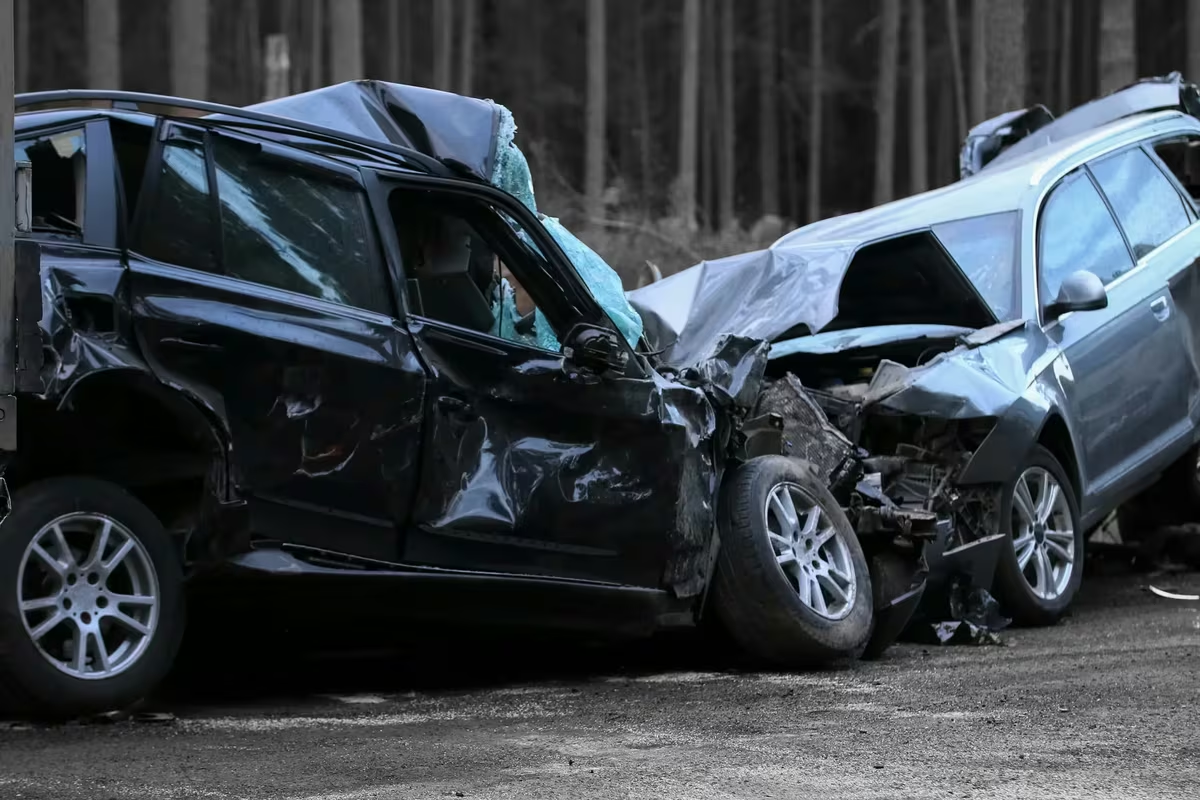 Car Accidents Rear-end, intersection, and highway collisions across Louisiana.
 -
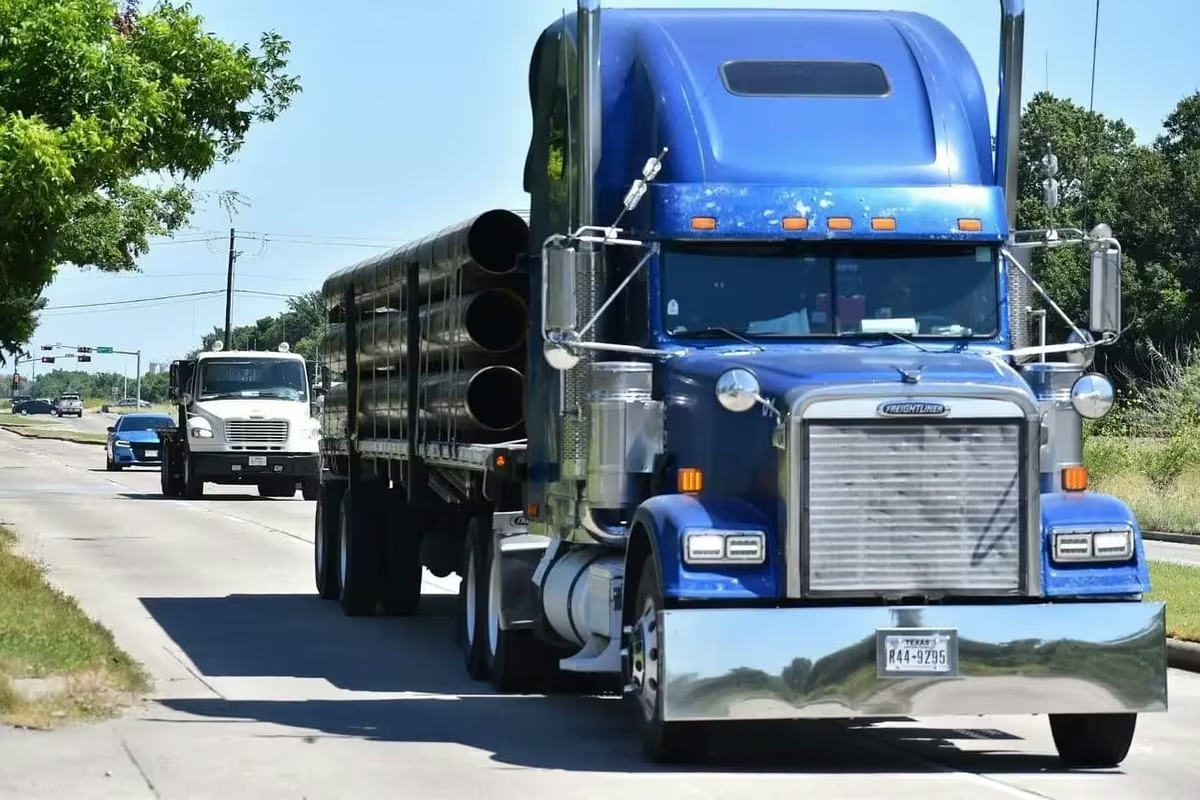 Truck Accidents 18-wheeler and commercial-vehicle wrecks governed by federal trucking rules.
 -
 Motorcycle Accidents Serious-injury motorcycle crashes where bias against riders is common.
 -
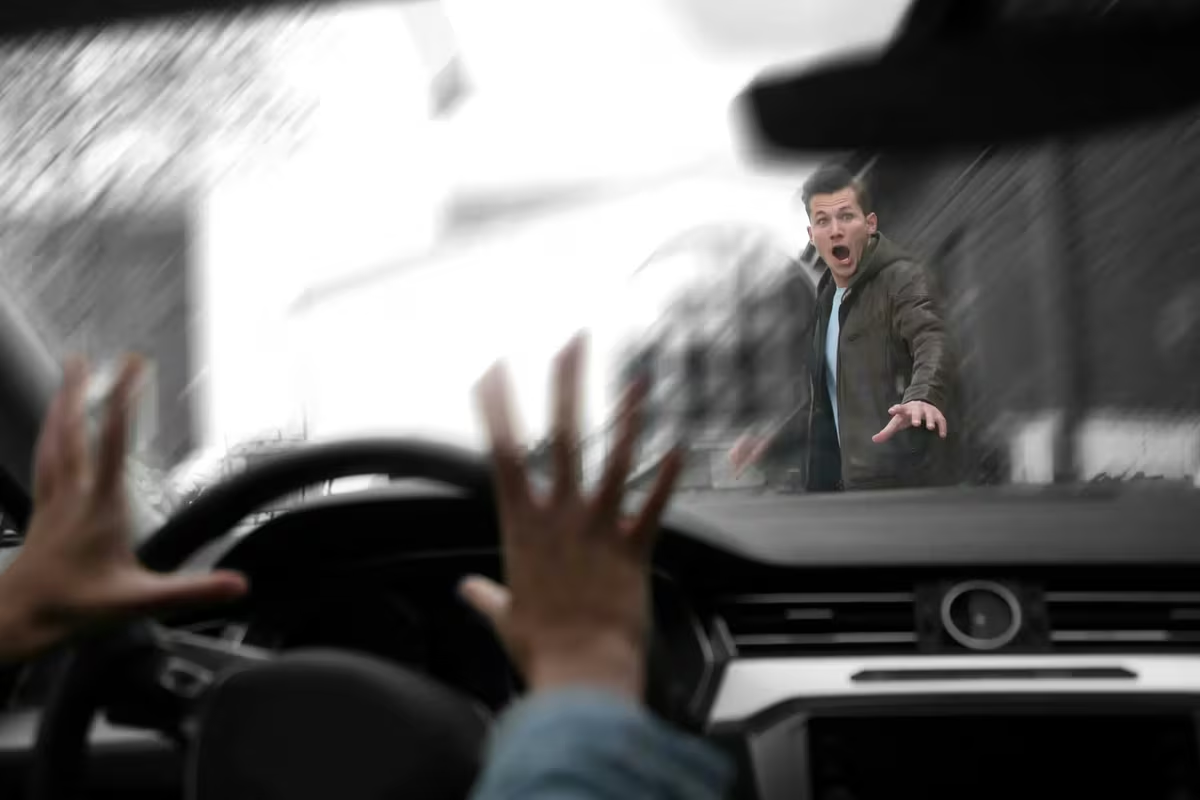 Pedestrian Accidents Crosswalk and roadway pedestrian injuries with high-stakes liability.
 -
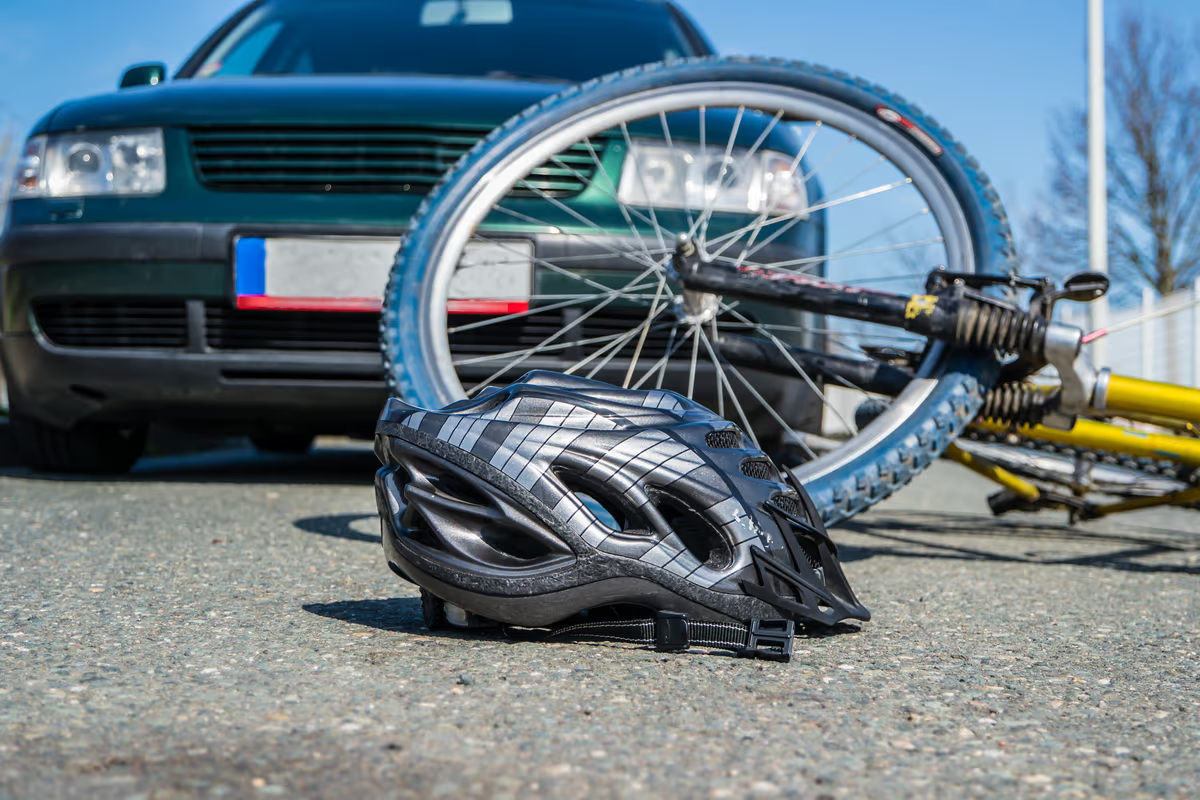 Bicycle Accidents Cyclists struck by drivers who failed to share the road.
 -
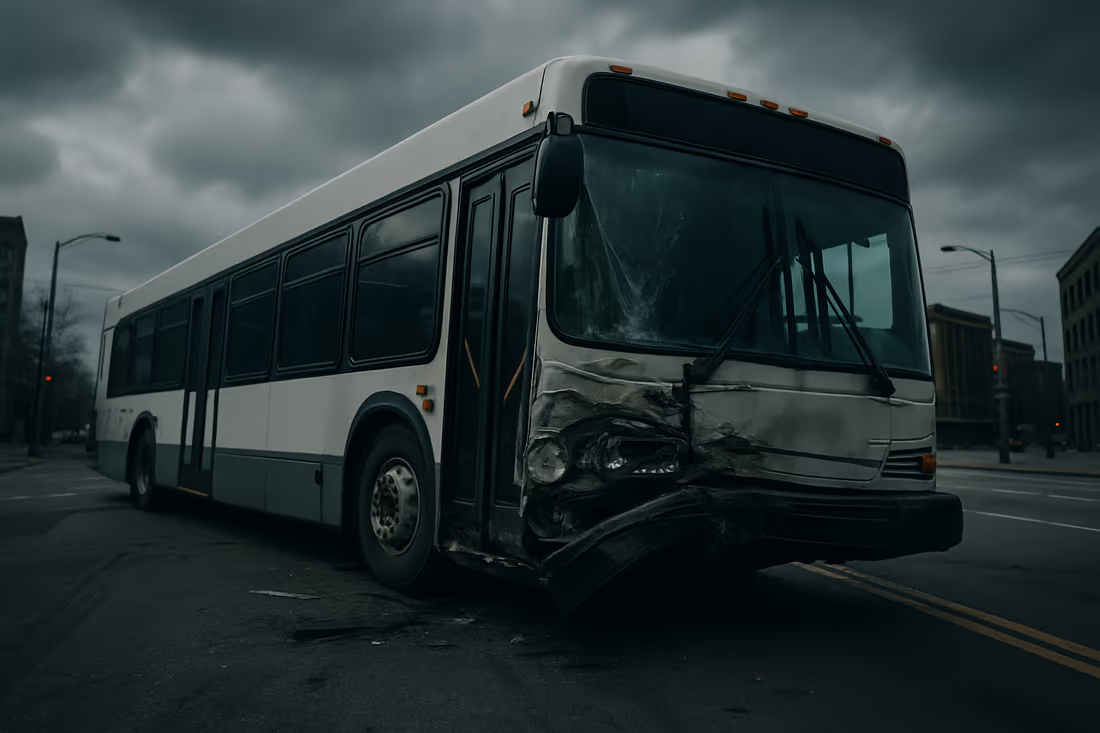 Bus Accidents Transit, school, and charter-bus crashes involving public and private carriers.
 -
 Slip & Fall Falls caused by wet floors, poor maintenance, and hidden hazards.
 -
 Catastrophic Injury Brain, spinal-cord, amputation, and severe-burn injuries that change a life.
 -
 Wrongful Death Claims brought by families after a fatal accident or act of negligence.
 -
 Construction Accidents Falls, struck-by, and equipment injuries on the job site.
 -
 Oilfield Accidents Drilling, pipeline, and refinery injuries across the energy sector.
 -
 Workers' Compensation On-the-job injuries and the benefits owed to injured workers.
 -
 Nursing Home Abuse Neglect and abuse of residents in long-term-care facilities.
How Long Do You Have to File a Car Accident Lawsuit in Louisiana?
The deadline depends on the date of the crash. For injuries sustained on or after July 1, 2024, Louisiana gives you two years to file a car accident lawsuit under La. C.C. art. 3493.1, while injuries before that date fall under the older one-year period in La. C.C. art. 3492. Louisiana calls this deadline a prescriptive period, and once it runs, the claim is gone no matter how clear the other driver’s fault was. Mark the date and treat it as the hard outer limit, not a target.
Two-Year Rule for Injuries On or After July 1, 2024
The clock for a Mansfield crash on or after July 1, 2024 starts on the day the injury was sustained, which for most car wrecks is the date of the collision. You have until the two-year mark to either settle the claim or file suit in a Louisiana court. Filing one day late generally ends the case, so the practical rule is to resolve or file well before the deadline rather than counting down to it.
One-Year Rule for Older Injuries
The shorter window matters most for anyone still deciding whether to pursue a crash that happened before July 1, 2024. The controlling fact for which deadline applies is the date the injury happened, not the date you discovered every consequence of it. If you are unsure where your wreck falls, pin down the injury date first and work from there.
Deadlines for Wrongful Death Claims
When a car accident is fatal, a separate article controls. A wrongful death claim under La. C.C. art. 2315.2 belongs to surviving family members and runs from the date of death, which is not always the date of the crash. A related survival action under La. C.C. art. 2315.1 covers the claims the decedent could have brought before death. The surviving family should confirm the exact running date early, because the death and the collision do not always fall on the same day.
Shorter Notice Issues for Government-Related Claims
Some crashes involve a government vehicle or a road maintained by a public entity. Claims that touch a state or local body can carry their own procedural steps in addition to the prescriptive period. Those steps run on their own schedule, and a missed step can sink an otherwise valid case.
Why Waiting Can Hurt Your Case
The deadline is the legal floor, but evidence has its own shorter timeline. Skid marks fade, vehicles get repaired or scrapped, dashcam and surveillance footage gets overwritten, and witnesses move or forget what they saw. Waiting until the prescriptive period is almost up leaves less time to gather records, photograph the scene, and identify every responsible party before that proof disappears. Acting early protects both the deadline and the evidence that supports the claim.
How Is Fault Determined in a DeSoto Parish Car Accident Case?
Fault in a DeSoto Parish car accident comes down to evidence and Louisiana’s allocation rules, not to whoever sounds most convincing on the phone. Investigators, insurers, and ultimately a court assign a percentage of responsibility to each party involved. Under La. C.C. art. 2323, Louisiana follows a modified comparative fault system: for causes of action arising on or after January 1, 2026, a plaintiff who is 51 percent or more at fault recovers nothing, and a plaintiff at 50 percent or less has damages reduced by their fault percentage. That math is why how fault gets assigned matters as much as whether you were hurt.
Role of the Louisiana State Police crash report
When troopers or local officers respond to a Mansfield or DeSoto Parish crash, they document the scene and produce a uniform crash report. That report records vehicle positions, statements, road conditions, citations issued, and the officer’s narrative of what happened. Insurers lean on it when they open a file, and it often shapes the first liability decision.
The report carries weight, but it is not the final word. An officer arrives after the collision and reconstructs events from what remains and what people say. A report that misstates the sequence of vehicles or omits a witness can be challenged with other evidence. The report is a starting point, not a verdict.
How fault percentages are assigned in multi-vehicle crashes
In a multi-vehicle crash, each driver who contributed to the collision can be assigned a share of the responsibility. A court allocates percentages across every responsible party, and those percentages total 100. One driver might be 70 percent responsible for running a stop sign while another is 30 percent responsible for speeding through the intersection.
This allocation drives the outcome. The percentage attached to each party determines what their share of any damages becomes, and a few points in either direction can change what a claim is worth. Insurers understand this, which is why they push to nudge your number higher. Documenting exactly how the crash unfolded protects you from carrying blame you did not earn.
Why insurance adjusters shift blame
An adjuster’s job is to limit what the insurer pays, and assigning more responsibility to you is a direct way to do that. Every percentage point shifted onto an injured driver reduces the payout. Expect the other driver’s insurer to look for any statement or fact that supports a higher number against you.
Common approaches include leading questions during a recorded statement, selective reading of the crash report, and arguments that you could have avoided the collision. These are negotiating positions, not findings. Solid evidence is what counters them, which makes preserving the proof early one of the most valuable things you can do.
Using black box data, dashcam footage, and cell records
Physical and electronic evidence often settles disputes that statements cannot. Modern vehicles store event data recorder information, sometimes called black box data, that can show speed, braking, throttle, and steering in the seconds before impact. That data can confirm who had the right of way or who failed to slow down.
Dashcam footage, nearby surveillance video, and traffic camera recordings can capture the collision directly. Cell phone records can show whether a driver was texting or talking at the moment of the crash, which speaks to distraction. Some of this evidence is overwritten or deleted within days or weeks, so identifying and preserving it quickly matters.
When a crash involves a commercial or government vehicle
Fault analysis changes when a commercial truck, delivery vehicle, or government vehicle is involved. Commercial carriers keep logs, maintenance records, and onboard telematics that bear on responsibility, and an employer can share liability for the conduct of a driver acting within the scope of employment. Those records feed into the same percentage allocation across every responsible party.
Crashes involving a parish, state, or municipal vehicle or a poorly maintained public road add their own procedural and evidentiary wrinkles. The common thread is that more potential parties means more places responsibility can land, and more records that can either help or hurt your share. Gathering those records early keeps the allocation honest.
Can You Still Recover Money If You Were Partly at Fault in Louisiana?
Yes. Being partly at fault for a crash does not automatically end your claim in Louisiana. Under La. C.C. art. 2323, Louisiana uses a modified comparative fault system: for causes of action arising on or after January 1, 2026, a person who is 51 percent or more at fault takes nothing, while at 50 percent or less the damages are reduced by that percentage and the rest stays with the injured party. The rest of this section explains what that one rule means in practice.
How Louisiana comparative fault works
A judge or jury assigns each party a percentage of responsibility that adds up to 100 percent. Your percentage is your reduction, not a bar, as long as it stays at or below 50 percent for causes of action arising on or after January 1, 2026. At 51 percent the claim ends. This allocation matters in Mansfield and across DeSoto Parish because most contested crashes involve some dispute over who did what.
How fault percentage affects compensation
The arithmetic is direct. Take a claim valued at $100,000. If you are found 20 percent at fault, the award drops by $20,000 and you receive $80,000. At 40 percent fault on the same claim, you receive $60,000. The percentage applies to the full damage figure, both the economic side like medical bills and lost wages and the general side like pain and suffering. A few percentage points can move the number by thousands of dollars, which is why fault allocation is often the most contested part of a case.
Examples of shared fault in Mansfield crashes
Shared fault shows up in ordinary collisions. A driver rear-ends you on a US 84 or US 171 stretch, but you had a brake light out, so an adjuster argues you contributed. You enter an intersection on a stale yellow while another driver runs the red. One driver speeds while the other fails to yield. In each scenario, both drivers can carry a percentage. The point is not that shared fault sinks the claim. It is that the percentage gets argued, and the argument decides how much of your damages survive.
Why insurers try to shift blame
Insurers run the same arithmetic. Every percentage point of fault they push onto you reduces what they pay, and at 51 percent the payment drops to zero. That incentive drives the early questions, the framing of the crash report, and the push for a quick recorded statement. An adjuster who can attach a number to your conduct has a direct financial reason to make that number as large as the file allows.
Evidence that can reduce your assigned fault
Your assigned percentage is not fixed by an adjuster’s first guess. It is built from evidence, and stronger evidence usually means a smaller number. The crash report, scene photographs, vehicle damage patterns, and independent witness accounts all speak to who did what. Dashcam footage, nearby surveillance video, and electronic data from the vehicles can contradict a one-sided account. When the facts are complex, a reconstruction expert can establish speeds, positions, and sequence. The cleaner the record, the harder it is for the other side to inflate your share.
Past results do not guarantee future outcomes; each case is decided on its own facts. See our full case results.
What Compensation Can You Recover After a Mansfield Car Accident?
After a crash in Mansfield, Louisiana law lets you pursue two broad categories of damages: economic losses you can document with bills and records, and non-economic losses for the human cost of the injury. Both flow from La. C.C. art. 2315, the foundation of Louisiana injury claims. The numbers turn on how serious the injury is, how long treatment runs, and how the crash changed your ability to work and live. The categories below show what belongs in a claim.
Medical Bills and Future Treatment
Medical expenses are usually the first dollars on the table. They cover emergency transport, the hospital stay, imaging, surgery, follow-up visits, physical therapy, prescriptions, and medical equipment. Past bills are documented through itemized statements and records. These special damages are part of what La. C.C. art. 2315 makes recoverable from the person whose fault caused the injury.
Future treatment counts too. A back injury that needs ongoing therapy, a knee that may require a later surgery, or a spinal condition that calls for long-term pain management all carry projected costs. These are proven through medical opinions on what care the injury will demand going forward.
Lost Wages and Reduced Earning Capacity
If the crash kept you off the job, the income you lost is recoverable. That includes hourly wages, salary, and benefits tied to time missed for treatment and healing. Pay records and employer statements establish the amount.
A more serious injury can reach beyond a few missed paychecks. When an injury limits the work you can do permanently, Louisiana allows damages for reduced earning capacity, which measures the gap between what you could earn before and what you can earn now. A worker who can no longer perform physical labor, or who must move to lower-paying work, has a real claim for that difference over the rest of a career.
Pain, Suffering, and Loss of Enjoyment of Life
Not every loss shows up on an invoice. Louisiana recognizes general damages for physical pain, mental anguish, and the loss of enjoyment of life. These compensate for what the injury took beyond the financial cost: chronic pain, sleep disruption, anxiety, and the inability to do things you did before the crash. General damages stand alongside the economic losses under La. C.C. art. 2315.
Because there is no receipt for pain, these damages are proven through medical records, treatment history, and testimony about how the injury changed daily life. The value depends on severity and duration.
Property Damage and Vehicle Replacement
Vehicle damage is its own category. If the car can be fixed, you can pursue the reasonable cost of repair. If the cost to repair exceeds the vehicle’s value, the claim is for the fair market value of the car before the crash, a total loss. Related costs, such as a rental while your vehicle is out of service, also belong in this part of the claim.
Wrongful Death and Other Damages After a Fatal Crash
When a crash takes a life, Louisiana shifts the claim to surviving family members. Spouses, children, and other qualifying relatives can pursue damages for their own losses, including loss of companionship and the financial support the person provided. Family members may also bring loss of consortium claims, which compensate close relatives for the loss of love, companionship, and services caused by a serious injury, not only a death.
One category sits apart from the rest. Louisiana does not allow punitive, or exemplary, damages in most car accident cases. The law makes a specific exception: under La. C.C. art. 2315.4, exemplary damages are available when the injury was caused by the wanton or reckless disregard of an intoxicated driver whose intoxication was a cause in fact of the crash. There is no cap on that amount.
How Much Is Your Mansfield Car Accident Claim Worth?
No two claims carry the same value, and any number you hear in the first week is a guess. A Mansfield car accident claim is worth the total of your economic losses, your physical and emotional harm, and the practical limits on collecting from whoever is responsible. As a working matter, the ceiling on most claims is set by the evidence and the available coverage, not by a number anyone can quote on day one. Value comes from five things working together: how badly you were hurt, how fault is divided, how much insurance exists, what you lost in income, and how an experienced eye reads the long-term picture.
Injury severity and medical treatment
The single largest driver of claim value is the nature and cost of the injury. A soft-tissue strain that resolves in six weeks sits at one end. A spinal injury requiring surgery, a traumatic brain injury, or an amputation sits at the other. The medical record sets the floor: emergency care, imaging, specialist visits, physical therapy, surgery, and the documented prognosis. Future treatment counts too, and a credible claim accounts for the operations, injections, or therapy a physician expects you to need years from now.
Treatment gaps cut value. If you stop going to appointments, an adjuster reads that as proof you healed, whether or not that is true. Consistent, documented care is what ties the dollar figure to reality.
Fault and comparative negligence
What you are owed and what you collect are two different numbers, and the gap between them is fault. A damages award is reduced by the percentage of fault assigned to the injured person. If your total damages are valued at $200,000 and you are found 20 percent at fault, the award drops to $160,000. That arithmetic happens whether the case settles or goes to verdict, because the insurer prices the claim against the same rule a jury would apply.
This is why fault is contested so hard early. Every percentage point an adjuster pins on you shaves the payout. The mechanics of how those percentages are assigned, and how the right evidence pushes them back down, are covered in the fault sections of this page. For valuation, the takeaway is simple: a strong liability picture protects the full value of the claim, and a weak one erodes it before a single medical bill is added up.
Available insurance coverage
A claim is only worth what can actually be collected. Many drivers carry nothing more than the legal minimum liability coverage. When damages exceed the at-fault driver’s policy limit, the math does not vanish, but the source of payment shifts. Your own uninsured and underinsured motorist coverage, a commercial policy behind a work vehicle, or an umbrella policy can become the realistic path to full value.
This is the difference between a claim’s theoretical worth and its collectible worth. A catastrophic injury caused by a driver carrying minimum limits with no assets is worth far less in cash than the same injury caused by a commercial defendant with layered coverage. A careful attorney maps every policy in play before valuing a claim, because finding a second or third source of coverage often matters more than any other single step.
Lost income and long-term impairment
Lost wages are the part of a claim people underestimate most. The clear piece is time missed from work right after the crash, documented by pay records and an employer letter. The larger and harder piece is reduced earning capacity. If an injury keeps you from returning to the job you held, forces a lower-paying role, or shortens your working years, that future loss belongs in the claim.
Proving it takes more than a paystub. Vocational experts and economists translate a physical limitation into a dollar figure across a working lifetime. A roofer with a permanent shoulder restriction and an office worker with the same injury face very different income futures, and the valuation should reflect that.
Why quick insurance offers are often too low
An early offer arrives before anyone knows the full extent of the injury. That timing is the point. An offer made three weeks after a crash cannot account for a surgery recommended three months later, a therapy course that runs a year, or a permanent impairment that surfaces once the acute pain fades. Once you accept and sign a release, the claim is closed, even if your condition worsens.
Pain, suffering, and loss of enjoyment of life are real categories of damages, and they are routinely the part a fast offer ignores or lowballs, because they are harder to reduce to a receipt. One category an early offer will never mention is exemplary damages. Under La. C.C. art. 2315.4, when an intoxicated driver causes injury through wanton or reckless disregard and the intoxication was a cause in fact of the injury, exemplary damages are available with no cap on the amount. The full value of a claim becomes clear only after the injury stabilizes and the long-term picture is documented. A number offered before that point is built on incomplete information.
What Evidence Helps Prove a Mansfield Car Accident Claim?
A car accident claim is only as strong as the evidence behind it. The proof that matters falls into a few categories: the official crash report, photographs and video from the scene, medical records that connect your injuries to the wreck, recorded data from the vehicles and nearby cameras, and statements from people who saw what happened. Each one answers a different question, and the strongest claims pull from all of them. Evidence also fades fast. Skid marks wash away, vehicles get repaired, and witnesses forget details within days, so the value of collecting proof early is hard to overstate.
Crash reports and police records
The crash report is usually the first document an adjuster or attorney reads. When a Mansfield collision involves injury, death, or property damage above the statutory threshold, Louisiana law requires it to be reported to law enforcement, and the investigating officer documents the scene in a standardized report. That report records the date, location, drivers, vehicles, weather, and the officer’s narrative of how the crash happened. It often notes which driver was cited and how the officer understood the sequence of events.
The report is not the final word on fault. It is one person’s assessment, written quickly at a chaotic scene, and it can be wrong. But it carries weight, and it sets the starting point for the conversation. The report can be supplemented or contradicted with other evidence, making it a foundation rather than a ceiling.
Photos and videos from the scene
Photographs taken at the scene capture conditions that disappear within hours. Vehicle positions, the angle of impact, debris fields, skid marks, traffic signals, road surface, and lighting all tell part of the story. Pictures of your own injuries, taken close to the time of the crash, document their severity before bruising fades or swelling goes down.
Photos from a phone are fine, and more is better than less. Wide shots show the overall scene and the relationship between vehicles. Close shots show damage, gouges in the pavement, and the condition of tires or signals. Where someone managed to take video, the footage can show motion and timing that still images cannot. This kind of contemporaneous record is difficult for an insurer to argue around because it shows the scene as it actually was.
Medical records and bills
Medical records are the bridge between the crash and the damages. They establish what injuries you suffered, when you sought treatment, what the treatment cost, and how your condition progressed. A consistent treatment history, starting close to the date of the wreck, ties the injury to the collision and undercuts the common insurer argument that something else caused the harm.
Gaps in treatment create openings for the other side. When weeks pass between the crash and the first doctor visit, an adjuster will argue the injury came from somewhere else. The records also carry forward into future care. Where a physician documents that ongoing treatment, therapy, or surgery is likely, those records support a claim for future medical costs, not just the bills already paid.
Black box, dashcam, and surveillance footage
Modern vehicles record data. The event data recorder, often called the black box, can capture speed, braking, throttle position, and seatbelt use in the seconds before impact. That information either confirms or contradicts what a driver says happened, and it is hard to dispute because it comes from the vehicle itself. This data can be overwritten or lost when a vehicle is repaired or scrapped, so preserving it early matters.
Dashcam footage from either vehicle, and surveillance video from nearby businesses or traffic cameras, can show the crash directly. A Mansfield intersection bordered by stores or gas stations may have cameras pointed at the road. Footage is often deleted on a short cycle, sometimes within days, which is why a prompt written request to preserve it can be the difference between having the video and losing it.
Witness statements and expert reconstruction
People who saw the crash provide an outside account that neither driver controls. A neutral witness who watched a driver run a red light or look down at a phone gives the claim independent support. Witness memory fades and contact information gets lost, so getting names and statements early preserves testimony that would otherwise vanish.
Some crashes need an expert to explain. An accident reconstructionist uses physical evidence, vehicle data, and the laws of physics to reconstruct speeds, angles, and the sequence of impact. This becomes important when fault is disputed or a collision involves a commercial vehicle, where the stakes and the complexity both rise.
Your Mansfield Injury Attorneys
Founding partners Trey Morris and Justin Dewett lead every Mansfield injury case Morris & Dewett takes.


Should You Talk to the Insurance Company After a Mansfield Crash?
You have to talk to your own insurer after a crash, but you do not have to talk to the other driver’s insurance company at all, and you should be careful with both. Your own policy almost certainly requires prompt notice and reasonable cooperation. The other side’s adjuster works for the company that may end up paying your claim, which means their interests and yours point in opposite directions. Knowing which conversation is required and which is optional protects the value of your claim from the first phone call.
What to report to your own insurer
Your auto policy is a contract, and most policies require you to report an accident promptly and to cooperate with the investigation. Reporting the basic facts to your own insurer is a duty you owe under that contract. Give the date, time, location, the other vehicles involved, and that a collision occurred.
Stick to what you know for certain. You can describe where the crash happened and who was present without guessing about speed, distances, or who caused it. If you are not sure of an answer, saying so is honest and accurate. A factual report keeps you in compliance with your policy without locking you into details you have not yet confirmed.
Why the other driver’s insurer may ask for a recorded statement
The at-fault driver’s insurance company often calls within days of a crash and asks for a recorded statement. This call usually comes before you know the full extent of your injuries or how your treatment will unfold. The adjuster is friendly, but the recording becomes a fixed record the company can use later.
You are not required to give a recorded statement to the other driver’s insurer. Nothing in Louisiana law obligates you to sit for a recorded interview with the company that may owe you money. An early statement, given while you are still sore, medicated, or uncertain about your symptoms, can be read back to you months later as if it were a careful and complete account.
Common insurance tactics after Louisiana car accidents
Adjusters use predictable approaches because they work. Recognizing them helps you respond on your own terms rather than theirs.
- The quick offer. A check arrives fast, often before you have finished treatment. Accepting it usually requires signing a release that ends your claim, including for injuries that surface later.
- The recorded statement request. Phrased as routine, the recording is used to pin you to early descriptions of your injuries or the crash.
- The medical authorization. A broad release lets the insurer comb through your entire medical history, looking for prior conditions to blame for your current symptoms.
- The fault question. Open-ended questions invite you to speculate about what happened. Louisiana allocates fault by percentage under La. C.C. art. 2323, and any percentage assigned to you reduces what you can collect, so a casual guess can carry real cost.
What not to say before legal advice
Do not admit fault, apologize in a way that sounds like an admission, or speculate about how the crash happened. Fault in Louisiana is determined by the facts and the evidence, not by an off-the-cuff statement to an adjuster. What feels like simple politeness can be recorded and treated as an acknowledgment of blame.
Do not minimize your injuries or guess at how badly you are hurt. Many crash injuries, including soft-tissue damage and concussions, take days to fully present. Saying “I’m fine” on day one can undercut a serious diagnosis on day ten. Do not agree to a recorded statement, sign a broad medical authorization, or accept a settlement before you understand the full scope of your injuries and your claim.
How a lawyer handles insurer communications
Once an attorney represents you, adjusters communicate through the lawyer rather than directly with you. That single change stops the recorded-statement calls and the pressure to settle early. It also means responses to the insurer are measured against the actual evidence and the full picture of your injuries, not given on the spot while you are still under medical treatment.
A lawyer also manages the parts of the process most people never see: documenting the claim, valuing it against your medical treatment and lost income, and pushing back when an adjuster tries to assign you fault or undervalue the harm.
What If the Other Driver Was Uninsured or Underinsured in Louisiana?
If the driver who hit you in Mansfield had no insurance, or carried a policy too small to cover your injuries, your own auto policy is often the source of compensation. Under La. R.S. 22:1295, uninsured and underinsured motorist coverage, known as UM/UIM, is required in every Louisiana auto policy unless the named insured rejects it in writing on a form prescribed by the Commissioner of Insurance, and a valid written rejection stays in effect for the life of the policy. That single rule is why many drivers carry UM coverage without realizing it. The sections below walk through how that coverage works in practice once you need it.
Using your uninsured motorist coverage
Uninsured motorist coverage applies when the at-fault driver had no liability insurance at all. Because the coverage rides in your policy by default, you likely have it unless you signed a written rejection. The claim runs against your own insurer, but it stands in the shoes of the driver who hit you. You still have to prove the other driver was at fault and document the extent of your injuries. Pull your declarations page and check the UM line. If it shows a coverage limit, that is the pool available to you.
Using underinsured motorist coverage when limits are too low
Underinsured motorist coverage fills the gap when the at-fault driver carried insurance, but not enough. A serious injury can exhaust the other driver’s policy and still leave medical bills unpaid. UIM coverage from your own policy can pay the difference up to your UIM limit. The order of demand, the credit the UIM insurer claims for the underlying limits, and the timing of any settlement all affect what you collect.
Claims involving hit-and-run drivers
When the driver who caused the crash flees and is never identified, there is no liability insurer to pursue. UM coverage typically steps in for these phantom-vehicle and hit-and-run situations, treating the unknown driver as uninsured. Prompt reporting matters. File a police report, note the time and location, and preserve any witness contact information or camera footage. Insurers scrutinize hit-and-run claims closely because there is no opposing driver to confirm the account, so independent evidence carries weight.
Stacking and policy issues
The amount of UM/UIM coverage available depends on the exact policy language, the number of vehicles on the policy, and whether multiple policies in the household can be combined. Coverage questions also turn on whether a prior written rejection was valid, since an invalid rejection can leave coverage in place even where the insurer claims it was waived. These are document-driven questions. The declarations page, the application, and the signed rejection form, if one exists, decide them.
Why UM/UIM claims can still become adversarial
A UM/UIM claim is filed against your own insurance company, which surprises many people. The insurer still investigates fault, still questions the severity of your injuries, and still has an incentive to pay less. Being a policyholder does not make the claim friendly. In a UM dispute, your own carrier takes the same adversarial position an opposing insurer would.
What Types of Car Accidents Do Mansfield and DeSoto Parish Lawyers Handle?
DeSoto Parish car accident cases run the full range, from low-speed parking lot taps to fatal highway collisions. The mechanism of a crash shapes the evidence that matters, the injuries that result, and the parties who may be responsible. The categories below cover the bulk of what comes through a Mansfield personal injury practice. Each one carries its own proof problems and its own set of defenses an insurer will raise.
Rear-End and Intersection Crashes
Rear-end collisions are the most common crash type, and they happen often at the stop-and-go points along U.S. 171 and the intersections feeding into downtown Mansfield. The trailing driver usually bears responsibility because the law expects a safe following distance, but that presumption is not absolute. A sudden lane change, a non-functioning brake light, or a chain-reaction pileup can split blame among several drivers.
Intersection crashes turn on who had the right of way. Red-light runs, failure-to-yield turns, and stop-sign violations produce side-impact and angle collisions that injure necks, backs, and shoulders. Signal timing, witness accounts, and any traffic-camera footage become the core of these cases.
Head-On and T-Bone Collisions
Head-on collisions carry the highest injury severity because the closing speed combines both vehicles’ velocity. They occur on the two-lane rural roads around DeSoto Parish when a driver crosses the centerline, attempts an unsafe pass, or drifts after fatigue or impairment. The forces involved frequently cause spinal injuries, fractures, and internal trauma.
T-bone crashes, where the front of one vehicle strikes the side of another, leave the occupants on the impact side with little protection. These cases usually come down to which driver entered the intersection lawfully. Vehicle damage patterns, point-of-impact analysis, and the crash report help establish the sequence.
Drunk and Distracted Driving Accidents
Impaired and distracted driving crashes raise issues beyond ordinary negligence. When a driver causes injury through the wanton or reckless disregard for others that comes with operating a vehicle while intoxicated, Louisiana allows exemplary damages under La. C.C. art. 2315.4, provided the intoxication was a cause in fact of the injury. There is no statutory cap on the amount of those exemplary damages.
Distracted driving, including texting, eating, or reaching for objects, produces crashes that look like ordinary inattention but leave a digital trail. Cell phone records, app usage data, and dashcam footage can show what a driver was doing in the seconds before impact.
Commercial Truck and 18-Wheeler Accidents
Crashes involving 18-wheelers and other commercial vehicles on I-49 and the parish’s freight corridors differ from passenger-car wrecks in scale and in who can be held responsible. A motor carrier, a maintenance contractor, or a cargo loader may share fault alongside the driver. Federal hours-of-service and inspection rules add layers of evidence that do not exist in a typical car crash.
These cases move fast on the defense side. Electronic logging device data, driver qualification files, and post-crash inspection records can disappear if no one preserves them early. Mansfield and DeSoto Parish lawyers who handle commercial-vehicle claims send preservation demands and pursue the data before it is overwritten.
Motorcycle, Pedestrian, and Fatal Accidents
Motorcyclists and pedestrians absorb crash forces directly, so the same collision that dents a car can cause catastrophic injury to a rider or a person on foot. Bias against motorcyclists is common, and insurers often lean on it to shift blame. Helmet use, lighting conditions, and crosswalk placement all factor into how fault gets assigned.
When a crash is fatal, the claim shifts to the surviving family. Louisiana provides a wrongful death action under La. C.C. art. 2315.2 for the spouse, children, parents, or siblings the statute names, in that order of priority. These cases require careful documentation of both the deceased’s economic contributions and the family’s loss, and they demand the same evidence preservation as any serious injury claim.
What clients say
- ★★★★★
I hired Morris and Dewett back in November of 2025.
They helped me get through my hard times of being off work, stress, and worry. Anytime I had a question I could call and they always had an answer. Very nice and professtional people. Thank you Morris and Dewett for making this an easy process for me and my family.
- ★★★★★
Morris and Dewett and their team of attorneys and staff go above and beyond.
They always were there to support me and answer all my questions after a shoulder injury that included multiple surgeries. They are caring and compassionate and that goes a long way! Highly recommended!
- ★★★★★
Thanks Morris and Dewett for the excellent work you have done on my behalf.
I want to personally thank Sarah for her kindness.
- ★★★★★
Morris & Dewett does things the right way!
They put their clients first in measurable and impactful ways.
- ★★★★★
First time being injured and needing a lawyer they where very helpful.
They answered my questions Id have very well. Highly recommend them.
- ★★★★★
Wonderful experience with Morris and DeWitt, everyone was articulate and punctual, and open to all my questions about the process.
My case couldn't have been handled by a better team! Caity Nerren, Jessica Christian, and Meghan Nolen were all fantastic and helped every step of the way. Thanks again for all of your hard work.
Reviews reflect individual client experiences. Past results do not guarantee future outcomes.
Mansfield Louisiana Car Accident Lawyer FAQs
These are the questions DeSoto Parish drivers ask most after a crash. Each answer states the rule first, then the reason it matters.
How long do I have to file a car accident lawsuit in Louisiana?
For injuries on or after July 1, 2024, Louisiana sets a two-year prescriptive period under La. C.C. art. 3493.1. Injuries before that date fall under the older one-year period in La. C.C. art. 3492. The deadline runs from the day the injury was sustained, and missing it usually ends the claim no matter how strong the facts are. Different deadlines and notice rules can apply to claims involving a government entity, so the date you were hurt drives the whole timeline.
Can I still get money if the crash was partly my fault?
Yes. Louisiana uses a comparative fault system under La. C.C. art. 2323, so partial fault reduces a damages award rather than erasing it outright. For causes of action arising on or after January 1, 2026, a plaintiff who is 51% or more at fault recovers nothing, and at 50% or less the award is reduced by the assigned fault percentage. This is exactly why insurers push to pin a higher share of blame on you. Your fault percentage is not final until the evidence is weighed.
What if the other driver had no insurance or not enough?
Your own uninsured and underinsured motorist coverage is built to handle that gap. Under La. R.S. 22:1295, UM/UIM coverage must be included in every Louisiana auto policy unless the named insured rejects it in writing on the form prescribed by the Commissioner of Insurance. If you never signed a valid rejection, you likely have this coverage even if you do not remember buying it. It can apply when the at-fault driver carries no insurance, carries too little, or flees the scene.
What happens if I was uninsured when the crash happened?
Louisiana’s “no pay, no play” rule under La. R.S. 32:866 limits what an uninsured driver can collect. An uninsured motorist cannot recover the first $100,000 in bodily injury damages or the first $100,000 in property damage from the at-fault driver’s insurer, and this applies regardless of who caused the crash. Damages above those thresholds may still be available. Being uninsured does not always mean walking away with nothing, but it narrows what you can pursue.
Can I sue the at-fault driver’s insurance company directly?
Usually not. Louisiana’s Direct Action Statute, La. R.S. 22:1269, now defaults to prohibiting suit directly against a liability insurer, with seven specific exceptions. Those exceptions include an insured who is insolvent or bankrupt, an insured who has died, a failure to serve the insured within 180 days, claims against a UM carrier, certain family tort claims, an insurer that denied coverage or issued a reservation of rights, and an insured who fails to answer or defend. Outside those situations, the claim typically proceeds against the at-fault driver, with the insurer paying any judgment within policy limits.
Do I have to give the other insurer a recorded statement?
No law requires you to give the other driver’s insurer a recorded statement. Adjusters often ask early because answers given before you understand the full extent of your injuries can be used to reduce the value of your claim later. You do have duties to your own insurer under your policy.
How much does it cost to talk to a lawyer about a Mansfield crash?
Most personal injury attorneys, including this firm, handle car accident claims on a contingency basis, meaning the fee comes as a percentage of the result rather than an upfront payment. An initial consultation is typically free.
Frequently Asked Questions
- Can I still recover if I was partially at fault for the crash?
- Yes, in most situations. La. C.C. art. 2323 reduces your damages by your percentage of fault rather than barring the claim outright. A driver assigned 20 percent of the fault on a $100,000 claim collects $80,000. One caveat applies to newer crashes. For causes of action arising on or after January 1, 2026, a claimant found 51 percent or more at fault collects nothing. At 50 percent or less, the award is reduced in proportion to the fault percentage.
- Do I need a lawyer if the insurance company already offered a settlement?
- An early offer is the insurer's opening number, not a neutral valuation of your claim. Offers made in the first weeks after a crash often arrive before the full extent of medical treatment is known. Signing a release ends the claim permanently, even if the injuries turn out worse than expected. An attorney compares the offer against documented medical bills, projected future care, and lost income before you decide. If the number holds up against that math, you have lost nothing by checking. If it does not, you have avoided settling a claim for less than the evidence supports.
- How long does a car accident case take to settle in Louisiana?
- Most claims resolve in a range of several months to more than a year. Three factors drive the timeline: how long medical treatment lasts, whether fault is disputed, and whether a lawsuit must be filed. A claim generally should not settle before the injured person reaches maximum medical improvement, because future care cannot be valued until the medical picture is stable. Disputed liability or a low offer pushes a case into litigation, which adds time. A claim with clear fault, completed treatment, and adequate insurance limits settles faster than one missing any of those three.
- Do I need to go to court?
- Most Louisiana car accident claims settle through negotiation without a trial. Filing a lawsuit does not mean a courtroom appearance is certain. Cases settle at every stage, including after suit is filed and on the eve of trial. Preparing each case as though it will be tried tends to produce stronger settlement positions, because insurers price claims differently when the firm across the table actually tries cases. If trial becomes necessary, your attorney presents the case. You participate as a witness, not as your own advocate.
- Can I sue after a hit-and-run accident in Mansfield?
- Yes. A fleeing driver does not end the claim. Investigation sometimes identifies the driver through surveillance footage, witness accounts, or debris left at the scene. When the driver cannot be found, your own uninsured motorist coverage is often the source of compensation. Under La. R.S. 22:1295 , UM coverage equal to your liability limits is included in every Louisiana auto policy. The only exception is a written rejection on the form prescribed by the Commissioner of Insurance . The uninsured and underinsured motorist section above explains how those claims work in detail.
Last updated June 14, 2026