

Mansfield, Louisiana Truck Accident Lawyer Serving DeSoto Parish
A collision with a loaded commercial truck is not the same as a fender bender, and the claim that follows is not handled the same way.
Have You Been Injured in a Truck Accident in Mansfield, Louisiana?
A fully loaded tractor-trailer can weigh 80,000 pounds, roughly twenty times the weight of a passenger car. When that mass strikes a smaller vehicle, the people in the smaller vehicle absorb most of the force. Mansfield sits at the crossroads of timber, oilfield, and freight traffic, so the trucks moving through DeSoto Parish are often heavy, frequently out of state, and almost always backed by a corporate carrier and its insurer.
That weight difference drives the injuries these cases involve. Spinal trauma, traumatic brain injury, broken bones, and internal damage are common outcomes when a commercial vehicle is involved. Serious injuries mean larger medical bills, longer time away from work, and a higher stake in getting the claim right.
What Counts as a Truck Accident Case?
Not every crash with a large vehicle is a commercial truck case, and the distinction matters because commercial carriers are governed by federal safety rules that ordinary drivers are not. A truck accident case generally involves a commercial motor vehicle: an eighteen-wheeler or semi-truck, a tanker hauling fuel or chemicals, a log truck, a dump truck, a delivery box truck, or a flatbed carrying equipment or pipe. These vehicles operate for a business, which usually means an employer, an insurance policy with high limits, and records that a passenger-car claim never produces.
The presence of a business defendant changes who can be held responsible and what evidence exists. A commercial carrier keeps driver logs, inspection records, dispatch data, and electronic onboard information. Those records can show why a crash happened. They can also disappear if no one demands them in time. That is the core reason these claims are pursued differently from a standard car accident.
Crashes on US-84, US-171, and I-49 Near Mansfield
DeSoto Parish carries heavy commercial traffic on a handful of corridors. US-171 runs north and south through Mansfield, connecting Shreveport traffic to the south toward Leesville and the Texas line. US-84 cuts east and west, linking the parish to Natchitoches and feeding traffic toward Texas. Interstate 49 runs nearby and pulls long-haul freight through the region at highway speed. Add the rural state highways and parish roads that timber and oilfield trucks use to reach worksites, and you have a network where heavy vehicles share the road with local drivers every day.
The causes follow the traffic. Driver fatigue on long timber and oilfield routes, improperly secured loads from industrial sites, blind-spot and wide-turn collisions at intersections, brake failure on older equipment, and speed or weather on rural stretches all turn up in these cases. Each cause points to different proof and sometimes different defendants.
Serving Mansfield
Served from our Shreveport office.
509 Milam St
Shreveport, LA 71101
Open 24/7 for injured Mansfield residents
Get directions →What Should You Do Right After a Truck Accident in Mansfield, Louisiana?
The hours right after a wreck with a commercial truck shape everything that follows. The steps below put your health first and the strength of your claim second. They matter because a tractor-trailer collision generates evidence that moves, gets repaired, or gets overwritten faster than most people expect.
Call 911 and Get the Police Crash Report
Call 911 from the scene. Reporting the wreck to law enforcement is the practical first move when a commercial vehicle is involved, and it also satisfies the reporting duty under La. R.S. 32:398, which covers crashes involving injury, death, or property damage above the statutory threshold. A responding officer documents the position of the vehicles, statements from drivers and witnesses, weather and road conditions, and any citations issued. That report becomes a foundational record.
Get the report number before you leave, or ask the officer how to obtain a copy. A crash report is one of the few independent documents created in the first hour, and you will want it on file.
Get Medical Care and Document Every Injury
See a doctor the same day, even if you feel functional. Adrenaline masks pain, and serious injuries from a high-mass collision such as spinal damage, internal bleeding, or concussion can present hours or days later. A same-day medical record connects your injuries to the crash and removes an argument the trucking insurer will otherwise make about whether the wreck caused them.
Keep going to your appointments. Follow the treatment plan. Gaps in care or missed visits give the other side room to claim you healed or were never hurt. Save discharge papers, imaging orders, prescriptions, and your mileage to and from treatment.
Photograph the Scene, the Truck, and Its Markings
If you can move safely, photograph everything before vehicles are towed. Capture the truck’s full position, the damage to both vehicles, debris, skid marks, and the roadway. Then photograph the truck itself in detail.
Get the company name and logo on the cab and trailer, the U.S. DOT number, the license plates on both the tractor and the trailer, and any placards showing the cargo. Those identifiers tell a lawyer who the carrier is, who insures it, and which federal records to chase. Photograph your own visible injuries too, and do it again over the following days as bruising develops.
Do Not Give a Recorded Statement to the Trucking Insurer
A representative for the trucking company or its insurer may contact you within hours, sometimes before you leave the hospital. Be polite and give nothing beyond confirming who you are. Do not agree to a recorded statement, and do not accept a quick check in exchange for signing anything.
These early calls exist to lock you into a version of events while you are still in pain and missing facts. An offhand “I’m okay” or “I didn’t see them” gets used later to reduce or deny your claim. You are not required to give a recorded statement to the other side’s insurer, and you should not.
Contact a Truck Accident Lawyer Before Evidence Disappears
Speak with a truck accident lawyer early, because the most valuable evidence in these cases is controlled by the carrier and does not survive long. Electronic logging data, engine control module readings, dispatch records, and maintenance files can be overwritten or routinely purged within weeks. A lawyer can send a formal preservation demand that puts the company on notice to keep that material intact.
Acting early also means injuries get documented, witnesses get located while their memory is fresh, and the carrier’s rapid-response team does not get a head start it can use against you. The sooner the right records are secured, the stronger the foundation for everything that comes next.
Why Are Truck Accident Claims Different From Car Accident Claims in Louisiana?
A truck accident claim looks like a car accident claim from the outside. Someone was hurt, a vehicle caused it, and an insurer is on the other end. The legal machinery underneath is not the same. A commercial truck is a regulated business operation, the company behind it answers to a separate set of safety expectations, and the evidence that decides these cases lives in places a car wreck rarely reaches.
Commercial Trucking Is a Regulated Business, Not Just Driving
Commercial trucking operates as a regulated business activity, which sets it apart from ordinary passenger-car driving. The expectations reach the driver, the vehicle, and the company itself. A regular driver follows the state traffic code. A commercial carrier follows that code plus a separate layer of safety expectations that shape how it hires, trains, inspects, and dispatches.
Two practical realities shape most claims. The first is fatigue. Time behind the wheel of a loaded tractor-trailer carries recognized limits, because exhaustion in a heavy commercial vehicle is a known danger. The second is coverage. Commercial carriers tend to carry liability protection well beyond a private auto policy, with larger figures still for trucks hauling hazardous materials. The size of that coverage is one reason these claims get contested so hard.
Why Trucking Cases Involve Far More Evidence
A car wreck usually comes down to a police report, two drivers’ accounts, and some photographs. A trucking case carries a paper and data trail that is much larger, because the duty-time and recordkeeping practices in commercial trucking push carriers to create and keep records that passenger drivers never generate.
The duty-time practices, for example, mean commercial drivers track their on-duty status, and most carriers record it electronically. That produces a digital record of when the driver started, how long they had been at the wheel, and whether they were near their limit when the crash happened. Beyond duty records, a carrier’s files can include maintenance and inspection logs, the driver’s qualification and training history, dispatch instructions, and onboard telematics. None of that exists in a two-car collision.
This evidence does not stay available on its own. Electronic data can be overwritten and physical records can be discarded on routine retention schedules. That is the practical reason trucking cases reward fast, informed action and punish delay, a point that matters long before anyone files suit.
Why Federal and State Rules Both Matter
Two layers run at once in a Louisiana trucking case. The safety and compliance side describes what the carrier and driver were expected to do. Louisiana law governs how an injured person proves fault, who can be held responsible, and what damages are available. Neither layer answers the whole question by itself.
A breach of a safety expectation does not automatically write a check. It can serve as evidence of negligence that still has to be proved and connected to the harm under Louisiana’s own liability framework. An attorney handling your case has to read the compliance side to spot the problem and the state side to turn that problem into a result. The specifics of how Louisiana assigns fault, what compensation the law allows, and how long you have to act are their own subjects, addressed elsewhere on this page. The point here is narrower: a lawyer who knows only the state side, or only the compliance side, is working with half the case.
Why Insurers Contest Truck Claims Aggressively
Because the coverage is large and the exposure is real, the insurers behind commercial trucks treat these claims differently from a routine auto file. More money is at stake, more parties can be brought in, and the carrier’s own records can cut against it once someone digs them out. That combination gives the carrier’s side a strong incentive to limit what comes to light and what gets paid.
That is why the evidence question and the speed question are not academic. The records that point to a duty-time problem or a maintenance failure are controlled by the company you are making a claim against. An attorney who understands trucking knows to secure that evidence before it cycles out, and knows that the size of the policy is a reason to expect resistance, not a quick resolution.
What Are the Most Common Causes of Truck Accidents on US-84, US-171, and I-49 Near Mansfield?
Most truck wrecks near Mansfield trace back to a small set of preventable failures: a tired driver, an unsecured load, a blind-spot misjudgment, a neglected brake system, or a heavy rig moving too fast for the conditions. The roads here carry a steady mix of loaded log trucks, oilfield service rigs, and freight running between US-84, US-171, and I-49. Identifying the actual cause matters, because the cause points to who was negligent and which safety duty was broken.
Driver Fatigue on Timber and Oilfield Routes
Fatigue is one of the most common and most preventable causes of serious truck wrecks. A drowsy driver behind 80,000 pounds reacts slowly and drifts out of a lane. Tired driving dulls judgment and slows reaction time, and that combination turns a routine traffic slowdown into a high-speed impact.
Timber and oilfield routes around DeSoto Parish run on tight schedules. A driver hauling logs or pushing to make a well-site delivery has a financial incentive to keep rolling past the point of safe operation. When a logbook or electronic record shows a driver who should have been parked was still behind the wheel, that record becomes direct evidence of negligence.
Overloaded and Improperly Secured Loads From DeSoto Parish Industrial Sites
A shifting or falling load can cause a rollover, a jackknife, or debris strewn across a lane. A load that is not distributed and tied down well can break free before or during transit. Log loads, pipe, equipment, and bulk industrial cargo each carry their own securement demands.
Crashes tied to load failures often involve more than the driver. The party that loaded the trailer at the mill, the yard, or the well site may share responsibility if the securement was wrong from the start. An overweight rig also strains brakes and tires and lengthens stopping distance, which turns a routine stop into a rear-end collision.
Blind Spot and Wide-Turn Crashes at Mansfield Intersections
Large trucks have substantial blind spots along both sides, directly behind the trailer, and immediately in front of the cab. A driver who changes lanes or merges without confirming a clear path can run over a smaller vehicle the driver never saw. These crashes happen on US-171 and US-84 where local traffic mixes with through trucks.
Wide turns create a related danger. A tractor-trailer making a right turn often swings left first, and a passing motorist can be pinned or struck against the curb. Intersections in and around Mansfield, where trucks turn from highways onto local routes, are a recurring setting for these collisions.
Poor Maintenance and Brake Failure on Aging Fleets
Brakes, tires, and steering components on a heavy truck wear under constant load. A carrier that skips inspection and upkeep to keep trucks earning leaves defects on the road. A brake that is out of adjustment or a tire that should have been pulled from service can be the entire reason a wreck happened.
Maintenance and inspection records tell the story. When those records show ignored defects or skipped service, the failure points back to the carrier, not just the driver. On the grades and stop-and-go stretches near Mansfield, a brake failure on a fully loaded rig leaves almost no margin.
Speeding, Distracted Driving, and Weather on the Sabine River Corridor
Speed magnifies every other risk. A loaded truck needs far more distance to stop than a car, so a driver running over the limit cannot react in time when traffic slows. Distraction compounds it. A driver looking at a phone, a dispatch screen, or a meal takes their eyes off a road that demands full attention.
Weather along the Sabine River corridor adds another layer. Fog, heavy rain, and slick pavement reduce traction and visibility, and a driver who fails to slow for conditions loses control of a vehicle that is hard to stop even in clear weather. When speed, distraction, and conditions combine, the result is often a high-energy crash with severe injuries.
What We Handle
Mansfield Practice Areas
-
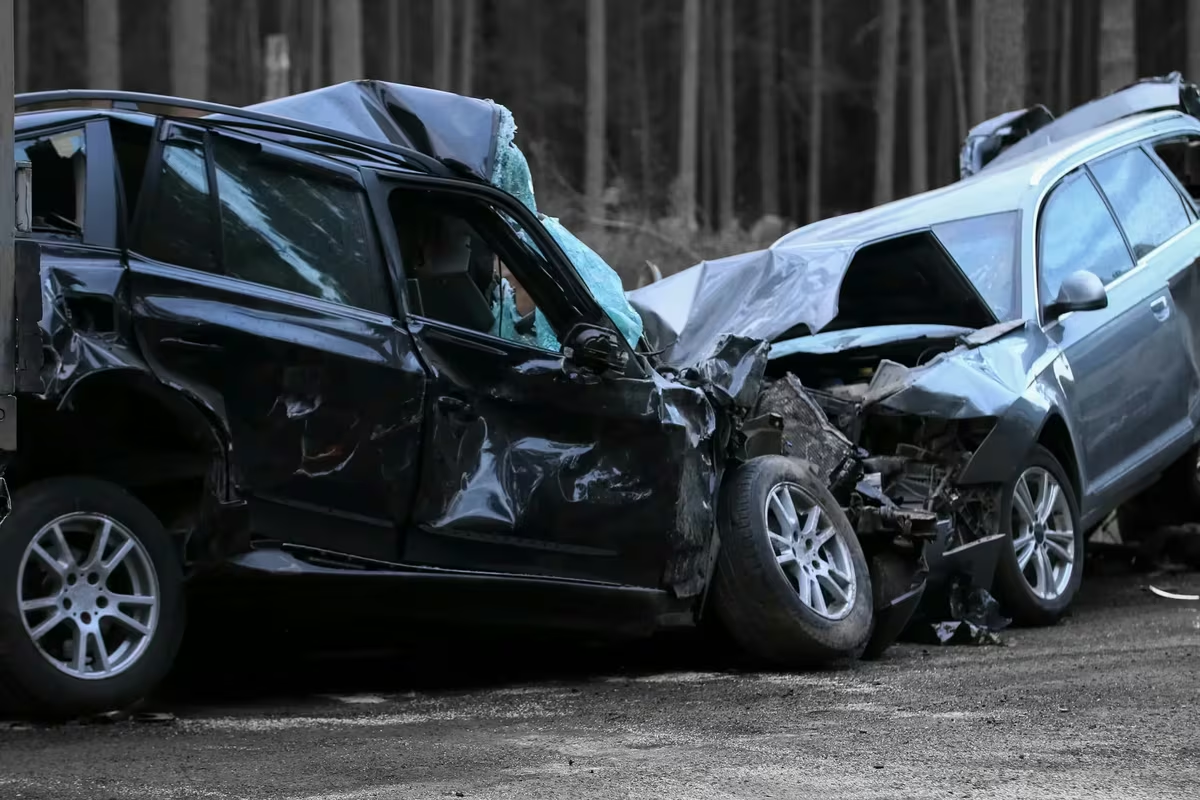 Car Accidents Rear-end, intersection, and highway collisions across Louisiana.
 -
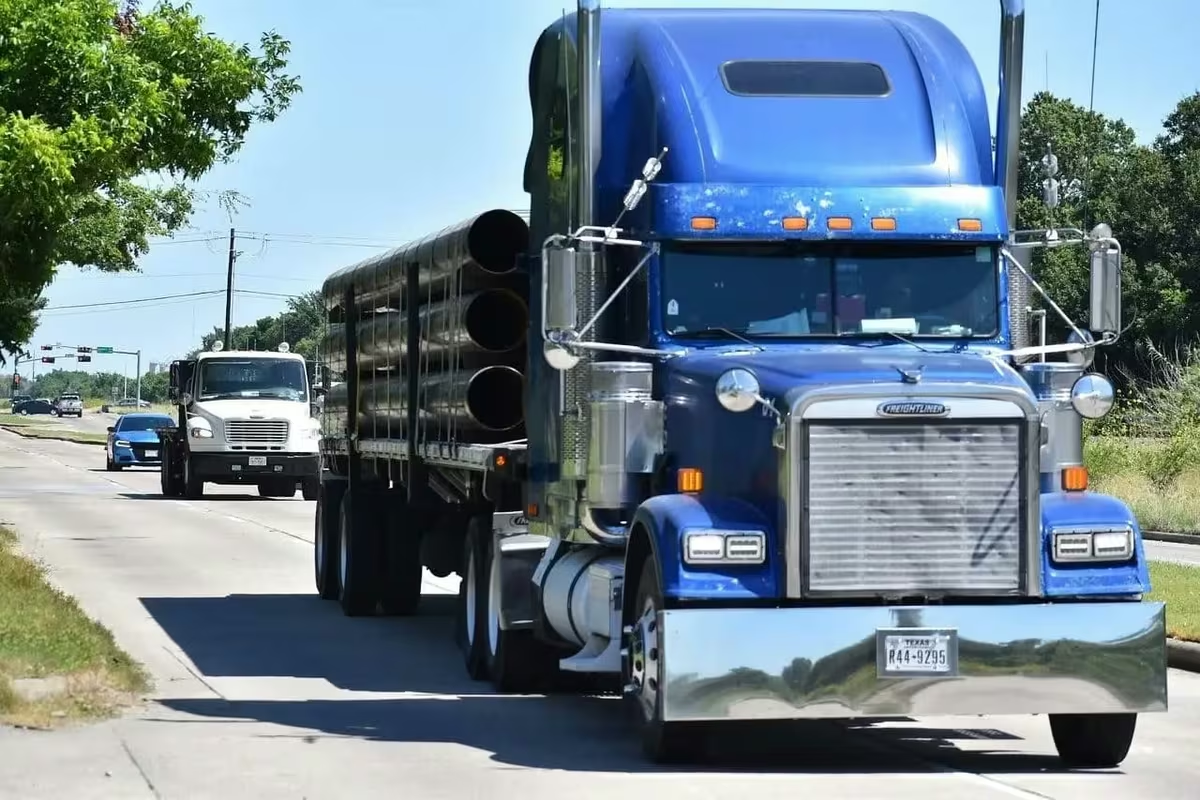 Truck Accidents 18-wheeler and commercial-vehicle wrecks governed by federal trucking rules.
 -
 Motorcycle Accidents Serious-injury motorcycle crashes where bias against riders is common.
 -
 Pedestrian Accidents Crosswalk and roadway pedestrian injuries with high-stakes liability.
 -
 Bicycle Accidents Cyclists struck by drivers who failed to share the road.
 -
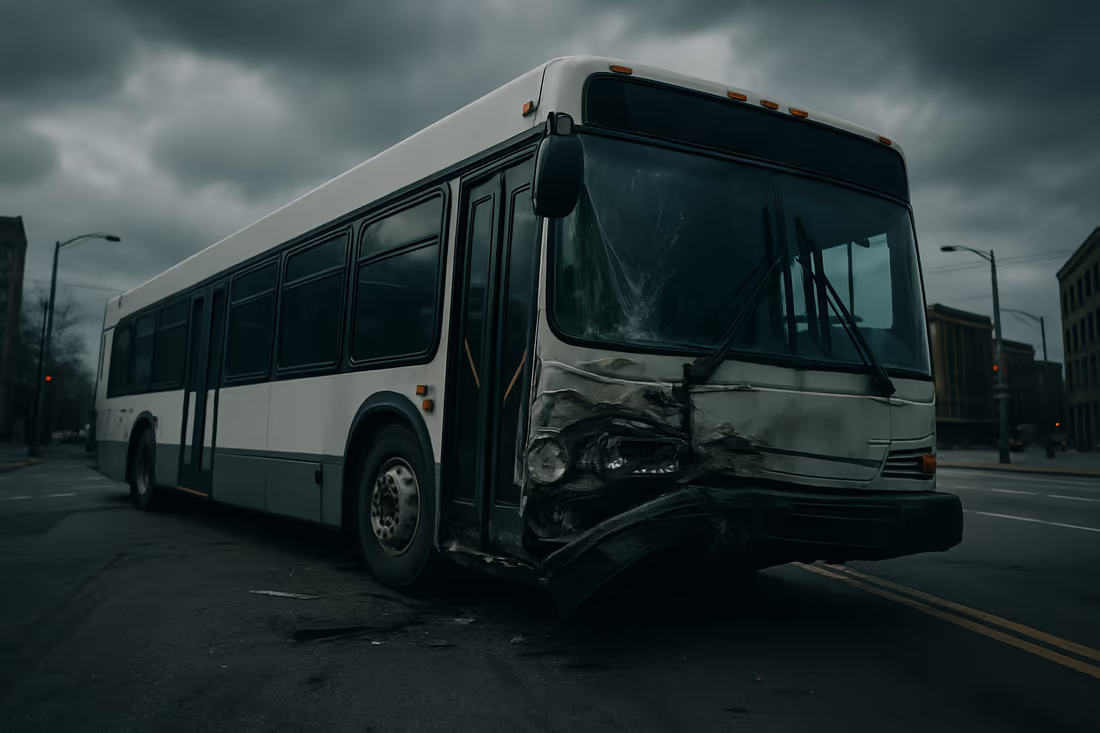 Bus Accidents Transit, school, and charter-bus crashes involving public and private carriers.
 -
 Slip & Fall Falls caused by wet floors, poor maintenance, and hidden hazards.
 -
 Catastrophic Injury Brain, spinal-cord, amputation, and severe-burn injuries that change a life.
 -
 Wrongful Death Claims brought by families after a fatal accident or act of negligence.
 -
 Construction Accidents Falls, struck-by, and equipment injuries on the job site.
 -
 Oilfield Accidents Drilling, pipeline, and refinery injuries across the energy sector.
 -
 Workers' Compensation On-the-job injuries and the benefits owed to injured workers.
 -
 Nursing Home Abuse Neglect and abuse of residents in long-term-care facilities.
Who Can Be Held Liable After a Truck Accident in Mansfield, Louisiana?
A truck crash near Mansfield rarely has just one responsible party. The driver is the obvious starting point, but the trucking company, a separate cargo loader, a freight broker, a maintenance shop, or a parts manufacturer can each contribute. Identifying every party who played a role matters because a single defendant may carry thin coverage while the parties behind it carry far more. The work of a serious truck case is tracing the chain of responsibility back through everyone who touched the load, the truck, and the driver.
The Truck Driver and the Trucking Company (Vicarious Liability)
The driver who caused the crash is directly responsible for negligent driving. The trucking company that employed that driver is usually answerable too, under the rule Louisiana calls vicarious liability or respondeat superior. Under La. C.C. art. 2320, Louisiana employers are answerable for the damage their employees cause while acting in the course and scope of their employment. A driver hauling freight on the company’s dispatch is squarely within that scope.
That matters financially. The driver alone may have limited personal assets, but the carrier stands behind the driver’s conduct and carries the commercial policy that covers the loss. Holding the company in the case keeps the responsible insurance on the hook rather than chasing an individual.
The Carrier’s Direct Conduct: Hiring, Supervision, and Entrustment
A trucking company’s own decisions can also matter, separate from the driver’s conduct on the road. The practical questions are whether the company hired a driver with a known history of violations, put an undertrained operator behind the wheel, ignored prior safety complaints, or handed a truck to someone it had reason to know was unfit. Each of those is about a decision the carrier made before the crash ever happened.
These are investigation focuses that turn on records, not on controlling the exact moment of the crash. A lawyer building this part of the case pulls the carrier’s hiring file and safety history to see what it knew and when. The paper trail shows whether the company exercised care in the people and equipment it put on the road.
Independent Contractor vs. Employee: How Carriers Try to Shift Responsibility
Carriers frequently argue that the driver was an independent contractor, not an employee, in an effort to step back from the driver’s conduct. The label on a contract is not the end of the analysis. The real working relationship is what gets examined: who set the route, the schedule, the equipment, and the manner of the work.
The practical point for an injured person is simple. Do not assume the company is out of the picture because it calls the driver a contractor. That classification is an investigation focus, not a conclusion, and it is one of the first things a capable attorney pressure-tests with the actual records of how the work was controlled.
Cargo Loaders, Freight Brokers, and Maintenance Contractors
Responsibility can extend well past the driver and the carrier. DeSoto Parish sits in timber and oilfield country, and a great deal of freight moves through industrial loading sites. When a load is overloaded, unbalanced, or poorly secured, a separate cargo loader or shipper may share fault for what they put on the trailer. A freight broker that arranged the haul can come into focus depending on what it knew about the carrier it hired. A maintenance contractor that serviced the brakes or tires may be responsible if its work was deficient.
Each of these is an investigation focus that depends on the records. Loading manifests, bills of lading, broker-carrier agreements, and repair invoices show who handled what.
Truck and Parts Manufacturers
When a mechanical problem may have contributed to a crash, a brake system that failed or a tire that came apart, the manufacturer of the truck or the part can become a focus of the investigation. Whether a defect played a role is an engineering question, answered by preserving the physical evidence and having qualified experts examine it.
That is why moving fast to preserve the truck and its components matters. Once a damaged unit is repaired, scrapped, or returned to service, the proof of a defect can be gone. A manufacturer focus lives or dies on the condition of the evidence and the early decision to lock it down.
How Does Louisiana’s Pure Comparative Fault Rule Affect Your Truck Accident Recovery?
In a Louisiana truck accident case, your fault percentage reduces your damages but does not necessarily erase them. The comparative fault rule lives in La. C.C. art. 2323. For causes of action arising on or after January 1, 2026, a plaintiff who is 51% or more at fault takes nothing. At 50% fault or less, damages are reduced by the assigned fault percentage. So a $1,000,000 award with 20% fault on the injured driver pays out at $800,000.
This matters more in trucking cases than in ordinary wreck cases. Carriers and their insurers know the math. Shifting even a slice of fault onto you cuts what they owe, dollar for dollar.
Can You Still Be Compensated If You Were Partially at Fault?
Yes, as long as your share of fault stays at 50% or below. Under La. C.C. art. 2323, a finding that you bear some responsibility reduces your damages in proportion rather than wiping them out. If you were 30% at fault, you keep 70% of the proven damages. The line that ends compensation is 51% for causes of action arising on or after January 1, 2026. Cross that threshold and you take nothing home.
This is why how fault gets assigned is often the central dispute in a truck case. A driver who was speeding slightly, or who braked late, still has a claim if the truck driver’s hours-of-service violation or the carrier’s conduct carried the larger share of blame. The question is never simply whether you made a mistake. It is what percentage of the total fault the law puts on you against everyone else involved.
How Fault Is Allocated Among Multiple Defendants
Truck crashes routinely involve more than one responsible party. The driver, the motor carrier, a cargo loader, a maintenance contractor, and others can each be assigned a share. A judge or jury allocates a fault percentage to every party who contributed to the harm, and to the injured plaintiff. Those percentages must total 100%.
Louisiana law leaves a great deal of this to the factfinder. Under La. C.C. art. 2324.1, in the assessment of damages for offenses and quasi-offenses, much discretion must be left to the judge or jury. That discretion is the foundation of the abuse-of-discretion standard that governs appellate review of general-damage awards in Louisiana. In practice it means the trial-level allocation and award carry real weight, and an appeals court will not lightly disturb them. The more clearly the evidence ties each defendant to a specific failure, the harder it is to push fault back onto the injured party.
How Insurers Exploit Comparative Fault to Cut Payouts
Comparative fault is the insurer’s favorite lever. Because every point of fault assigned to you removes that same percentage from the payout, the carrier’s adjuster works to build a fault story against you from the first phone call. Common moves include arguing you were distracted, exceeded the speed limit, failed to react in time, or were in the truck’s path when you should not have been.
Multiple-defendant cases give insurers a second angle. Each carrier wants fault shifted to the others and to you, shrinking its own exposure. Solid evidence is the counterweight. Crash reconstruction, the truck’s electronic data, driver logs, and witness accounts pin the real percentages to the parties who earned them. Without that proof, a thin allegation of shared fault can quietly cost a serious portion of a claim, and at 51% it can end the claim entirely.
What Compensation Can You Recover After a Mansfield Truck Accident?
Louisiana law lets a truck crash victim recover for the full range of losses the wreck caused. The foundation is La. C.C. art. 2315, the general tort article: every act that causes damage to another obligates the person at fault to repair it. That single article reaches two broad categories, economic and non-economic damages, and the Civil Code then adds separate articles for exemplary damages and for claims when someone dies. What follows explains each category, anchored to the specific code article that creates it, so you can see what a full claim actually covers.
Economic Damages: Medical Bills, Future Care, Lost Wages, and Earning Capacity
Economic damages cover the measurable money the crash cost you, and they flow directly from the repair obligation in La. C.C. art. 2315. The largest piece is usually medical care: emergency treatment, hospitalization, surgery, imaging, medication, physical therapy, and the bills from every provider who treated the injury. When a serious injury requires ongoing treatment, the claim also reaches future medical care, calculated with help from physicians and life-care planners who project the cost of treatment you have not yet received.
Lost income belongs here too. That includes the wages you missed while you could not work and, in cases of lasting injury, lost earning capacity, the reduction in what you can earn going forward. A person who returns to a lower-paying job, or who cannot work at all, has a real economic loss that the law recognizes. These figures are built from pay records, tax returns, and vocational and economic expert analysis rather than guesswork.
Non-Economic Damages: Pain and Suffering Under Louisiana Law
Non-economic damages compensate the harms that do not arrive with a receipt. Under the same general tort article, La. C.C. art. 2315, these include physical pain and suffering, mental anguish, disfigurement, scarring, disability, and loss of enjoyment of life. A spinal injury that ends your ability to hunt, fish, or pick up your grandchildren is a real loss even though no invoice measures it.
Louisiana does not cap these damages in an ordinary truck crash case. The amount is left to the discretion of the judge or jury, who weigh the severity of the injury, the length of treatment, and how the injury changed daily life. Two people with the same broken bone can have very different non-economic claims depending on how the injury affects each life.
Punitive Damages: The Narrow Path in Louisiana Truck Cases
Louisiana generally does not allow punitive, or exemplary, damages, and the general tort article La. C.C. art. 2315 does not supply them. They are available only when a separate statute expressly authorizes them. The one that matters most in motor vehicle cases is La. C.C. art. 2315.4, a distinct Civil Code article that permits exemplary damages when an injury is caused by the wanton or reckless disregard of an intoxicated operator whose intoxication was a cause in fact of the harm.
That is a demanding standard. A driver’s ordinary negligence, even serious negligence, does not open the door. The path under La. C.C. art. 2315.4 runs through proof that the truck driver was intoxicated and that the intoxication actually caused the crash. When that proof exists, art. 2315.4 places no statutory cap on the amount of exemplary damages a jury can award.
Wrongful Death and Survival Actions
When a truck crash kills someone, Louisiana law splits the claim into two distinct actions, each created by its own Civil Code article. The survival action under La. C.C. art. 2315.1 belongs to the deceased person’s own claim. It recovers the damages the victim suffered between the moment of injury and death, including their conscious pain, suffering, and medical expenses during that period.
The wrongful death action under La. C.C. art. 2315.2 is a separate article and a separate claim. It belongs to the surviving family members and compensates their own losses: the loss of the deceased’s love, companionship, support, and services. Both articles run to statutorily designated beneficiaries, with the law setting a defined order of who may bring each claim, beginning with a surviving spouse and children. Because La. C.C. art. 2315.1 and La. C.C. art. 2315.2 create two separate claims with their own beneficiaries and their own measures of damages, families are well served by counsel who pleads both correctly.
How Much Is a Truck Accident Case Worth in Mansfield, Louisiana?
There is no fixed figure, and any lawyer who quotes one before reviewing your records is guessing. The value of a Mansfield truck case is the sum of the categories above: the documented economic losses under La. C.C. art. 2315, the non-economic harm a judge or jury would assign under that same article, and, in the rare case that qualifies under La. C.C. art. 2315.4, exemplary damages. Severity of injury and the strength of the liability evidence drive the number more than any rule of thumb.
Commercial truck claims also tend to involve larger insurance coverage than ordinary car wrecks, which affects what a full claim can realistically reach. The honest answer to the valuation question is that it depends on the medical evidence, the lost-income proof, and how clearly fault sits with the trucking defendants. A careful evaluation of those specific facts, not a comparison to someone else’s settlement, is what tells you what your own case is worth.
Past results do not guarantee future outcomes; each case is decided on its own facts. See our full case results.
How Long Do You Have to File a Truck Accident Claim in Louisiana?
The filing deadline depends on when the crash happened. For injuries sustained on or after July 1, 2024, Louisiana gives you two years to file suit under La. C.C. art. 3493.1. For crashes before that date, the older one-year period under La. C.C. art. 3492 still controls. This deadline is called prescription, and once it runs, the claim is gone no matter how strong it was. A second, much shorter practical clock matters just as much: the window to preserve the truck’s electronic data before it is overwritten or routinely purged.
Louisiana’s Prescriptive Period for Personal Injury Claims
Louisiana measures the filing deadline from the day the injury or damage was sustained. Under La. C.C. art. 3493.1, a DeSoto Parish truck crash on or after July 1, 2024 carries a two-year prescriptive period. A crash before that date is governed by the prior one-year rule under La. C.C. art. 3492. That is why the date of the wreck is the first thing to pin down. The two periods are not interchangeable, and assuming you have two years on a 2023 crash is a costly mistake.
Product liability claims do not follow the new two-year rule. Those keep the one-year period under La. C.C. art. 3492. That distinction can matter in a truck case where a defective brake, tire, or trailer component is part of the cause, because the claim against the manufacturer may run on a shorter clock than the claim against the driver and carrier. Sorting out which deadline applies to which defendant is something to confirm early, not after the fact.
The Window to Preserve Black Box and Electronic Data
The legal filing deadline is not the deadline that destroys most truck cases. Commercial trucks generate digital records that exist for a limited time and then disappear through normal business operation. Engine control module data, telematics feeds, dispatch logs, and electronic duty-status records are commonly overwritten or aged out on a carrier’s ordinary retention schedule. By the time a filing deadline becomes relevant, much of that data may already be gone.
A formal preservation demand, sent to the carrier and its insurer in writing, puts them on notice to stop the routine deletion of that data and freeze it for the case. The sooner that demand goes out, the more of the truck’s own record survives. Waiting weeks to send it can mean the difference between proving a duty-status issue from the device itself and arguing about it from a paper log filled out by hand. Acting in the first days, not the final months, is what protects the evidence.
Why You Must Act Before the Insurer Sends an Adjuster
Trucking insurers move fast after a serious crash, often dispatching their own investigators to the scene the same day. They document the wreck, photograph skid marks and vehicle positions, and gather statements while the evidence is fresh, and they do it to limit what they pay. The injured party who waits is gathering nothing during that same window.
Getting your own representation in place early closes that gap. It means an independent investigation can begin while the scene is still readable, while witnesses still remember what they saw, and before the carrier controls the entire account of how the crash happened. The filing deadline gives you a year or two on paper. The practical reality is that the most important evidence is most available in the first days and weeks.
Why Waiting Hurts Evidence Collection
Time degrades a truck case in ways the calendar does not show. The crash scene is cleared and repaved. Vehicles are repaired, scrapped, or sold, taking the physical damage evidence with them. Witnesses move, forget details, and become harder to locate. Driver logs and inspection records pass their retention windows. Each of these losses is permanent, and none of them waits for the prescriptive period to expire.
Filing within the deadline keeps the legal claim alive. Acting early keeps the proof alive. A claim filed on the last lawful day with no surviving electronic data, no preserved vehicle, and scattered witnesses is far weaker than the same claim built while the record still existed. The prescriptive period sets the outer limit. The work that wins or loses the case usually has to begin long before it runs.
What Evidence Do Truck Accident Lawyers Look For?
A truck accident case is won or lost on documents and data that the trucking company controls. The most valuable proof in a commercial crash lives inside the truck and inside the carrier’s own files: the electronic logs, the engine data, the maintenance history, and the driver’s records. Much of it is electronic, and much of it can be overwritten or routinely purged unless someone demands its preservation early. A lawyer who handles these cases builds the file around that reality, working outward from the crash scene to the carrier’s records room.
Police Reports and Crash Scene Photos
The investigating officer’s crash report is the starting document. It records the parties, the vehicles, the weather, the road, statements made at the scene, any citations issued, and the officer’s diagram of how the collision happened. It is not the final word on fault, but it anchors the timeline and identifies the carrier and driver involved.
Scene photographs carry weight a written report cannot. Skid marks, gouges in the pavement, debris fields, the final resting positions of the vehicles, and the damage patterns on each one let a reconstruction expert calculate speeds and angles. Photographs of the truck’s lights, tires, and load tell their own story. The scene changes within hours, so early images are often the only permanent record of what the road looked like at impact.
Driver Logs and Electronic Logging Device (ELD) Data
Fatigue is a recurring problem in commercial trucking, and the proof of it sits in the driver’s hours-of-service records. Many commercial carriers record duty status electronically through an electronic logging device, which produces a digital record of driving time, on-duty time, and rest periods. That data can show whether the driver was within normal driving limits or pushing past them when the crash happened.
ELD records also reveal patterns. A driver who logs steady compliance one week and impossible mileage the next has a record that does not add up, and the inconsistency itself is useful evidence. Because these logs sit at the center of fatigue claims, they are among the first records a lawyer asks the carrier to preserve in writing before the data ages out of the system.
Black Box and Telematics Data
Most modern tractors carry an engine control module, often called a black box, that records the truck’s operating data in the seconds before a hard braking event or collision. Typical entries include road speed, throttle position, brake application, and whether the driver was steering or braking at impact. This data does not rely on anyone’s memory or honesty.
Many fleets layer telematics systems on top of the engine module that track GPS position, speed, and harsh-event alerts in real time. Together, the engine data and telematics give a second-by-second account of how the truck was being driven. This information can be overwritten when the vehicle is repaired or returned to service, which is why a preservation demand on the carrier matters in the first days after a crash.
Maintenance, Inspection, and Driver Qualification Records
A truck that should never have been on the road, or a driver who should never have been behind the wheel, leaves a paper trail. Maintenance and inspection records show whether the carrier kept its brakes, tires, lights, and steering in safe condition or ignored known defects. Repair invoices, inspection reports, and out-of-service findings build the picture.
Carriers also commonly keep a driver qualification file for each driver. That file usually includes the driver’s driving history, medical certification, and verification of prior employment. After a serious crash, drug and alcohol testing of the commercial driver is often part of the record, and those results can become part of the case. These records can expose a carrier that hired or kept a driver it had reason to know was unsafe.
Witness Statements and Medical Records
Independent witnesses who saw the crash carry credibility that the parties do not. Their accounts of speed, lane position, signaling, and reaction can confirm or contradict the drivers’ versions, and their memories fade fast, so statements taken early are worth far more than ones gathered months later.
Medical records tie the crash to the harm. They document the injuries, the treatment, the prognosis, and the cost of care, and they connect each diagnosis back to the collision. Complete records, including imaging, treatment notes, and the opinions of treating physicians, prove the value of an injury rather than merely asserting it. The strength of a case rests on how thoroughly this proof is gathered and preserved.
Your Mansfield Injury Attorneys
Founding partners Trey Morris and Justin Dewett lead every Mansfield injury case Morris & Dewett takes.


What Will a Mansfield Truck Accident Lawyer Do for Your Case?
A truck accident lawyer’s job starts the day you call, not the day a lawsuit is filed. The early work decides what evidence survives, which parties stay in the case, and how much leverage you carry into negotiation. Below is the concrete sequence a lawyer follows on a DeSoto Parish trucking case, from the first preservation letter to the courtroom door.
Send an Immediate Preservation Demand to the Carrier
The first move is a written demand telling the trucking company to hold every record tied to the crash. That includes electronic logging data, onboard event recorder downloads, dispatch records, maintenance files, and the driver’s qualification file. Carriers cycle out this data on short retention schedules, so the letter goes out before anything can be overwritten or discarded.
The demand matters because the most useful data has the shortest shelf life. A documented request gives your lawyer a clear record of what was asked for and when it was asked. If a preservation letter waits until suit is filed, the records that decide the case may already be gone.
Retain an Accident Reconstruction Expert Familiar With DeSoto Parish Roads
A reconstruction expert translates physical evidence into a defensible account of how the crash happened. They work from skid marks, crush damage, final rest positions, and downloaded vehicle data to calculate speed, braking, and the sequence of impact. On a loaded commercial truck, those numbers carry weight a witness memory cannot match.
Local road knowledge matters here. Sight lines, grade, and shoulder conditions on US-84, US-171, and the corridors feeding into I-49 differ from interstate driving, and an expert who has worked these roads can speak to how the geometry of a specific intersection or curve contributed.
Subpoena FMCSA Safety Records, Drug/Alcohol Test Results, and Driver Qualification Files
Commercial carriers generate a paper trail that ordinary car wreck cases never touch. A lawyer pulls the driver qualification file, the carrier’s safety rating and inspection history, hours-of-service logs, and the post-accident drug and alcohol testing results that federal rules require after qualifying crashes. Each of these can reveal a pattern the carrier would rather keep buried.
These records do not arrive voluntarily. They come through formal discovery, subpoenas, and document requests directed at the carrier and third parties that hold the data. A driver with prior hours-of-service violations, a lapsed medical certification, or a hiring file that skipped basic checks changes the value of a case.
Depose the Carrier’s Safety Director and Dispatcher
Documents tell part of the story; sworn testimony fills the rest. A lawyer deposes the carrier’s safety director, the dispatcher who assigned the route, and often the driver. The goal is to lock down what the company knew about this driver, what schedule pressure it applied, and whether it enforced its own safety policies or wrote them only for the inspection binder.
A dispatcher who pushed a driver past a realistic delivery window, or a safety director who waved through a marginal hire, can put the carrier’s direct conduct in front of the jury. Trucking cases turn on the company’s choices as much as the driver’s.
Negotiate With Insurers or Litigate the Claim to Verdict
With evidence preserved, experts retained, and the carrier’s conduct on the record, the lawyer presents a demand backed by proof. Most cases resolve through negotiation once the carrier’s insurer sees that the file is built for trial. A claim that arrives with reconstruction analysis, qualification-file problems, and management depositions is a different conversation than one resting on a police report alone.
When the insurer will not pay fair value, the case proceeds toward trial in the appropriate court. The willingness and readiness to try the case is what makes the negotiation credible in the first place. A firm that only settles negotiates from a weaker position, and the carriers know it.
How Do You Deal With the Trucking Company’s Insurance Carrier After a DeSoto Parish Crash?
After a DeSoto Parish truck crash, you deal with the carrier’s insurer by saying little, signing nothing, and routing contact through a lawyer before the adjuster builds a file. The insurer’s goal is to close the claim for as little as possible, and it starts that work fast. One point trips up many people first: in Louisiana you usually cannot sue the trucking company’s insurer directly. Under the direct action statute, La. R.S. 22:1269, the default is prohibition. You name the driver and the carrier, and the insurer stands behind them, except in seven enumerated situations where it can be named, such as when the insured is bankrupt or insolvent, the insured has died, service of process fails within 180 days, the claim is an uninsured-motorist action, the claim is between family members, the insurer has denied coverage or issued a reservation of rights, or the insured fails to answer or defend.
Why Trucking Companies Dispatch Rapid-Response Claims Teams Within Hours
National freight carriers and their insurers often send investigators to a crash scene the same day. These teams photograph the wreck, interview witnesses, and download data from the truck before the dust settles. They are building the carrier’s defense while an injured person is still at the hospital or arranging a vehicle tow.
That head start matters because the scene changes quickly. Skid marks fade, debris gets cleared, and the truck goes back into service or into a repair yard. By the time an injured person thinks about hiring counsel, the carrier may already hold the most useful evidence.
You do not control that team, and you are not required to talk to it. A polite refusal to give a statement at the scene is reasonable. Get names, get the company on the report, and let your own investigation catch up.
Recorded Statements: Why You Should Never Give One Without a Lawyer
An adjuster will often call within days and ask for a recorded statement. The request sounds routine. It is not. The recording becomes a fixed account that the insurer can use to pin down your story before you know the full extent of your injuries or the facts of the crash.
Common pitfalls follow a pattern. You are asked how you feel, and you say “fine” because you are being polite, which the insurer later quotes against your injury claim. You are asked to estimate a speed or distance you cannot truly recall, and an off-the-cuff guess becomes a fact in the file. You are asked leading questions designed to assign you a share of fault.
You are not obligated to give a recorded statement to the other side’s insurer. You can decline and direct the adjuster to your attorney. Doing so does not make you look guilty. It makes you look represented.
Low-Ball Settlement Offers and Common Carrier-Insurer Tactics
Early offers tend to arrive before anyone knows what the case is worth. A quick check covers a few weeks of bills and asks you to sign a release that closes the claim forever. If your injuries need surgery or long-term care later, the release is already signed and the money is gone.
Insurers use predictable tactics. They delay responses while bills come due. They dispute the necessity of treatment. They press the comparative-fault argument to shrink the payout. They time an offer to land when financial pressure is highest, hoping urgency does the negotiating for them.
These moves are the routine practice of claims handling. The answer is patience plus information: full medical documentation, a clear picture of future care, and a refusal to settle until the injury has stabilized enough to value honestly.
How a Lawyer Levels the Playing Field Against National Freight Insurers
A lawyer changes the conversation from the moment of representation. Once the carrier and its insurer know counsel is involved, contact runs through the attorney, the recorded-statement requests stop, and the file is built on documentation rather than on a claimant’s stray phone-call remarks.
Counsel also reads the coverage correctly. Because La. R.S. 22:1269 generally bars naming the insurer directly, an attorney structures the claim against the driver and the carrier and watches for the narrow exceptions, like a coverage denial, a reservation of rights, or an insolvent insured, that change who belongs in the lawsuit. Getting that right from the start avoids a defense motion to dismiss the insurer later.
The practical effect is a single point of contact who answers the adjuster, manages the medical record, and decides when the claim is ripe to value. You stop being the person an experienced claims team negotiates against.
Where Will Your Mansfield Truck Accident Case Be Filed? DeSoto Parish Courts and Jurisdiction
A Mansfield truck accident case can land in one of two court systems: a Louisiana state court or a federal court. Which one fits depends on who the parties are, where the crash happened, and how much money is in dispute. The court system changes the jury pool, the procedural rules, and the pace of the case. Here is how each path works and what drives the decision.
The 42nd Judicial District Court of DeSoto Parish
The 42nd Judicial District Court is the Louisiana state trial court that serves DeSoto Parish, and it sits in Mansfield. For a state-court lawsuit tied to a crash near Mansfield, this is the courthouse most people picture first.
Which parish a case belongs in is a practical question worth raising early, and the answer turns on the parties and the facts of the crash. A carrier’s lawyers will often try to move the case somewhere they consider friendlier, so the available filing locations and the tradeoffs between them are worth mapping out at the start.
Federal Court Option: When Diversity Jurisdiction Applies
Many trucking cases qualify for federal court through what is called diversity jurisdiction. Under 28 U.S.C. 1332(a), a federal court can hear a state-law claim when there is complete diversity of citizenship between the parties and the amount in controversy exceeds $75,000, exclusive of interest and costs. That $75,000 threshold was set by the Federal Courts Improvement Act of 1996.
Complete diversity means no plaintiff shares a home state with any defendant. In a Mansfield crash, the injured driver is usually a Louisiana citizen, and the trucking company is frequently based in another state. When that lineup holds and the claimed damages clear $75,000, the case can be filed in federal court or removed there by the defense after it is filed in state court. Serious truck injuries routinely exceed the $75,000 mark, so the diversity question often turns on citizenship alone.
What If the Trucking Company Is Based Out of State?
Out-of-state carriers are the norm in highway trucking, not the exception. A truck on US-84, US-171, or I-49 may belong to a company headquartered hundreds of miles away, with a driver who lives in a third state and an insurer based somewhere else entirely. That spread of citizenship is exactly what opens the door to federal diversity jurisdiction under 28 U.S.C. 1332(a).
A defendant from another state will often try to remove a Mansfield case from state court to the federal district court that covers DeSoto Parish. Removal does not change the substantive Louisiana law that governs the claim. It changes the courthouse, the judge, and the pool of jurors. A lawyer who only practices in one forum is at a disadvantage the moment the carrier files to move the case.
How Local Court Knowledge Affects Strategy and Settlement Leverage
Where a case is filed is not a clerical detail. It shapes leverage. A carrier evaluating a claim weighs the jury pool, the assigned judge’s tendencies, and how local rules run before it decides what a case is worth. Counsel who knows the 42nd Judicial District Court and the federal court that covers this region can read those variables and price the case accordingly.
That knowledge also drives the choice of whether to resist removal or accept it. Sometimes a state-court jury in DeSoto Parish is the stronger setting for an injured plaintiff. Sometimes federal procedure moves a case toward resolution faster. The point is that an informed filing decision is a strategic one, made with the specific crash, the specific parties, and the specific damages in view.
What clients say
- ★★★★★
I hired Morris and Dewett back in November of 2025.
They helped me get through my hard times of being off work, stress, and worry. Anytime I had a question I could call and they always had an answer. Very nice and professtional people. Thank you Morris and Dewett for making this an easy process for me and my family.
- ★★★★★
Morris and Dewett and their team of attorneys and staff go above and beyond.
They always were there to support me and answer all my questions after a shoulder injury that included multiple surgeries. They are caring and compassionate and that goes a long way! Highly recommended!
- ★★★★★
Thanks Morris and Dewett for the excellent work you have done on my behalf.
I want to personally thank Sarah for her kindness.
- ★★★★★
Morris & Dewett does things the right way!
They put their clients first in measurable and impactful ways.
- ★★★★★
First time being injured and needing a lawyer they where very helpful.
They answered my questions Id have very well. Highly recommend them.
- ★★★★★
Wonderful experience with Morris and DeWitt, everyone was articulate and punctual, and open to all my questions about the process.
My case couldn't have been handled by a better team! Caity Nerren, Jessica Christian, and Meghan Nolen were all fantastic and helped every step of the way. Thanks again for all of your hard work.
Reviews reflect individual client experiences. Past results do not guarantee future outcomes.
Why Hire a Local Mansfield Truck Accident Lawyer for Your DeSoto Parish Crash?
A truck accident claim in DeSoto Parish is decided by people and places a local lawyer already knows. The judges, the adjusters who work North Louisiana files, the reconstruction experts who can walk a US-84 crash scene, the way a Mansfield jury weighs a logging-truck case. Distance from those things costs leverage. Proximity to them builds it. Below is what local representation actually adds, plus a plain explanation of what hiring a lawyer typically costs and how the fee usually works.
Local Knowledge of DeSoto Parish Judges, Adjusters, and Expert Networks
Trucking cases turn on procedure as much as proof. A lawyer who appears regularly in DeSoto Parish knows how the local bench handles discovery disputes, how it rules on motions to compel a carrier’s records, and how it sets scheduling. That familiarity shapes the strategy from the first filing.
The same applies to the adjusters. National freight insurers assign claims to a handful of regional adjusters who handle North Louisiana files year after year. A lawyer who has negotiated against those specific people knows their patterns, their authority limits, and when an offer is genuinely final versus a starting position.
Expert networks matter just as much. A serious truck case needs an accident reconstructionist, often a medical specialist, and sometimes a trucking-industry expert on hours-of-service or maintenance standards. A local lawyer already has working relationships with experts who will travel to a DeSoto Parish road, review the crash data, and testify in Mansfield without learning the geography from scratch.
Familiarity With North Louisiana Roads and Trucking Routes
The roads around Mansfield carry a particular mix of commercial traffic. Timber haulers, oilfield service trucks, and freight running the I-49 corridor all move through DeSoto Parish on routes with their own hazards. A lawyer who knows these roads understands how a crash on a two-lane US highway differs from one on the interstate, and how that difference affects fault analysis.
That regional knowledge feeds directly into reconstruction. Knowing the sight lines at a specific intersection, the grade of a particular stretch of US-171, or the seasonal patterns of timber traffic gives a reconstruction expert a factual foundation that a lawyer parachuting in from elsewhere has to build from photographs. Local familiarity shortens that gap and sharpens the case.
How Much Does It Cost to Hire a Truck Accident Lawyer? Contingency Fees Explained
Most truck accident cases are handled on a contingency fee. You pay no attorney fee up front and no fee unless the lawyer obtains compensation through settlement or judgment. The fee is a percentage of the amount obtained, set by the agreement before the work begins.
The contingency arrangement is set out in a written fee agreement. That agreement states the percentage the lawyer will receive, how that percentage is calculated, and how case expenses are handled. Those expenses include filing fees, expert witness costs, deposition transcripts, and the cost of obtaining records. Read closely whether expenses come out of the gross amount before the fee is calculated or after, because that detail changes what you actually take home.
This structure exists for a practical reason. A truck case can run tens of thousands of dollars in expert and litigation costs long before any money comes in. The contingency model shifts that financial risk to the lawyer and aligns the lawyer’s interest with yours: the firm advances the costs and is repaid only if the case produces compensation.
Track Record in Northwest Louisiana Truck and 18-Wheeler Cases
Experience with commercial vehicle litigation is not the same as experience with car wrecks. Truck cases involve federal motor carrier records, electronic logging data, corporate defendants, and insurers who litigate hard. A firm that has handled 18-wheeler and commercial vehicle cases across Northwest Louisiana brings a working knowledge of how these claims develop, what evidence the carrier will try to keep, and where the real value sits.
Morris and Dewett Injury Lawyers handles personal injury, commercial vehicle and 18-wheeler collisions, catastrophic injury, and wrongful death matters across Louisiana, with a Northwest Louisiana presence rooted in its Shreveport headquarters and Minden office.
Free Consultation and Direct Access to Your Lawyer
A first consultation on a truck accident claim costs nothing. It is a chance to lay out what happened and hear an honest read on the claim before any commitment.
Direct access matters once the case is underway. Truck cases move on tight timelines, and decisions about preservation demands, medical treatment, and settlement need a lawyer you can reach, not a message routed through layers of staff. A claim this serious deserves a lawyer who is reachable when it counts.
Frequently Asked Questions
- Can I Still Obtain Compensation If I Was Partially at Fault?
- Yes. Louisiana follows comparative fault under La. C.C. art. 2323. Your damages are reduced by your percentage of fault, but partial fault does not erase your claim. For causes of action arising on or after January 1, 2026, a plaintiff who is 51 percent or more at fault receives nothing, while a plaintiff at 50 percent or less has damages reduced by the assigned percentage. Trucking insurers raise comparative fault early because every point they shift onto you cuts what they pay. A driver assigned 20 percent fault on a $500,000 case loses $100,000. That math is why fault allocation gets contested hard in these cases.
- How Long Does a Louisiana Truck Accident Lawsuit Take?
- It depends on whether the carrier disputes liability and how serious the injuries are. A claim with clear fault and a treated, stabilized injury can settle in months. A contested case with multiple defendants, expert reconstruction, and significant future medical needs can run a year or more before it resolves. The timeline also moves with your medical treatment. Settling before you reach maximum medical improvement risks undervaluing future care. A case that needs trial takes longer than one that settles, because the court's docket and discovery schedule set the pace.
- Does My Case Have to Go to Trial?
- Most truck accident claims settle before trial. Carriers and their insurers weigh the cost and risk of a verdict against a negotiated number, and many cases resolve once liability and damages are documented. Settlement is the common outcome, not the exception. Filing suit and preparing for trial is not the same as guaranteeing a trial. A case built to win in front of a jury usually settles on stronger terms, because the carrier sees the evidence and the willingness to try it. The readiness is the leverage.
- What If a Loved One Died in the Crash?
- Louisiana separates two claims when a crash is fatal. The survival action under La. C.C. art. 2315.1 covers what the person who died experienced before death, including their pain and suffering. The wrongful death action under La. C.C. art. 2315.2 covers the losses the surviving family suffers, such as loss of support and companionship. Both actions belong to statutory beneficiary classes set by law, starting with the surviving spouse and children. The order of who may bring each claim follows the same beneficiary structure. These are distinct claims with distinct damages, and a fatal-crash case typically pursues both.
- What If the Truck Driver Was Uninsured or an Independent Contractor?
- A driver labeled an independent contractor does not automatically end the carrier's responsibility. Under La. C.C. art. 2320, an employer answers for damage caused by an employee acting in the course and scope of employment. Whether a worker is a true independent contractor or a functional employee turns on control and the actual working relationship, not the label on a contract. If the driver carried little or no coverage, the case looks past the driver to the motor carrier, its insurer, and other responsible parties. Your own uninsured and underinsured motorist coverage may also apply. Sorting out who is responsible and who can pay is part of the early investigation in any truck case.
Last updated June 14, 2026