
What Does a Texas Pedestrian Accident Lawyer Do?
A Texas pedestrian accident lawyer builds the proof that a driver caused your injuries, then handles every party that owes you money so you do not negotiate alone against a trained adjuster. The work falls into five jobs: investigating who was at fault, dealing with insurers, valuing the harm, negotiating a settlement, and going to court if the offer stays low.
Pedestrian cases carry a specific problem that ordinary collision cases do not. The driver walks away physically fine, and you are the one who absorbed the impact. That imbalance shapes how the defense tells the story, which is why the early work matters so much.
Investigating Liability and Preserving Evidence
The first job is reconstructing what happened before the evidence disappears. Crosswalk paint fades, traffic-camera footage gets overwritten on a 30-to-90-day loop, and witnesses forget. A lawyer sends preservation letters to the driver, the driver’s employer if a work vehicle was involved, and any business with a camera pointed at the scene. That stops a defendant from quietly recording over the one clip that shows the light was green for you.
Investigation also means pulling the official crash report, mapping skid marks and point of impact, and identifying every camera within sight of the intersection.
Handling Insurance Companies and Recorded Statements
The second job is standing between you and the adjusters. After a pedestrian crash you may hear from several insurers at once, and each one is gathering material to reduce what it pays. A lawyer takes those calls, controls what gets disclosed, and keeps you from a recorded statement that a defense reviewer can later twist into an admission.
A good attorney handles the recorded-statement question without hesitation, because giving one early, before you know the full extent of your injuries, can lock you into a version of events you would not have signed off on once the medical picture became clear. The lawyer also gathers and submits your records on a schedule that fits the claim, not the insurer’s pressure to settle fast.
Calculating Current and Future Damages
The third job is putting an honest number on the harm. Adjusters anchor low by counting only the bills already in hand. A lawyer counts the full picture: emergency treatment, surgeries, rehabilitation, future medical care your doctors project, lost wages, reduced earning capacity if you cannot return to the same work, and the non-economic harm of pain and lasting disability.
Future medical costs are where pedestrian cases often turn, because the impact tends to produce orthopedic and head injuries that need years of follow-up. Building that figure usually requires medical and economic input rather than a guess.
Negotiating a Settlement
The fourth job is the negotiation itself. Most pedestrian claims resolve by settlement, but a fair settlement is the product of a demand backed by organized proof, not a phone call. A lawyer assembles the liability evidence, the medical record, and the damages model into a demand package, then negotiates against the insurer’s number.
The leverage comes from credibility. An insurer that believes a lawyer is prepared to file and try the case values the claim higher than one it expects to fold. That is why the next job matters even when trial never happens.
Filing a Lawsuit if the Insurer Refuses Fair Value
The fifth job is litigation when the offer stays unfair. Filing a lawsuit opens formal discovery, which lets the attorney compel the driver’s phone records, the employer’s policies, camera footage, and sworn testimony that an insurer would never hand over voluntarily. It also puts a court deadline on the case.
A firm that is genuinely willing to try the case changes the math at the negotiating table.
What Should You Do After a Pedestrian Accident in Texas?
The minutes and days after a pedestrian is struck by a vehicle shape the injury claim that follows. Get medical care first. Then preserve what you can: the police report, photographs, names, and insurance details. Those records are what a claim is built on later, and most of them stop being available within hours or days of the crash.
Call 911 and Request a Police Report
Call 911 from the scene. When an officer responds to a crash that injured someone, the officer documents what happened in a written report. That report records the parties, the vehicles, the location, statements from those involved, and the officer’s observations about how the collision occurred. It becomes one of the first independent records of the event.
Ask the responding officer how to obtain a copy and note the report number before anyone leaves. A pedestrian who is too hurt to handle this can have a family member or witness do it. The point is to make sure the crash gets reported and documented rather than treated as a minor incident that nobody writes down.
Seek Emergency Medical Care Even If You Feel Fine
Accept the ambulance or go to an emergency room the same day, even if nothing seems broken. Adrenaline masks pain after a collision, and serious conditions like internal bleeding, concussion, and soft-tissue damage often do not show symptoms for hours. A pedestrian carries no metal cage or airbags, so the forces in even a low-speed strike land directly on the body.
Same-day treatment protects health first. It also creates a medical record that ties the injuries to the crash. When someone waits days to see a doctor, an insurer later argues the injuries came from something else. Prompt care closes that gap before it opens.
Photograph the Scene, Vehicle, Crosswalk, Signals, and Injuries
If you are physically able, photograph everything before it changes. Capture the vehicle that struck you, its license plate, and its position in the road. Photograph the crosswalk markings, traffic signals, stop signs, and lane lines. These details establish where the pedestrian was and who had the right of way, and crews repaint markings and repair signals on their own schedule.
Photograph your own injuries and your torn or bloodied clothing the same day, then again as bruising develops over the following days. Wide shots that show the full intersection are as useful as close-ups. A witness or family member can take these photos if you cannot. Surveillance and traffic-camera footage from nearby businesses is often overwritten within days, so noting which buildings face the scene helps an attorney request that video before it disappears.
Get Driver, Witness, and Insurance Information
Collect the driver’s full name, phone number, driver’s license number, license plate, and auto insurance carrier and policy number. Photographing the insurance card and license is faster and more accurate than writing them down. If the driver leaves the scene, write down the plate, vehicle description, and direction of travel and give them to the responding officer.
Get the names and phone numbers of anyone who saw the crash. Independent witnesses who do not know either party are persuasive, and they scatter fast once the scene clears. A short voice memo or a note on a phone with a witness’s name and what they saw preserves an account that may be hard to track down weeks later.
Do Not Give a Recorded Statement to Any Insurer
You will likely get a call from the driver’s insurance company within a day or two. You are not required to give that insurer a recorded statement, and you should decline until you have spoken with your own attorney. Adjusters use recorded statements to lock in early, incomplete accounts that they later use to shift blame onto the pedestrian or minimize the injuries before the full extent is known.
Report the crash to your own insurer as your policy requires, and stick to the basic facts: date, location, and that a collision occurred. Avoid guessing about speed, distance, or fault, and never accept blame at the scene or on a call. Decline any quick settlement offer made before a doctor has evaluated the full injuries. Once a recorded statement or a signed release is given, it is difficult to undo.
What Texas Pedestrian Laws Affect Your Injury Claim?
Where you were standing or walking, whether a signal controlled the crossing, and what each party did at the moment of impact often decide who pays in a pedestrian injury claim. The facts that applied at the exact spot of a crash drive the fault analysis.
Driver Duties to Yield and Use Due Care Around Pedestrians
A driver who fails to keep a proper lookout, drives too fast for conditions, or ignores a person clearly in the roadway can be found at fault for the resulting harm. How a driver behaved around a pedestrian is the practical question in your case, and it turns on conduct the evidence can show, not on a vague claim that the driver should have been more careful.
Crosswalk and Traffic Signal Rules for Pedestrians
Marked crosswalks and traffic signals change the right-of-way picture. A pedestrian crossing with a walk signal at a controlled intersection stands in a very different position than one stepping into traffic against a signal. The signal phase, the presence or absence of a marked crosswalk, and who had the legal right to proceed are central facts in most intersection cases.
These facts are also where insurers concentrate their disputes, because a crosswalk or signal that favored the pedestrian undercuts any argument that the pedestrian caused the crash. Preserving signal-timing data, intersection video, and witness accounts early matters for exactly that reason.
Jaywalking, Crossing Outside a Crosswalk, and Right-of-Way
Crossing outside a marked crosswalk does not automatically defeat a claim, but it shifts the right-of-way picture. Where a pedestrian crosses away from an intersection or signal, the practical expectation is that the pedestrian gives way to vehicles, while the driver still has to use care to avoid a collision the driver could reasonably prevent.
That combination is why “the pedestrian was jaywalking” is rarely the end of the analysis. Fault can be shared, and how it is allocated turns on the specific conduct of both parties. The question for your case is not just where you crossed, but whether the driver had time and opportunity to avoid the impact.
Sidewalk, Shoulder, and Roadway Walking Rules
People on foot are generally expected to use sidewalks where they are available and practical, and to walk along the roadway in a defined manner when no sidewalk exists. Where a pedestrian was lawfully positioned strengthens a claim. A position the rules discourage gives an insurer an argument to shift blame.
These positioning facts come up often in rural and suburban crashes, in construction zones where sidewalks are closed, and in nighttime cases. The location of the body, debris, and vehicle damage frequently tells a more reliable story than the driver’s later account.
School Zones, Intersections, Parking Lots, and Unmarked Crosswalks
Certain locations carry heightened expectations. School zones impose reduced speeds and increased driver attention during posted hours. Intersections can contain unmarked crosswalks that still carry pedestrian right-of-way even without painted lines. Parking lots and private drives raise their own questions about who controlled the space and what duty applied.
Each of these settings changes the duties in play and the evidence that proves them.
Who Can Be Held Liable in a Texas Pedestrian Accident?
The driver who hit you is the obvious defendant, but rarely the only one worth pursuing. A pedestrian collision can involve a vehicle owner, an employer, a road authority, a property owner, or a parts maker, and each of those parties may carry its own insurance. Identifying every responsible party early matters because the driver’s policy alone may not cover serious injuries. Pinning down who else shares fault is one of the first questions a thorough investigation answers.
Negligent Drivers and Vehicle Owners
The driver is the starting point when their conduct caused the crash. Speeding, running a red light, failing to yield, distraction behind the wheel, impairment, or simply not watching for people on foot are the kinds of conduct an investigation examines. The vehicle owner can be a separate target. When an owner hands the keys to someone unfit to drive, that decision is worth investigating as a basis to bring the owner into the case independent of the driver. That second avenue matters when the driver is uninsured but the owner is not. Whether either path fits your situation is a question the investigation has to establish, not something this page can promise.
Commercial Drivers, Employers, Rideshare, and Trucking Companies
When the person who struck you was working at the time, the employer is often worth investigating as a defendant. A delivery driver running a route, a trucker hauling freight, or a rideshare driver carrying a passenger was furthering the company’s business, and that connection can bring a larger commercial insurance policy into the case. Whether the employer can be held responsible for a given driver’s conduct turns on the nature of the work relationship, which is exactly the kind of question a thorough liability review works through before any party is named.
Employers may also have responsibility tied to their own conduct, separate from the driver. How a company hired, trained, supervised, and maintained its fleet are all areas an investigation looks into. Rideshare and trucking cases add layers worth examining. App-based platforms carry tiered coverage that can shift depending on whether the driver was logged in or carrying a fare, and motor carriers operate within their own oversight framework.
Government Entities Responsible for Unsafe Roads or Signals
Sometimes the roadway itself is part of the problem. A malfunctioning traffic signal, a missing crosswalk marking, an obscured sign, or a poorly designed intersection can contribute to a pedestrian crash. When a city, county, or state agency is responsible for that condition, whether it can be brought into the case is a question the investigation has to work through.
Pursuing a government body is not the same as pursuing a private driver. These claims can carry their own procedural conditions that do not apply to ordinary defendants, and those conditions can be both technical and time-sensitive. Whether a road authority can be held liable in your specific situation is therefore a focused investigation question rather than a guarantee.
Property Owners and Construction Contractors
Crashes do not only happen on open roads. A pedestrian struck in a parking lot, a private drive, or a poorly lit walkway may have a claim against the property owner who created or ignored a hazard. The question an investigation asks is whether the owner kept the property reasonably safe for people who were lawfully there. Blocked sightlines, broken lighting, and unmarked vehicle paths are common factors.
Construction zones can add another responsible party. Contractors and subcontractors who set up work areas route pedestrians, post warnings, and manage travel paths. When a contractor’s lane closure or detour forced you into the path of traffic, that company belongs in the analysis alongside the driver.
Vehicle Manufacturers or Maintenance Providers
Occasionally the vehicle, not the person operating it, is the failure point. Defective brakes, a stuck accelerator, faulty headlights, or a malfunctioning advanced safety system can cause or worsen a pedestrian strike. A product claim against the manufacturer or component maker becomes worth investigating when a defect contributed to the crash.
The same logic reaches repair shops. A mechanic who performed brake work negligently, or a service provider who returned a vehicle with a known unrepaired defect, can share responsibility. These claims rely on preserving the vehicle and securing the right experts before evidence is lost, which is why naming every potential defendant early changes what compensation is actually reachable.
How Does Texas Determine Fault in a Pedestrian Accident?
Texas decides fault by assigning each party a percentage of responsibility for the crash. A pedestrian can carry a share, the driver a share, and sometimes a third party a share. Those percentages do two things at once. They decide whether the pedestrian can collect anything at all, and they decide how much. The framework that controls this is Texas modified comparative negligence under Tex. Civ. Prac. & Rem. Code section 33.001.
The percentage attached to the injured pedestrian is the single number that drives the outcome. An inflated figure accepted from an adjuster shrinks the claim or ends it. That is why the dispute in most pedestrian cases centers on a number.
Texas Modified Comparative Negligence Rule
Texas uses a modified comparative negligence system under Tex. Civ. Prac. & Rem. Code section 33.001. Fault is divided among everyone who caused or contributed to the injury, and each is given a percentage. A pedestrian who shares some blame is not automatically shut out. The pedestrian’s own percentage reduces what the pedestrian can collect, and a percentage above the statutory threshold ends the claim.
The percentage is not handed over by the insurer as a neutral fact. It is built from evidence, and the side that builds it more carefully usually controls it.
The Bar Above 50 Percent
The percentage carries a hard cutoff. Under Tex. Civ. Prac. & Rem. Code section 33.001, a person whose share of responsibility is greater than 50 percent cannot collect damages. At more than 50 percent, the claim is barred. At 50 percent or less, the claim survives. This is why insurers push to move a pedestrian above the line. A single percentage point separates a reduced payment from nothing.
A pedestrian found 50 percent responsible can still pursue damages. A pedestrian found at a higher share cannot. That single threshold is why fault disputes in pedestrian cases are contested so closely.
How Shared Fault Reduces a Claim
When a pedestrian stays at or below the 50 percent line, the claim is not barred. It is reduced. Under the same Tex. Civ. Prac. & Rem. Code section 33.001 framework, when a person’s share of fault is below the statutory threshold, the damages they can collect are reduced in proportion to their own percentage of fault. A claim valued at $100,000 with the pedestrian assigned 20 percent fault is reduced by that 20 percent, leaving $80,000 before liens and costs.
The arithmetic is straightforward. The dispute is over the percentage. Every point the insurer can assign to the pedestrian is a point off the final number. That is why the percentage, not the headline value, decides what reaches the injured person.
Why Insurance Adjusters Blame Pedestrians
Adjusters have a financial reason to push fault onto the pedestrian. Each percentage point assigned to the walker reduces the payout, and crossing the line above 50 percent erases the claim entirely. Common moves include arguing the pedestrian was outside a crosswalk, stepped off a curb suddenly, wore dark clothing at night, or was looking at a phone.
These arguments are often raised before any real investigation. A pedestrian who gives a recorded statement, or who lets the adjuster’s version of events stand unchallenged, hands over the percentage. Treat any early fault assignment as a negotiating position, not a finding.
How Crosswalk, Signal, and Visibility Facts Affect Fault
The percentages are not guesses. They are argued from physical facts. Where the pedestrian was standing or walking, whether a marked or unmarked crosswalk was in play, what the traffic signal showed, the lighting, sight lines, vehicle speed, and the point of impact all shape the split.
A pedestrian crossing with a walk signal in a marked crosswalk carries a very different fault profile than one crossing mid-block against traffic. Video from nearby cameras, signal-timing data, skid marks, and the resting positions of the vehicle and the pedestrian can move the percentage in either direction. Because the percentage decides both whether the claim survives the 50 percent cutoff and how much it is worth, locking down these facts early is the work that determines the outcome.
Can a Pedestrian Recover Compensation in Texas if Partly at Fault (Including Jaywalking)?
Yes. A pedestrian who shares some blame for a crash can still recover damages in Texas, as long as their assigned share of fault is 50 percent or less. Tex. Civ. Prac. & Rem. Code section 33.001 is the single rule that sets that line. Being partly responsible reduces the award. It does not erase the claim.
Under section 33.001, a claimant whose percentage of responsibility is greater than 50 percent cannot recover, while a claimant at or below 50 percent recovers an amount reduced by their own share. A pedestrian found 30 percent at fault still collects 70 percent of proven damages. The contest is over the percentage, and that percentage is decided by evidence, not by an adjuster’s first phone call. Insurers sometimes tell injured walkers that any fault on their part ends the matter. The statute is the answer to that, and it says otherwise.
Can I Still Recover If I Was Jaywalking in Texas?
Jaywalking does not automatically bar a claim. Crossing mid-block or against a signal may add a share of fault to the pedestrian, but the same section 33.001 threshold still controls whether the claim survives. The conduct affects the percentage, not the existence of the right to recover.
The question is comparative under that one rule. If a jaywalking pedestrian is assigned 40 percent of the fault and the inattentive driver 60 percent, the pedestrian recovers 60 percent of proven damages, because the pedestrian’s share stays at or under the 50 percent line in Tex. Civ. Prac. & Rem. Code section 33.001. Apportioning that fault turns on what the driver was doing as much as on where the pedestrian was walking. A driver who was speeding, looking at a phone, or running a light can still carry the larger share even when the pedestrian was outside a crosswalk.
Can I Sue If I Was Hit Outside a Crosswalk?
A crash outside a marked crosswalk is still actionable. The location of the impact is one fact that feeds into the percentage, not a separate rule that ends the claim. A case filed after a mid-block strike rises or falls on the same section 33.001 analysis that governs every Texas pedestrian case.
The defense will argue the pedestrian gave up the right of way. The response is to document what the driver did wrong, because that conduct is what shifts the percentage. Excessive speed, impairment, distraction, or a failure to brake can place most of the fault on the driver even when the pedestrian was not in a crosswalk. As long as the pedestrian’s share stays at 50 percent or below under Tex. Civ. Prac. & Rem. Code section 33.001, damages remain available, reduced only by that share.
How Evidence Can Challenge Fault Allegations
Fault percentages are not fixed by the police report or the adjuster’s opinion. They are arguable, and strong evidence moves them within the same section 33.001 framework. Video from nearby cameras, doorbell devices, or a vehicle dashcam can show the driver’s speed and reaction time. Witness statements, the physical scene, vehicle damage, and lighting conditions all feed into how blame gets divided.
Building the record early changes the number, and the number is what decides the claim under the statute. An adjuster who opens at “you were 60 percent at fault, so we owe nothing” is asserting a percentage that evidence can defeat. Reconstruction analysis, signal timing data, and medical records tying the injuries to the impact can pull the pedestrian’s share below the 50 percent line in Tex. Civ. Prac. & Rem. Code section 33.001. Every point of fault shifted off the pedestrian both preserves the claim and raises the amount the insurer must pay.
What If I Was Hit in a Parking Lot, Not a Public Road?
A parking lot collision follows the same comparative fault standard. The crash happening on private property does not remove the pedestrian’s right to bring a claim or change the section 33.001 analysis. A driver backing out without looking, or cutting across a lot at speed, can carry the bulk of the fault.
The proof tends to look different in a lot. Store and garage surveillance cameras often capture the whole event, and those recordings can be requested before they are overwritten. Pedestrians struck in a parking area recover under the same standard that applies on a public street: damages reduced by their own percentage of fault and barred only if that share exceeds 50 percent, the line drawn by Tex. Civ. Prac. & Rem. Code section 33.001.
What Compensation Can an Injured Pedestrian Recover in Texas?
A pedestrian hurt by a vehicle can pursue two broad kinds of damages: economic losses with a dollar figure attached, and non-economic losses that compensate for harm money cannot fully restore. The size of each depends on the injuries, the medical record, and how the loss is documented.
Pedestrian injuries skew severe. A person on foot has no airbag, no seatbelt, and no crumple zone, so the same impact that dents a bumper can fracture bones, damage organs, or cause a brain injury. That severity is why future treatment, lost earning capacity, and long-term care so often dominate the value of these claims.
Medical Bills and Future Treatment Costs
Past medical expenses are the foundation: ambulance transport, emergency care, surgery, hospitalization, imaging, medication, and rehabilitation. Each is proven with billing records and provider statements, so this category is the most concrete part of a claim.
Future treatment is where serious pedestrian cases gain their real value. A spinal injury may require years of therapy, a knee reconstruction may need revision surgery, and a brain injury may demand cognitive rehabilitation and supervision. These costs are estimated through a life-care plan prepared by treating doctors and medical-cost experts. A claim that ignores future care undervalues the injury, which is one reason an early lowball offer rarely reflects what a case is worth.
Lost Income and Reduced Earning Capacity
Lost income covers the wages a person could not earn while healing. Pay stubs, tax returns, and an employer statement establish the figure for an hourly or salaried worker. Self-employed pedestrians document the loss through prior earnings and business records.
Reduced earning capacity is the larger and harder question. When an injury prevents someone from returning to the same work, or from working at all, the loss is measured over a working lifetime. A vocational expert assesses what the person can still do, and an economist reduces that future stream of lost earnings to present value.
Pain, Suffering, Disability, and Disfigurement
Non-economic damages compensate for the human cost of an injury rather than its receipts. This category includes physical pain, mental anguish, the loss of enjoyment of daily activities, physical impairment, and disfigurement such as scarring from a crash or surgery.
These losses have no invoice, so they are proven through testimony, medical records describing the injury, and the consistent treatment history that shows the harm is real. They are evaluated case by case, weighing the severity and permanence of the injury against how it changed the person’s life. Whether Texas places any limit on these damages in a given pedestrian-vehicle case is a point to confirm directly with an attorney, because the answer turns on the type of claim and the defendant involved.
Wrongful Death and Survival Damages for Families
When a pedestrian is killed, two separate claims can arise. A wrongful death claim belongs to surviving family members and addresses their own losses: the financial support the decedent would have provided, lost companionship, and grief. A survival claim belongs to the estate and addresses what the injured person endured between the collision and death, including conscious pain and the medical expenses incurred before they passed.
Who may bring a wrongful death claim, and how the two claims are valued, is governed by the specific Texas statutes that apply. Families considering a fatal pedestrian case should ask an attorney to identify the eligible claimants and the categories of loss each claim covers before any settlement discussion begins.
Punitive (Exemplary) Damages When Allowed
Punitive damages, also called exemplary damages, are not available in a typical negligence case. They are reserved for a narrow set of cases involving conduct far worse than ordinary carelessness, and they exist to punish the wrongdoer rather than to compensate the injured person. A drunk driver or a driver who acted with extreme recklessness may, on the right facts, expose a defendant to this kind of award.
The legal standard for proving exemplary damages, and any limit Texas places on the amount, is specific and should be confirmed with an attorney against the facts of the case. A pedestrian who suspects the driver’s conduct was egregious should raise it early, because the evidence that supports such a claim, such as a blood-alcohol result or a pattern of violations, must be preserved while it still exists.
How Much Is a Texas Pedestrian Accident Case Worth?
There is no single number. A Texas pedestrian accident case is worth the total documented harm, minus any reduction for the pedestrian’s own share of fault, capped by the insurance available to pay it. Anyone who quotes an “average settlement” before reviewing your medical records and the crash facts is guessing. Value turns on four things: how serious the injury is, how clear the liability is, how much insurance exists, and how a Texas jury would treat the case at trial.
Injury Severity and Long-Term Medical Needs
Injury severity is the largest driver of value. A pedestrian struck by a vehicle absorbs the full force with no protection, so injuries tend toward the catastrophic end: traumatic brain injury, spinal cord damage, multiple fractures, internal organ injury, and amputation. The case value tracks the lifetime cost and impact of those injuries, not just the emergency room bill.
Future medical needs often dwarf the bills already incurred. A spinal injury can require surgeries years apart, ongoing physical therapy, assistive equipment, and home modifications. A serious case usually relies on a life care plan, a physician-prepared projection of every treatment the injury will demand over a lifetime, to put a defensible number on future cost. The same logic applies to permanent disability that ends a career.
Liability Strength and Comparative Fault
A case with clear liability is worth more than the identical injury with murky liability. If a driver ran a red light and a doorbell camera caught it, the value sits near the full measure of damages. If the driver claims the pedestrian darted into traffic, an insurer will discount its offer to reflect the risk that a jury assigns the pedestrian part of the blame.
A Texas pedestrian’s damages are reduced in proportion to the pedestrian’s own percentage of responsibility. The stronger your evidence that the driver caused the crash, the smaller the fault percentage an insurer can credibly argue, and the larger your net result. That is why liability strength changes the number so dramatically. Two cases with the same injury and the same medical bills can settle for very different amounts based on nothing more than the fault picture.
Insurance Policy Limits
Insurance is the practical ceiling. A case can be worth a great deal on paper, but if the only coverage available is a minimum auto liability policy, the at-fault driver’s policy may not stretch to cover a catastrophic injury. That is why identifying every available policy matters so much: the driver’s liability coverage, any commercial or employer coverage if the driver was working, and the pedestrian’s own uninsured and underinsured motorist coverage, which can apply when a pedestrian is struck.
Stacking multiple policies and pursuing additional responsible parties is often the difference between a settlement that covers a lifetime of care and one that runs out in a year.
How Comparative Fault Reduces Your Damages (With Example Calculations)
Because a Texas pedestrian’s damages are reduced in proportion to the pedestrian’s own percentage of responsibility, the effect on value is easiest to see in numbers. Assume a jury values the total damages at $500,000.
If the pedestrian bears no responsibility, the award is the full $500,000. If the pedestrian is assigned 20 percent of the responsibility, the award drops by that share to $400,000. If the pedestrian is assigned half the responsibility, the award drops by half to $250,000. Each step applies the same proportionate reduction, scaling the award down by the pedestrian’s own percentage.
That math explains why insurers push so hard to argue a pedestrian carried part of the blame. The factual fight over crosswalk position, signal timing, and visibility is not a side issue. It is the case.
Settlement Value vs. Trial Value
Settlement value and trial value are not the same number. Trial value is what a jury might award after hearing all the evidence. Settlement value is that figure discounted for the risk, time, and expense both sides face if they go to court. Most cases settle because both sides prefer a known outcome to a gamble.
The gap between the two narrows when the evidence is strong and the attorney is genuinely prepared to try the case. An insurer offers more when it believes the lawyer across the table will take a low offer to a jury. That is the practical reason trial readiness affects settlement value even in cases that never reach a courtroom.
What Evidence Proves a Texas Pedestrian Accident Claim?
A pedestrian claim succeeds on documented proof, not memory. The strongest cases combine the official crash report, video of the impact, physical evidence from the scene, medical records that tie injuries to the collision, and expert analysis when fault is disputed. Each piece answers a different question: who did what, when, where, and how badly the pedestrian was hurt. Evidence degrades fast, so the gathering that happens in the first days often decides what a case looks like a year later.
Police Crash Report (CR-3) and Officer Findings
The investigating officer’s crash report is the spine of most pedestrian claims. It records the date, time, location, conditions, the parties involved, witness names, and the officer’s narrative of how the collision happened. It often notes which direction the pedestrian was traveling, where the impact occurred relative to a crosswalk, and whether the driver was cited.
The report is not the final word on fault. Officer conclusions can be contested, and insurers know it. But it anchors the timeline and preserves witness identities that vanish if no one writes them down. A driver’s statement at the scene, captured in the report, may later contradict what their insurer argues.
Traffic Camera, Dashcam, Doorbell, and Surveillance Video
Video is the closest thing to an objective witness. Intersection traffic cameras, business surveillance, residential doorbell cameras, and dashcams from the involved vehicle or nearby cars can show speed, signal status, the driver’s path, and the moment of impact. In a dispute over whether a driver yielded or a pedestrian darted out, footage answers the question that testimony only argues.
This evidence is also the most fragile. Many systems overwrite footage in days or weeks, and a business has no obligation to keep video unless asked. Preservation letters sent quickly to camera owners and the city can stop deletion. When fault hinges on signal timing or right of way, video frequently settles it before a jury ever hears the case.
Scene Photos, Skid Marks, and Vehicle Damage
Physical evidence tells the story the report summarizes. Skid marks indicate braking and approximate speed. The point of rest, debris field, and where the pedestrian came to a stop help reconstruct the angle and force of impact. Vehicle damage, the height and location of dents, broken glass, and contact points on the bumper or hood, can corroborate how a pedestrian was struck and how fast the vehicle was moving.
Scene conditions matter as much as the impact. Photographs of crosswalk markings, traffic signals, sightline obstructions, lighting, and signage establish what each party could see and what each was required to do. This evidence disappears within days as marks fade and vehicles are repaired or scrapped. Documenting it early protects the case.
Medical Records as Causation Proof
Medical records do two jobs. They prove the extent of the injuries, and they connect those injuries to the collision. A defense insurer will argue that a herniated disc or a brain injury existed before the crash or came from something else. Consistent treatment records, imaging, and physician notes that tie symptoms to the collision date close that gap.
Gaps in treatment give insurers an opening. A delay between the crash and the first doctor’s visit, or a stretch with no follow-up, invites the argument that the injury was not serious or not caused by the collision. Complete records, including emergency care, follow-up treatment, and any future-care recommendations, document both what happened and what the injury will require going forward.
Accident Reconstruction and Expert Testimony
When liability is genuinely contested or injuries are catastrophic, experts translate raw evidence into conclusions a jury can rely on. An accident reconstruction specialist uses skid marks, vehicle damage, point of impact, and physics to calculate speed and establish who had the right of way and whether the driver had time to stop. Their analysis can turn a he-said dispute into a measured finding.
Other experts fill specific gaps. A treating or independent physician explains causation and the permanence of injuries. A vocational or economic expert quantifies lost earning capacity and future care costs. Knowing which expert answers which question, and retaining them before evidence is lost, is the difference between a documented claim and an argument without proof.
How Do Insurance Claims Work After a Texas Pedestrian Accident?
A pedestrian injured by a vehicle does not file through any single channel. The claim usually runs through the driver’s insurance first, then through the pedestrian’s own coverage, and sometimes through a commercial policy when the driver was working. Knowing which policy applies, and in what order, decides who pays the medical bills and how much reaches the injured person after liens. People who were on foot are often surprised to learn that their own auto policy can matter even though they were walking.
The At-Fault Driver’s Liability Insurance
The first source of payment is usually the liability insurance carried by the driver who hit the pedestrian. Liability coverage exists to pay people the insured driver injures, which includes pedestrians, cyclists, and other motorists. The adjuster opens a claim, reviews the police report, and evaluates injuries and fault before extending an offer.
This is where the early facts of the crash do the heavy lifting. The driver’s carrier looks at where the pedestrian was walking, whether signals controlled the intersection, the driver’s speed, and any statements taken at the scene. A strong factual record pushes the adjuster toward a fuller evaluation. A thin record invites a low offer.
PIP, MedPay, and Health Insurance
Medical bills do not wait for a liability settlement, and a pedestrian often has more than one way to cover them in the meantime. Personal Injury Protection, commonly called PIP, and Medical Payments coverage, called MedPay, are add-ons on an auto policy that pay medical costs regardless of who caused the crash. A pedestrian who owns a car may be able to use the PIP or MedPay on their own auto policy after being struck while walking.
Health insurance is the other early payer. A pedestrian’s health plan will often cover treatment up front, subject to the plan’s deductibles and copays. These first-payer sources keep care moving while liability is sorted out. They also create reimbursement obligations, which is why coordinating them matters before any settlement is signed.
Uninsured and Underinsured Motorist Coverage
Not every driver carries enough insurance, and some carry none. Uninsured and underinsured motorist coverage, written as UM and UIM, sits on a person’s own auto policy to fill that gap. UM responds when the at-fault driver has no liability coverage. UIM responds when the at-fault driver has some coverage but not enough to cover the full loss.
For a pedestrian who owns a vehicle, this coverage can be the difference between a partial payment and a meaningful one. It often applies even when the injured person was walking rather than driving, because the coverage follows the policyholder. A pedestrian who was struck and is unsure whether the driver was insured should locate their own auto declarations page early, because UM and UIM claims have their own notice rules and proof requirements.
Commercial, Rideshare, and Delivery Driver Insurance
When the driver was working, a commercial policy may apply on top of, or instead of, a personal auto policy. A delivery van, a work truck, a rideshare vehicle, or a company car can each bring a business insurance layer into the claim. Commercial policies often carry higher limits than a personal policy, which matters when injuries are serious.
Rideshare and delivery platforms add a wrinkle: coverage frequently depends on what the driver was doing at the moment of the crash. Whether the app was on, whether a trip or delivery was accepted, and whether a passenger or package was in the car can each change which policy responds and at what limit. Identifying the driver’s status at impact is part of building the claim, not an afterthought.
Settlement Offers, Medical Liens, and Net Proceeds
A settlement check is not the same as money in hand. Before proceeds reach the injured person, the providers and insurers who paid along the way often assert liens or reimbursement claims against the settlement. Hospitals, health plans, and PIP or MedPay carriers may all have a stake. Resolving those claims is what turns a gross settlement into net proceeds.
This is why a first offer rarely tells the full story. The number that matters is what the pedestrian keeps after medical liens, reimbursement obligations, and case costs are accounted for. Negotiating the underlying liens down can change the take-home figure as much as raising the gross settlement does.
What If the Driver Was Uninsured or Fled the Scene?
A pedestrian hit by a driver who carries no insurance, too little insurance, or who leaves the scene is not automatically out of options. The work usually starts with two tasks that often run in parallel: finding every insurance policy that might respond, and identifying the driver if the driver left. Whether and how a particular type of auto coverage reaches a pedestrian claim under Texas law is a question for the early investigation in a specific case, not something this page states as settled.
Hit-and-Run Pedestrian Accident Claims
A driver who leaves the scene of a crash involving injury commits a serious offense, but the driver’s criminal exposure does not pay the injured pedestrian’s bills. The civil side of a hit-and-run turns first on whether the driver can be found and second on which policies might respond once the facts are mapped.
Documentation matters more in a hit-and-run than in almost any other pedestrian case. Insurers scrutinize these claims closely, often asking for prompt reporting to police and corroboration that a vehicle was actually involved. Reporting the crash quickly, preserving any physical evidence, and gathering witness contacts early all strengthen the record.
Identifying the Driver Through Video, Witnesses, and Police
A driver who flees is not always gone for good. Surveillance footage from nearby businesses, residential doorbell cameras, traffic and intersection cameras, and dashcams from other vehicles frequently capture a fleeing car, a partial plate, or a distinctive feature. This footage is often overwritten within days, so moving to identify and preserve it early is the difference between a name and a dead end.
Witnesses who saw the vehicle leave can describe the make, color, direction of travel, and sometimes part of the license plate. Police investigating the crash run plates, canvass for cameras, and compile their findings. When a fleeing driver is identified, the case can shift from an unknown-driver posture to a liability claim against a named at-fault driver and any insurer behind them.
Criminal Case vs. Civil Claim
The criminal case and the civil claim are separate tracks that can run at the same time. The criminal case is brought by the state and addresses whether the driver broke the law, with possible penalties such as fines, license consequences, or jail. It does not award money to the injured person.
The civil claim is the injured pedestrian’s own case for compensation. It proceeds on its own timeline and its own standard of proof, which is lower than the criminal standard. A driver can be acquitted or never charged and still be held financially responsible in a civil claim. A criminal conviction, by contrast, can supply useful evidence on the civil side. The two should be tracked together so deadlines and evidence in one do not undercut the other.
Identifying Other Available Policies
When the at-fault driver cannot fully pay, the search widens to every policy that might respond. If the driver was working at the time, a commercial auto policy or an employer’s coverage may apply. If the driver was logged into a rideshare or delivery app, that platform’s commercial coverage may be in play depending on the driver’s status at the moment of the crash.
Other layers can exist as well: a vehicle owner’s policy when the driver was someone else, and umbrella coverage that sits above a standard auto policy. Locating these policies takes early, deliberate investigation, because no insurer volunteers coverage that has not been demanded. Mapping out every potential source of compensation is one of the first steps after an uninsured or hit-and-run pedestrian crash.
How Long Do You Have to File a Texas Pedestrian Accident Lawsuit?
Every Texas pedestrian injury claim runs against a filing deadline called the statute of limitations. Miss it, and the right to sue is usually gone for good, no matter how strong the underlying claim was. The clock generally starts on the date of the crash, which is why the deadline matters from day one, not from the day a settlement falls apart. The exact deadline depends on who you sue and what kind of claim you bring.
These periods are set by statute, they vary by claim type, and waiting carries permanent consequences. The specific length of each period should be confirmed against the current Texas statutes with an attorney before you rely on it, because the consequence of getting it wrong is the loss of the claim itself.
The Standard Personal Injury Deadline
A pedestrian hurt by a negligent driver brings a personal injury claim, and Texas sets a fixed limitations period for that kind of suit. The period runs from the date the injury occurred, so a person struck in a crosswalk starts the clock at the moment of impact. The deadline applies whether the claim settles with an insurer or proceeds to a lawsuit, because filing the lawsuit is what stops the clock. An attorney can confirm the precise length of this period under the current Texas Civil Practice and Remedies Code for your specific facts. Filing one day late is treated the same as filing years late.
Wrongful Death Filing Deadline
When a pedestrian is killed, the family’s claim is a wrongful death action rather than a personal injury suit, and it carries its own filing deadline. That deadline generally runs from the date of death, which is not always the same as the date of the crash if the person survived for a period before passing. Surviving spouses, children, and parents are the parties who may bring this claim, and the time limit governs all of them. The exact wrongful death limitations period should be verified with counsel against the current statute, because the consequence of a missed deadline is the same loss of the right to sue.
Government Claims Notice Deadline Under the Texas Tort Claims Act
Suing a government entity is a different process with an earlier and much shorter trap. If a city, county, or state agency contributed to the crash, through an unsafe road, a broken signal, or a negligent government driver, the Texas Tort Claims Act requires formal written notice of the claim well before the ordinary lawsuit deadline. Many municipalities impose even shorter notice windows through their own charters, sometimes a matter of weeks. The notice requirement is separate from the lawsuit deadline. You can satisfy one and still lose the claim by missing the other. Anyone who suspects a public entity played a role should confirm the applicable notice deadline immediately with counsel, because these government windows are the most common way an otherwise valid claim dies early.
Exceptions That Can Toll the Clock
Texas law recognizes limited circumstances that pause, or toll, the running of the deadline. A child injured as a pedestrian is generally given protection because minors cannot sue on their own, so the clock may not run in the usual way until adulthood. A person rendered legally incapacitated by the injury may also receive tolling for the period of incapacity. The discovery rule can apply where an injury or its cause could not reasonably have been known at the time, though Texas courts apply it narrowly. These exceptions are fact-specific and easy to misjudge. Do not assume one applies. Ask an attorney to evaluate whether any tolling rule fits your situation rather than treating the standard deadline as flexible.
What Happens If You Miss the Deadline
A defendant whose deadline has passed will move to dismiss the case, and Texas courts grant those motions. Once the limitations period expires, the merits of the claim stop mattering. The medical bills, the lost income, the crosswalk video, none of it can be presented, because the court will not reach the evidence. Insurers know the deadlines too, and an adjuster who can run out the clock has little reason to pay fair value. That is why the filing deadline shapes the entire claim from the start. It sets the outer boundary on negotiation, on investigation, and on the right to a courtroom at all. The safest course is to confirm every applicable deadline early, in writing, with counsel who handles Texas pedestrian cases.
How Much Does a Texas Pedestrian Accident Lawyer Cost?
Most Texas pedestrian accident lawyers charge nothing upfront and take a percentage of the eventual settlement or verdict. There is no hourly bill and no retainer check at the start. The fee is contingent on the result, which means the lawyer is paid only if money comes in. That structure lets an injured person hire experienced counsel without having cash on hand.
The fee percentage, the free consultation, and the case costs that are separate from the attorney fee are all set out in the written terms the firm’s attorneys provide before you sign.
Contingency Fee Structure: What ‘No Win, No Fee’ Means
A contingency fee means the attorney’s payment is a share of what the client receives, not a flat charge. If the case produces no compensation, the client owes no attorney fee. This is the standard model for personal injury work because it shifts the financial risk of pursuing a claim from the injured person to the firm.
The terms are set out in a written fee agreement that the client reads and signs before representation begins. That document spells out the percentage, how it is calculated, and how case expenses are handled.
Typical Contingency Percentages
Contingency percentages in Texas personal injury cases commonly land around one-third of the proceeds when a case settles before suit, and often step up if the case requires filing a lawsuit, going through discovery, or proceeding to trial. The fee rises at defined stages because litigation demands far more work than a pre-suit demand. The exact percentage and any tiered structure belong in the written agreement, not in a verbal promise.
A firm quoting a lower pre-suit rate may charge a higher trial rate, and the difference matters most in the cases that go the distance.
Free Consultation
Initial consultations for pedestrian accident claims are typically free. You can describe what happened, hear an honest assessment of whether you have a viable claim, and learn how the firm would approach it, all without paying for that meeting. The consultation is also your chance to evaluate the lawyer before any commitment.
Case Costs and Expenses
Attorney fees and case costs are two different things. The fee is the percentage that pays the lawyer for legal work. Case costs are the out-of-pocket expenses required to build and prove the claim. Those expenses can include court filing fees, charges for obtaining medical records and the police crash report, deposition transcript costs, expert witness fees, and accident reconstruction work.
Most firms advance these costs as the case proceeds, so the client pays nothing along the way. The written agreement should state whether the firm advances costs and whether the client owes those costs if the case does not produce a settlement or verdict.
What Costs Come Out of Your Settlement
When a case resolves, the attorney fee and the advanced case costs are paid from the gross settlement before the client receives the balance. Medical liens and unpaid provider bills may also be paid from the proceeds. The amount the client keeps is the net figure left after the fee, the costs, and any liens are satisfied.
A well-run firm gives you a written settlement statement showing every deduction so you can see exactly how the gross became the net. Reducing medical liens directly increases what reaches your hands.
Your Injury Attorneys
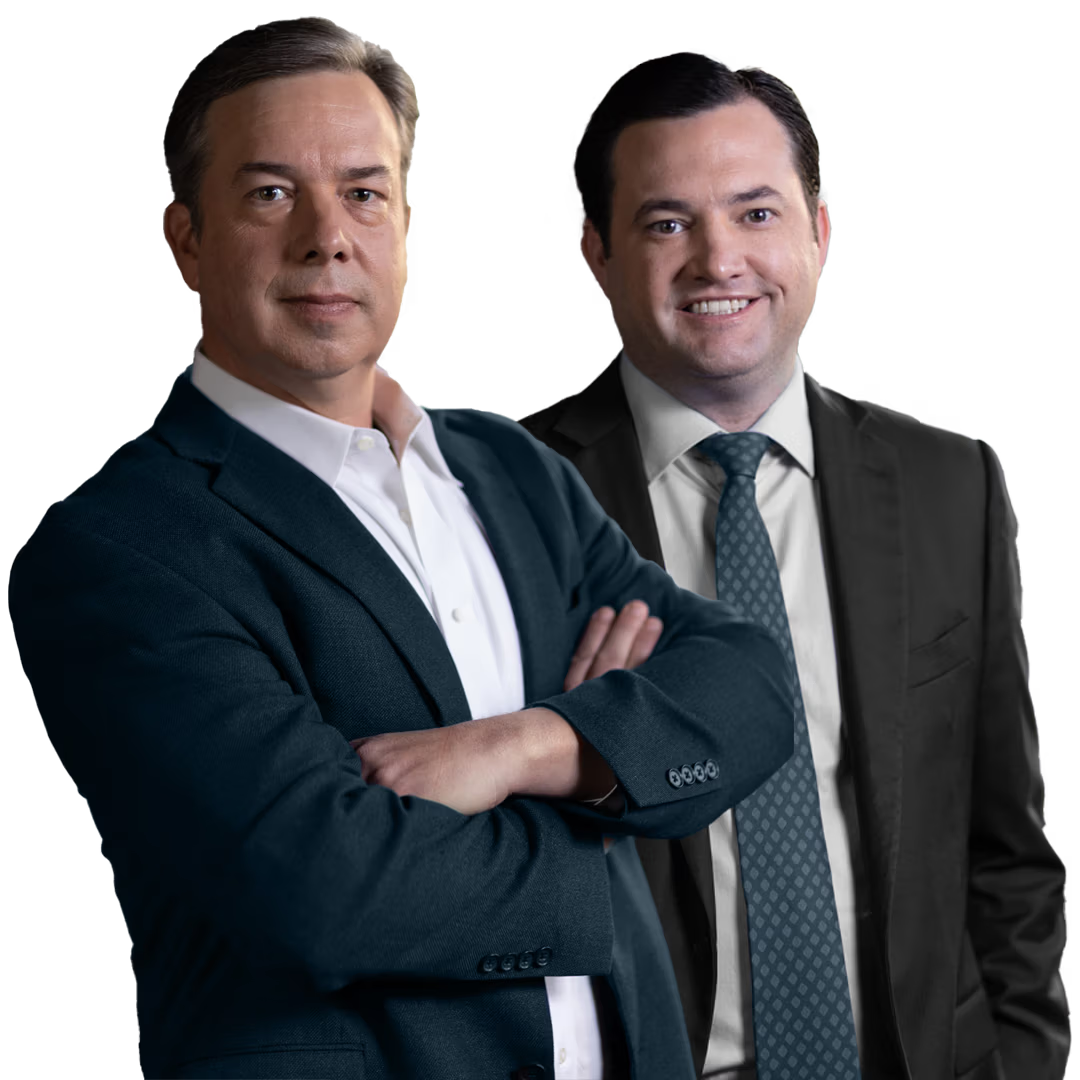
Founding partners Trey Morris and Justin Dewett lead every injury case Morris & Dewett takes.


What clients say
- ★★★★★
I hired Morris and Dewett back in November of 2025.
They helped me get through my hard times of being off work, stress, and worry. Anytime I had a question I could call and they always had an answer. Very nice and professtional people. Thank you Morris and Dewett for making this an easy process for me and my family.
- ★★★★★
Morris and Dewett and their team of attorneys and staff go above and beyond.
They always were there to support me and answer all my questions after a shoulder injury that included multiple surgeries. They are caring and compassionate and that goes a long way! Highly recommended!
- ★★★★★
Thanks Morris and Dewett for the excellent work you have done on my behalf.
I want to personally thank Sarah for her kindness.
- ★★★★★
Morris & Dewett does things the right way!
They put their clients first in measurable and impactful ways.
- ★★★★★
First time being injured and needing a lawyer they where very helpful.
They answered my questions Id have very well. Highly recommend them.
- ★★★★★
Wonderful experience with Morris and DeWitt, everyone was articulate and punctual, and open to all my questions about the process.
My case couldn't have been handled by a better team! Caity Nerren, Jessica Christian, and Meghan Nolen were all fantastic and helped every step of the way. Thanks again for all of your hard work.
Reviews reflect individual client experiences. Past results do not guarantee future outcomes.
Our Shreveport Office
509 Milam St
Shreveport, LA 71101
Open 24/7 for injured Shreveport residents
Get directions →Past results do not guarantee future outcomes; each case is decided on its own facts. See our full case results.
Frequently Asked Questions
- Is Texas a no-fault state for pedestrian accidents?
- No. Texas is an at-fault (tort) state. The driver who caused the crash, and that driver's liability insurer, pays for the pedestrian's injuries. There is no system that forces each side to turn to its own coverage first regardless of blame. That means fault is the central question in a pedestrian claim, and proving who failed to use reasonable care decides who pays. Because fault drives the outcome, the at-fault driver's percentage of responsibility matters. Texas follows a modified comparative negligence rule under Tex. Civ. Prac. & Rem. Code section 33.001: a person is barred from recovering damages only if their own share of fault is more than 50 percent. Below that threshold, the claim proceeds with damages reduced by the percentage assigned to the pedestrian.
- Can family members file a wrongful death claim if a pedestrian was killed?
- Yes. When a pedestrian is killed by a negligent driver, the surviving spouse, children, and parents can bring a wrongful death claim. These claims seek damages for the losses the family suffers, including lost financial support, lost companionship, and mental anguish. A separate survival claim can recover damages the deceased person could have pursued, such as medical expenses and the conscious pain endured before death. The fault rules still apply. If the driver bears the larger share of responsibility for the crash, the family's claim moves forward, with any reduction tied to the percentage of fault assigned to the deceased pedestrian.
- What if a child was hit as a pedestrian in Texas?
- A child injured as a pedestrian has the same right to compensation as an adult, and the analysis of the driver's conduct is often more favorable. Drivers owe a high duty of care in places where children are present, including school zones, neighborhood streets, and crossings near parks. Courts also judge a young child's own conduct by what is reasonable for a child of similar age, not by an adult standard, which limits how much blame an insurer can shift onto the child. A parent or guardian typically pursues the claim on the child's behalf. The timing rules for a minor's claim differ from an adult's, so a child's case should be evaluated by counsel rather than assumed to follow the same deadline.
- Should I accept the insurance company's first offer?
- The first offer is rarely the full value of a serious claim, and accepting it usually ends your ability to pursue more later. Adjusters often present an early number before the full extent of injuries, future treatment needs, and lost earning capacity is known. Once you sign a release, the claim is closed even if your condition worsens. A first offer is also a place where comparative fault shows up quietly. An adjuster may price the offer as though the pedestrian carried a large share of blame, which lowers the number. Reviewing the evidence first, rather than reacting to the insurer's framing, is what protects the value of the claim.
- Who pays my medical bills if I get hit while walking?
- The at-fault driver's liability insurance is the primary source for medical bills in a Texas pedestrian claim, because Texas places financial responsibility on the driver who caused the crash. In practice, the liability insurer usually pays through a settlement after treatment, not in real time as bills arrive. That gap means other coverage often fills in while the claim is pending. Your own auto policy may include medical payments coverage or uninsured and underinsured motorist coverage that responds when you are struck on foot, and your health insurance can cover treatment in the meantime. Medical providers may also assert liens against the eventual settlement. Sorting out which source pays first, and which must be repaid from any settlement, is a routine part of handling a pedestrian claim correctly.
Last updated June 20, 2026