

What Qualifies as a Catastrophic Injury in Louisiana?
catastrophic injury
An injury causing permanent disability, extended medical care, or long-term impairment of a person’s capacity to work, live independently, or care for themselves. Courts recognize the category in damages calculations and expert witness requirements.
Louisiana does not have a single statutory definition of catastrophic injury. Courts apply the term to injuries that permanently alter a person’s capacity to work, live independently, or care for themselves.
TBI
Traumatic Brain Injury. Damage to the brain caused by an external physical force. Ranges from mild concussion to severe brain damage affecting cognition, speech, motor function, and personality. Requires neurologist, neuropsychologist, and often a life care planner to document long-term needs.
The recognized categories include TBI, spinal cord injury resulting in paralysis, amputation, severe burns, permanent sensory loss including blindness or hearing loss, and crush injuries affecting multiple organ systems. This page is the hub for two specific injury types: Brain Trauma and Spine Trauma. Both have dedicated pages with more specific legal and medical information.
life care planner
A credentialed specialist (usually a nurse or rehabilitation professional) who documents all future medical needs and costs over the injured person’s remaining life expectancy. The life care plan is used to support future damages claims in litigation.
The severity of the injury determines what expert witnesses are needed, how complex the damages calculation becomes, and how likely the case is to go to trial. Alexandria cases typically require a medical economist, a life care planner, and a vocational rehabilitation specialist. These experts are not interchangeable with the treating physician.
Serving Alexandria
Served from our Lake Charles office -- serving all of Rapides Parish.
4865 Ihles Road
Lake Charles, LA 70605
Open 24/7 for injured Alexandria residents
Get directions →Liability Theories in Catastrophic Injury Cases
The legal theory underlying your claim depends on how the injury happened. Motor vehicle accidents apply a negligence standard under La. C.C. Art. 2315: the at-fault party must have breached a duty of reasonable care and caused your injury. Product liability cases use the Louisiana Products Liability Act (LPLA), which imposes strict liability for products that are unreasonably dangerous. The injured person does not need to prove negligence, only that the defect existed and caused the injury.
Premises liability claims arise under La. C.C. Art. 2317 when a property owner’s failure to maintain safe conditions causes the injury. These three theories (motor vehicle, product, premises) often overlap when a single incident has multiple contributing factors.
Many catastrophic injury cases involve more than one responsible party. A commercial truck driver may be an employee whose employer is also vicariously liable under respondeat superior. Under La. C.C. Art. 2320, an employer is liable for an employee’s negligent acts within the scope of employment. A defective product on a job site implicates both the manufacturer and potentially the employer.
Comparative Fault
A legal rule reducing your compensation by your percentage of fault. In Louisiana, if you are 51% or more at fault, you recover nothing. Below 51%, your damages are reduced proportionally. Applies to all personal injury claims under La. C.C. Art. 2323.
Comparative Fault applies to all Louisiana personal injury cases. As of January 1, 2026, Act 15 of the 2025 Regular Session (HB 431) raised the bar: if you are found 51% or more at fault, you are fully barred from recovery. Below that threshold, your damages are reduced proportionally. Insurance adjusters build their entire defense strategy around pushing your fault percentage above that cutoff.
A strategy for disputing fault percentage starts at the accident scene investigation, not after the lawsuit is filed. Morris & Dewett works with accident reconstructionists and independent investigators to establish fault percentages before the insurer’s version hardens.
What We Handle
Alexandria Practice Areas
-
 Car Accidents Rear-end, intersection, and highway collisions across Louisiana.
 -
 Truck Accidents 18-wheeler and commercial-vehicle wrecks governed by federal trucking rules.
 -
 Motorcycle Accidents Serious-injury motorcycle crashes where bias against riders is common.
 -
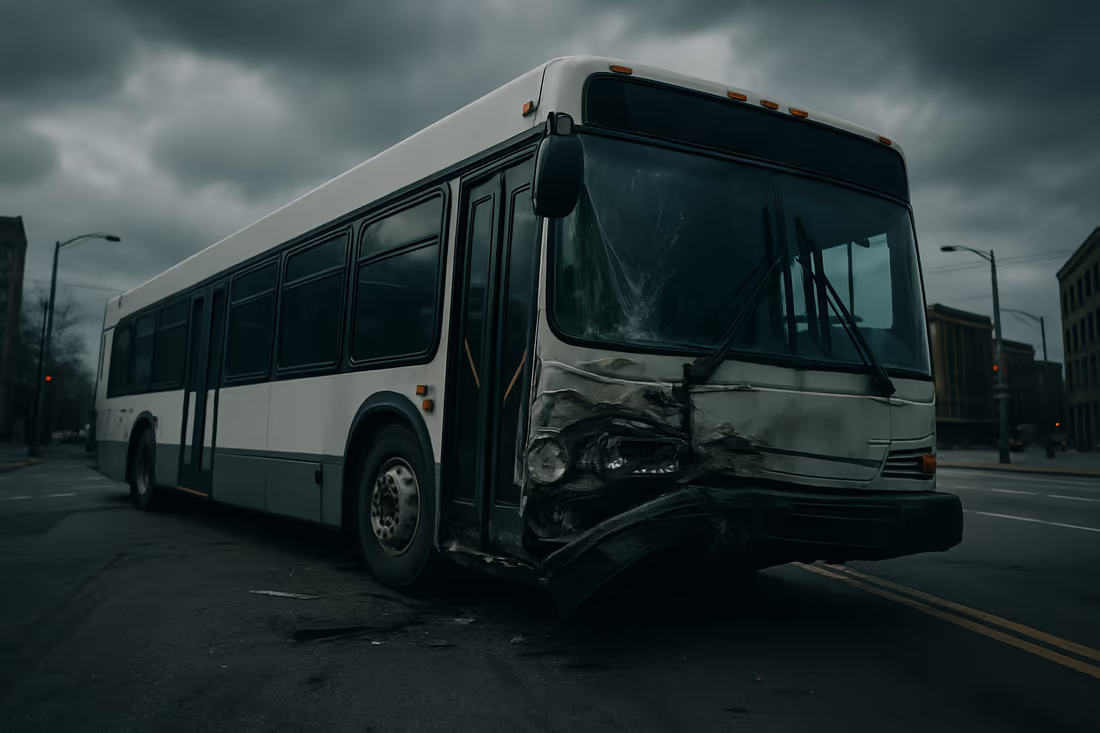 Bus Accidents Transit, school, and charter-bus crashes involving public and private carriers.
 -
 Catastrophic Injury Brain, spinal-cord, amputation, and severe-burn injuries that change a life.
 -
 Brain Injury Traumatic brain injuries with long-term cognitive and physical effects.
 -
 Wrongful Death Claims brought by families after a fatal accident or act of negligence.
 -
 Construction Accidents Falls, struck-by, and equipment injuries on the job site.
 -
 Offshore Accidents Rig, platform, and vessel injuries beyond the shoreline.
 -
 Workers' Compensation On-the-job injuries and the benefits owed to injured workers.
Calculating Future Damages in Catastrophic Cases
Future damages are typically the largest component of a catastrophic injury claim. Because the losses are permanent, they require lifetime projections that the insurer’s adjuster is not in a position to independently evaluate. This is where the expert team matters most.
A life care planner documents every future medical need over a person’s remaining life expectancy. The list includes physician visits, therapy, adaptive devices, home modifications, attendant care hours, and medications. The plan covers wheelchair maintenance schedules, cognitive therapy sessions, and everything in between. The life care planner works from the treating physicians’ records, not from general assumptions about the injury type.
Loss of Earning Capacity
The difference between what you could have earned over your working lifetime before the injury and what you can earn now. Calculated by a vocational expert and converted to present value by an economist.
Loss of Earning Capacity is calculated separately from lost wages. Lost wages are what you have already missed. Earning capacity is what you will lose over a projected working career.
A vocational rehabilitation specialist determines your post-injury work capacity and earning range. An economist converts that lifetime differential to present value.
Non-economic damages include pain and suffering, mental anguish, loss of enjoyment of life, and permanent disability. These do not have a fixed calculation. They are presented to the jury or negotiated based on the documented permanence and severity of the injury. Louisiana does not cap general or special damages in non-medical-malpractice personal injury cases in the 9th Judicial District Court in Rapides Parish.
Loss of consortium is available for a spouse. Under La. C.C. Art. 2315, a spouse can claim compensation for the loss of companionship, affection, and support caused by the injured person’s condition. It is a separate line item from the injured person’s own claims.
One 2024 reform directly affects how medical damages are presented: La. R.S. 9:2800.27 limits recoverable medical expenses to amounts actually paid, not amounts billed. Hospitals bill at charge-master rates that are rarely what anyone actually pays. The reform requires your attorney to present actual paid amounts, which changes the economic picture of the case.
Past results do not guarantee future outcomes; each case is decided on its own facts. See our full case results.
Filing Deadlines and Court Procedures in Rapides Parish
Prescriptive Period
Louisiana’s term for the legal deadline to file a lawsuit. For personal injury, it is two years from the date of injury for accidents on or after July 1, 2024, under La. C.C. Art. 3493.1 (Act 423). Prior injuries carry a one-year period under the old rule.
Louisiana’s Prescriptive Period for personal injury is two years from the date of injury under La. C.C. Art. 3493.1 for accidents occurring on or after July 1, 2024. For older injuries, the prior one-year period applies. If an attorney quotes you a three-year deadline, or a one-year deadline for a 2024 accident without flagging the reform, they are working from outdated law.
Product liability claims under the LPLA follow different rules: one year from discovery of the injury, with a ten-year absolute period from the date of manufacture. Government entity claims require a 90-day notice of claim before suit is filed. If your injury involved a road defect on a state highway, the Louisiana Department of Transportation and Development (LADOTD) is a state defendant. Separate notice rules apply.
Catastrophic injury cases in Rapides Parish are filed in the 9th Judicial District Court in Alexandria. The court’s scheduling orders set expert designation deadlines, require physician depositions in advance of trial, and establish timelines for Daubert admissibility motions challenging expert witnesses.
Cases of this complexity rarely resolve quickly. Many conclude through structured settlements providing scheduled income streams rather than a lump sum. That structure affects tax planning and long-term care budgeting.
Rapides Regional Medical Center serves as the Level II trauma center for the Alexandria area. For injuries exceeding that capacity, transfers go to LSU Health Shreveport. Your initial emergency care records are foundational medical evidence.
Louisiana’s Strategic Highway Safety Plan documented 972 traffic fatalities in a recent peak year. That included 185 pedestrian fatalities statewide. Severe injuries on Louisiana roads are not unusual events, and the legal process for addressing them is well-established in the 9th JDC.
Your Alexandria Injury Attorneys
Founding partners Trey Morris and Justin Dewett lead every Alexandria injury case Morris & Dewett takes.


How Do Insurance Companies Handle Catastrophic Injury Claims?
When a catastrophic injury claim is reported, the opposing insurer does not wait. Their claims team investigates immediately. The goal at that stage is to limit exposure before the full medical picture is established. This is not speculation about intent; it is a description of how the economics of insurance defense work.
Do not give a recorded statement to the opposing insurer without your attorney present. This applies regardless of how cooperative or routine the request sounds. A recorded statement taken before the extent of permanent injuries is documented gives the insurer material to dispute causation, pre-existing conditions, and severity. It costs you nothing to wait.
Early settlement offers are standard in catastrophic injury cases. Insurers extend offers before the life care plan is complete and before future earning capacity has been evaluated. An offer made at that stage reflects the insurer’s estimate of minimum exposure, not the full value of the claim. Accepting early permanently closes all future claims related to the injury.
Delay is also a tool. Slow response times, repeated requests for the same documents, and adjuster reassignments are common. These are not administrative oversights. They create pressure to resolve before your case is fully built.
Morris & Dewett’s fee arrangement is contingency-based: we take no fee unless there is a recovery, and clients pay nothing upfront. That structure means we can build cases at the right pace.
What clients say
- ★★★★★
I hired Morris and Dewett back in November of 2025.
They helped me get through my hard times of being off work, stress, and worry. Anytime I had a question I could call and they always had an answer. Very nice and professtional people. Thank you Morris and Dewett for making this an easy process for me and my family.
- ★★★★★
Morris and Dewett and their team of attorneys and staff go above and beyond.
They always were there to support me and answer all my questions after a shoulder injury that included multiple surgeries. They are caring and compassionate and that goes a long way! Highly recommended!
- ★★★★★
Thanks Morris and Dewett for the excellent work you have done on my behalf.
I want to personally thank Sarah for her kindness.
- ★★★★★
Morris & Dewett does things the right way!
They put their clients first in measurable and impactful ways.
- ★★★★★
First time being injured and needing a lawyer they where very helpful.
They answered my questions Id have very well. Highly recommend them.
- ★★★★★
Wonderful experience with Morris and DeWitt, everyone was articulate and punctual, and open to all my questions about the process.
My case couldn't have been handled by a better team! Caity Nerren, Jessica Christian, and Meghan Nolen were all fantastic and helped every step of the way. Thanks again for all of your hard work.
Reviews reflect individual client experiences. Past results do not guarantee future outcomes.
What to Do Immediately After a Catastrophic Injury in Alexandria
If you or a family member has been severely injured, the first priority is medical care. Rapides Regional Medical Center handles Level II trauma in the Alexandria area. Document every treatment encounter from the emergency room forward. Medical records are the evidentiary foundation of the damages case, and gaps in treatment history give insurers room to argue the injuries were not as severe as claimed.
Preserve evidence if it is safe to do so. Photograph the location, vehicles, and conditions involved. Get accident report numbers from responding police and contact information for witnesses.
Surveillance footage from businesses and traffic cameras is typically overwritten within 30 to 60 days. Requests to preserve that footage need to happen fast.
Do not give a recorded statement to any insurance company before speaking with an attorney. This instruction applies to your own insurer as well in some circumstances. Once you have legal representation, all insurer contact routes through your attorney.
The two-year prescriptive period under La. C.C. Art. 3493.1 starts from the date of injury. Medical recovery does not pause it. Waiting until treatment is complete before consulting an attorney is a common mistake in catastrophic cases. It compresses the time available to investigate and build the claim.
Preservation Letter
A formal legal demand sent to defendants requiring them to preserve all evidence related to the incident. Prevents overwriting of electronic data, vehicle black box data, employment records, and surveillance footage.
One of the first steps after engagement is sending a Preservation Letter to lock down electronic data, vehicle records, and employment files before they are overwritten or destroyed. We send preservation demands within days of engagement.
I-49 runs through Alexandria and connects Central Louisiana to higher-traffic corridors. The Louisiana Highway Safety Commission reports the Baton Rouge area ranks among the state’s top three for pedestrian crashes per capita. That corridor shares highway infrastructure with the Alexandria region. Catastrophic pedestrian injuries in Central Louisiana follow the same claims process as any other serious injury claim.
Frequently Asked Questions
- What are some common causes of catastrophic injuries?
- Motor vehicle accidents involving commercial trucks, high-speed collisions, and motorcycle crashes are the most common causes in Rapides Parish. Workplace accidents at industrial facilities and construction sites account for a significant share. Falls from heights, defective products, and premises hazards also result in catastrophic injuries. The type of accident determines which liability theory applies and which defendants may be responsible.
- How can I prove who caused my catastrophic injury?
- Proof of liability requires evidence connecting the defendant's conduct to your injury. Dashcam footage, police reports, and witness statements establish what happened. Medical expert testimony connects the incident to the specific injuries. In vehicle accidents, accident reconstruction experts analyze physical evidence to establish fault. In product cases, a forensic engineer examines the product defect. In workplace cases, safety experts evaluate whether applicable standards were violated. The list of evidence depends on the type of case.
- Do I need a catastrophic injury lawyer?
- A catastrophic injury claim involves life care planners, vocational experts, medical economists, and opposing insurance teams with their own specialists. The insurer investigating your claim has handled thousands of these cases. Handling one alone without equivalent expertise and resources is not a comparable contest. Representation with a firm experienced in Louisiana catastrophic injury litigation is not optional for claims of this complexity.
- Are there damage caps in Louisiana?
- Louisiana does not cap general or special damages in non-medical-malpractice personal injury cases in Rapides Parish's 9th Judicial District Court. Punitive damages have caps, but punitive damages are rarely available in personal injury cases outside narrow categories. For medical malpractice cases, a separate cap structure applies under Louisiana's Medical Malpractice Act, which is distinct from personal injury law.
- How long do I have to file a catastrophic injury lawsuit in Alexandria, Louisiana?
- For accidents occurring on or after July 1, 2024, Louisiana's prescriptive period is two years from the date of injury under La. C.C. Art. 3493.1. For accidents before that date, the prior one-year period applies. Product liability claims carry a one-year discovery period and a ten-year absolute manufacturing period under the LPLA. Claims against government entities require a 90-day notice of claim before filing suit. The correct deadline depends on when the injury occurred and who the defendants are.
- How is the value of a catastrophic injury case calculated in Louisiana?
- The value calculation for a catastrophic injury case has three components. Economic damages cover documented past and future medical costs, past lost wages, and projected loss of earning capacity. Non-economic damages cover pain and suffering, mental anguish, and permanent disability. Future damages require a life care plan prepared by a credentialed specialist and earning capacity analysis by a vocational expert and economist. The sum of those projections, discounted to present value, forms the baseline for negotiation or trial. The 2024 reform under La. R.S. 9:2800.27 limits medical damages to amounts actually paid, not billed amounts, which affects how future medical projections are presented.
- Can a family member file on behalf of someone who is incapacitated?
- Yes. If the injured person is incapacitated due to a severe TBI or other catastrophic injury, a family member or other authorized representative can initiate the claim on their behalf. In Louisiana, this may involve appointment of a curator or tutor through a court proceeding depending on the circumstances. An attorney can advise on the appropriate legal mechanism for the specific situation. The prescriptive period still runs from the date of injury regardless of the injured person's capacity, so prompt action is important.
- What if I was partially at fault for my own catastrophic injury?
- Louisiana applies comparative fault under La. C.C. Art. 2323. As of January 1, 2026, the threshold is 51%. If you are found 51% or more at fault, you recover nothing. If you are found 20% at fault on a valid claim, your recovery is reduced by 20%. Whether a comparative fault dispute significantly affects your case depends on the evidence. An experienced attorney can evaluate the strength of a fault-shifting defense before you decide how to proceed.
- What does the 2024 tort reform mean for my catastrophic injury case?
- La. R.S. 9:2800.27 limits recoverable medical expenses to amounts actually paid rather than amounts billed. Hospitals bill at charge-master rates that are substantially higher than what insurers or Medicare actually pay. Under the reform, only the paid amount is recoverable. For future medical damages in a catastrophic case, this means the life care plan must document projected actual costs, not projected billed rates. It also affects past medical damages. The change is significant in high-value cases and requires attorneys to understand how to present life care plan projections under the new standard.
Last updated June 5, 2026